You're viewing free preview questions — 6 questions previewing here — subscribe to unlock 128 more, plus the Full Question Bank, Mock Papers & Worksheets.Upgrade
Back

Reactivity and chemical properties — Free MYP3 Sciences Practice Questions

Free questions

Open in full, with answers, mark scheme and examiner insights.

Question 1Criterion A · Easy · 4 marksrevisionprep.com

Definition of reactivity

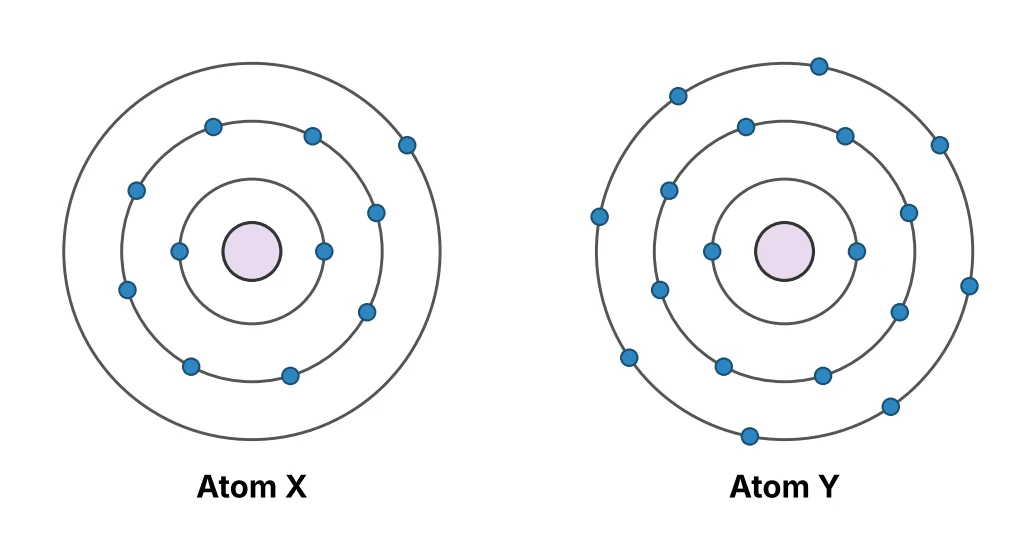
The diagram shows the electrons in the shells of two atoms, X and Y.
Question diagram
(a)
Identify which atom is more likely to react. [1]
(b)
Explain your answer to (a) using the outer shells. [2]
(c)
Atom Y is argon. Suggest why argon is used inside some light bulbs. [1]

revisionprep.com

Summary Answer

Not available for this question.

Model Answer

Not available for this question.

Marking Scheme

Not available for this question.

Examiner Insights

Not available for this question.

Question 2Criterion A · Easy · 2 marksrevisionprep.com

Comparing reactivity using experiments
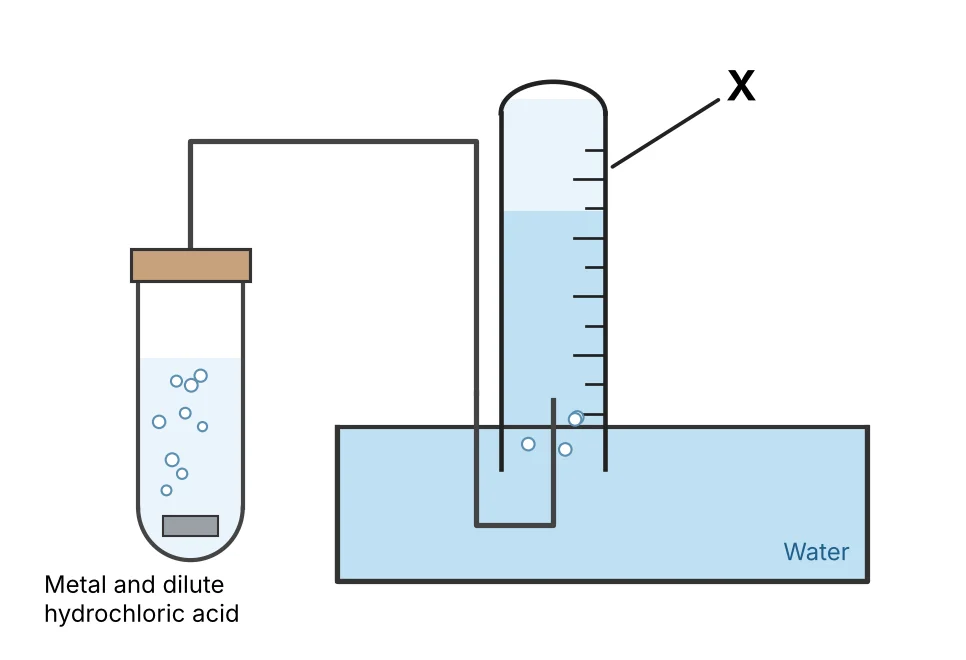
The diagram shows a metal reacting with dilute acid in a test tube. The gas travels along a delivery tube into a vessel X that is full of water and upside down in a trough.
Question diagram
(a)
Identify the piece of equipment labelled X. [1]
(b)
Suggest why hydrogen can be collected over water. [1]

revisionprep.com

Summary Answer

Not available for this question.

Model Answer

Not available for this question.

Marking Scheme

Not available for this question.

Examiner Insights

Not available for this question.

Question 3Criterion B + C · Medium · 4 marksrevisionprep.com

Reactivity series of metals

A student wants to find out which conditions iron needs to rust. Three tubes are set up with a new iron nail in each.

- Tube A: dry air with a drying agent
- Tube B: boiled water with a layer of oil on top
- Tube C: tap water open to the air
(a)
Explain why the water in tube B is boiled and covered with oil. [1]
(b)
Predict which nail rusts after one week. [1]
(c)
State the conclusion about the conditions needed for rusting. [1]
(d)
A fourth tube, D, has salty water open to the air. Predict how the nail compares with the nail in C. [1]

revisionprep.com

Summary Answer

Not available for this question.

Model Answer

Not available for this question.

Marking Scheme

Not available for this question.

Examiner Insights

Not available for this question.

Question 4Criterion A · Medium · 4 marksrevisionprep.com

Displacement reactions between metals

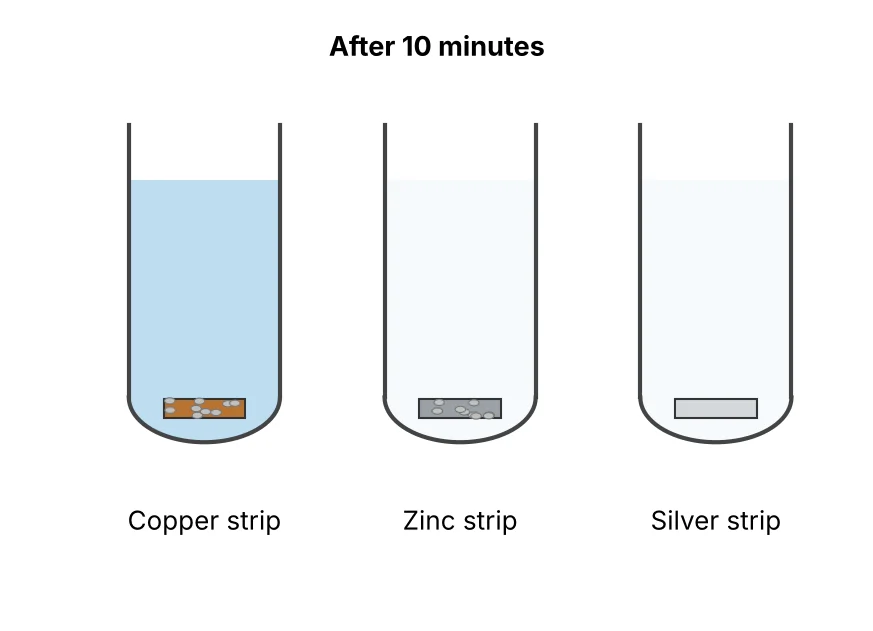
Copper, zinc and silver strips are each placed in a different tube of silver nitrate solution. The diagram shows the tubes after 10 minutes.
Question diagram
(a)
Identify the metals that displaced silver from the solution. [1]
(b)
Explain why the silver strip shows no change in silver nitrate solution. [1]
(c)
State what the results show about the reactivity of copper and zinc compared with silver, and what they do not show. [2]

revisionprep.com

Summary Answer

Not available for this question.

Model Answer

Not available for this question.

Marking Scheme

Not available for this question.

Examiner Insights

Not available for this question.

Question 5Criterion D + A · Challenge · 6 marksrevisionprep.com

Definition of reactivity

Three fence posts stood outdoors for two years. Post A (iron) has heavy orange rust. Post B (aluminium) and Post C (stainless steel) look almost unchanged. All three posts are equally strong.
(a)
Describe one difference between how iron and aluminium react with oxygen in air. [1]
(b)
Explain why Posts B and C are better than Post A for a fence built next to the sea. [2]
(c)
A company says iron posts are fine because they are cheap. Evaluate this claim using the observations and one other factor. [3]

revisionprep.com

Summary Answer

Not available for this question.

Model Answer

Not available for this question.

Marking Scheme

Not available for this question.

Examiner Insights

Not available for this question.

Question 6Criterion C · Challenge · 6 marksrevisionprep.com

Reactions of metals with water and steam

Four metals were tested with cold water and steam.

- Metal A: reacts slowly with cold water; reacts faster with steam
- Metal B: no reaction with cold water; reacts rapidly with steam
- Metal C: reacts violently with cold water
- Metal D: no reaction with cold water or steam
(a)
Put A, B, C and D in order of reactivity, most reactive first. [2]
(b)
Metal E is less reactive than B but more reactive than D. Predict how E reacts with steam compared with B and D. [2]
(c)
A student says D must be unreactive in all tests. Evaluate this using the data. [2]

revisionprep.com

Summary Answer

Not available for this question.

Model Answer

Not available for this question.

Marking Scheme

Not available for this question.

Examiner Insights

Not available for this question.

That's every free question here — 6 of 134.

+128 more questions, plus Mock Papers & Worksheets, are waiting in Premium.

Upgrade