You're viewing free preview questions — 4 questions previewing here — subscribe to unlock 75 more, plus the Full Question Bank, Mock Papers & Worksheets.Upgrade
Rocks and the Rock Cycle — Free MYP3 Sciences Practice Questions

1QuestionHow Each Type of Rock FormsConcept Practice
2 marks~3 minCriterion A
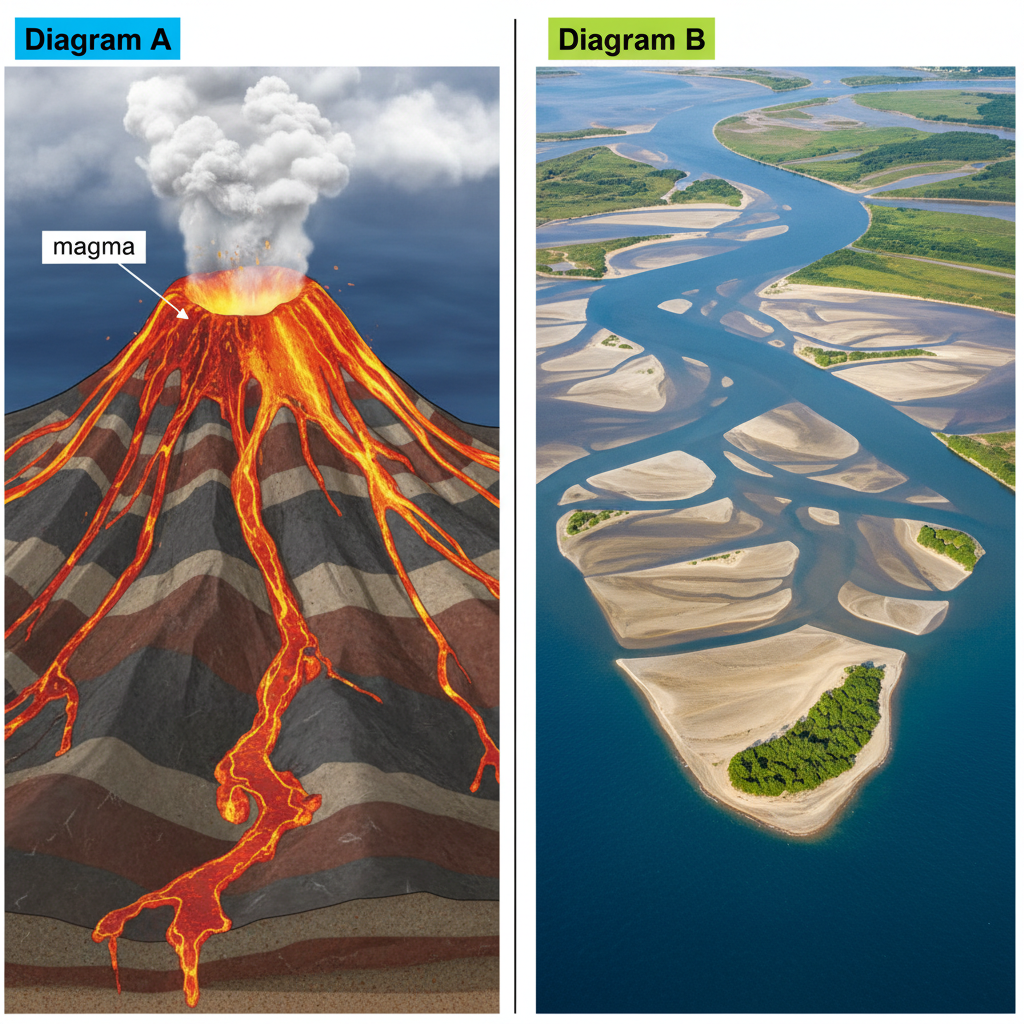
Examine the two diagrams below.
Diagram A shows a volcano with magma rising from the mantle and lava erupting from the crater.
Diagram B shows a river delta where layers of sand and mud are being deposited.
Diagram A shows a volcano with magma rising from the mantle and lava erupting from the crater.
Diagram B shows a river delta where layers of sand and mud are being deposited.
a
Identify which diagram shows igneous rock formation and which shows sedimentary rock formation. [1]
b
Explain why the process shown in Diagram A produces igneous rock. [1]

Solutions
2QuestionHow Each Type of Rock FormsAssessment Practice
4 marks~6 minCriterion C
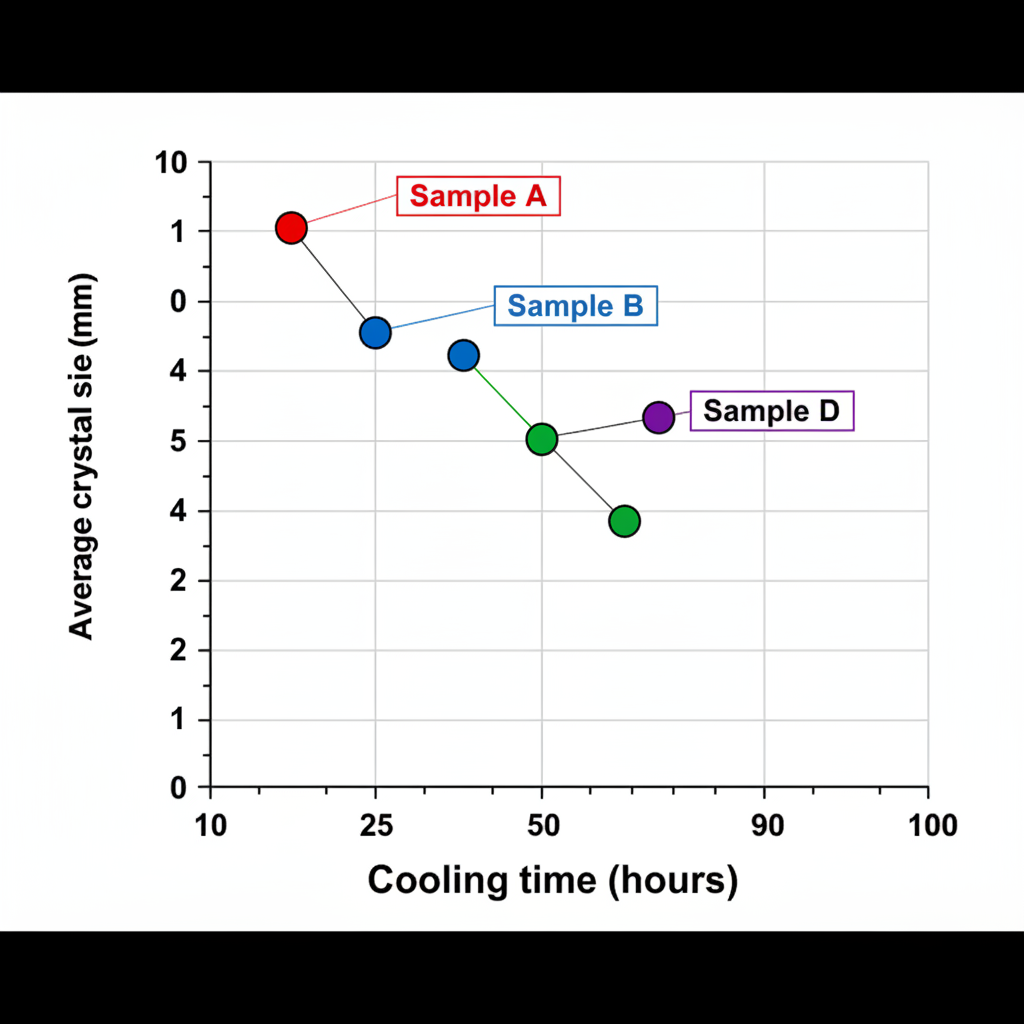
The graph below shows the relationship between cooling time and average crystal size for four magma samples.
| X-axis | Cooling time (hours): 0 | 10 | 20 | 30 | 40 | 50 | 60 | 70 | 80 | 90 | 100 |
|---|---|---|---|---|---|---|---|---|---|---|---|
| Y-axis | Average crystal size (mm): 0 | 1 | 2 | 3 | 4 | 5 | 6 | 7 | 8 | 9 | 10 |
| Sample A | (10 | 0.5) |
|---|---|---|
| Sample B | (25 | 2.0) |
| Sample C | (50 | 4.5) |
| Sample D | (90 | 9.0) |
a
Describe the relationship between cooling time and average crystal size shown by the data. [2]
b
Identify which sample most likely formed an extrusive igneous rock and justify your choice using data from the graph. [2]
Solutions
3QuestionPhysical and Chemical Properties of RocksAssessment Practice
4 marks~6 minCriterion D
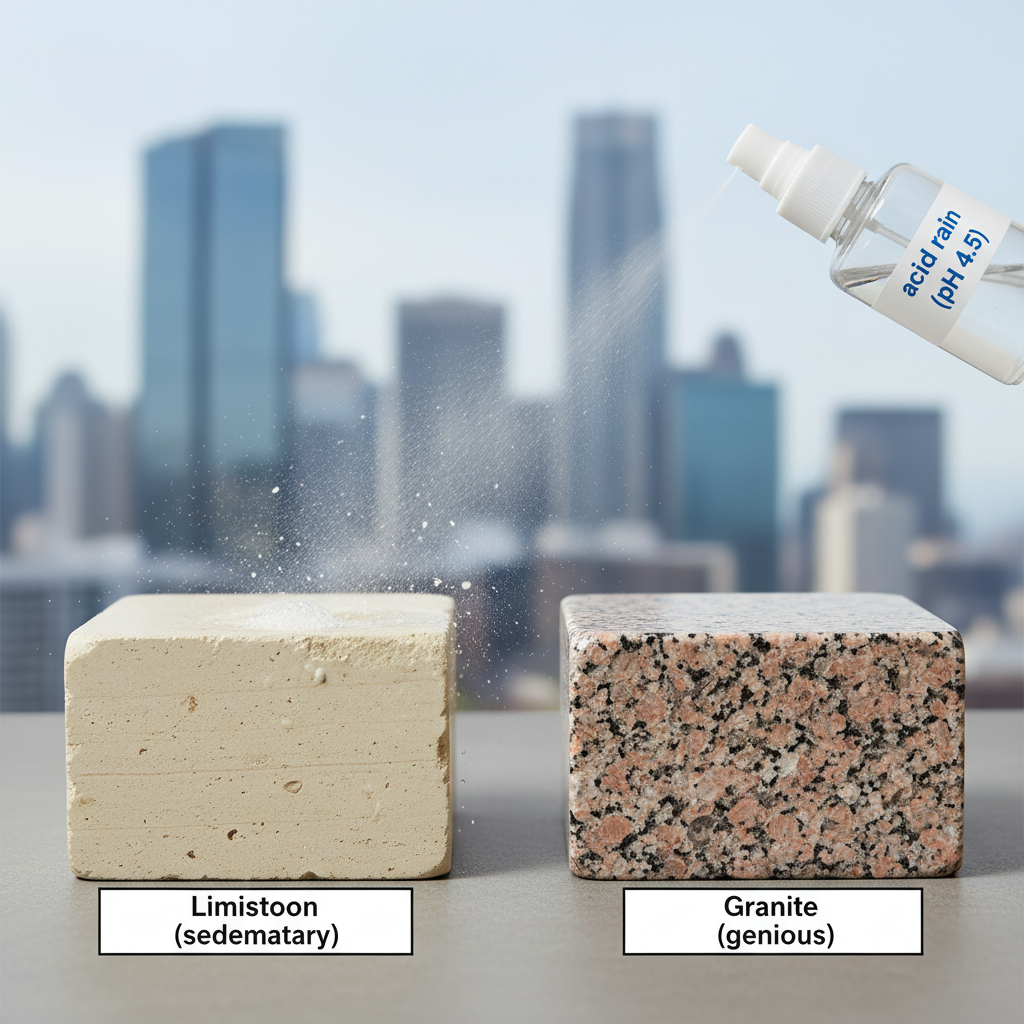
A construction company must choose between limestone and granite for the exterior of a building in an area with high acid rain.
a
Describe one chemical property of each rock that is relevant to this situation. [1]
b
Explain why granite is more suitable than limestone for this building exterior. [2]
c
Identify and explain one real-world limitation the company may face when choosing granite. [1]
Solutions
4QuestionHow Each Type of Rock FormsAssessment Practice
6 marks~9 minCriterion B
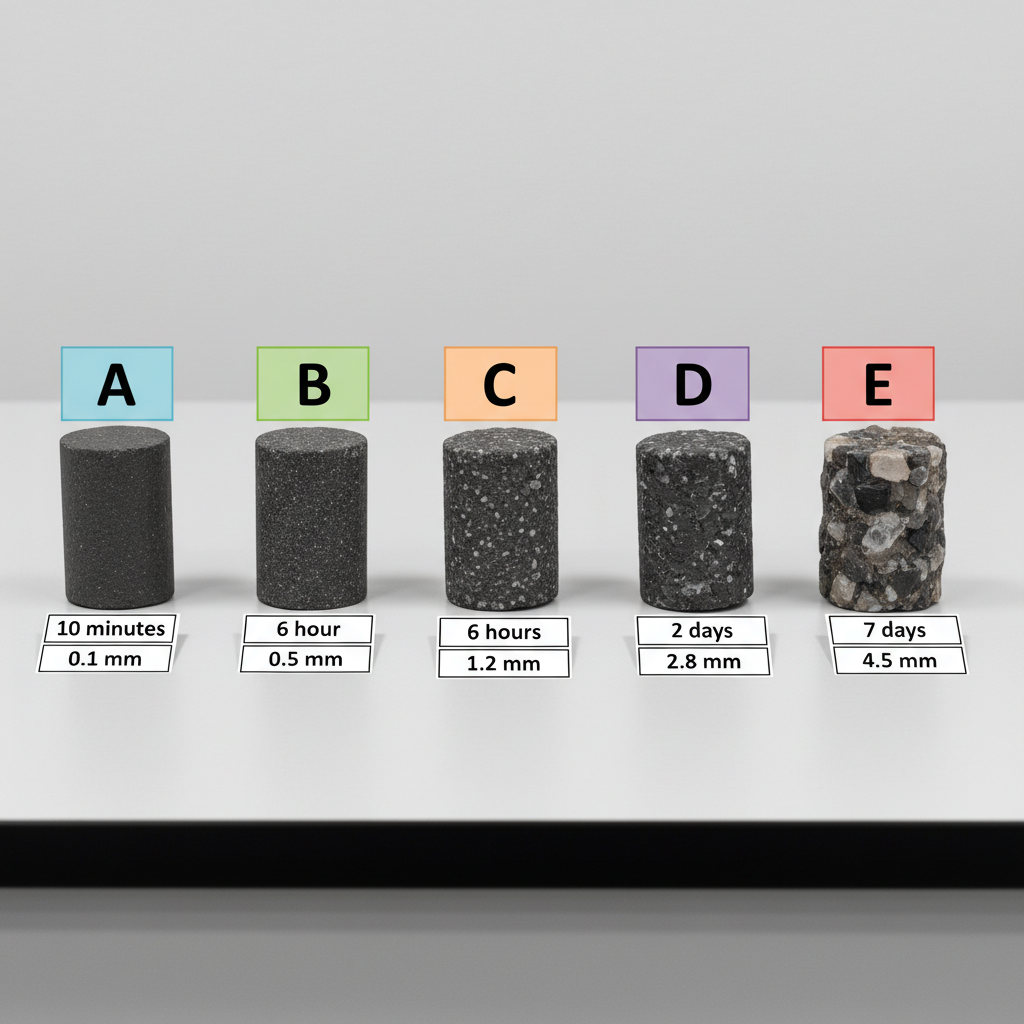
A geologist cools five samples of molten magma at different rates and records the average crystal size formed in each sample.
| Cooling time (days) | 0.007 | 0.042 | 0.25 | 2 | 7 |
|---|---|---|---|---|---|
| Average crystal size (mm) | 0.1 | 0.5 | 1.2 | 2.8 | 4.5 |
a
Describe the relationship between cooling time and average crystal size shown in the data. [1]
b
Explain why slower cooling produces larger crystals in igneous rocks. [2]
c
A sample of the same magma is cooled over 30 days. Using the data, predict the average crystal size and justify your prediction. [3]
Solutions
That's every free question here — 4 of 79.
+75 more questions, plus Mock Papers & Worksheets, are waiting in Premium.