You're viewing free preview questions — 4 questions previewing here — subscribe to unlock 62 more, plus the Full Question Bank, Mock Papers & Worksheets.Upgrade
The Solar System — Free MYP3 Sciences Practice Questions

1QuestionAsteroids Comets and MeteoroidsConcept Practice
4 marks~6 minCriterion A
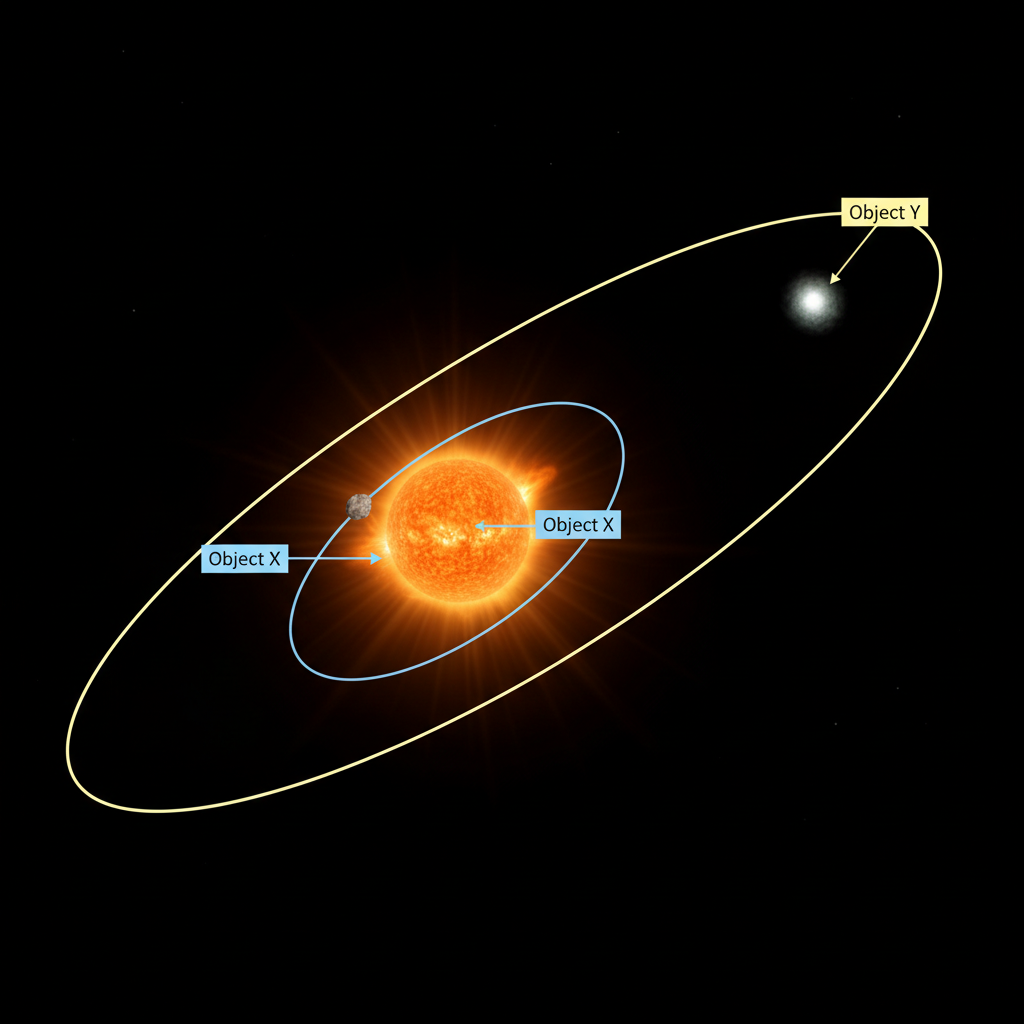
The diagram shows two celestial objects. Object X is located in the inner solar system, has an irregular rocky surface, and orbits the Sun in a nearly circular path. Object Y is located in the outer solar system, has a bright icy nucleus, and follows a highly elongated elliptical orbit.
a
Identify Object X and Object Y. [2]
b
Explain how two differences in composition between Object X and Object Y account for Object Y's ability to develop a glowing tail as it approaches the Sun. [2]

Solutions
2QuestionMovements of Planets Around the SunAssessment Practice
2 marks~3 minCriterion D
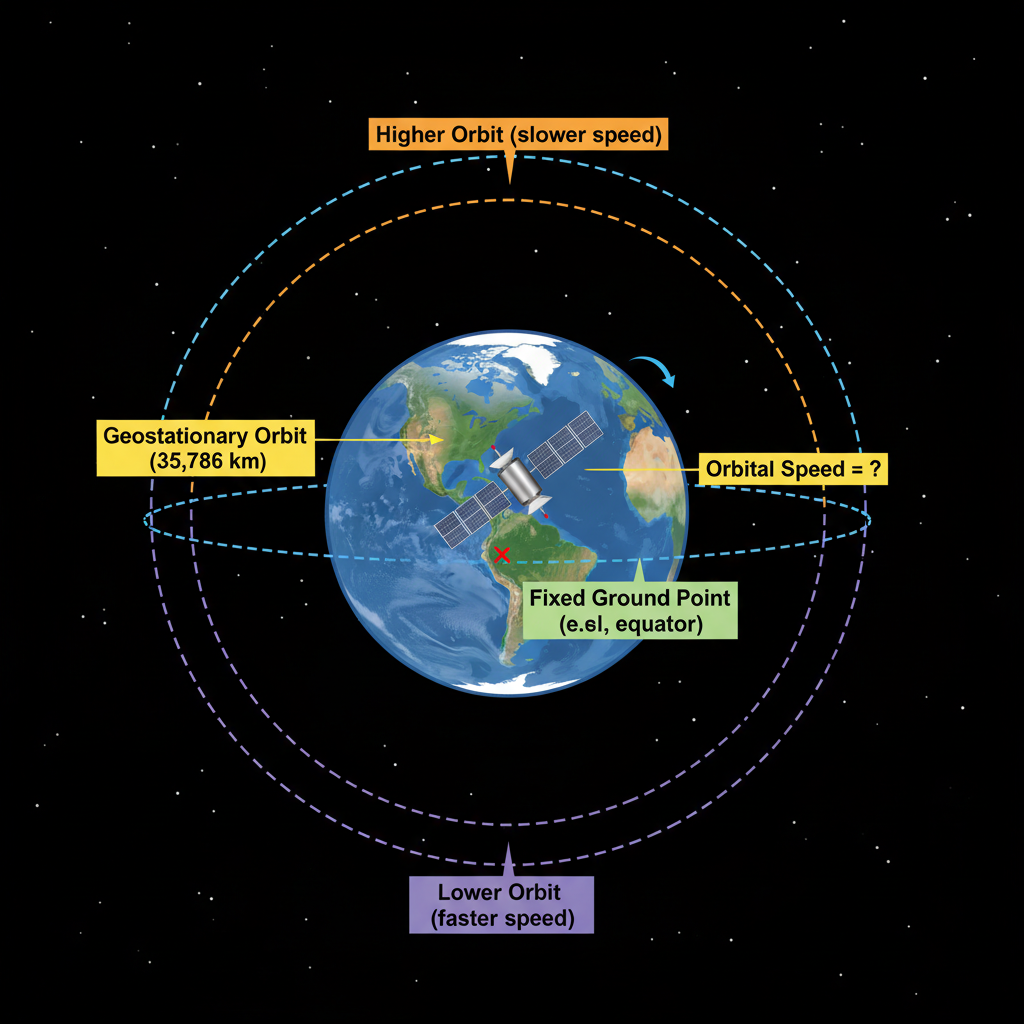
A communications satellite is designed to orbit Earth at exactly the right speed to remain above the same point on the ground at all times.
Describe one real-world consequence for users if the satellite's orbital speed is too slow or too fast. [2]
Describe one real-world consequence for users if the satellite's orbital speed is too slow or too fast. [2]
Solutions
3QuestionMovements of Planets Around the SunAssessment Practice
6 marks~9 minCriterion B
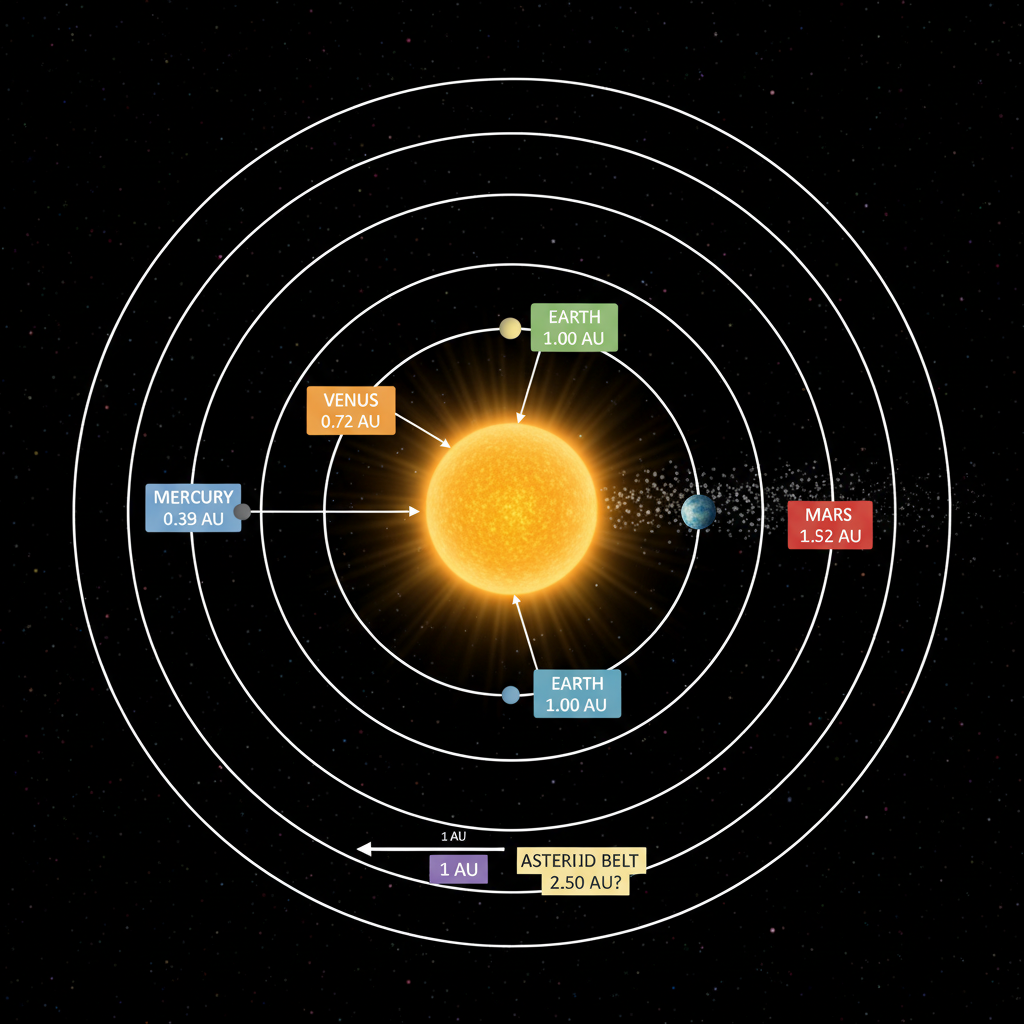
The table shows the average distance from the Sun and the orbital period for four planets.
| Planet | Distance (AU) | Orbital Period (years) |
|---|---|---|
| Mercury | 0.39 | 0.24 |
| Venus | 0.72 | 0.61 |
| Earth | 1.00 | 1.00 |
| Mars | 1.52 | 1.88 |
a
Describe the relationship between a planet's distance from the Sun and its orbital period. [1]
b
A student claims the relationship is not simply proportional. Calculate and for Mercury and Mars, and explain what these values reveal about the relationship. [3]
c
An asteroid has an average distance of 2.50 AU from the Sun. Use the relationship you identified to predict its orbital period. Show your working. [2]
Solutions
4QuestionAsteroids Comets and MeteoroidsAssessment Practice
7 marks~11 minCriterion C
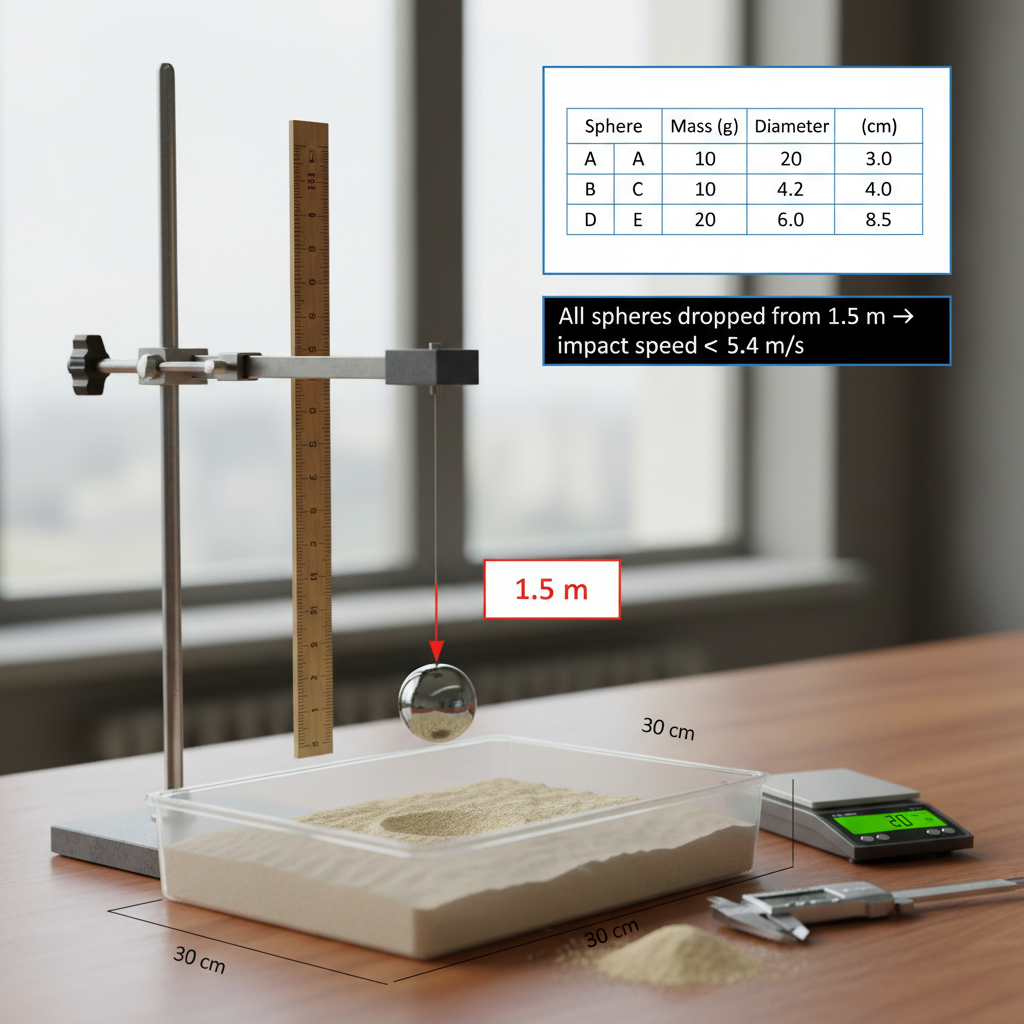
A student simulated asteroid impacts by dropping spheres into a tray of sand from a height of 1.5 m, producing an impact speed of approximately 5.4 m/s. Crater diameter was measured for each sphere.
| Sphere | A | B | C | D | E |
|---|---|---|---|---|---|
| Mass (g) | 10 | 20 | 10 | 20 | 40 |
| Crater diameter (cm) | 3.0 | 4.2 | 4.2 | 6.0 | 8.5 |
a
Identify which two spheres have the same kinetic energy. Explain your reasoning. [2]
b
Describe the relationship between sphere mass and crater diameter shown in the data. [2]
c
Sphere F has a mass of 30 g and is dropped from the same height. Analyse the data to predict the crater diameter Sphere F would produce. [3]
Solutions
That's every free question here — 4 of 66.
+62 more questions, plus Mock Papers & Worksheets, are waiting in Premium.