You're viewing free preview questions — 4 questions previewing here — subscribe to unlock 75 more, plus the Full Question Bank, Mock Papers & Worksheets.Upgrade
Weathering and Erosion — Free MYP3 Sciences Practice Questions

1QuestionDefinition and Types of WeatheringConcept Practice
2 marks~3 minCriterion A
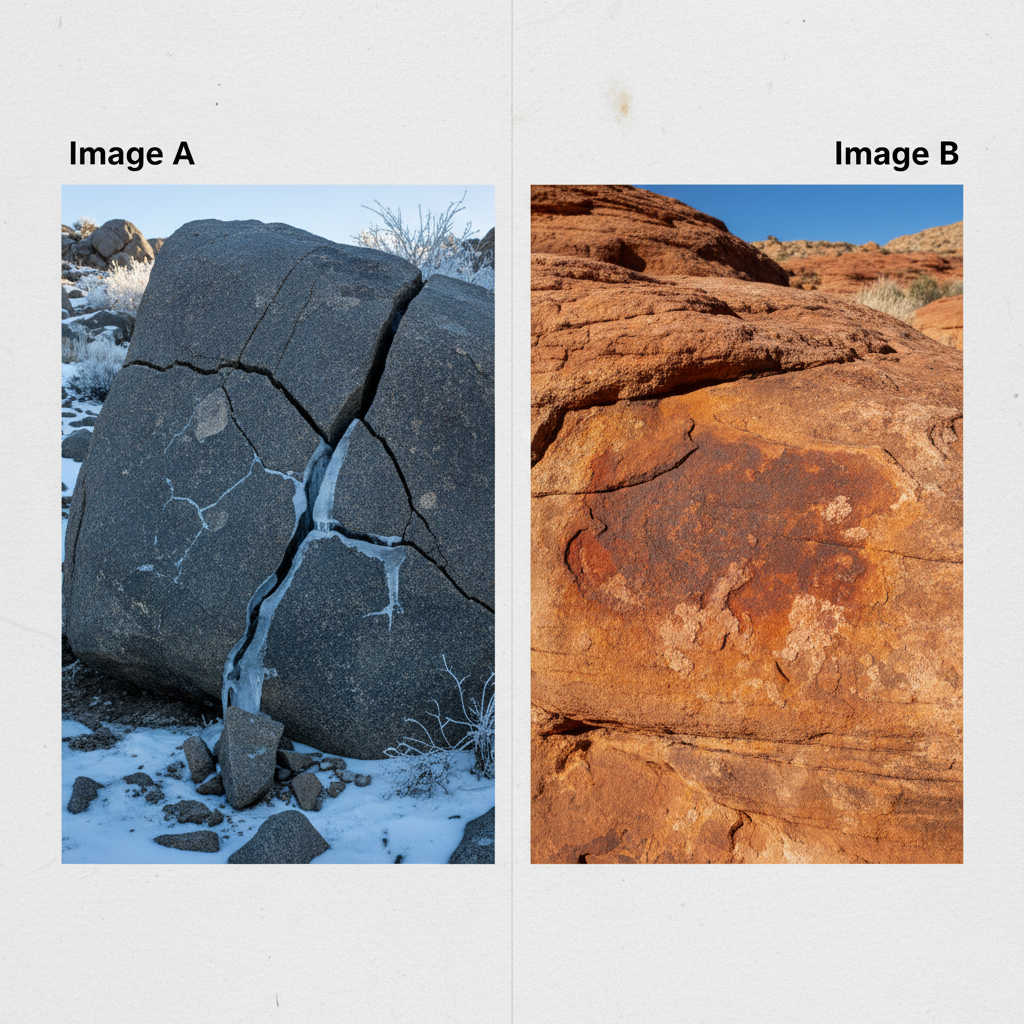
The diagram shows two examples of weathering.
Image A: a rock with large cracks caused by water repeatedly freezing and thawing inside the rock.
Image B: a rock with a reddish-brown surface caused by iron in the rock reacting with oxygen.
Identify the type of weathering shown in each image — mechanical weathering or chemical weathering.
Image A: [type] Image B: [type] [2]
Image A: a rock with large cracks caused by water repeatedly freezing and thawing inside the rock.
Image B: a rock with a reddish-brown surface caused by iron in the rock reacting with oxygen.
Identify the type of weathering shown in each image — mechanical weathering or chemical weathering.
Image A: [type] Image B: [type] [2]

Solutions
2QuestionProcesses of Erosion by Wind Water IceAssessment Practice
5 marks~8 minCriterion C
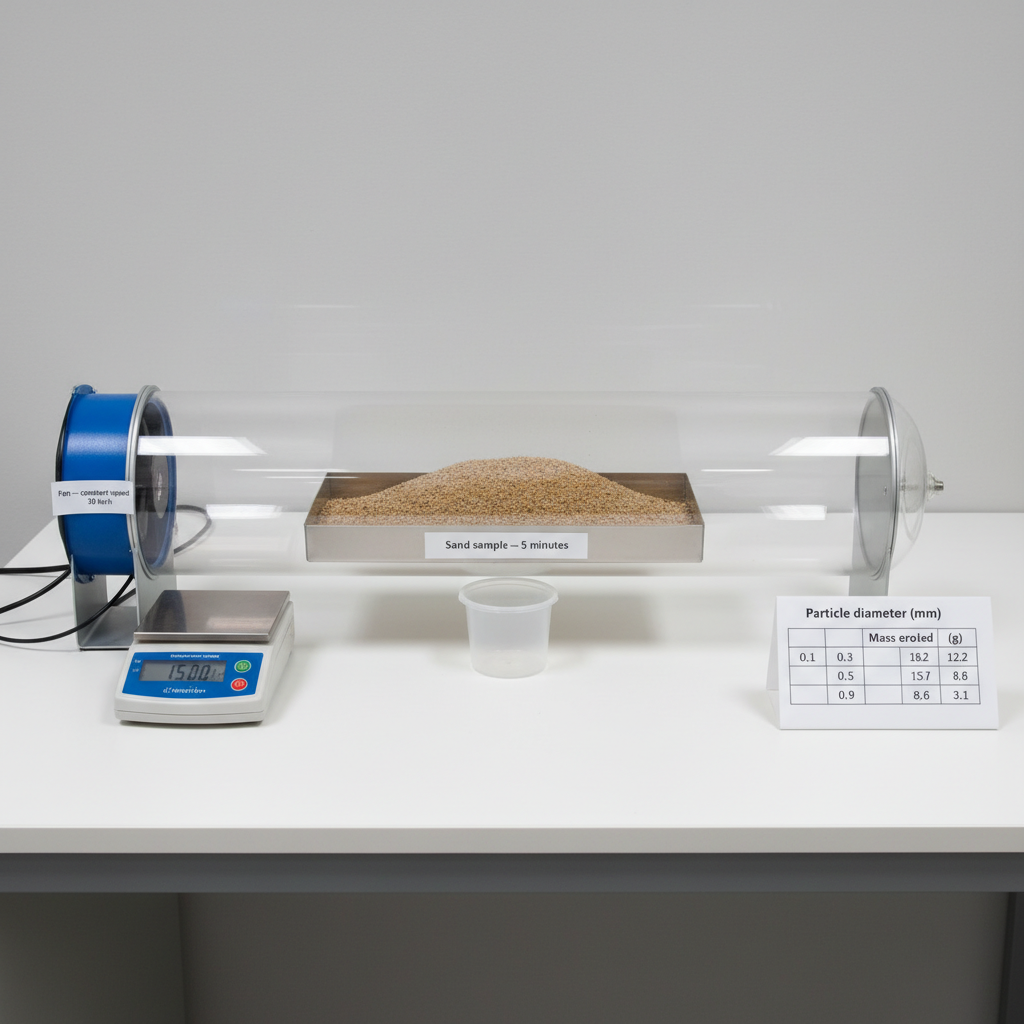
A wind tunnel experiment tests how particle size affects wind erosion. Air is blown at over sand samples for minutes each. The results are recorded below.
A student claims: "Wind erosion is always strongest on the smallest particles."
| Particle diameter (mm) | |||||
|---|---|---|---|---|---|
| Mass eroded (g) |
A student claims: "Wind erosion is always strongest on the smallest particles."
a
Describe the overall trend shown by the data. [1]
b
Explain why the data contradict the student's claim. [2]
c
Analyse whether the experimental data are sufficient to fully support or refute the student's claim. [2]
Solutions
3QuestionDefinition and Types of WeatheringConcept Practice
2 marks~3 minCriterion B
A student investigates how rock size affects the rate of weathering. Three rocks — large, medium, and small — are each placed in separate containers with the same volume of water and shaken for the same duration. The mass of each rock is measured before and after shaking.
a
Identify the independent variable in this investigation. [1]
b
Identify one controlled variable and explain why keeping it the same is important for this investigation. [1]
Solutions
4QuestionDefinition and Types of WeatheringAssessment Practice
6 marks~9 minCriterion D
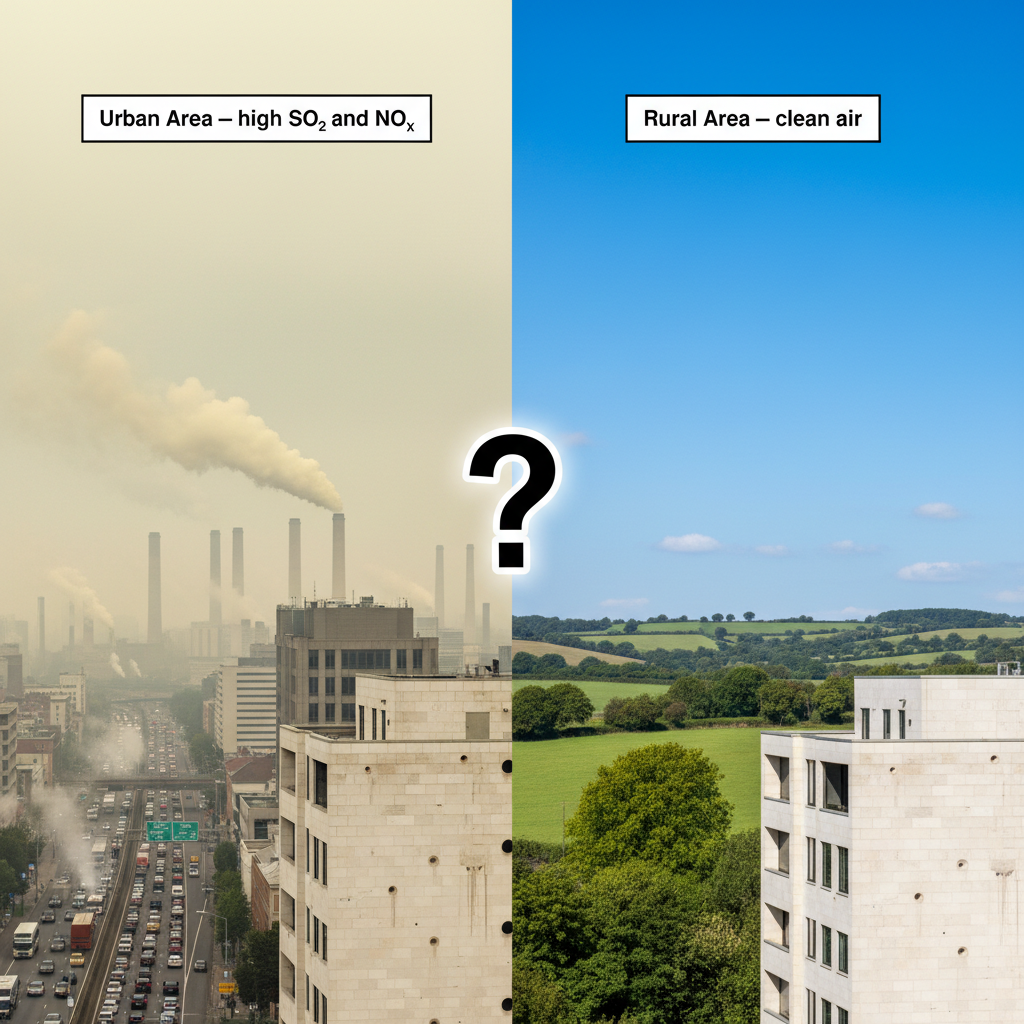
A city council is choosing between two sites for a new limestone building: an urban area with high levels of sulfur dioxide () and nitrogen oxides () in the air, and a rural area with clean air.
a
Describe what chemical weathering is and identify which location would cause it to occur faster. [2]
b
Explain how and in the urban atmosphere lead to faster chemical weathering of limestone (). [2]
c
Analyse two reasons why it is difficult to predict how much weathering the limestone building will experience over 50 years. [2]
Solutions
That's every free question here — 4 of 79.
+75 more questions, plus Mock Papers & Worksheets, are waiting in Premium.