You're viewing free preview questions — 4 questions previewing here — subscribe to unlock 74 more, plus the Full Question Bank, Mock Papers & Worksheets.Upgrade
Energy Efficiency and Real-Life Use — Free MYP3 Sciences Practice Questions

1QuestionCalculating Efficiency PercentConcept Practice
2 marks~3 minCriterion A
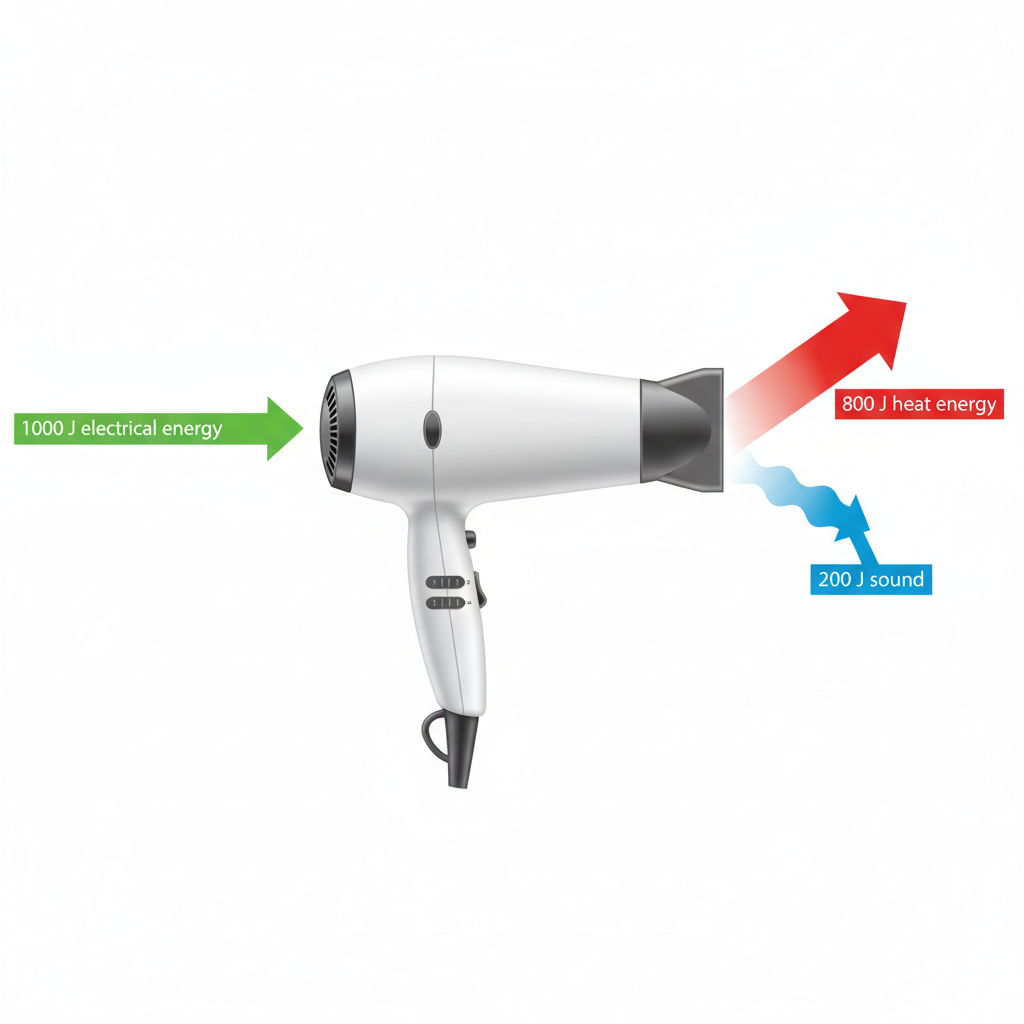
A hair dryer receives of electrical energy. It produces of heat energy and of sound energy.
Using the terms input energy, useful output, and wasted energy, describe how electrical energy is transformed as it passes through the hair dryer. [2]
Using the terms input energy, useful output, and wasted energy, describe how electrical energy is transformed as it passes through the hair dryer. [2]

Solutions
2QuestionCalculating Efficiency PercentAssessment Practice
3 marks~5 minCriterion C
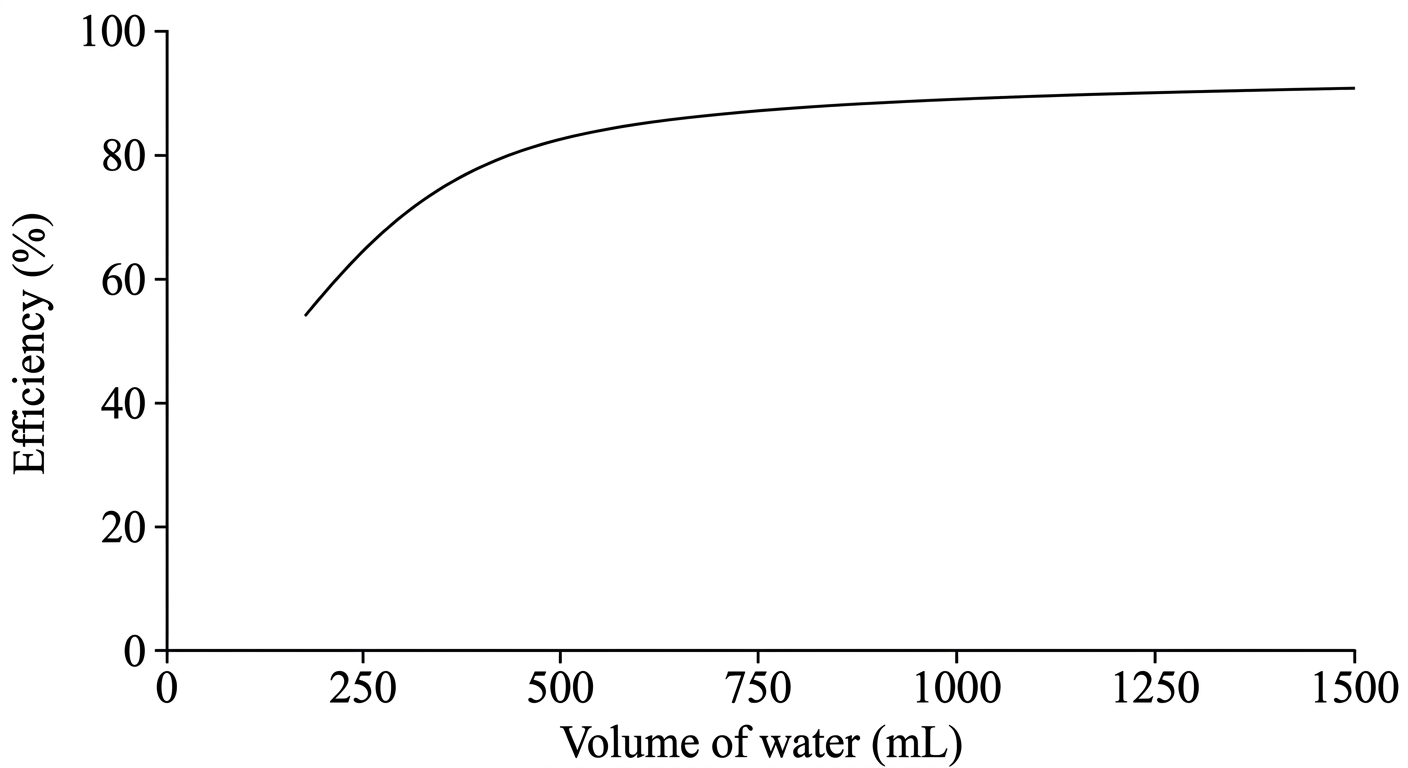
The graph below shows how the efficiency of an electric kettle changes as the volume of water inside it increases.
a
Describe the trend shown in the graph. [1]
b
Explain why efficiency is lower when the volume of water is small. Use the concept of heat loss to the surroundings in your answer. [1]
c
The graph shows that efficiency levels off at large volumes. Analyse why increasing the volume further produces little additional change in efficiency. [1]
Solutions
3QuestionCalculating Efficiency PercentAssessment Practice
6 marks~9 minCriterion B
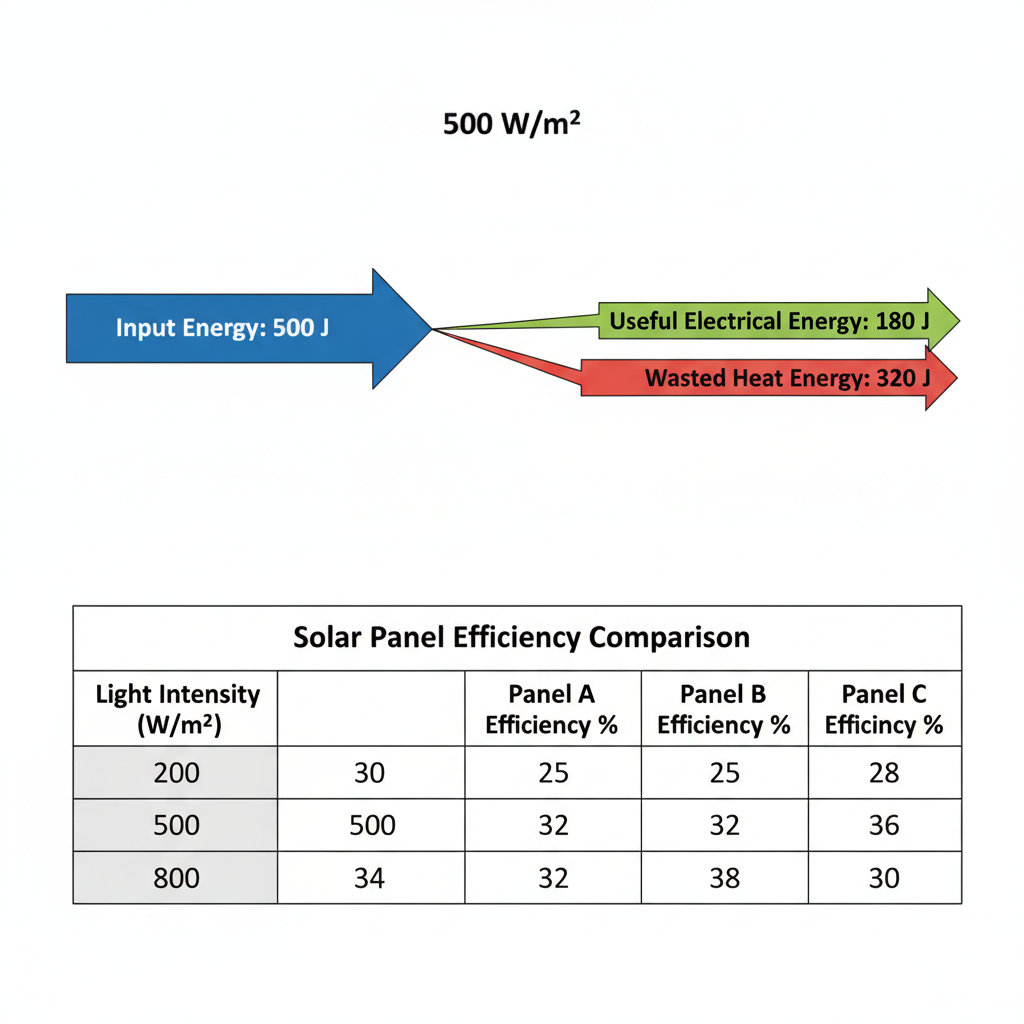
A solar panel receives of light energy and produces of useful electrical energy. The remaining energy is lost as heat.
The table below shows the efficiency of three solar panels at different light intensities.
The table below shows the efficiency of three solar panels at different light intensities.
| Light intensity () | 200 | 500 | 800 |
|---|---|---|---|
| Panel A efficiency (\%) | 30 | 36 | 34 |
| Panel B efficiency (\%) | 25 | 32 | 38 |
| Panel C efficiency (\%) | 28 | 36 | 30 |
a
Calculate the efficiency of the solar panel described above. [2]
b
Calculate the average efficiency of all three panels at each light intensity and identify which light intensity gives the highest average efficiency. [2]
c
Analyse the data in the table to describe the relationship between light intensity and solar panel efficiency. [2]
Solutions
4QuestionCalculating Efficiency PercentAssessment Practice
8 marks~12 minCriterion D
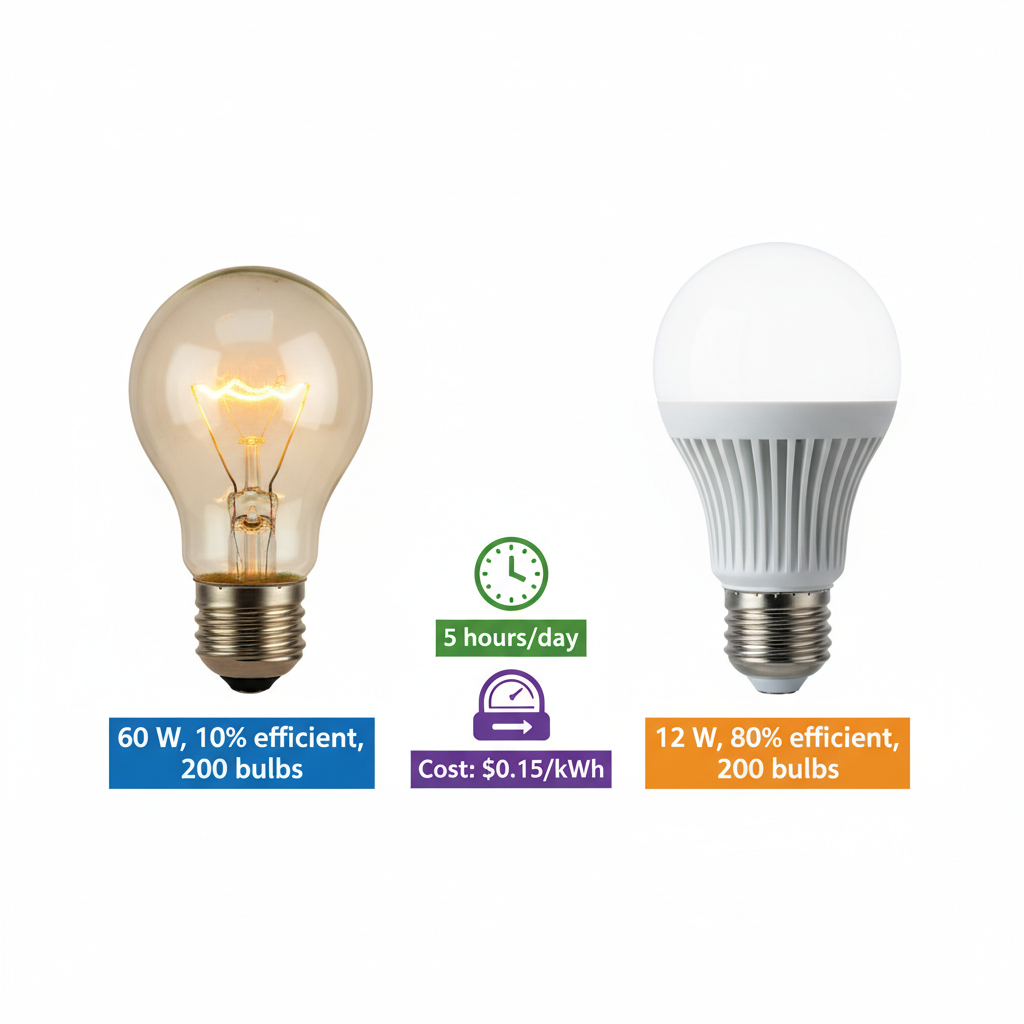
A school is replacing 200 old bulbs (each 60 W, 10% efficient) with 200 LED bulbs (each 12 W, 80% efficient). The bulbs operate for 5 hours each day. Electricity costs 0.15 USD per kilowatt-hour (kWh).
a
Calculate the useful power output of one old bulb and one LED bulb. [2]
b
Calculate the daily electricity cost of running all 200 old bulbs and all 200 LED bulbs. [3]
c
A student claims: "The LED bulbs are the better choice because they are more efficient." Using the data above and one factor beyond efficiency, analyse whether this claim is fully supported. [3]
Solutions
That's every free question here — 4 of 78.
+74 more questions, plus Mock Papers & Worksheets, are waiting in Premium.