You're viewing free preview questions — 4 questions previewing here — subscribe to unlock 77 more, plus the Full Question Bank, Mock Papers & Worksheets.Upgrade
Forms of Energy — Free MYP3 Sciences Practice Questions

1QuestionDefinition and Examples of Different Energy TypesConcept Practice
2 marks~3 minCriterion A
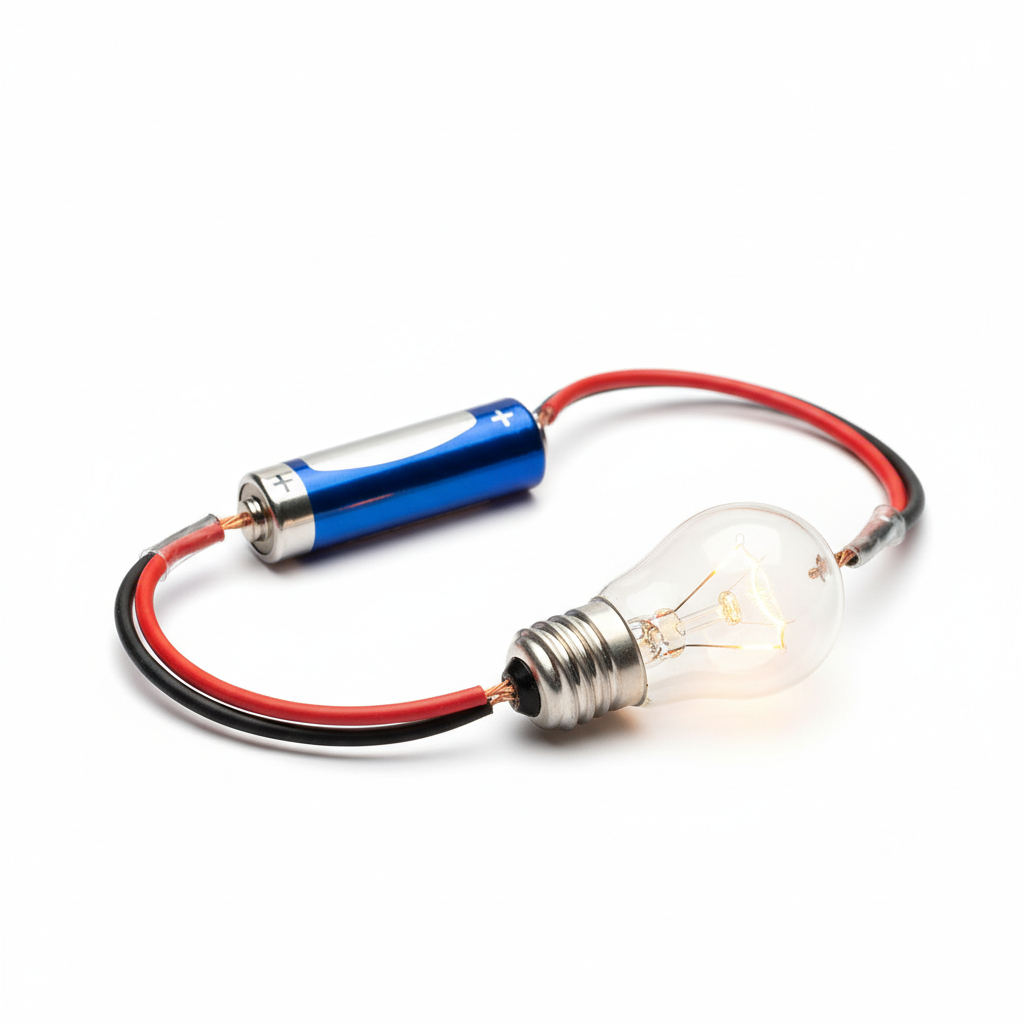
The diagram below shows a battery connected to a lit light bulb.
Identify the energy type stored in the battery. [1]
Explain the energy conversion that occurs when the circuit is switched on. [1]
Identify the energy type stored in the battery. [1]
Explain the energy conversion that occurs when the circuit is switched on. [1]

Solutions
2QuestionEnergy in Daily Life ApplicationsAssessment Practice
6 marks~9 minCriterion C
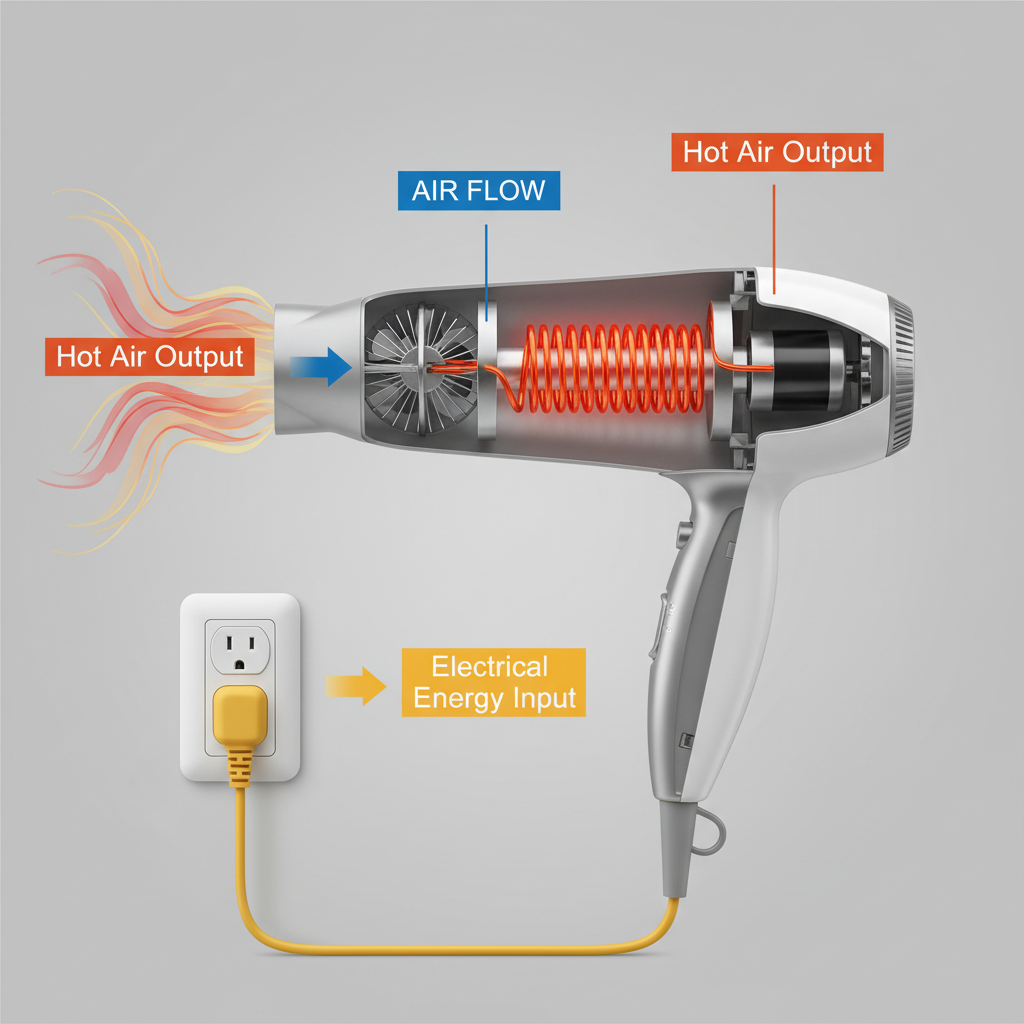
A hair dryer draws 1200 W from a wall socket. Its heating element warms the air, and its motor drives a fan to blow that air outward. Of the total electrical energy input, 75% is converted to thermal energy and 20% to kinetic energy.
a
Identify the form of energy that enters the hair dryer. [1]
b
Explain how the hair dryer converts electrical energy into two different output forms. [3]
c
A student claims the hair dryer converts 100% of its electrical energy into useful output. Using the percentages given, analyse whether this claim is correct. [2]
Solutions
3QuestionKinetic and Potential EnergyConcept Practice
3 marks~5 minCriterion B
A bowling ball rolls along a lane at a constant speed of . The kinetic energy of balls with different masses is shown below.
Use .
| Mass (kg) | 4 | 5 | 6 | 7 |
|---|---|---|---|---|
| Kinetic energy (J) | 50 | 62.5 | 75 | 87.5 |
Use .
a
Calculate the kinetic energy of a bowling ball of mass travelling at . [1]
b
Explain why kinetic energy increases as mass increases, even though speed stays the same. [1]
c
Analyse the data in the table. Describe the relationship between mass and kinetic energy, and use numerical evidence to support your answer. [1]
Solutions
4QuestionDefinition and Examples of Different Energy TypesAssessment Practice
12 marks~18 minCriterion D
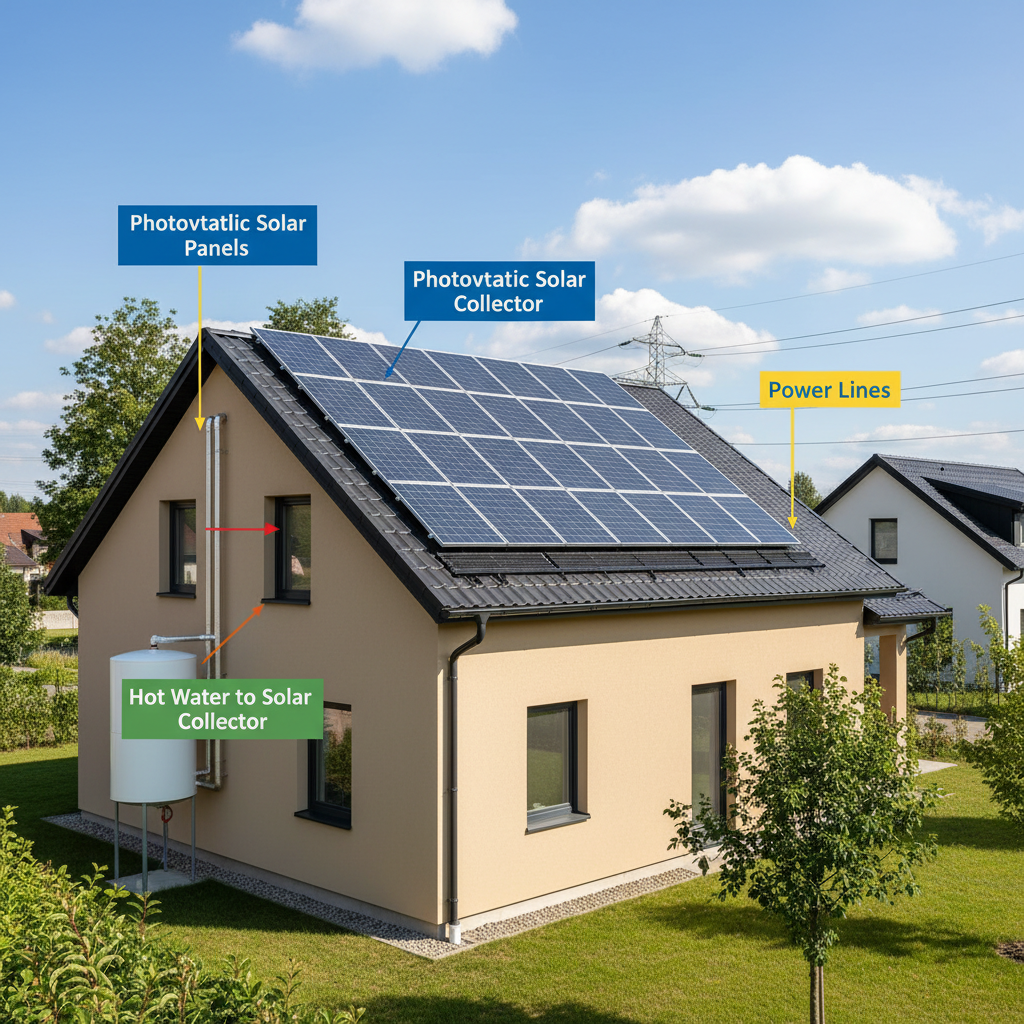
A family is considering installing solar panels on their roof to heat water. They live in a location where sunlight hours vary significantly across the year. In summer, the panels receive an average of 8 hours of sunlight per day; in winter, only 2 hours per day. The family requires hot water every day of the year.
a
Identify one advantage of using solar panels to heat water. [1]
b
Explain two limitations of using solar panels for this family's hot water supply, given the variation in sunlight hours. [4]
c
The family is considering adding an insulated storage tank and a gas-powered backup heater to their system. Analyse how these two additions would work together to provide a reliable hot water supply throughout the year. [7]
Solutions
That's every free question here — 4 of 81.
+77 more questions, plus Mock Papers & Worksheets, are waiting in Premium.