You're viewing free preview questions — 6 questions previewing here — subscribe to unlock 68 more, plus the Full Question Bank, Mock Papers & Worksheets.Upgrade
Back

Heat transfer: conduction, convection and radiation — Free MYP3 Sciences Practice Questions

Free questions

Open in full, with answers, mark scheme and examiner insights.

Question 1Criterion A · Easy · 2 marksrevisionprep.com

Definition and examples of conduction

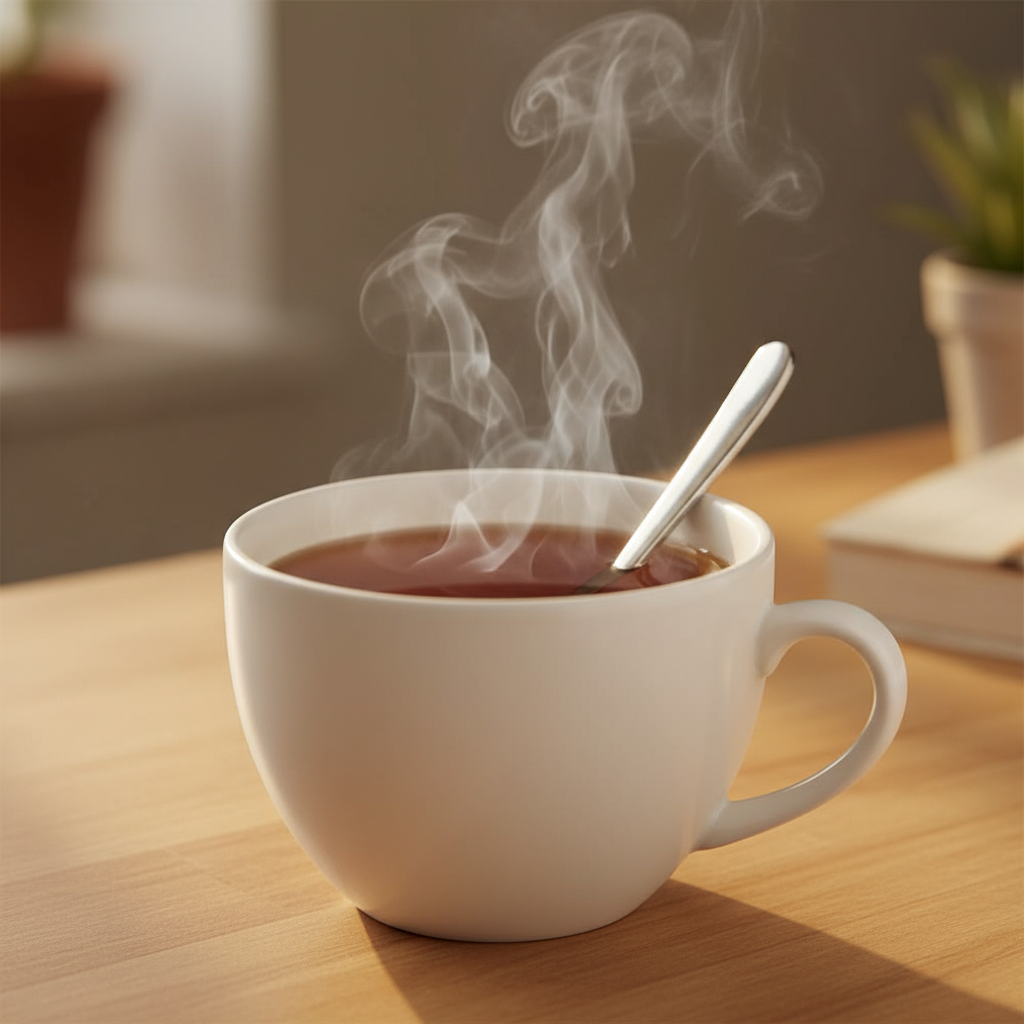
A metal spoon stands in a hot cup of tea, as shown in the photo. The lower part of the spoon is in the tea and the handle is above the rim.
Question diagram
(a)
Identify the part of the spoon where heat energy first enters the spoon. [1]
(b)
Explain, using particles, why this part of the spoon gets hot. [1]

revisionprep.com

Summary Answer

Not available for this question.

Model Answer

Not available for this question.

Marking Scheme

Not available for this question.

Examiner Insights

Not available for this question.

Question 2Criterion A · Easy · 2 marksrevisionprep.com

Comparing the three modes of heat transfer
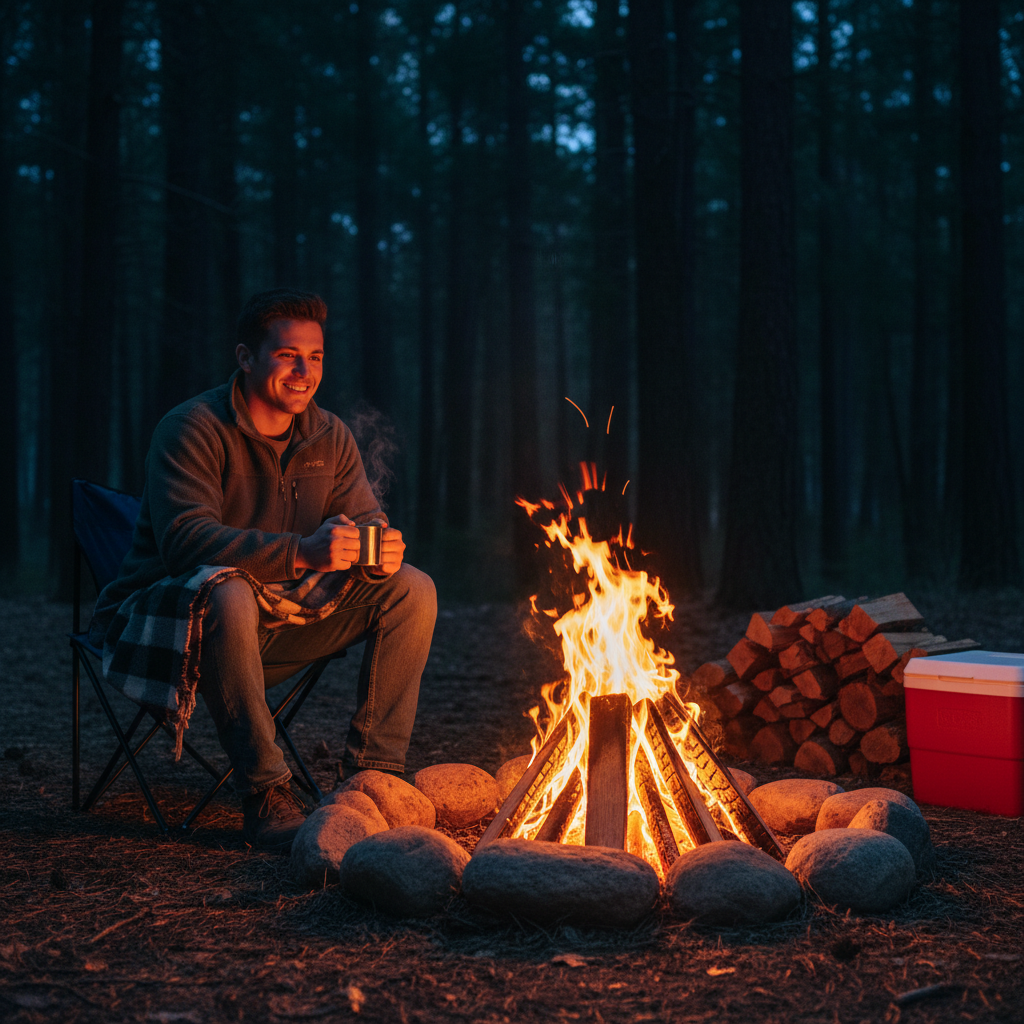
A person sits near a campfire on a still evening, as in the photo. He is not touching the fire.
Question diagram
(a)
Identify the method of heat transfer that lets him feel the fire's warmth. [1]
(b)
Explain how the energy gets from the fire to him. [1]

revisionprep.com

Summary Answer

Not available for this question.

Model Answer

Not available for this question.

Marking Scheme

Not available for this question.

Examiner Insights

Not available for this question.

Question 3Criterion D + C · Medium · 7 marksrevisionprep.com

Definition and examples of conduction

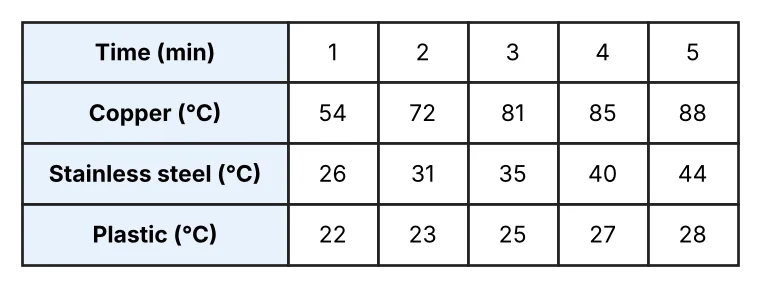
A company is choosing a material for the handle of a saucepan. A rod of each material has one end in water at 100 °C. The table shows the temperature at the other end. These are example results. A handle is unsafe to hold above about 50 °C.
Question diagram
(a)
Describe the pattern in the data for the three materials. [2]
(b)
Explain why a plastic handle stays cooler than a copper handle. [2]
(c)
Decide which materials are safe after 5 minutes and give one disadvantage of the safest choice. [3]

revisionprep.com

Summary Answer

Not available for this question.

Model Answer

Not available for this question.

Marking Scheme

Not available for this question.

Examiner Insights

Not available for this question.

Question 4Criterion B + C · Medium · 8 marksrevisionprep.com

Definition and examples of radiation

A student wants to find out how the colour of a container affects how much radiation it absorbs. She has four identical metal containers painted black, white, silver and red, a heat lamp and thermometers. Her example results for the temperature rise after 10 minutes are shown.

Black: 25 °C, Red: 18 °C, White: 10 °C, Silver: 6 °C
(a)
State a hypothesis for this investigation. [1]
(b)
Describe how she should carry out a fair test. [4]
(c)
Analyse the results and explain what they show about surface and absorption. [3]

revisionprep.com

Summary Answer

Not available for this question.

Model Answer

Not available for this question.

Marking Scheme

Not available for this question.

Examiner Insights

Not available for this question.

Question 5Criterion C · Challenge · 6 marksrevisionprep.com

Definition and examples of convection

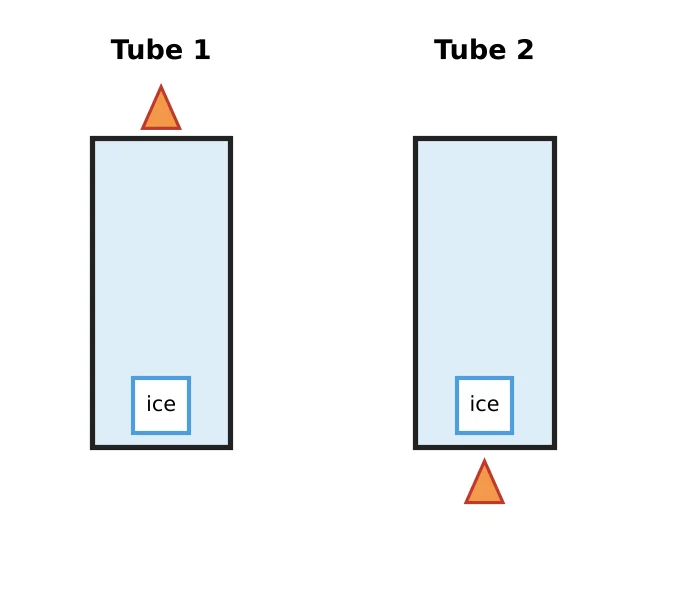
Two tubes of water each hold a small piece of ice kept at the bottom by a wire mesh. Tube 1 is heated at the top. Tube 2 is heated at the bottom, as shown. Example results: in tube 1 the water at the top boiled after 3 minutes and the ice was still there. In tube 2 the ice melted in 1 minute and the water was warm all through.
Question diagram
(a)
Explain why the ice in tube 2 melted so quickly. [2]
(b)
Explain why the ice in tube 1 stayed frozen even though the top water boiled. [2]
(c)
State one prediction about tube 1 if the water were stirred, and explain it. [2]

revisionprep.com

Summary Answer

Not available for this question.

Model Answer

Not available for this question.

Marking Scheme

Not available for this question.

Examiner Insights

Not available for this question.

Question 6Criterion A + C · Challenge · 10 marksrevisionprep.com

Real-life applications of heat transfer
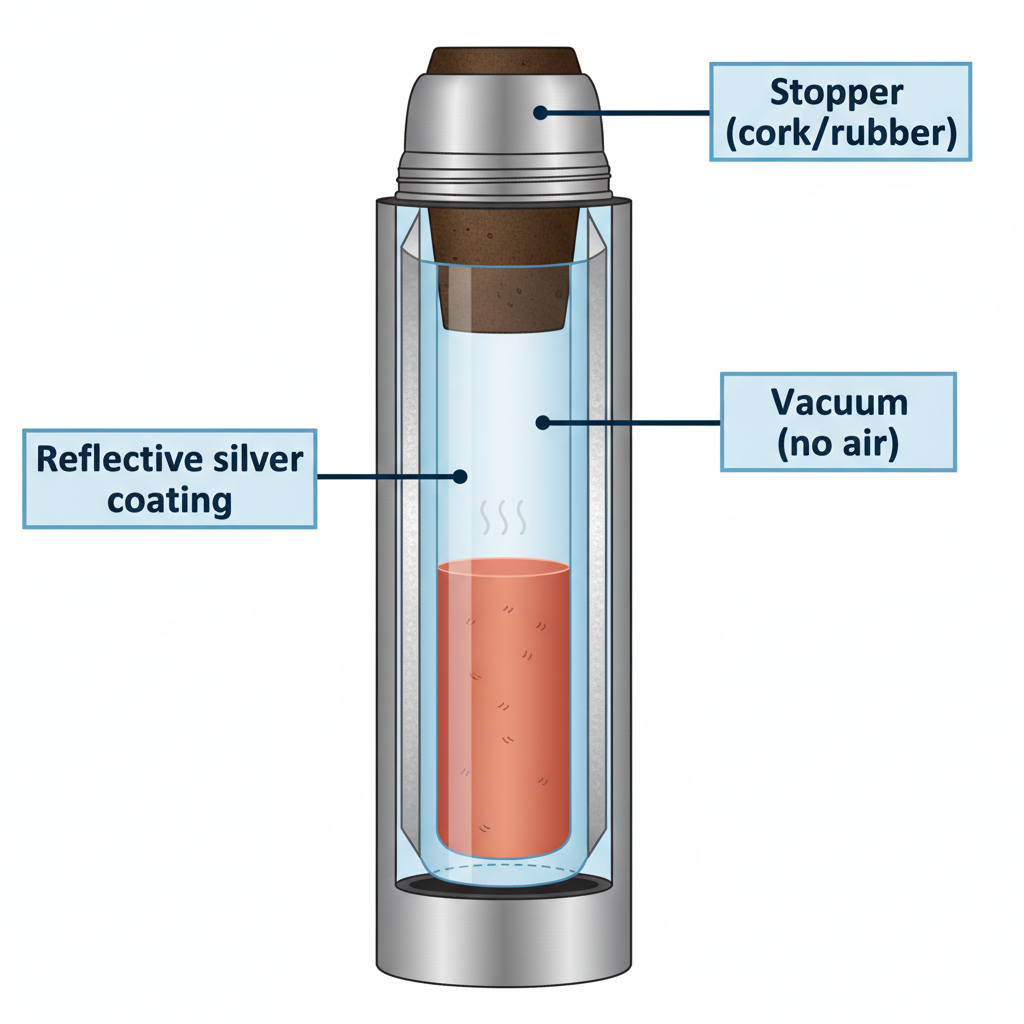
A thermos flask has double glass walls, a vacuum between them, shiny silver coating on the inside surfaces and a stopper (see the diagram). A student tests two flasks. They are identical except for the stopper: Flask A has a cork stopper and Flask B has a foam filled stopper. Both start with water at 80 °C. After 6 hours Flask A holds water at 54 °C and Flask B holds water at 62 °C (example data).
Question diagram
(a)
Describe how the vacuum and the shiny coating each reduce a different type of heat transfer. [2]
(b)
Explain why a thermos flask cannot stop heat loss completely. Refer to two parts. [2]
(c)
Calculate the temperature drop for each flask. [2]
(d)
Calculate the average rate of temperature drop in °C per hour for each flask. [2]

(e) Use the results to explain what the data show about the stopper, and give one limitation. [2]

revisionprep.com

Summary Answer

Not available for this question.

Model Answer

Not available for this question.

Marking Scheme

Not available for this question.

Examiner Insights

Not available for this question.

That's every free question here — 6 of 74.

+68 more questions, plus Mock Papers & Worksheets, are waiting in Premium.

Upgrade