You're viewing free preview questions — 4 questions previewing here — subscribe to unlock 69 more, plus the Full Question Bank, Mock Papers & Worksheets.Upgrade
Balanced and Unbalanced Forces — Free MYP3 Sciences Practice Questions

1QuestionDefinition and Effects of Balanced ForcesConcept Practice
2 marks~3 minCriterion A
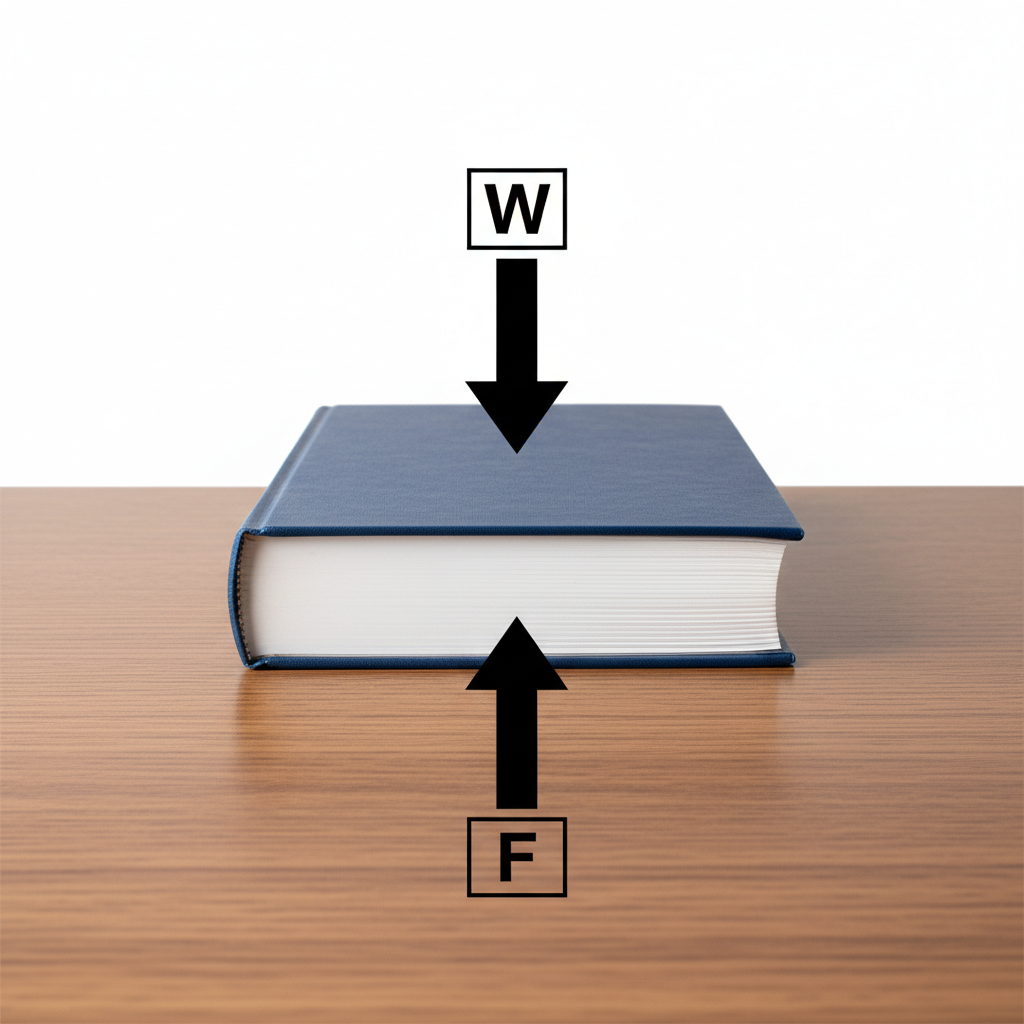
A book rests on a table. Its weight acts downward. A second force acts upward on the book, as shown in the diagram.
a
Identify the force . [1]
b
Explain how and together keep the book at rest. [1]

Solutions
2QuestionDefinition and Effects of Balanced ForcesAssessment Practice
4 marks~6 minCriterion D
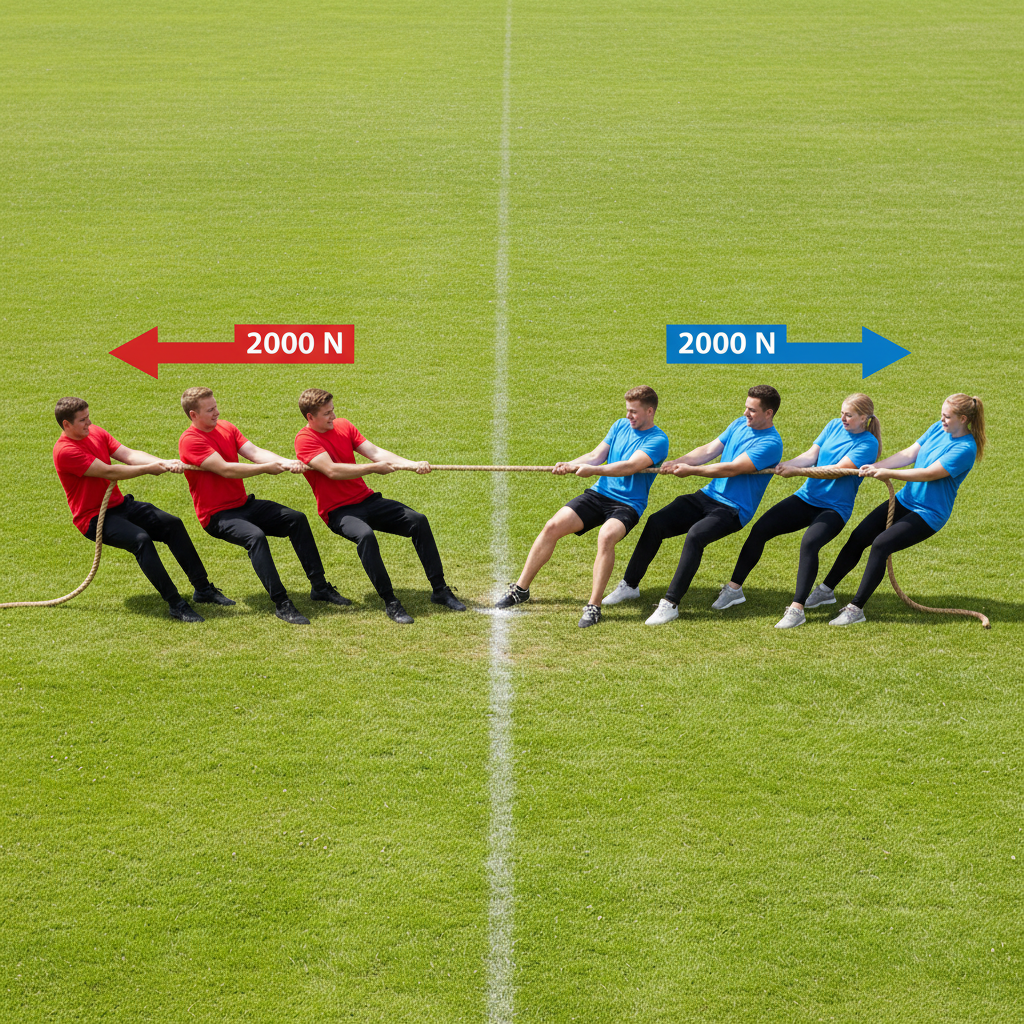
In a tug-of-war, Team A pulls a rope with a force of 2000 N to the left and Team B pulls with a force of 2000 N to the right. The rope remains stationary.
a
Apply the concept of balanced forces to explain why the rope does not move. [2]
b
Explain one limitation of using this scenario as a model of balanced forces. [2]
Solutions
3QuestionPredicting Motion with Force DiagramsAssessment Practice
4 marks~6 minCriterion C
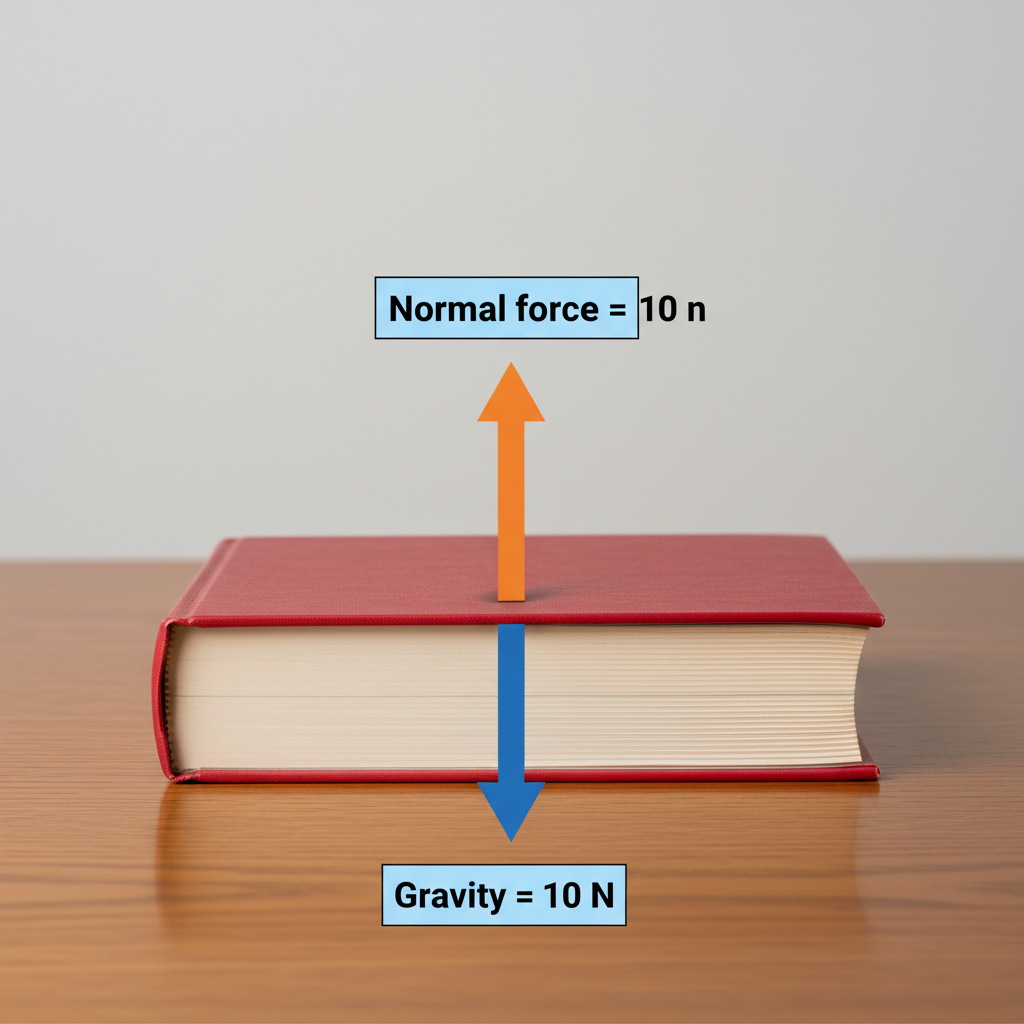
A book rests on a table. Two forces act on it: a gravitational force of downward and a normal force of upward.
a
State the two forces acting on the book and their directions. [1]
b
Explain why the book remains stationary, using the idea of balanced forces and net force. [2]
c
A second book is placed on top of the first. The normal force increases to but the gravitational force on the original book stays at . Analyse whether the forces on the original book are now balanced or unbalanced, and predict what this means for its motion. [1]
Solutions
4QuestionForce Arrows and Vector RepresentationAssessment Practice
6 marks~9 minCriterion B
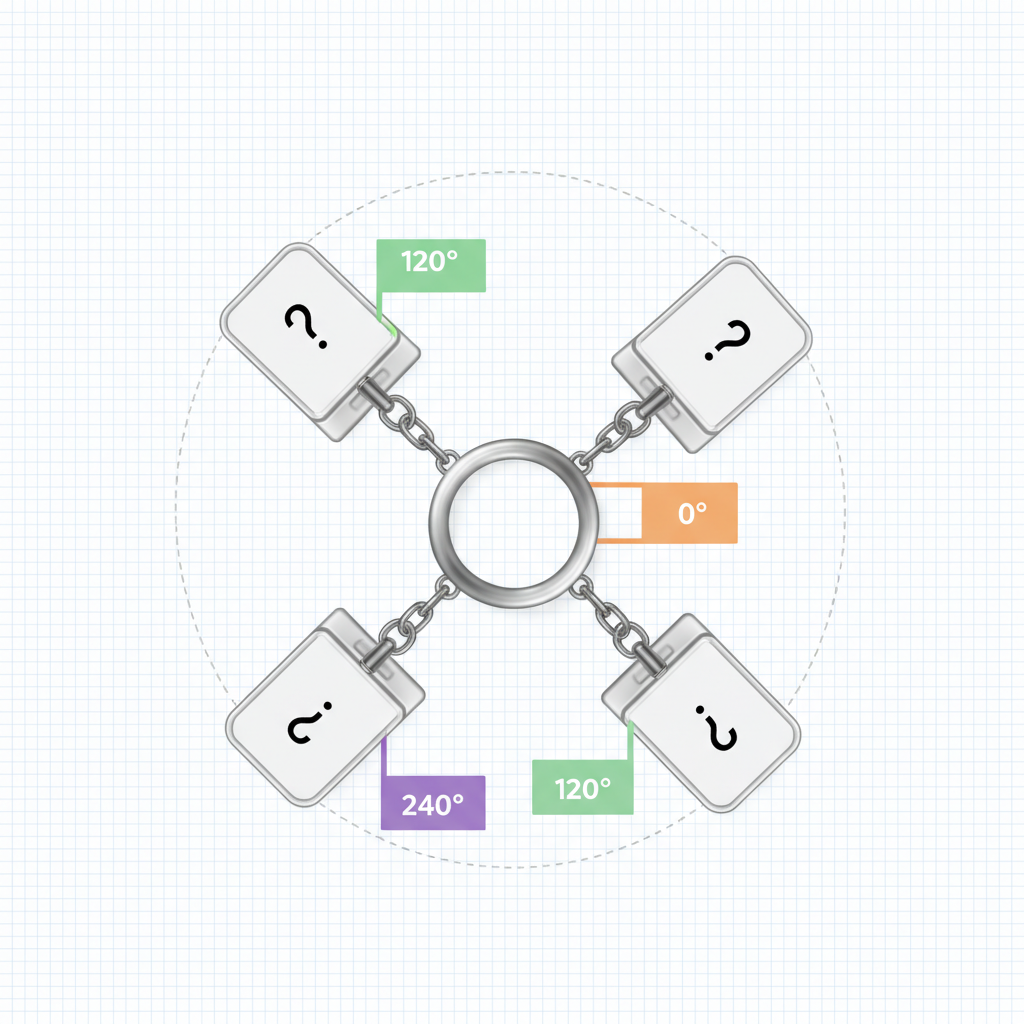
A student investigates forces acting on a metal ring using three spring scales. The table shows the forces applied in each trial and the resulting motion.
Trial 1: 2 N at 0°, 2 N at 120°, 2 N at 240° → ring stationary
Trial 2: 3 N at 0°, 2 N at 120°, 2 N at 240° → ring moves toward 0°
Trial 3: 4 N at 0°, 3 N at 120°, 1 N at 240° → ring moves toward 120°
A new trial applies forces of 5 N at 0°, 3 N at 120°, and 2 N at 240°.
Trial 1: 2 N at 0°, 2 N at 120°, 2 N at 240° → ring stationary
Trial 2: 3 N at 0°, 2 N at 120°, 2 N at 240° → ring moves toward 0°
Trial 3: 4 N at 0°, 3 N at 120°, 1 N at 240° → ring moves toward 120°
A new trial applies forces of 5 N at 0°, 3 N at 120°, and 2 N at 240°.
a
Draw a scaled vector diagram of the three forces using the scale 1 cm = 1 N. Add the vectors head-to-tail and draw the resultant. [2]
b
Calculate the magnitude and direction of the resultant force for the new trial. [2]
c
Using the pattern from the three trials, explain what motion you would expect the ring to show in the new trial and justify your prediction using your resultant. [2]
Solutions
That's every free question here — 4 of 73.
+69 more questions, plus Mock Papers & Worksheets, are waiting in Premium.