You're viewing free preview questions — 4 questions previewing here — subscribe to unlock 64 more, plus the Full Question Bank, Mock Papers & Worksheets.Upgrade
Color and the Electromagnetic Spectrum — Free MYP3 Sciences Practice Questions

1QuestionDispersion of Light Through a PrismConcept Practice
2 marks~3 minCriterion A
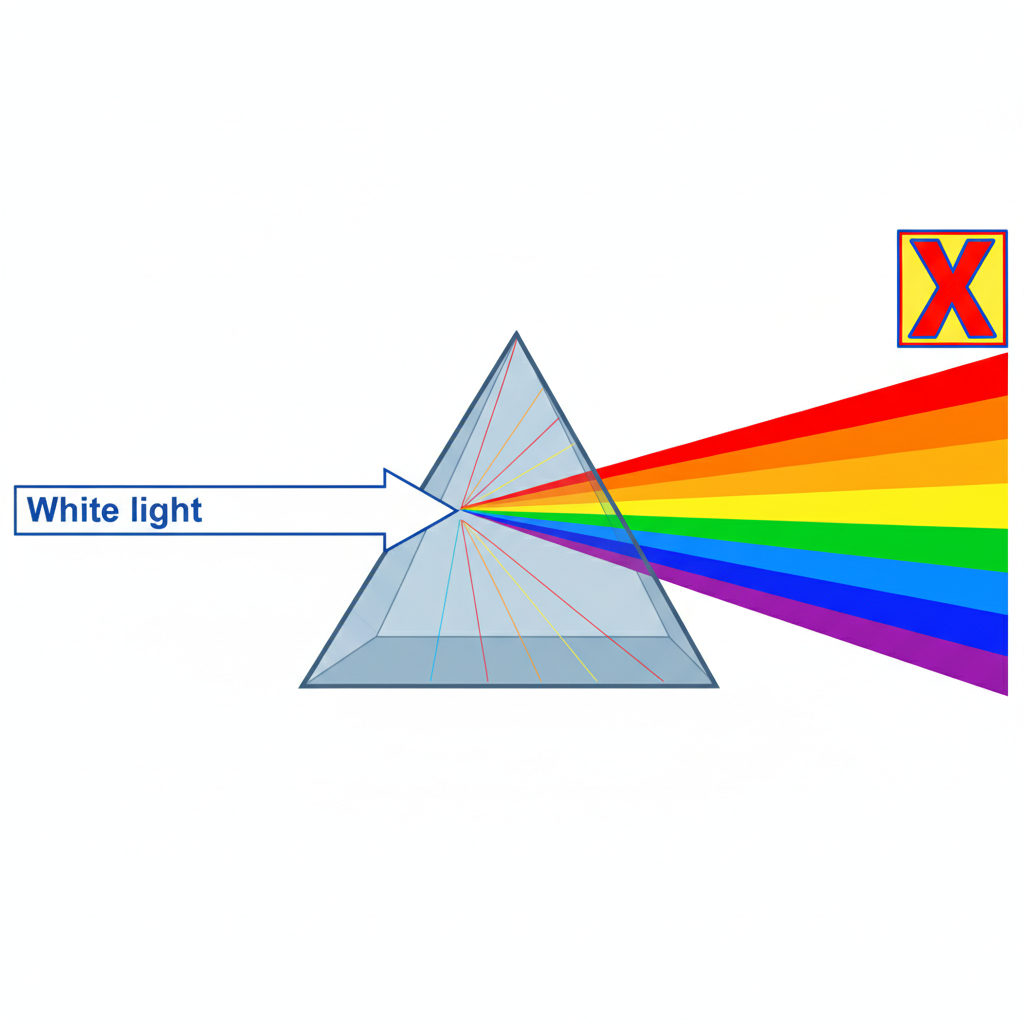
The diagram shows white light entering a glass prism and separating into a spectrum. The position marked is at the top of the dispersed beam.
a
Identify the color at position . [1]
b
Explain why that color appears at the top of the spectrum rather than at the bottom. [1]

Solutions
2QuestionOverview of the Electromagnetic SpectrumAssessment Practice
5 marks~8 minCriterion C
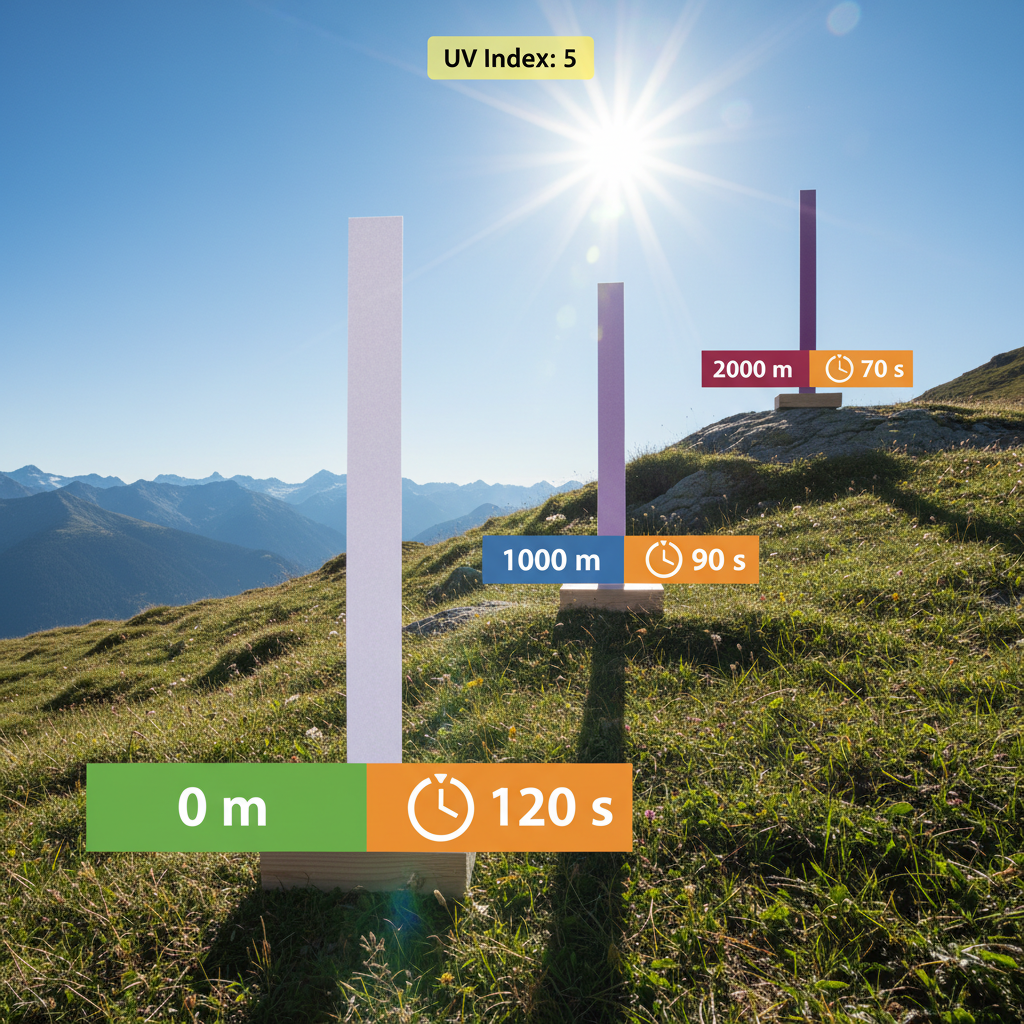
Students investigate how altitude affects UV intensity by measuring the time for UV-sensitive paper to change colour at three altitudes on a clear day (UV index 5).
The students claim: "UV intensity increases linearly with altitude."
| Altitude (m) | 0 | 1000 | 2000 |
|---|---|---|---|
| Time for colour change (s) | 120 | 90 | 70 |
The students claim: "UV intensity increases linearly with altitude."
a
Describe the relationship between time for colour change and UV intensity. [1]
b
Explain why shorter time for colour change is observed at higher altitudes. [2]
c
Analyse the data to evaluate whether the students' claim is valid. [2]
Solutions
3QuestionPrimary and Secondary Colors of LightAssessment Practice
6 marks~9 minCriterion D
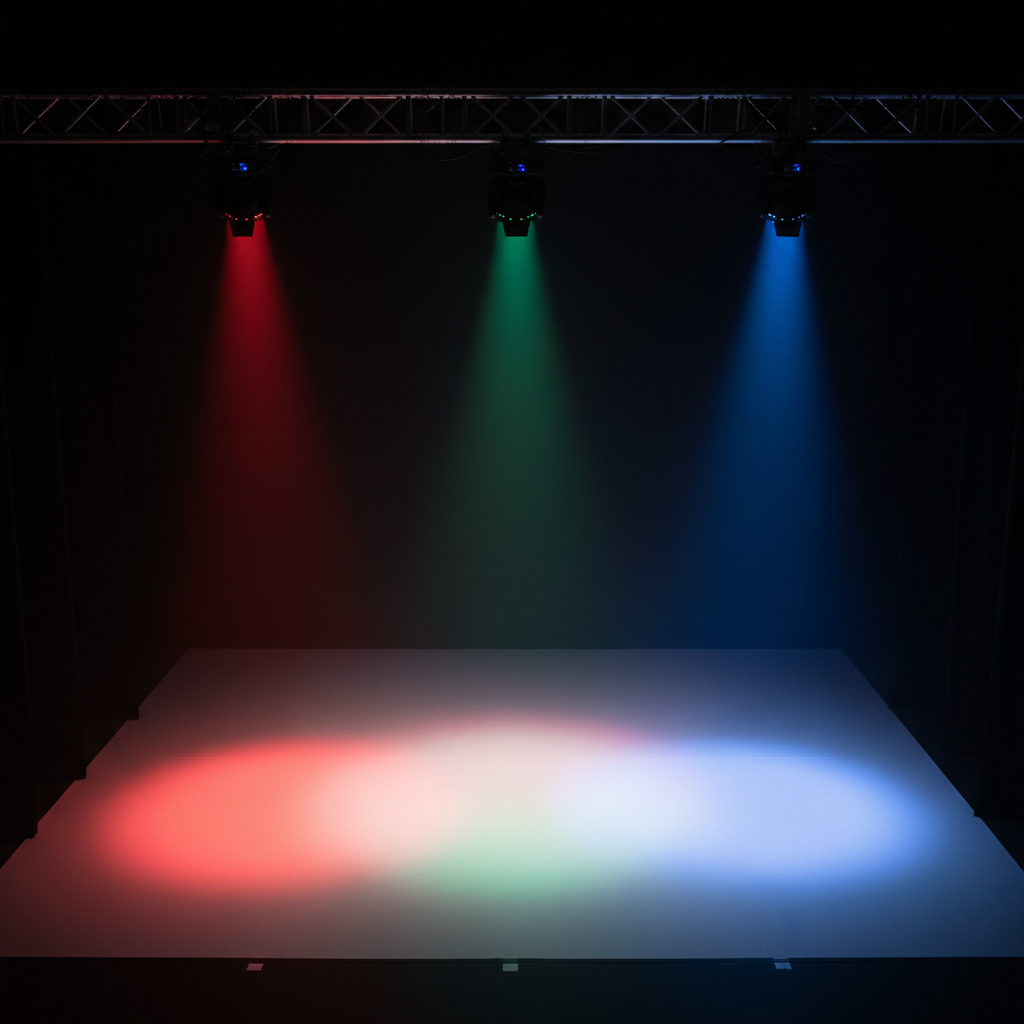
A theater technician aims three spotlights — red, green, and blue — at the same point on a stage to create white light. The resulting light appears pink instead of white.
a
Describe how red, green, and blue light combine to produce white light. [2]
b
Explain why the light on stage appears pink rather than white. [2]
c
A second technician suggests that additive color mixing with only three fixed primary colors cannot reproduce every color the human eye can see. Analyse how this limitation could affect color accuracy in a live performance. [2]
Solutions
4QuestionDispersion of Light Through a PrismAssessment Practice
6 marks~9 minCriterion B
A student shines white light through a triangular glass prism at different incident angles and measures the separation distance between red and violet light on a screen.
| Incident angle (°) | 30 | 40 | 50 | 60 | 70 |
|---|---|---|---|---|---|
| Separation distance (mm) | 2.1 | 3.8 | 6.0 | 8.7 | 11.9 |
a
Describe the pattern shown by the data. [2]
b
Predict the separation distance at an incident angle of 80°. Explain your reasoning using the data. [2]
c
Analyse why violet light and red light separate more as the incident angle increases. [2]
Solutions
That's every free question here — 4 of 68.
+64 more questions, plus Mock Papers & Worksheets, are waiting in Premium.