You're viewing free preview questions — 4 questions previewing here — subscribe to unlock 68 more, plus the Full Question Bank, Mock Papers & Worksheets.Upgrade
Uses of Light and Sound in Technology — Free MYP3 Sciences Practice Questions

1QuestionApplications of Light in Everyday LifeConcept Practice
2 marks~3 minCriterion A
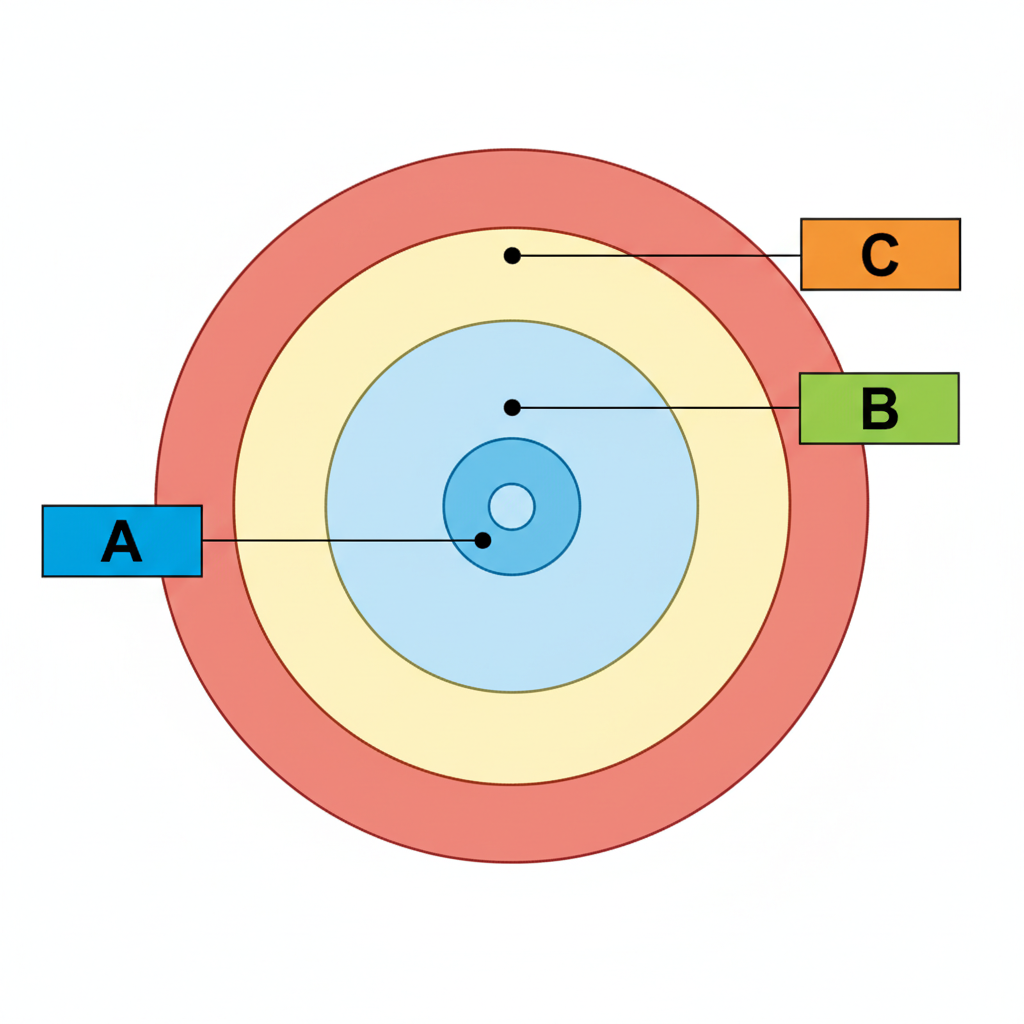
The diagram shows a cross-section of a fibre optic cable with three labelled parts: Part A (core), Part B (cladding), and Part C (outer coating).
a
Identify the part of the fibre optic cable responsible for keeping light contained within the cable. [1]
b
Explain how that part keeps light signals inside the core. [1]

Solutions
2QuestionUltrasound in Medicine and IndustryAssessment Practice
3 marks~5 minCriterion B
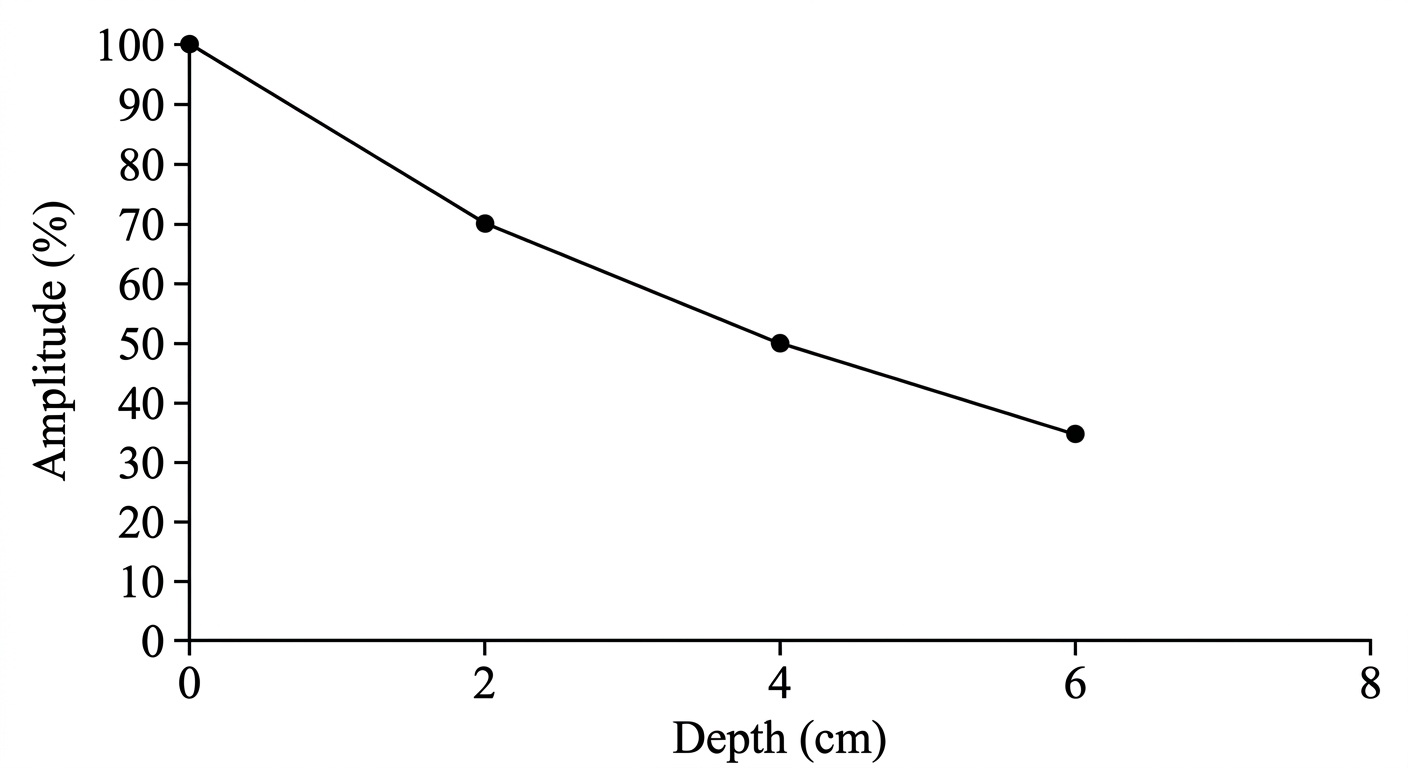
The graph below shows how the amplitude of an ultrasound pulse changes as it travels through muscle tissue.
| Depth (cm) | 0 | 2 | 4 | 6 |
|---|---|---|---|---|
| Amplitude (%) | 100 | 70 | 50 | 35 |
a
Describe the trend shown in the graph. [1]
b
Explain why the amplitude decreases as the ultrasound pulse travels deeper into the tissue. [1]
c
At 6 cm depth the amplitude is 35%. A technician claims the amplitude will reach 0% by 8 cm depth. Using the pattern in the data, assess whether this claim is likely to be correct. [1]
Solutions
3QuestionFiber Optics and CommunicationAssessment Practice
5 marks~8 minCriterion C
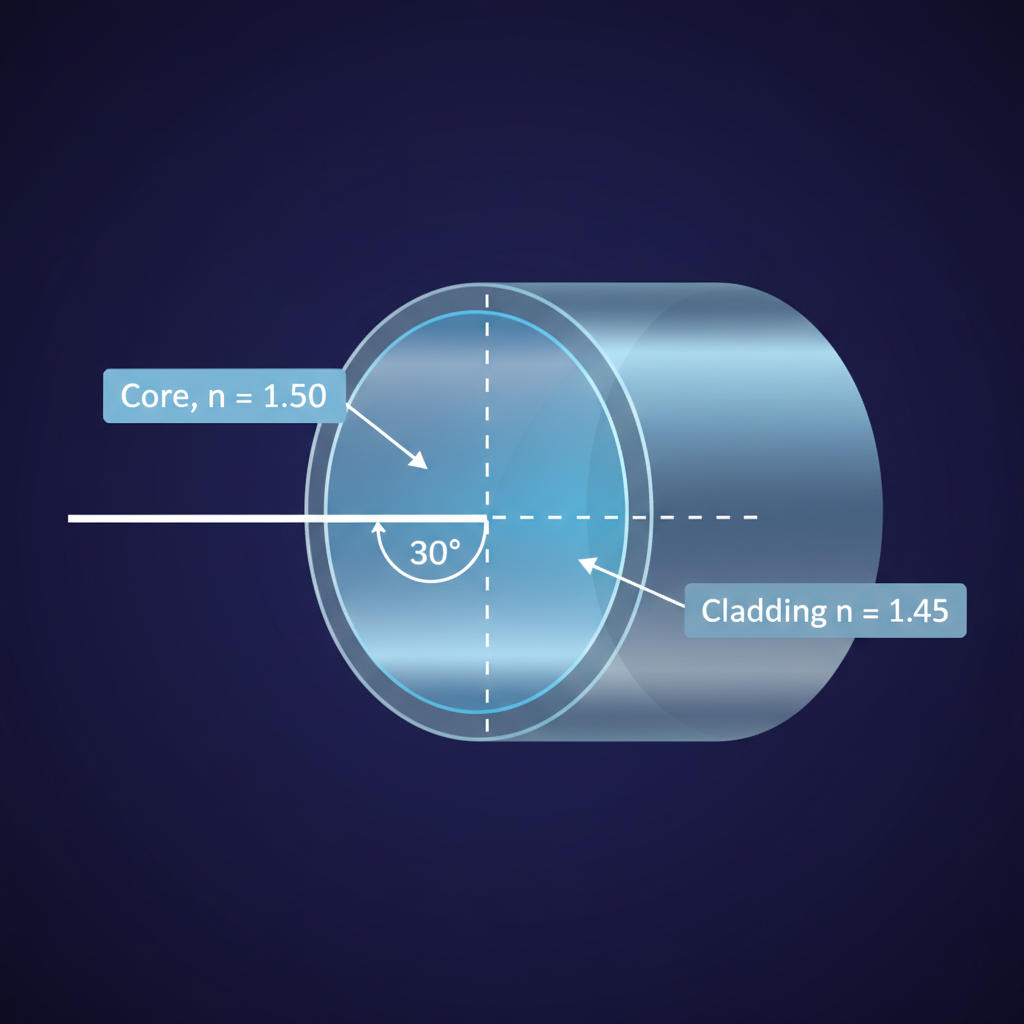
A fiber optic cable has a glass core with refractive index and a cladding with refractive index . A light ray enters the core from air () at an angle of 30° to the normal at the air–core boundary.
a
State the two conditions required for total internal reflection to occur. [1]
b
Calculate the critical angle at the core–cladding boundary. [2]
c
The ray enters at 30° to the normal at the air–core boundary. Using Snell's law, determine the angle at which it strikes the core–cladding boundary, and justify whether total internal reflection occurs. Explain how this result relates to the effectiveness of fiber optics for long-distance communication. [2]
Solutions
4QuestionApplications of Light in Everyday LifeAssessment Practice
8 marks~12 minCriterion D
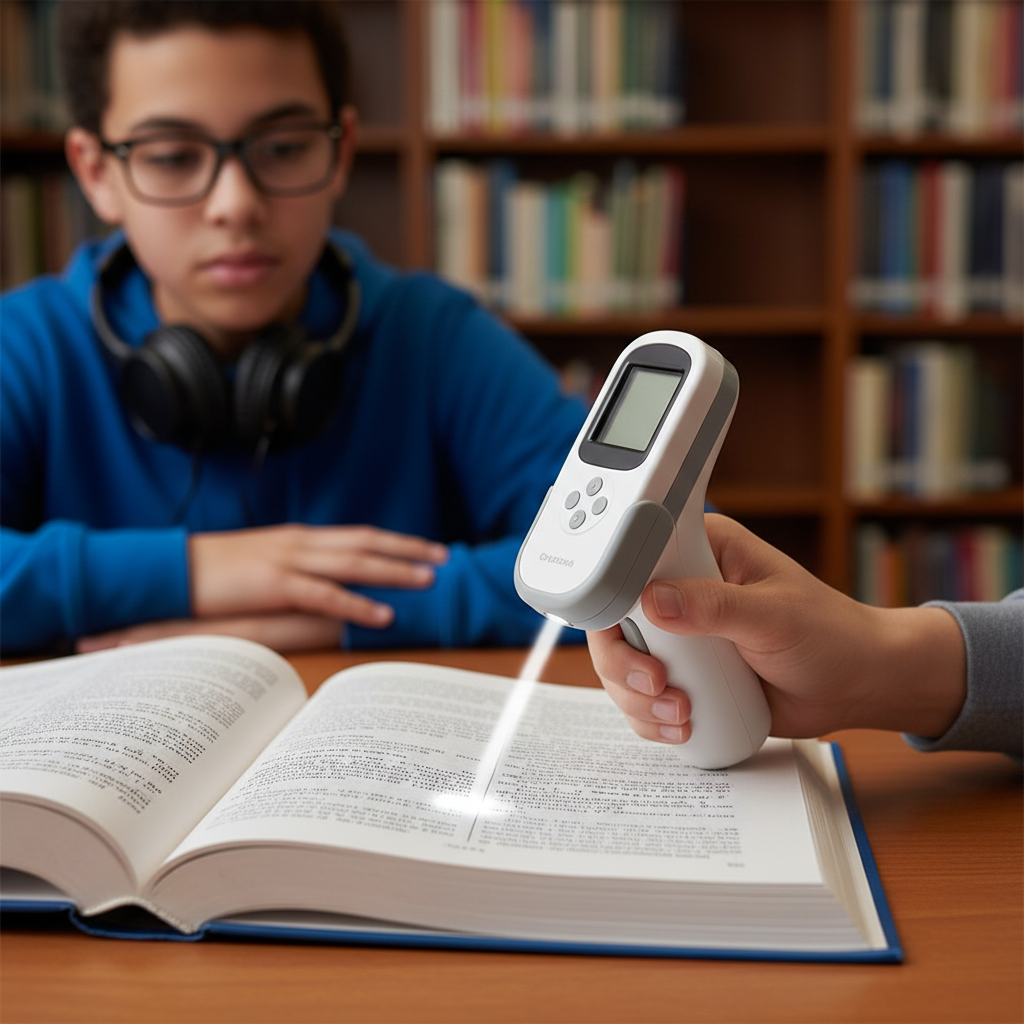
A handheld text-to-speech scanner emits light onto a printed page. The reflected light is captured by an optical sensor, and OCR (optical character recognition) software converts the pattern into audio. One device costs 800 dollars. A school survey found that 60% of visually impaired students who owned a scanner completed reading tasks independently, compared with 25% who did not.
a
Describe how the scanner uses light to capture printed text. [2]
b
Explain how the cost of the device could affect equal access to education for visually impaired students. [3]
c
A student argues: "These scanners should replace all other reading support because the data shows they work." Using the survey data and your own reasoning, analyse whether this conclusion is justified. [3]
Solutions
That's every free question here — 4 of 72.
+68 more questions, plus Mock Papers & Worksheets, are waiting in Premium.