You're viewing free preview questions — 5 questions previewing here — subscribe to unlock 128 more, plus the Full Question Bank, Mock Papers & Worksheets.Upgrade
Cell Division: Mitosis and Meiosis — Free MYP4 Biology Practice Questions

1QuestionFunctions of Mitosis in Growth and RepaiConcept Practice
2 marks~3 minCriterion A
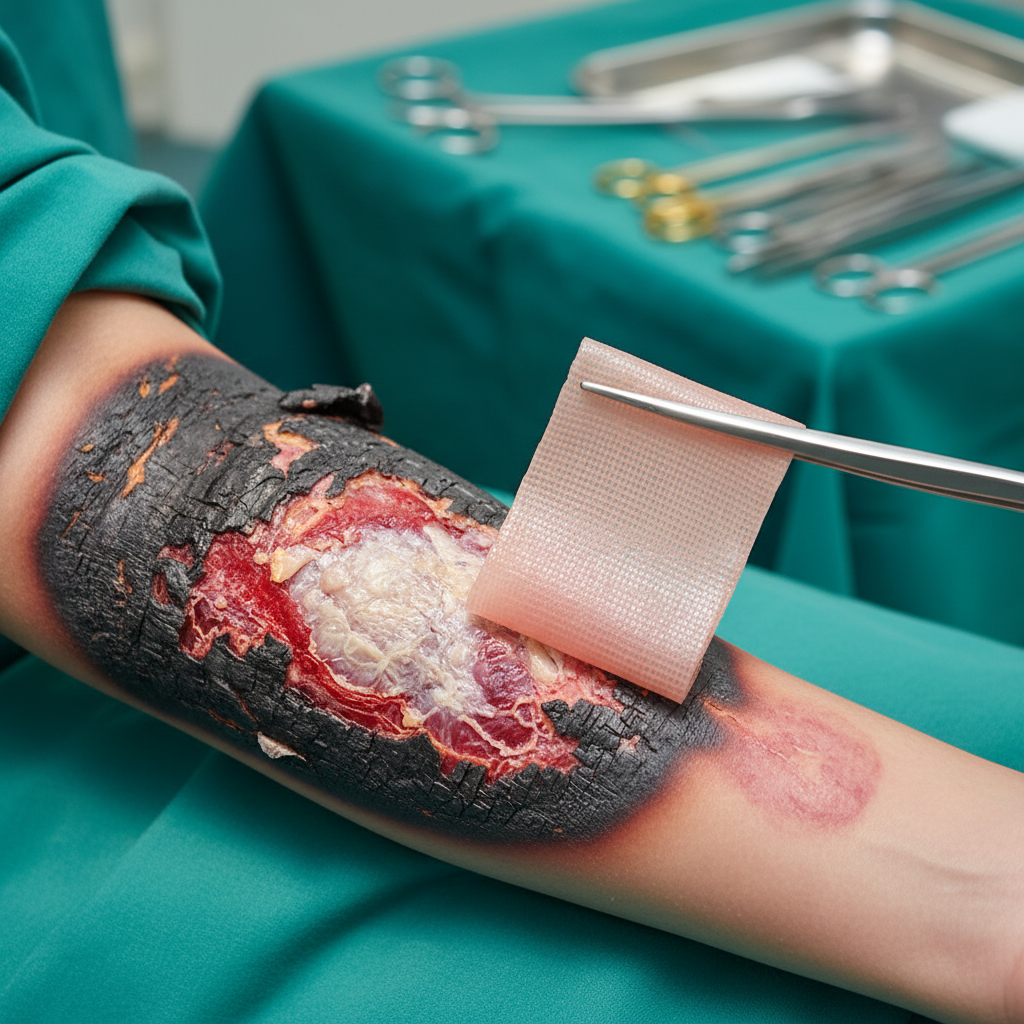
When a patient suffers severe burns, healthy skin is harvested from an unaffected donor site on the same patient and transplanted onto the damaged area.
a
Explain how mitosis enables the transplanted skin to restore the damaged tissue. [1]
b
Identify one limitation that reduces the effectiveness of skin graft treatment in patients with extensive burns. [1]

Solutions
2QuestionFunctions of Mitosis in Growth and RepaiAssessment Practice
5 marks~8 minCriterion A
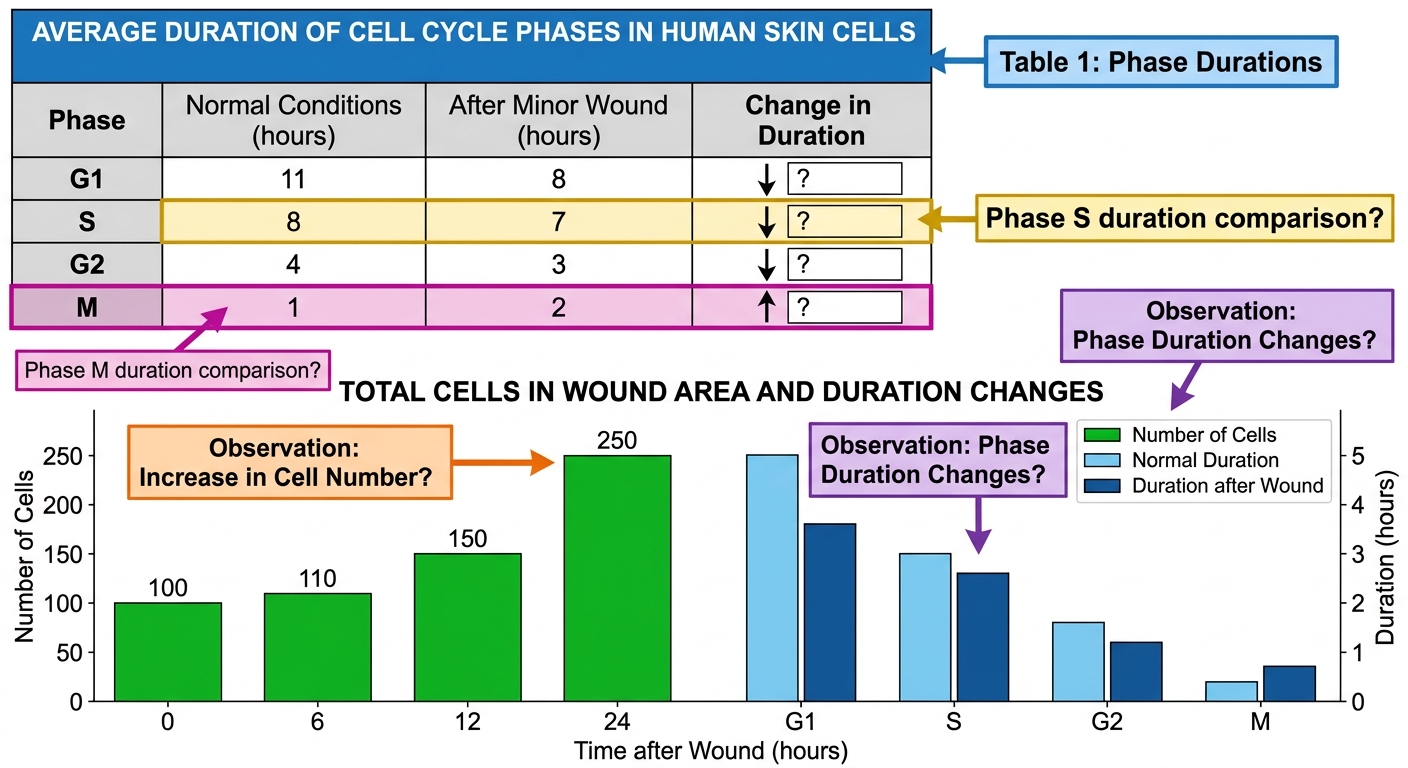
The tables below show the duration of each cell cycle phase in human skin cells under normal conditions and after a minor wound, and the total number of cells in the wound area at selected times after injury.
Cell cycle phase durations (hours):
Cells in wound area:
Cell cycle phase durations (hours):
| Phase | G1 | S | G2 | M |
|---|---|---|---|---|
| Normal | 11 | 8 | 4 | 1 |
| After wound | 8 | 7 | 3 | 2 |
Cells in wound area:
| Time after wound (hours) | 0 | 6 | 12 | 24 |
|---|---|---|---|---|
| Number of cells | 100 | 110 | 150 | 250 |
a
State the change in M phase duration following wounding. [1]
b
Explain how the phase duration data indicate that mitotic activity is specifically upregulated in response to wounding. [2]
c
Justify the conclusion that mitosis plays a critical role in wound repair, using both the phase duration data and the cell count data. [2]
Solutions
3QuestionFunctions of Mitosis in Growth and RepaiAssessment Practice
5 marks~8 minCriterion C
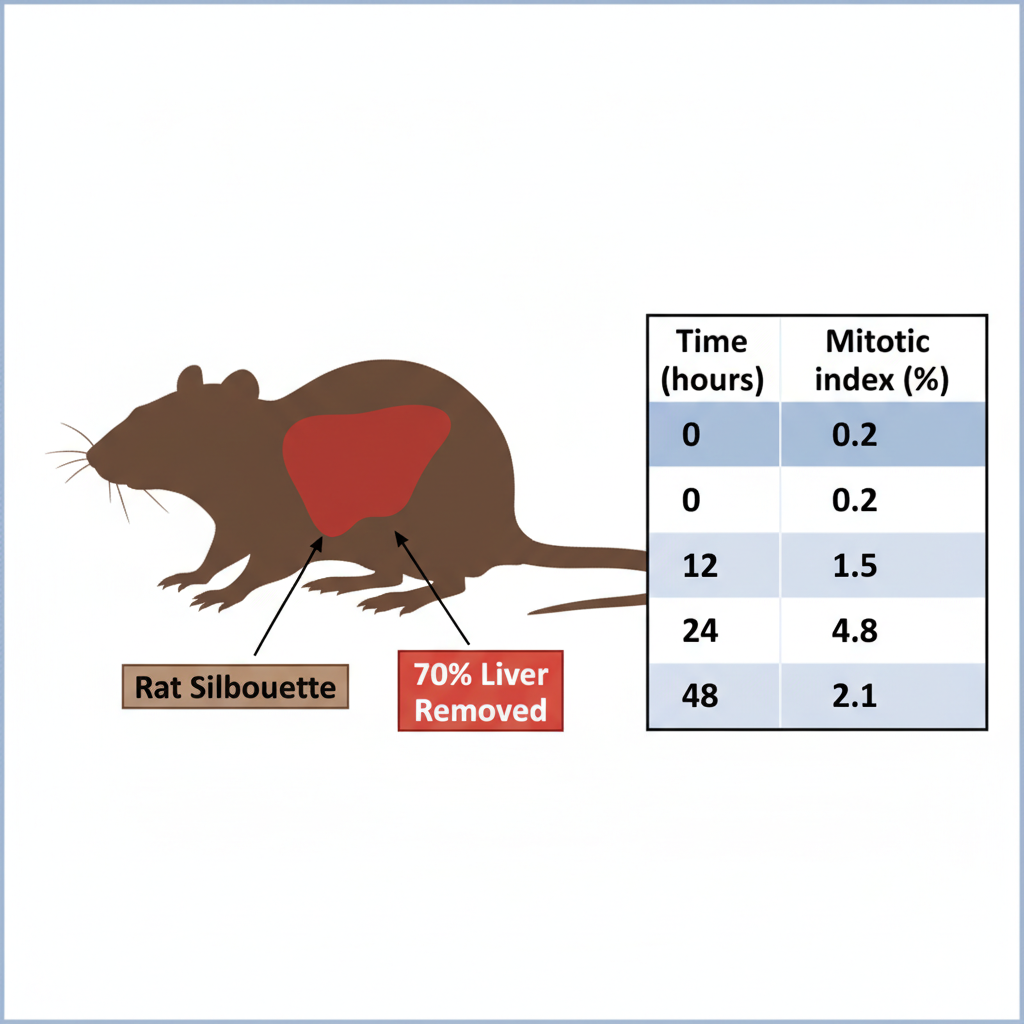
In a study of liver regeneration, rats underwent surgical removal of 70% of their liver (partial hepatectomy). Liver tissue samples were collected at 0, 12, 24, and 48 hours post-surgery, and the mitotic index (percentage of cells undergoing mitosis) was recorded.
| Time (hours) | 0 | 12 | 24 | 48 |
|---|---|---|---|---|
| Mitotic index (%) | 0.2 | 1.5 | 4.8 | 2.1 |
a
Describe the trend in mitotic index between 0 and 48 hours post-surgery, referring to specific values. [2]
b
Explain how the data between 0 and 24 hours relates to the role of mitosis in liver repair. [1]
c
Evaluate whether the data supports the hypothesis that hepatocyte mitosis peaks at 24 hours post-hepatectomy, including an explanation of what the mitotic index at 48 hours suggests about the regenerative process. [2]
Solutions
4QuestionComparison of Mitosis and MeiosisAssessment Practice
6 marks~9 minCriterion D
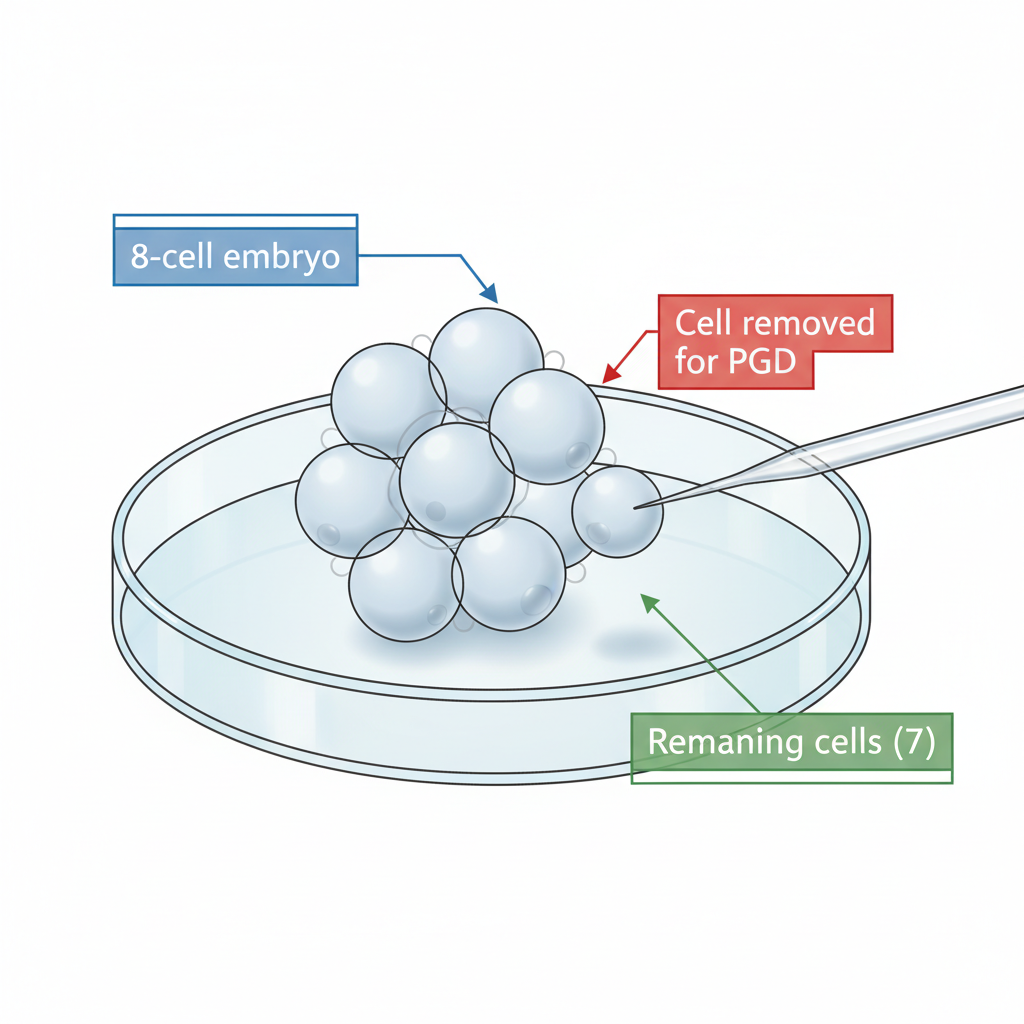
A couple with a family history of cystic fibrosis — an autosomal recessive disorder caused by mutations in the CFTR gene — undergoes IVF combined with preimplantation genetic diagnosis (PGD). Fertilised eggs develop through repeated mitotic divisions. At the 8-cell stage, one cell is removed from each embryo and tested for the CFTR mutation. Only embryos free of the mutation are implanted.
Refer to the diagram showing PGD on an 8-cell embryo.
Refer to the diagram showing PGD on an 8-cell embryo.
a
Explain how the properties of mitosis and of cells at the 8-cell stage allow one cell to be removed without harming the embryo's development. [2]
b
Explain one health benefit of using PGD to select against the cystic fibrosis mutation, linking the benefit to the biological effects of the disease. [2]
c
Discuss one ethical concern raised by using PGD to select against specific genetic traits, evaluating whether this concern outweighs the medical benefit in the context of cystic fibrosis. [2]
Solutions
5QuestionFunctions of Mitosis in Growth and RepaiAssessment Practice
8 marks~12 minCriterion D
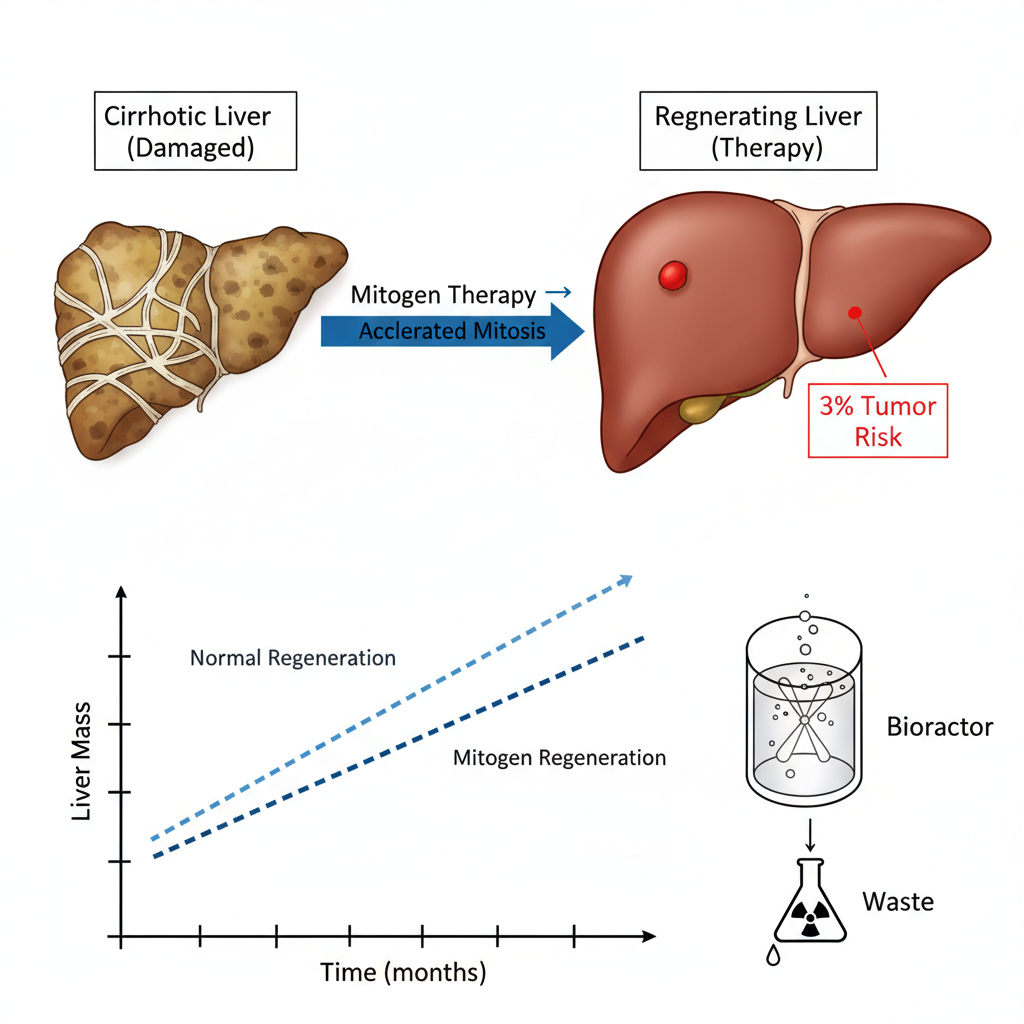
A biomedical company has developed a mitogen therapy to accelerate liver regeneration in patients with cirrhosis. Clinical trials report a 3% risk of uncontrolled cell division leading to tumour formation. Large-scale mitogen production relies on industrial bioreactors, generating significant energy demands and chemical waste. Access to the therapy is currently limited to high-income countries due to cost.
a
Explain how mitogen therapy uses mitosis to replace damaged liver tissue. [2]
b
Discuss two societal benefits this therapy offers compared with conventional liver transplantation. [2]
c
Analyse the environmental consequences of large-scale mitogen production, considering both energy consumption and chemical waste. [2]
d
Evaluate the ethical challenges of applying a single risk-benefit model — based on a 3% average cancer risk — to genetically and demographically diverse patient populations. [2]
Solutions
That's every free question here — 5 of 133.
+128 more questions, plus Mock Papers & Worksheets, are waiting in Premium.