You're viewing free preview questions — 5 questions previewing here — subscribe to unlock 124 more, plus the Full Question Bank, Mock Papers & Worksheets.Upgrade
Diffusion, Osmosis, and Active Transport — Free MYP4 Biology Practice Questions

1QuestionActive Transport and Energy RequirementConcept Practice
2 marks~3 minCriterion A
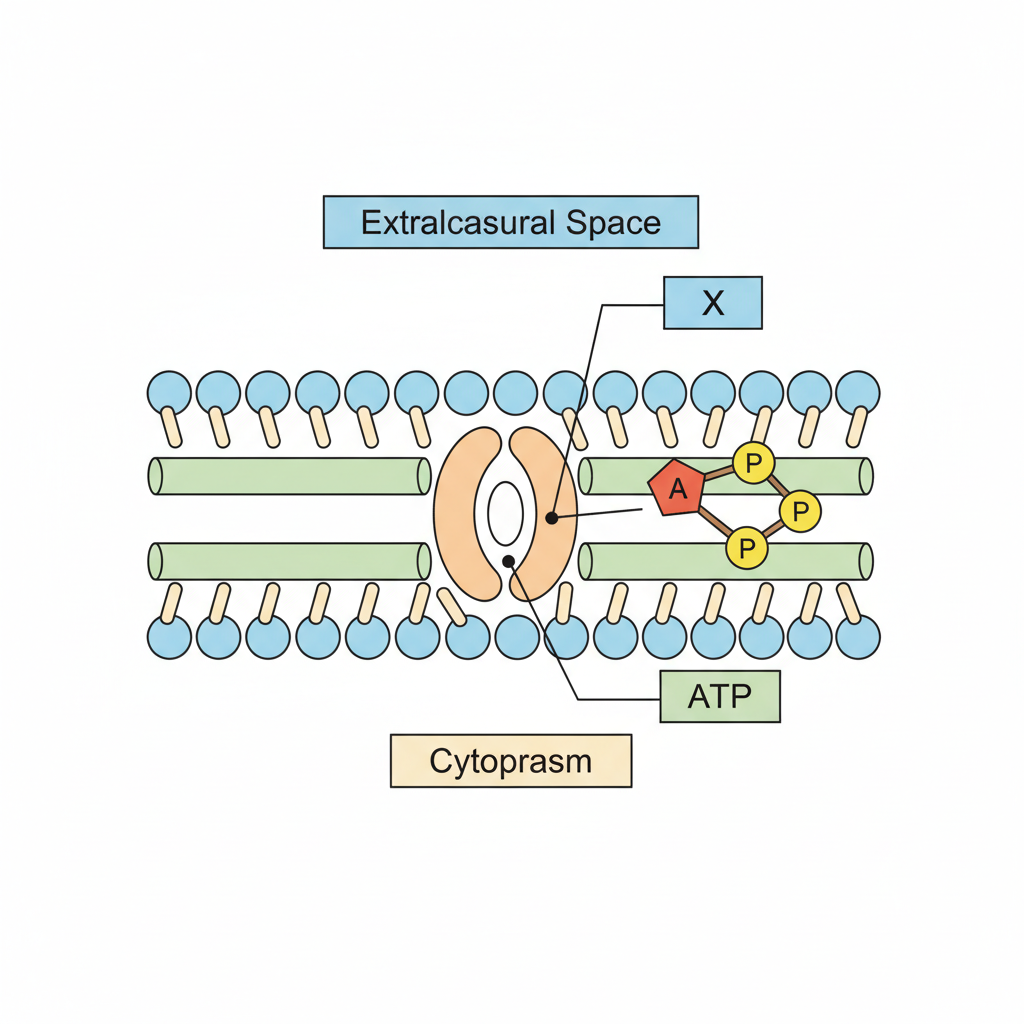
The diagram below shows a cross-section of a cell membrane. Structure X is a membrane protein associated with an ATP molecule.
a
Identify structure X. [1]
b
Explain how structure X uses ATP to move substances across the membrane. [1]

Solutions
2QuestionDefinition and Examples of DiffusionAssessment Practice
3 marks~5 minCriterion C
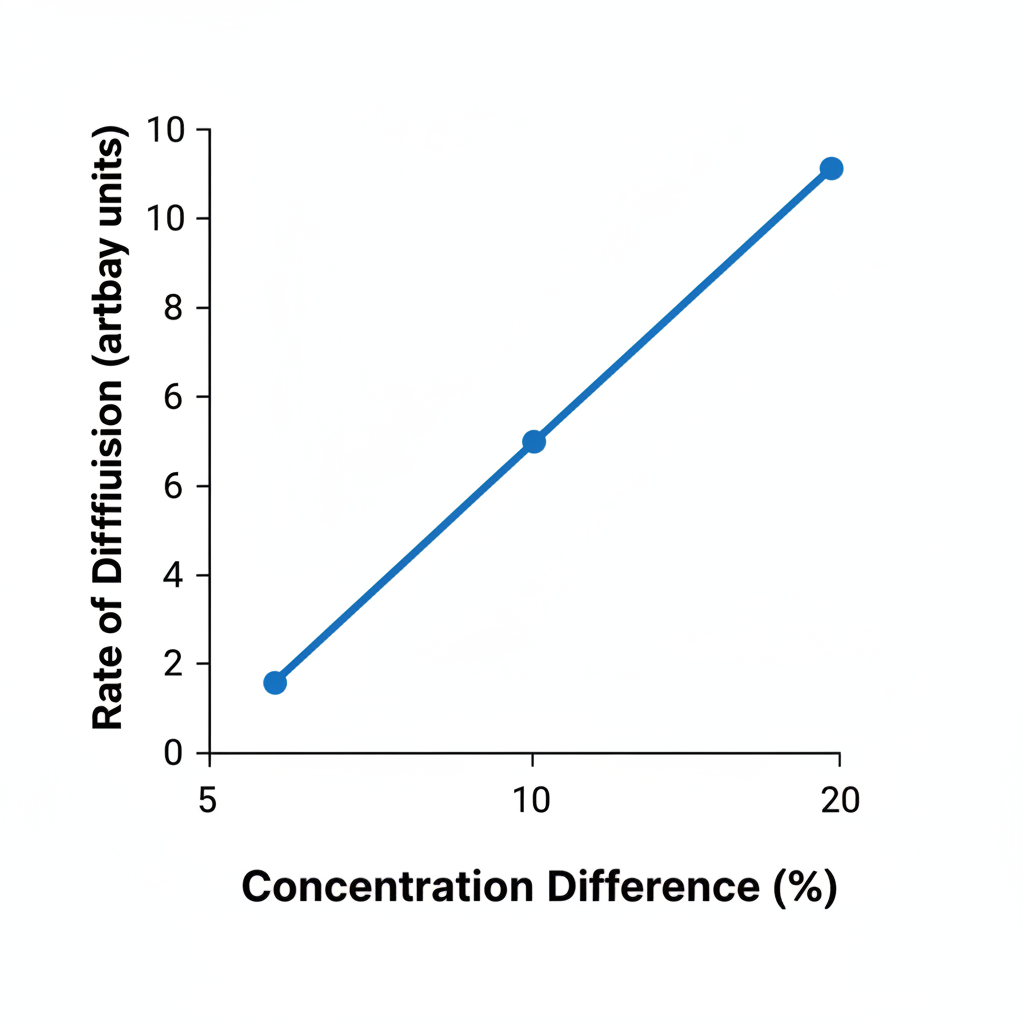
The graph below shows the rate of diffusion of a dye across a semipermeable membrane at three concentration differences.
| Concentration difference (%) | 5 | 10 | 20 |
|---|---|---|---|
| Rate of diffusion (arbitrary units) | 2.5 | 5 | 10 |
a
State the relationship between concentration difference and rate of diffusion shown in the graph. [1]
b
Explain why a greater concentration difference produces a faster rate of diffusion. [1]
c
A student claims that doubling the concentration difference will always double the rate of diffusion for any substance crossing any membrane. Evaluate this claim. [1]
Solutions
3QuestionFactors Affecting Rate of DiffusionAssessment Practice
3 marks~5 minCriterion B
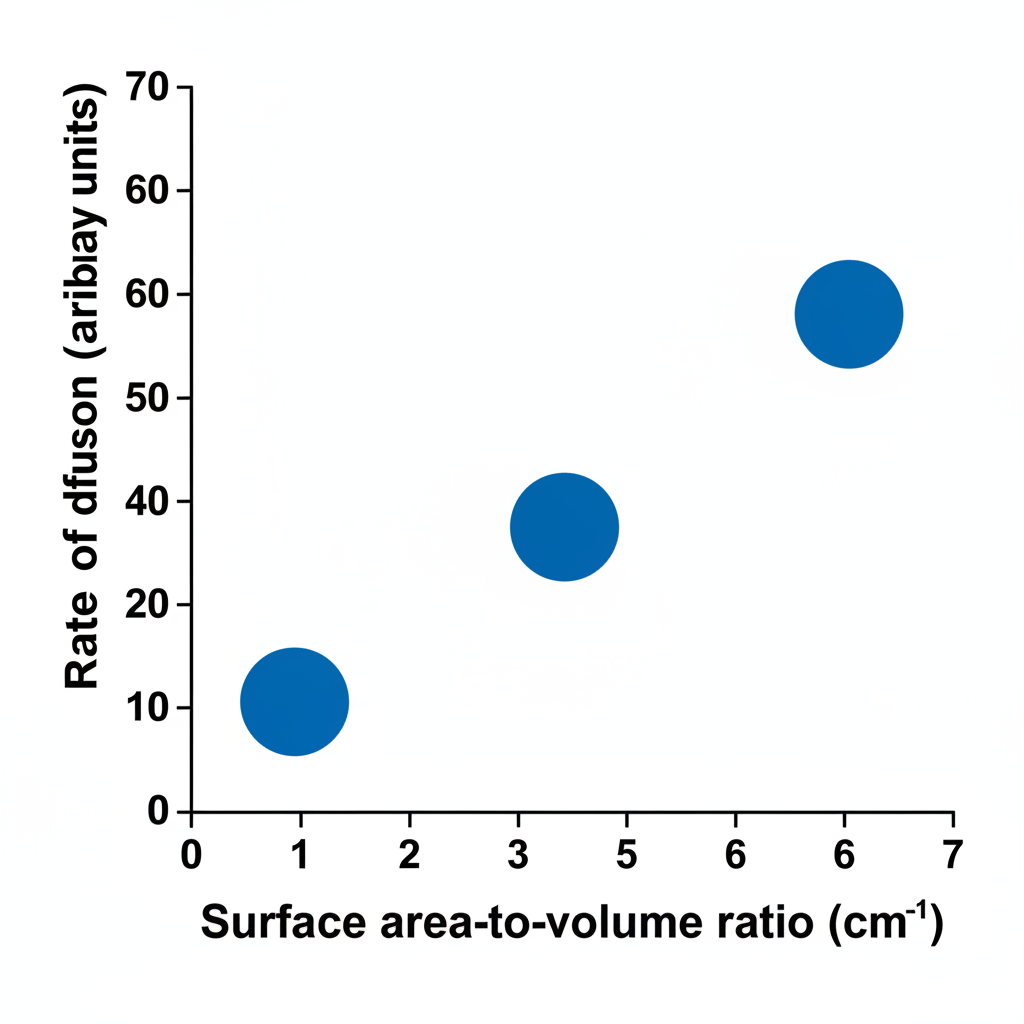
The graph below shows the relationship between surface area-to-volume ratio (SA:V) and rate of diffusion for three agar cubes with side lengths of 1 cm, 2 cm, and 3 cm.
a
State the trend shown in the graph. [1]
b
Explain why a smaller cube has a higher SA:V ratio than a larger cube. [1]
c
Explain why a higher SA:V ratio leads to a faster rate of diffusion, and discuss why this places a limit on maximum cell size. [1]
Solutions
4QuestionOsmosis in Cells and Living SystemsAssessment Practice
4 marks~6 minCriterion D
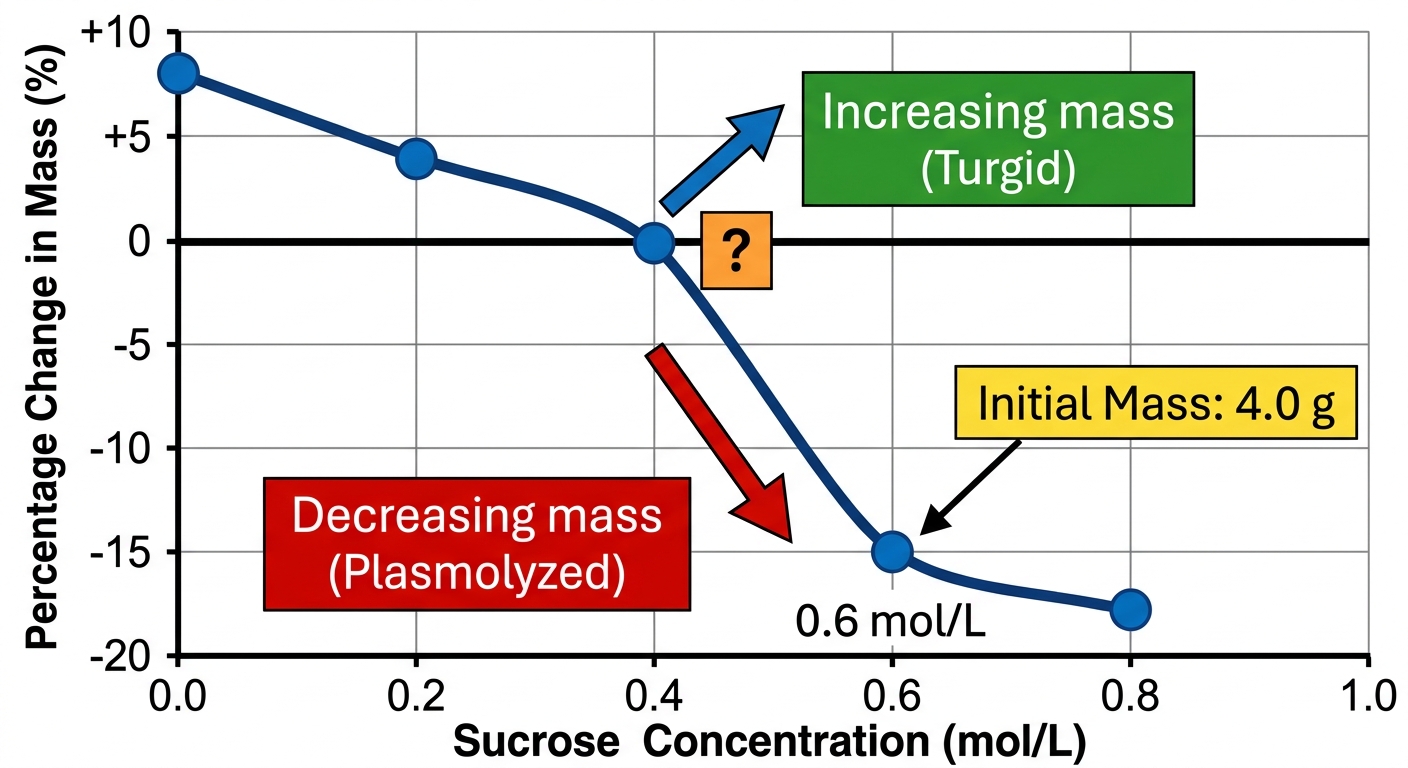
A student places strips of potato into sucrose solutions of five different concentrations. The bar chart shows the percentage change in mass of each strip after 30 minutes.
a
Deduce the sucrose concentration at which the potato strip shows no change in mass. [1]
b
The strip placed in 0.6 mol/L sucrose had an initial mass of 4.0 g and a final mass of 3.4 g. Calculate the percentage change in mass of this strip, showing your working. [1]
c
Evaluate whether the concentration identified in (a) is equal to the solute concentration of the potato cell sap, using your understanding of osmosis and water potential to justify your reasoning. [2]
Solutions
5QuestionFactors Affecting Rate of DiffusionAssessment Practice
8 marks~12 minCriterion D
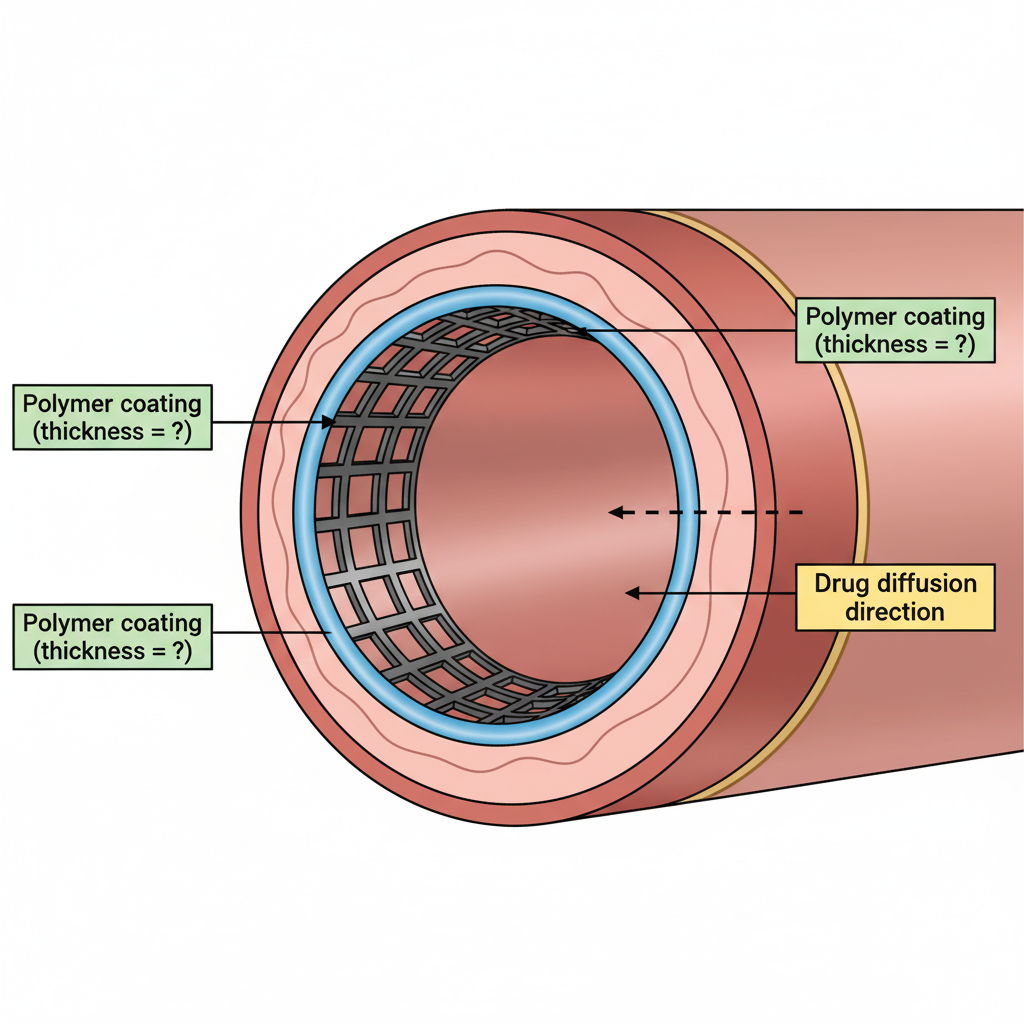
Drug-eluting stents (DES) are implanted in narrowed coronary arteries and release anti-proliferative medication through a polymer coating directly into the arterial wall via diffusion. Cardiologists can adjust coating thickness to control drug release rates. Over the past decade, DES use has expanded globally, raising questions about long-term patient outcomes and healthcare systems. Fick's law of diffusion is commonly used to model drug release from these devices.
a
Explain how reducing the polymer coating thickness from 120 µm to 60 µm would affect the rate of drug diffusion from the stent into the arterial wall. [2]
b
Discuss one societal benefit and one societal risk associated with the widespread use of drug-eluting stents over a 10-year period. [3]
c
Analyse one limitation of using Fick's law to model drug release from a stent into arterial tissue, with reference to a specific assumption of the law. [3]
Solutions
That's every free question here — 5 of 129.
+124 more questions, plus Mock Papers & Worksheets, are waiting in Premium.