You're viewing free preview questions — 5 questions previewing here — subscribe to unlock 121 more, plus the Full Question Bank, Mock Papers & Worksheets.Upgrade
Energy in Cells: Respiration and Photosynthesis — Free MYP4 Biology Practice Questions

1QuestionPhotosynthesis Equation and FactorsConcept Practice
2 marks~3 minCriterion A
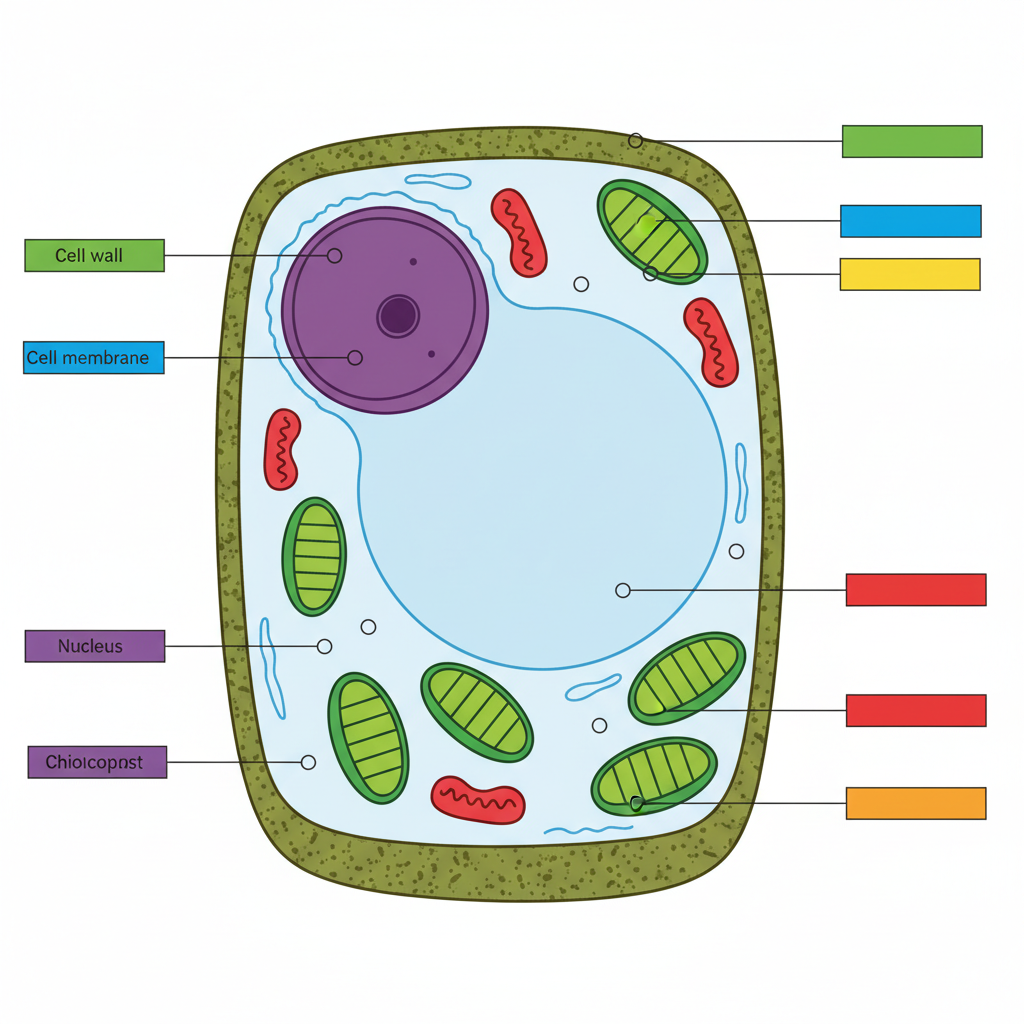
Chloroplasts are organelles found in the cells of photosynthetic organisms. Scientists studying crop productivity measure how efficiently chloroplasts convert light energy into stored chemical energy under varying environmental conditions.
a
State the organelle in a plant cell where photosynthesis occurs. [1]
b
Explain how the primary function of this organelle supports the energy needs of the plant. [1]

Solutions
2QuestionLeaf Structure and Adaptations for PhotosynthesisAssessment Practice
4 marks~6 minCriterion C
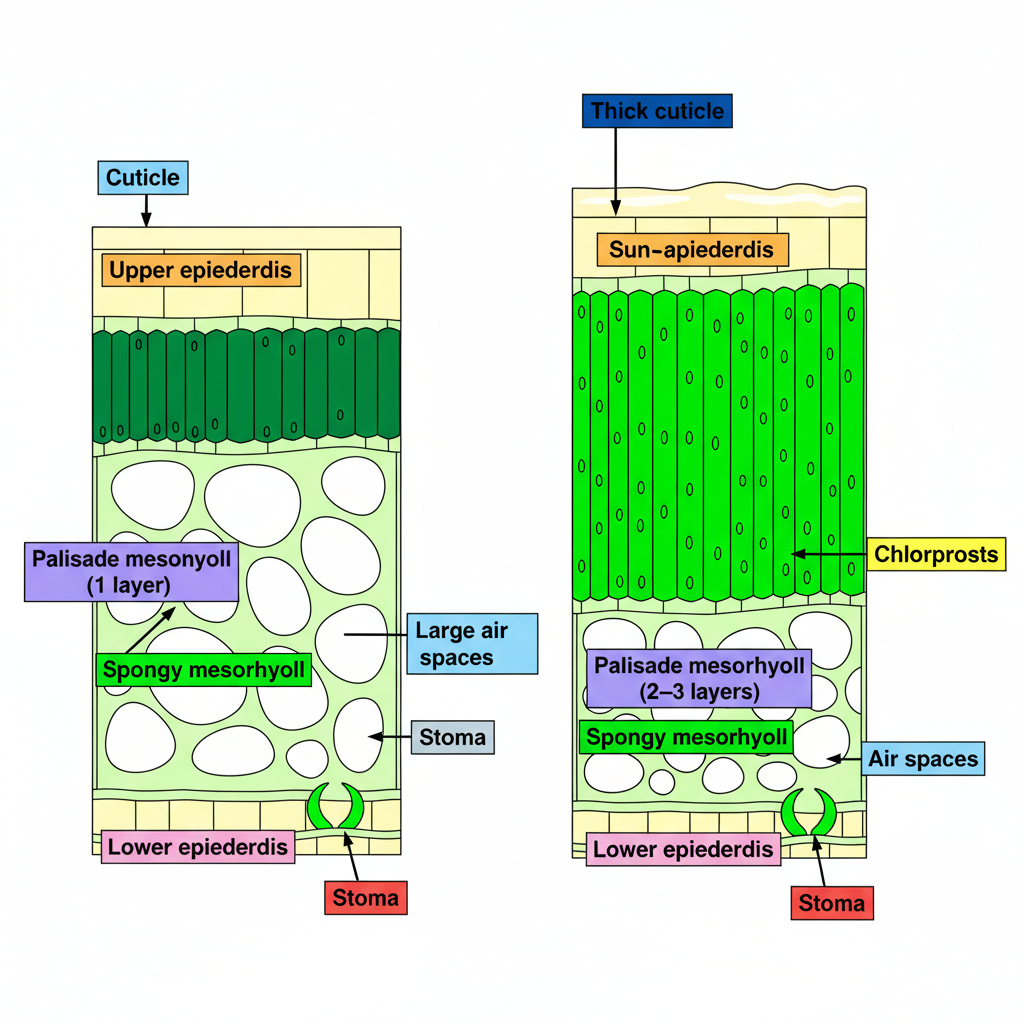
The diagram shows cross-sections of two leaves: one adapted to shade and one adapted to full sunlight.
a
Identify one structural difference between the shade-adapted leaf and the sun-adapted leaf as shown in the diagram. [1]
b
Explain how a higher concentration of chlorophyll in shade-adapted leaves allows them to maintain photosynthesis under low light intensity. [2]
c
A student claims that a thicker palisade layer in sun-adapted leaves is an advantage only when light is the limiting factor. Evaluate this claim. [1]
Solutions
3QuestionAerobic vs Anaerobic RespirationAssessment Practice
4 marks~6 minCriterion A
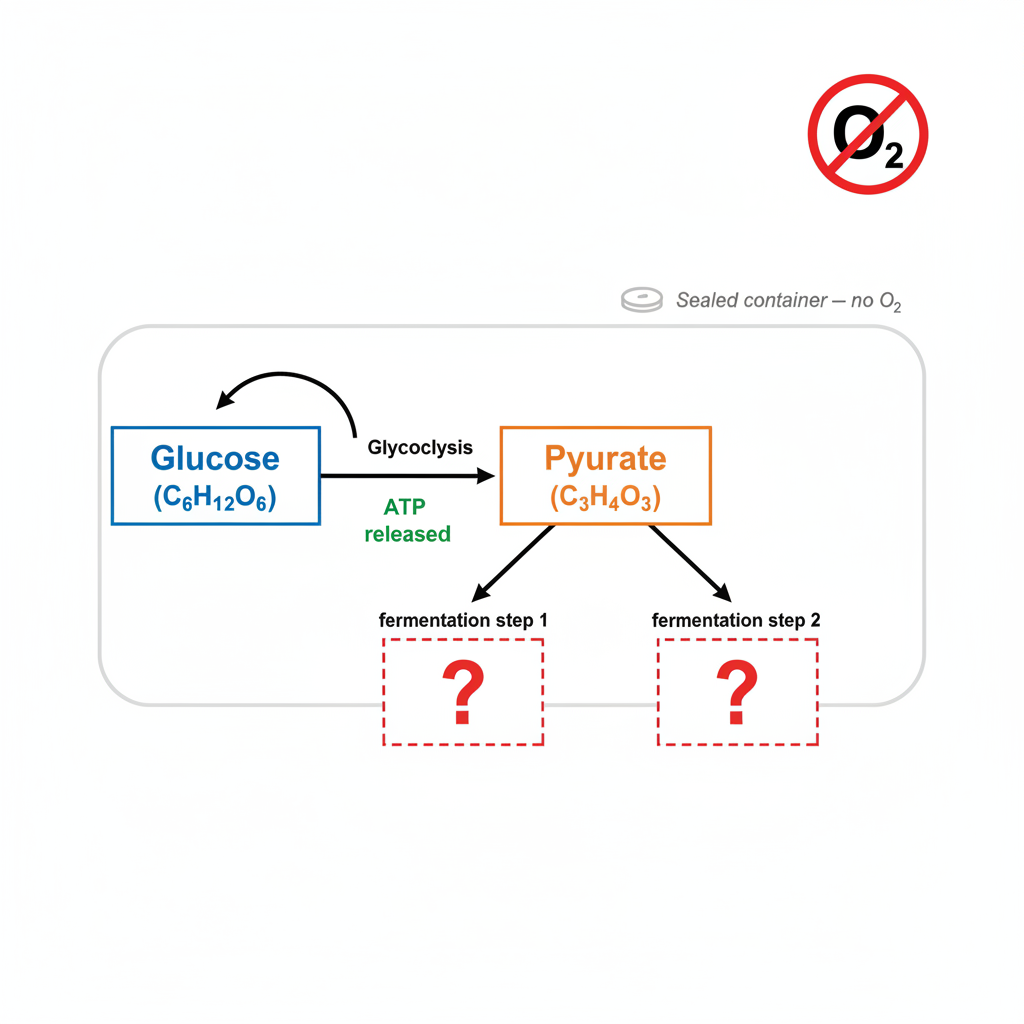
Yeast cells were placed in a sealed container with glucose solution. As respiration proceeded, the oxygen inside was gradually consumed.
a
Identify the two waste products of anaerobic respiration in yeast. [2]
b
A student bubbles the gas produced through limewater and observes it turning cloudy. Deduce which product this test detects and explain what the result indicates about the yeast's metabolic activity. [1]
c
Analyse why yeast switches from aerobic to anaerobic respiration as oxygen is depleted in the sealed container, referring to the electron transport chain and NAD⁺ regeneration. [1]
Solutions
4QuestionAerobic vs Anaerobic RespirationAssessment Practice
6 marks~9 minCriterion D
A fitness coach tells amateur runners that staying below the anaerobic threshold "builds aerobic base without toxic lactate buildup." The coach sells a heart-rate wristband that vibrates when heart rate approaches this threshold, warning runners to slow down. Sports scientists now understand that lactate plays a more complex metabolic role than this claim suggests.
a
Explain why describing lactate as a "toxic waste product" is scientifically inaccurate, referring to its metabolic fate under aerobic conditions. [2]
b
Explain how ion accumulation, rather than lactate itself, contributes to muscle fatigue during intense exercise. [2]
c
Evaluate the coach's professional responsibility in promoting this training method and wristband to amateur athletes who lack the scientific background to critically assess the claims. [2]

Solutions
5QuestionPhotosynthesis Equation and FactorsAssessment Practice
7 marks~11 minCriterion C
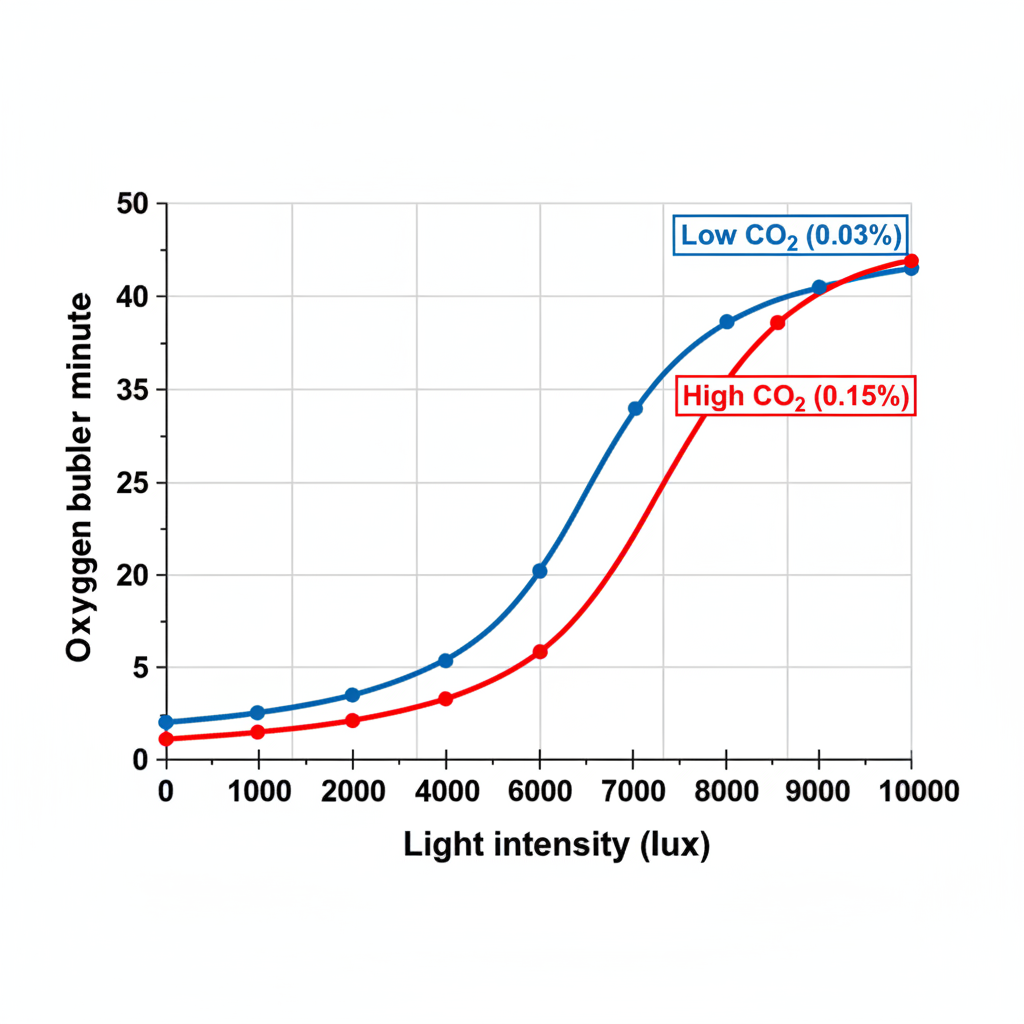
A student investigates how light intensity and carbon dioxide (CO2) concentration affect the rate of photosynthesis in Elodea canadensis. Oxygen bubbles released per minute are counted at light intensities from 0 to 10 000 lux, at two CO2 concentrations: low (0.03%) and high (0.15%). The graph shows both curves. At high CO2, the recorded values include 38 bubbles/min at 8 000 lux and 35 bubbles/min at 9 000 lux. The low CO2 curve plateaus at approximately 20 bubbles/min beyond 5 000 lux; the high CO2 curve reaches 40 bubbles/min at 10 000 lux.
A student proposes the hypothesis: "Light intensity is the only limiting factor for photosynthesis in aquatic plants."
A student proposes the hypothesis: "Light intensity is the only limiting factor for photosynthesis in aquatic plants."
a
Identify the anomalous data point in the high CO2 curve and suggest one possible reason for it. [2]
b
Explain which factor limits the rate of photosynthesis at 2 000 lux for each CO2 concentration, using data from the graph to support your answer. [2]
c
Evaluate the student's hypothesis using evidence from both curves. In your answer, discuss the role of light intensity and CO2 concentration as limiting factors and reach a justified conclusion about whether the hypothesis is supported. [3]
Solutions
That's every free question here — 5 of 126.
+121 more questions, plus Mock Papers & Worksheets, are waiting in Premium.