You're viewing free preview questions — 5 questions previewing here — subscribe to unlock 117 more, plus the Full Question Bank, Mock Papers & Worksheets.Upgrade
Enzymes and Metabolism — Free MYP4 Biology Practice Questions

1QuestionRole of Enzymes in Digestion and RespirationConcept Practice
4 marks~6 minCriterion A
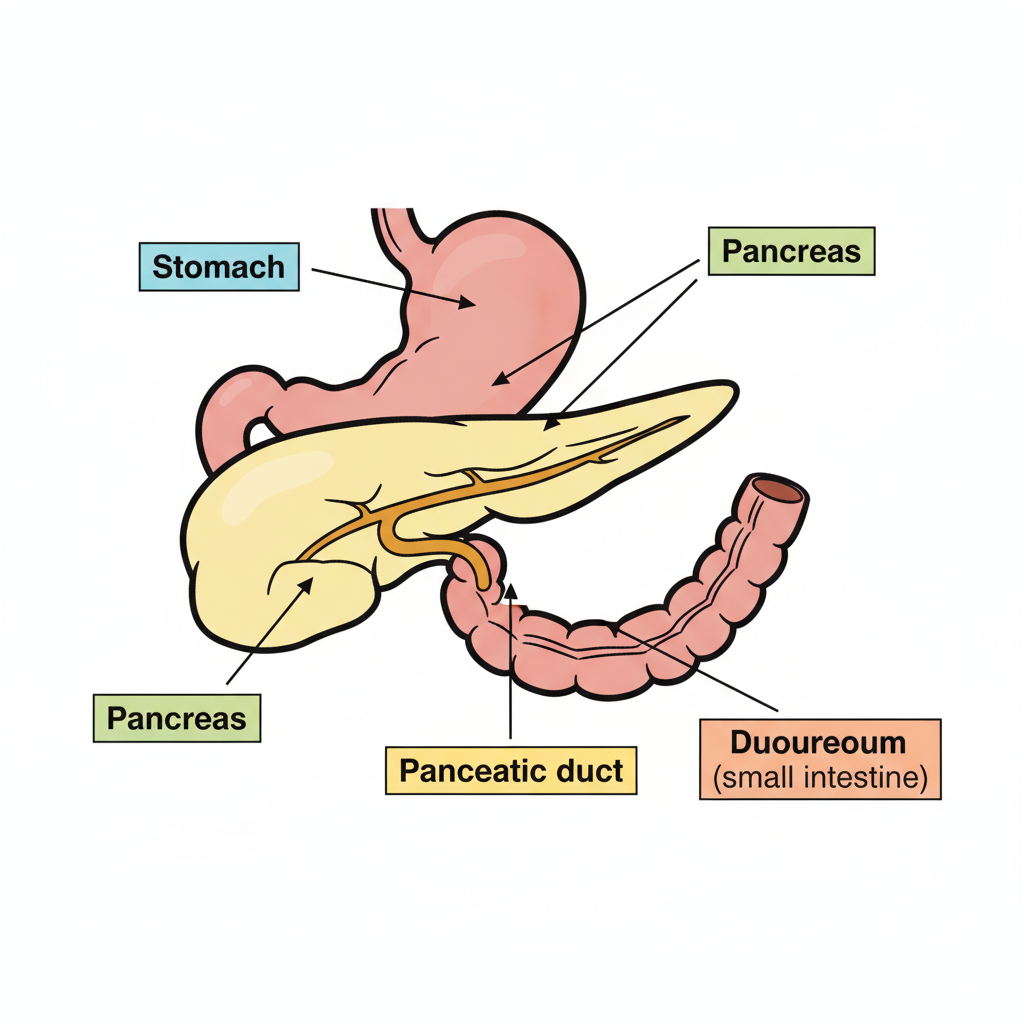
The diagram shows the pancreas releasing digestive enzymes through the pancreatic duct into the duodenum. The pancreas contains two functional regions: acinar cells, which synthesise and secrete digestive enzymes, and islets of Langerhans, which produce hormones.
a
Identify two digestive enzymes produced by the pancreas. [2]
b
Explain how pancreatic enzymes reach the duodenum after being synthesised in acinar cells. [1]
c
A patient has chronic pancreatitis causing progressive scarring and blockage of the pancreatic duct. Evaluate the consequences of this blockage for the digestion of macromolecules in the small intestine. [1]

Solutions
2QuestionFactors Affecting Enzyme ActivityAssessment Practice
4 marks~6 minCriterion A
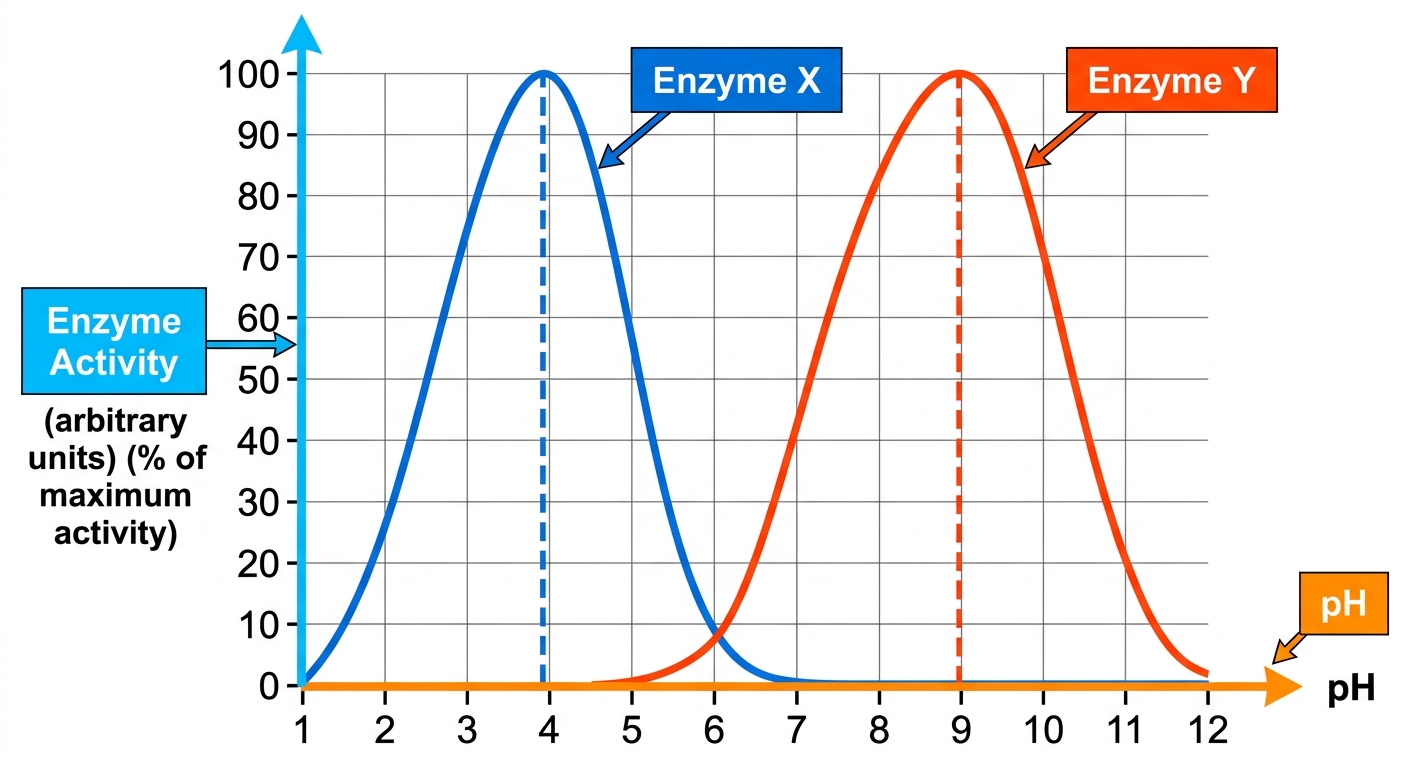
A student investigates enzyme activity across a range of pH values. The graph shows activity curves for two enzymes, X and Y, found in different regions of the human digestive system.
a
Deduce the pH at which enzyme Y shows maximum activity. [1]
b
Explain how the activity of enzyme X changes as pH increases from 2 to 7, referring to enzyme structure. [2]
c
Evaluate which enzyme is more likely to function in the stomach, using data from the graph to justify your answer. [1]
Solutions
3QuestionDenaturation and pH/Temperature EffectsAssessment Practice
4 marks~6 minCriterion D
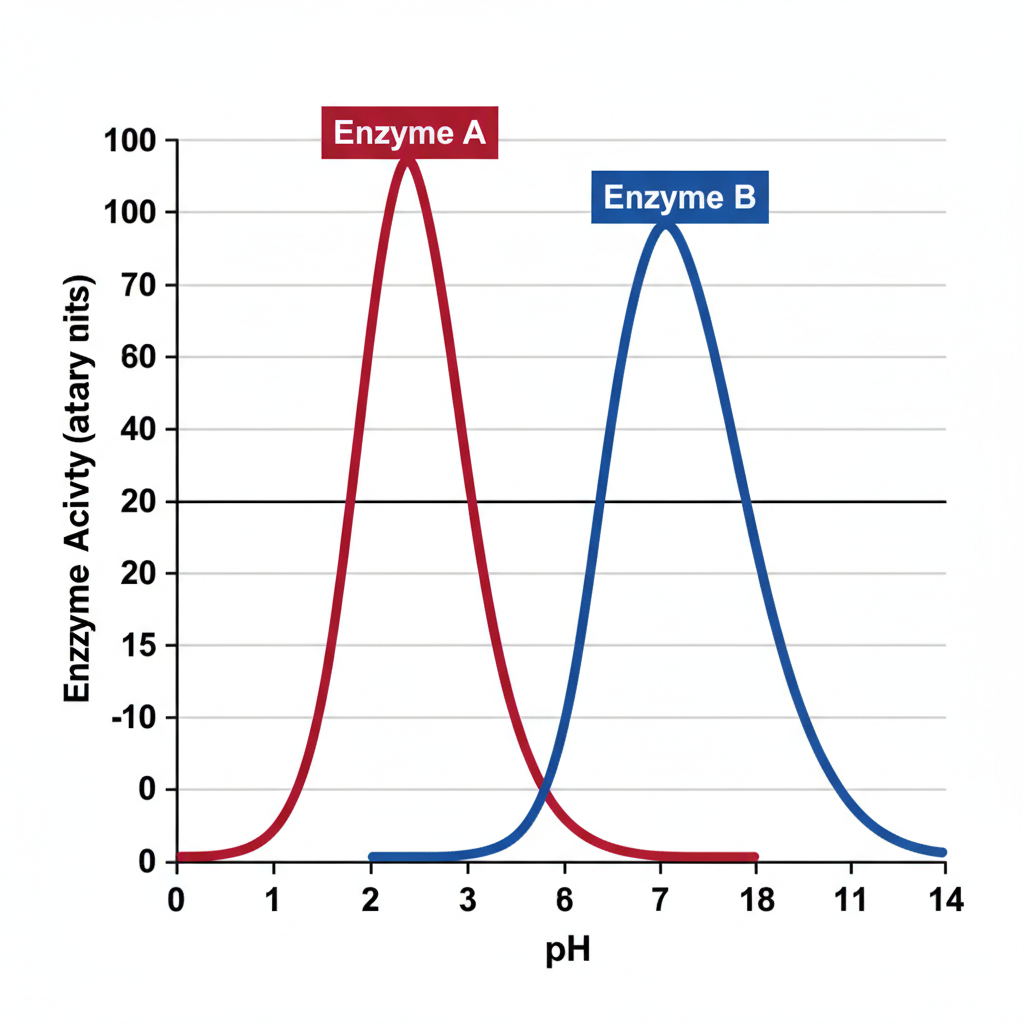
A student investigates the activity of pepsin (optimum pH 2) and trypsin (optimum pH 8) across a range of pH levels. The diagram shows the activity curves of both enzymes.
a
Identify which enzyme functions most effectively in the small intestine (pH ≈ 8). [1]
b
Explain why pepsin and trypsin have different optimum pH values, referring to the role of amino acid R-groups in maintaining active site shape. [2]
c
Evaluate the consequences for protein digestion if pepsin were secreted into the small intestine rather than the stomach. [1]
Solutions
4QuestionFactors Affecting Enzyme ActivityAssessment Practice
4 marks~6 minCriterion A
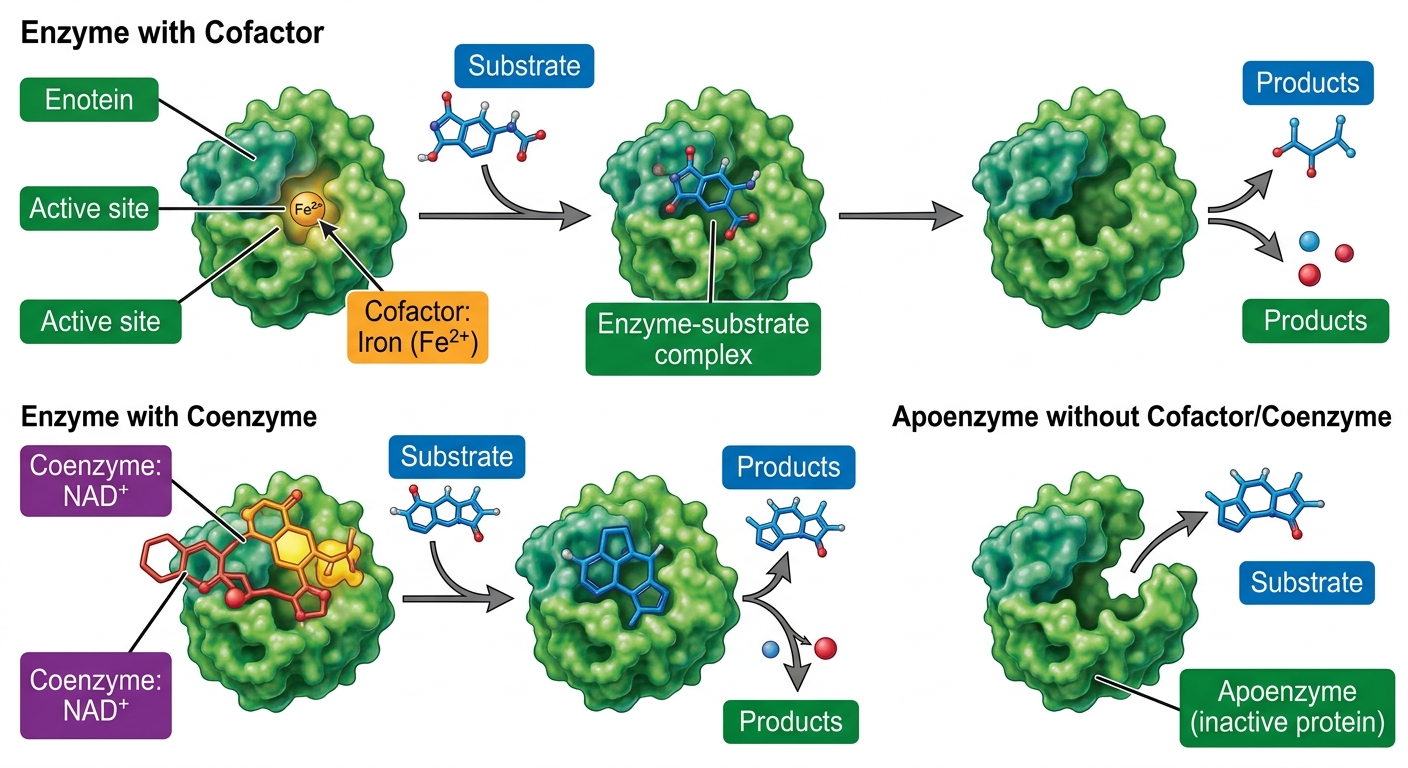
A student investigates the effect of a metal-ion cofactor on enzyme activity. In the presence of the cofactor , the enzyme catalyses its reaction efficiently. When is removed by adding a chelating agent, the reaction rate falls sharply. The student proposes that the cofactor is essential for maintaining the functional shape of the active site.
a
State the difference between a cofactor and a coenzyme. [1]
b
Explain how enables the enzyme to catalyse its reaction effectively. [1]
c
Analyse how the removal of affects the active site and, using this, account for the sharp fall in reaction rate observed by the student. [2]
Solutions
5QuestionStructure and Function of EnzymesAssessment Practice
6 marks~9 minCriterion D
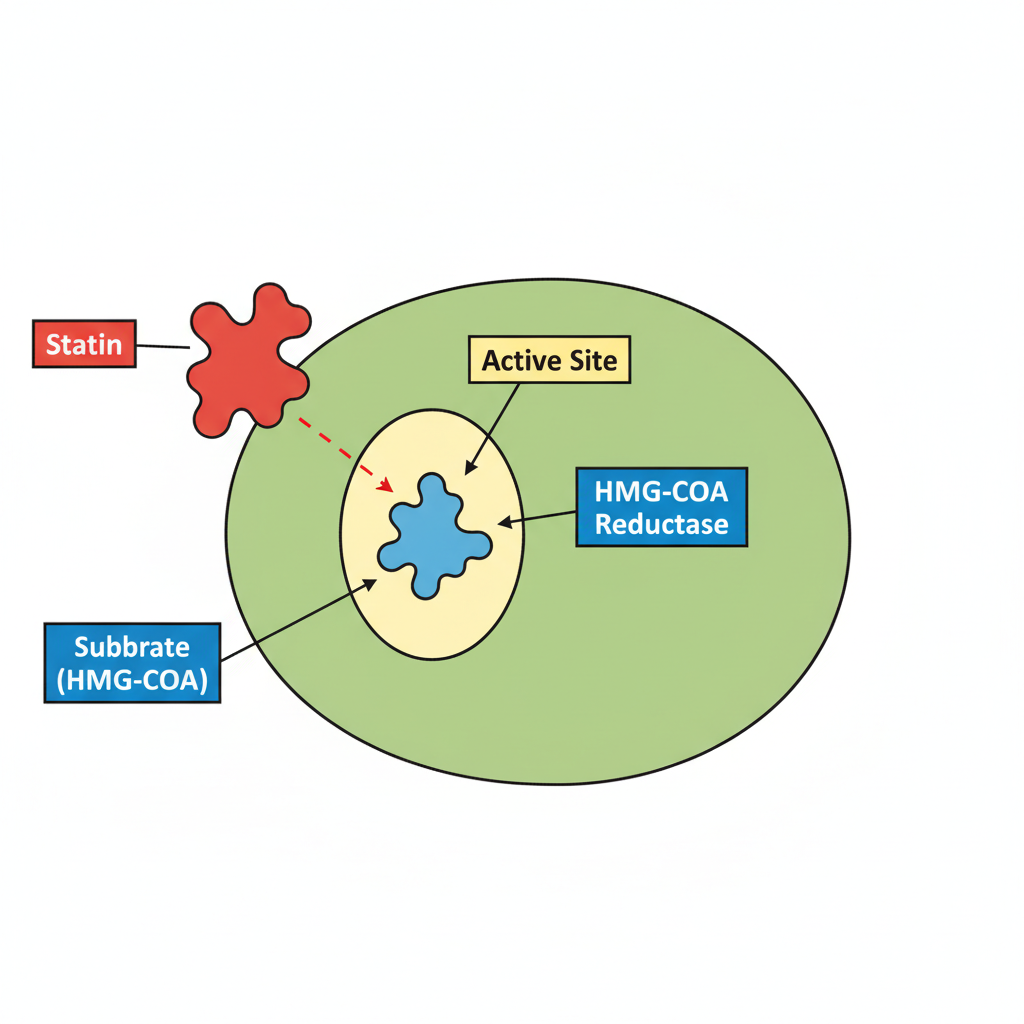
HMG-CoA reductase catalyses a key step in cholesterol synthesis. Statins are drugs whose molecular shape closely resembles the enzyme's natural substrate, HMG-CoA. A patient with elevated blood cholesterol is prescribed a statin. After several months, the patient reports muscle pain and elevated liver enzymes. The diagram shows the active site of HMG-CoA reductase with a statin molecule bound.
a
Explain how the molecular structure of statins allows them to act as competitive inhibitors of HMG-CoA reductase. Use the diagram in your answer. [2]
b
Discuss the ethical considerations a physician must weigh when deciding whether to continue statin therapy for this patient. [2]
c
Evaluate the effectiveness of competitive inhibition as a long-term strategy for managing elevated cholesterol, considering how the body may respond to sustained enzyme inhibition. [2]
Solutions
That's every free question here — 5 of 122.
+117 more questions, plus Mock Papers & Worksheets, are waiting in Premium.