You're viewing free preview questions — 5 questions previewing here — subscribe to unlock 142 more, plus the Full Question Bank, Mock Papers & Worksheets.Upgrade
Stem Cells — Free MYP4 Biology Practice Questions

1QuestionTypes of Stem Cells (Embryonic, Adult, Induced Pluripotent)Concept Practice
2 marks~3 minCriterion A
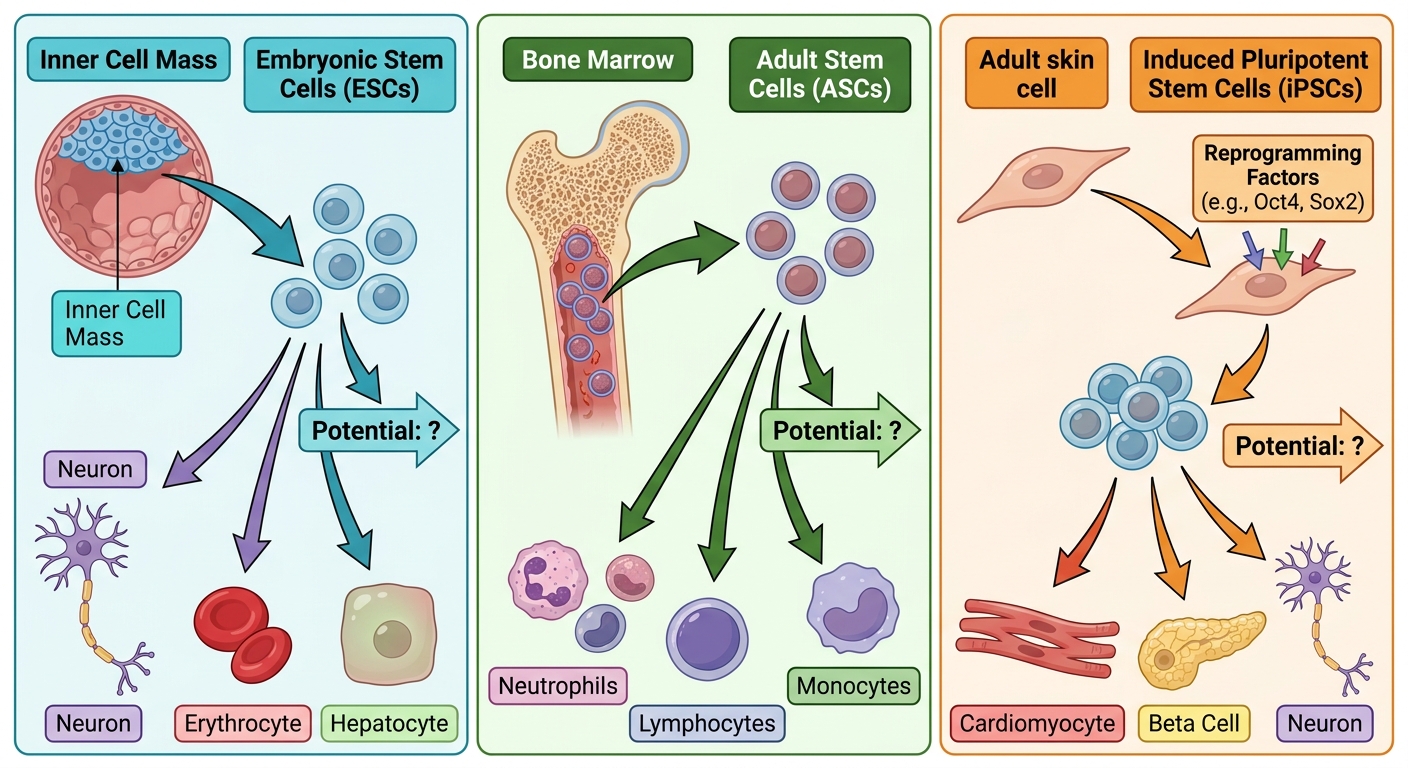
The diagram shows three types of stem cells: embryonic stem cells (ESC), adult stem cells (ASC), and induced pluripotent stem cells (iPSC). Each type differs in origin and differentiation potential.
a
State which type of stem cell is naturally pluripotent. [1]
b
Explain why iPSCs are considered pluripotent yet are distinct from ESCs in terms of their origin. [1]

Solutions
2QuestionRole of Stem Cells in Growth and DevelopmentAssessment Practice
3 marks~5 minCriterion C
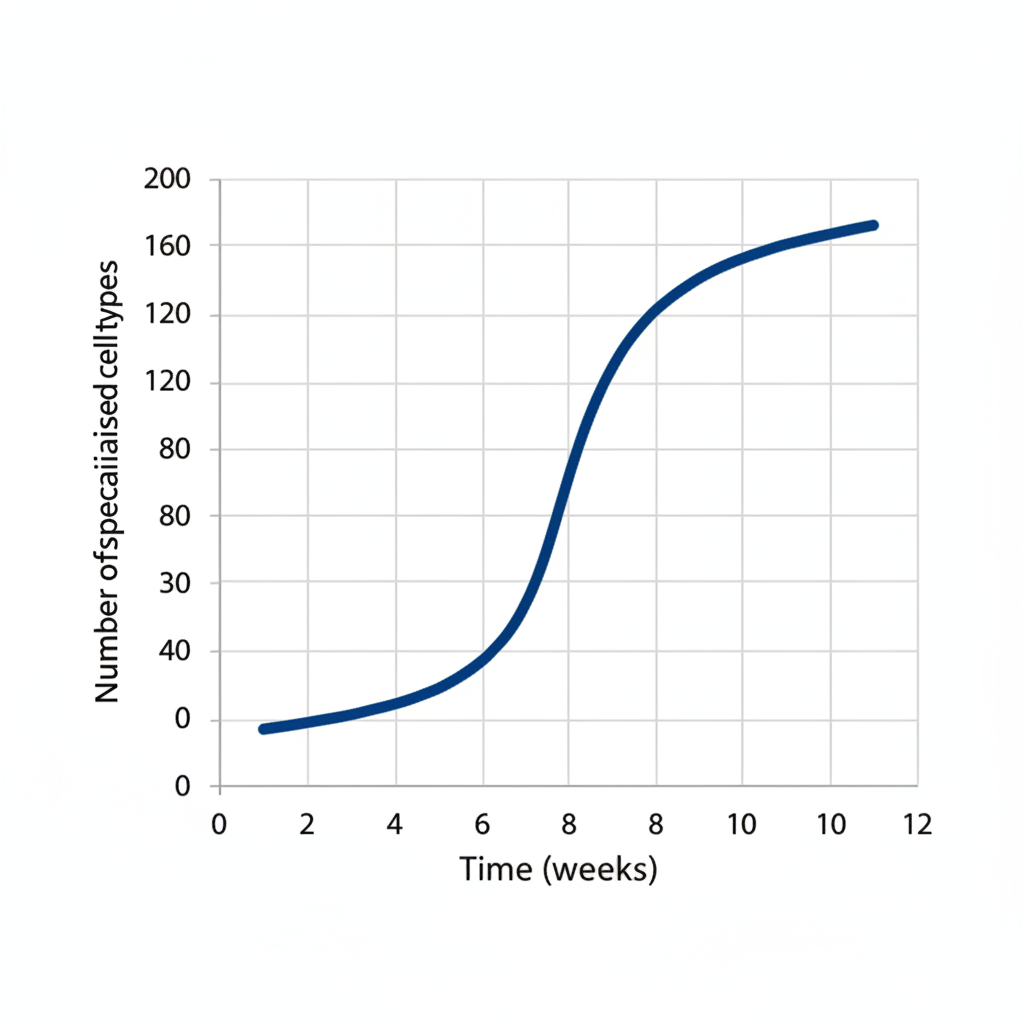
The graph below shows the number of specialised cell types present in a human embryo during the first 12 weeks of development.
a
Describe the trend shown in the graph. [1]
b
Explain how the activity of embryonic stem cells accounts for the trend you described in (a). [1]
c
After week 8, the number of specialised cell types plateaus. Analyse what this suggests about the changing role of stem cells as embryonic development progresses. [1]
Solutions
3QuestionEthical Considerations in Stem Cell ResearchAssessment Practice
3 marks~5 minCriterion D
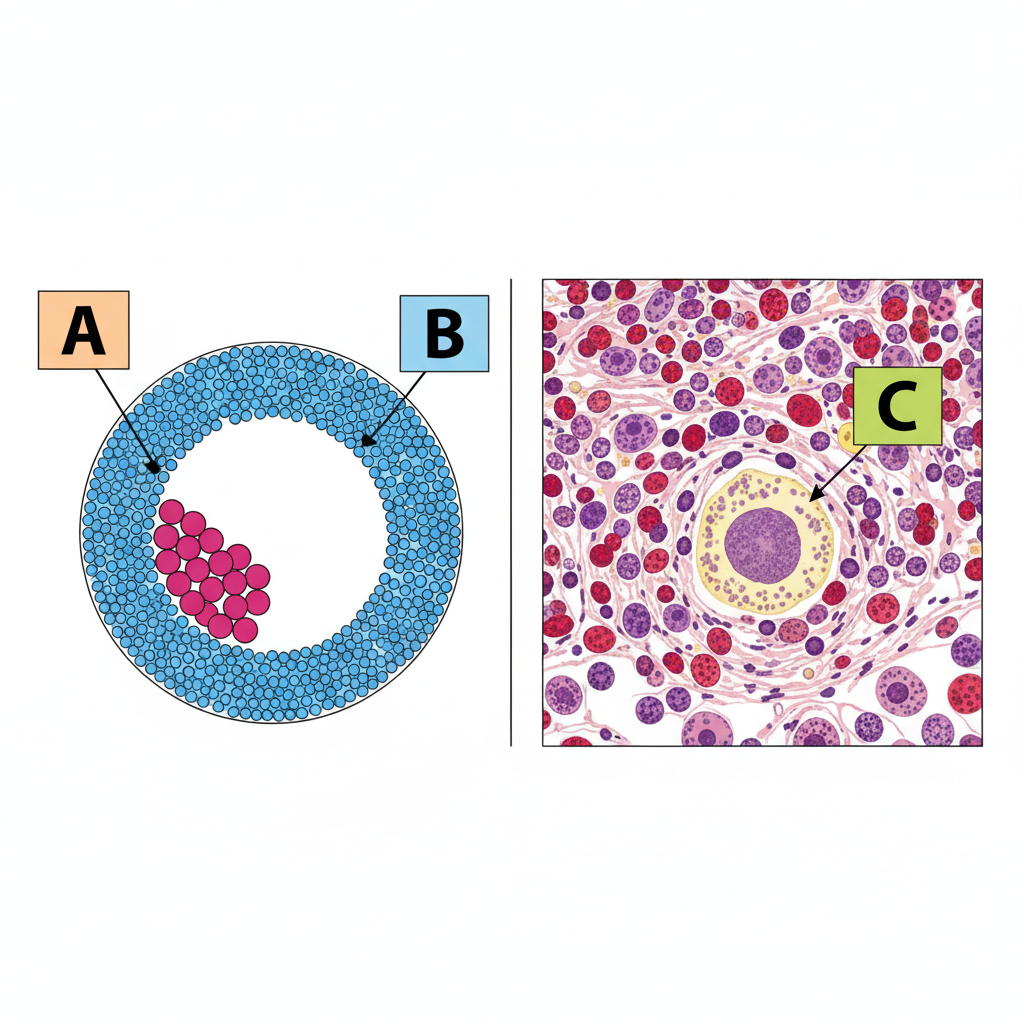
The diagram shows two structures. On the left is a blastocyst: a hollow ball of cells with an inner cell mass labelled A and an outer trophoblast layer labelled B. On the right is a bone marrow sample containing a hematopoietic stem cell labelled C.
a
Identify which labelled structure contains embryonic stem cells. [1]
b
Identify which labelled structure contains adult stem cells, and state one difference in potency between the stem cells in structure A and structure C. [1]
c
Evaluate one ethical concern associated with obtaining embryonic stem cells from a blastocyst, considering both a supporting and an opposing viewpoint. [1]
Solutions
4QuestionStem Cell Differentiation and SpecializationAssessment Practice
5 marks~8 minCriterion A
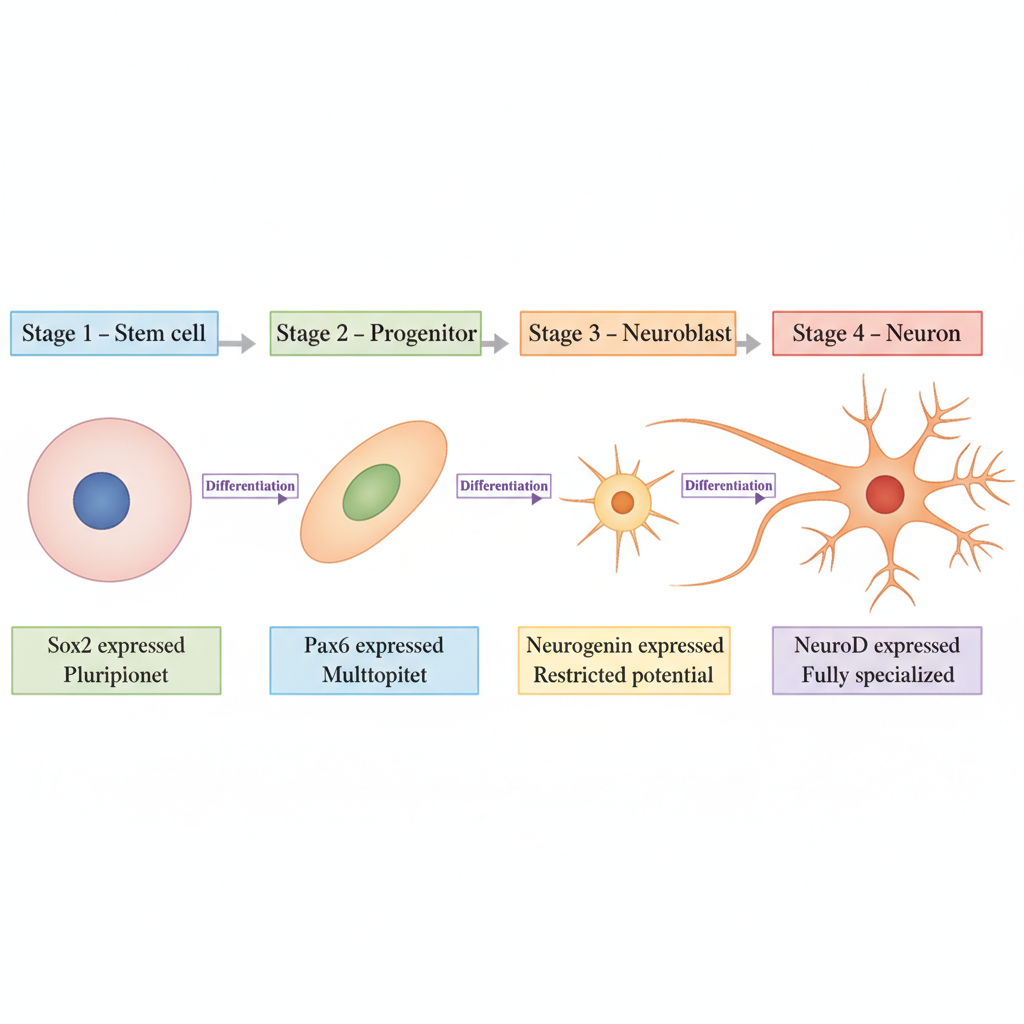
The diagram below shows four stages of neural stem cell differentiation.
Stage 3 — Neuroblast: Neurogenin expressed; restricted potential
Stage 4 — Neuron: NeuroD expressed; fully specialised
| Stage 1 | Stem cell: Sox2 expressed; pluripotent |
|---|---|
| Stage 2 | Progenitor: Pax6 expressed; multipotent |
Stage 3 — Neuroblast: Neurogenin expressed; restricted potential
Stage 4 — Neuron: NeuroD expressed; fully specialised
a
Explain how the sequential expression of Sox2, Pax6, Neurogenin, and NeuroD demonstrates that cell potential becomes progressively restricted during differentiation. [2]
b
Using the terms transcription factor and gene regulation, explain the molecular mechanism by which external developmental signals drive the transition from one stage to the next. [2]
c
Analyse why a mature neuron expressing NeuroD cannot be reprogrammed to become a muscle cell under normal physiological conditions, even though it contains the same DNA as a muscle cell. [1]
Solutions
5QuestionRole of Stem Cells in Growth and DevelopmentAssessment Practice
5 marks~8 minCriterion C
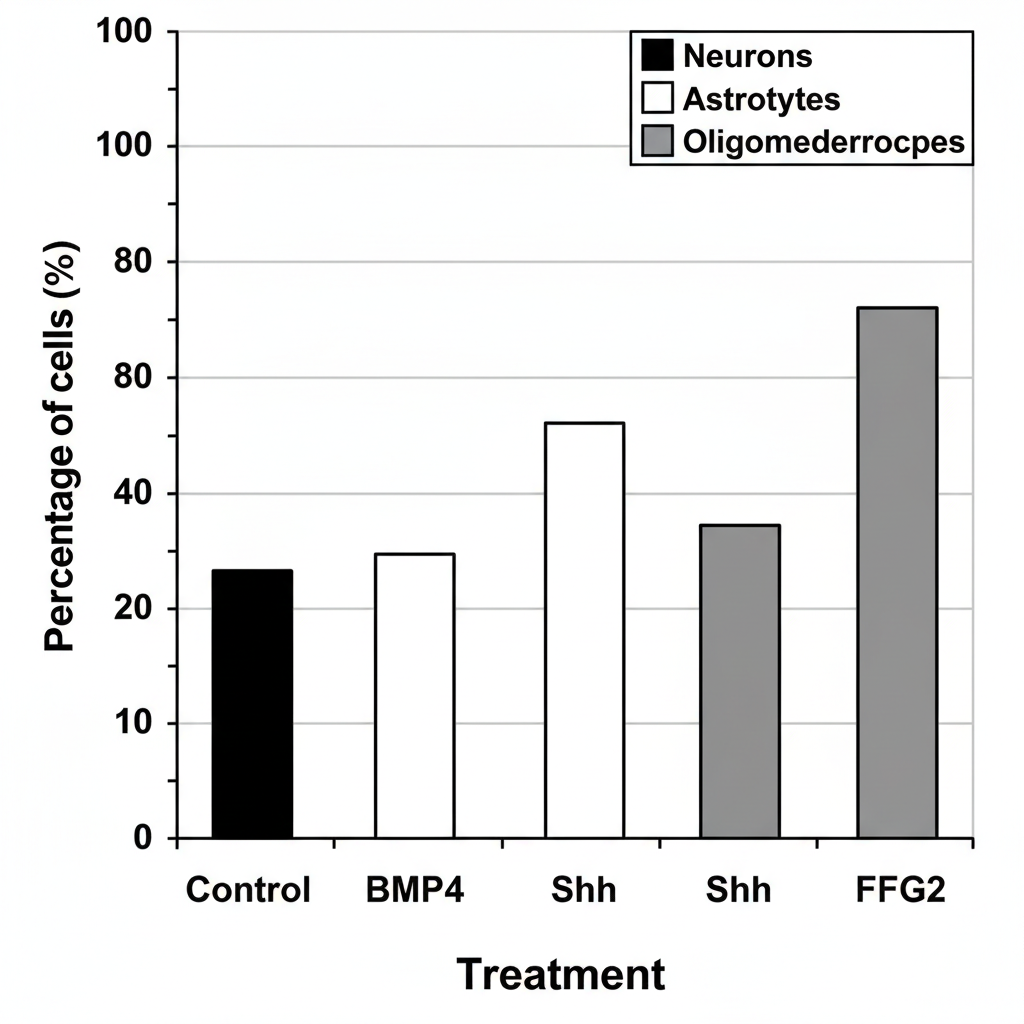
A study investigated how growth factors influence the fate of mouse neural stem cells. Cells were treated with BMP4, Shh, FGF2, or no factor (control) for 7 days. The percentage of cells differentiating into neurons, astrocytes, or oligodendrocytes was recorded and is shown in the bar chart below.
| Control | neurons 10% | astrocytes 40% | oligodendrocytes 50% |
|---|---|---|---|
| BMP4 | neurons 5% | astrocytes 85% | oligodendrocytes 10% |
| Shh | neurons 60% | astrocytes 20% | oligodendrocytes 20% |
| FGF2 | neurons 30% | astrocytes 30% | oligodendrocytes 40% |
a
State the differentiation outcome for neural stem cells in the control condition. [1]
b
Identify which growth factor most strongly promotes neuronal differentiation and describe how the data for that factor differs from the control. [2]
c
Evaluate the hypothesis that extracellular signals direct neural stem cell fate, using evidence from all four conditions. [2]
Solutions
That's every free question here — 5 of 147.
+142 more questions, plus Mock Papers & Worksheets, are waiting in Premium.