You're viewing free preview questions — 5 questions previewing here — subscribe to unlock 79 more, plus the Full Question Bank, Mock Papers & Worksheets.Upgrade
Biodiversity and Conservation — Free MYP4 Biology Practice Questions

1QuestionEndangered Species and ExtinctionConcept Practice
2 marks~3 minCriterion A
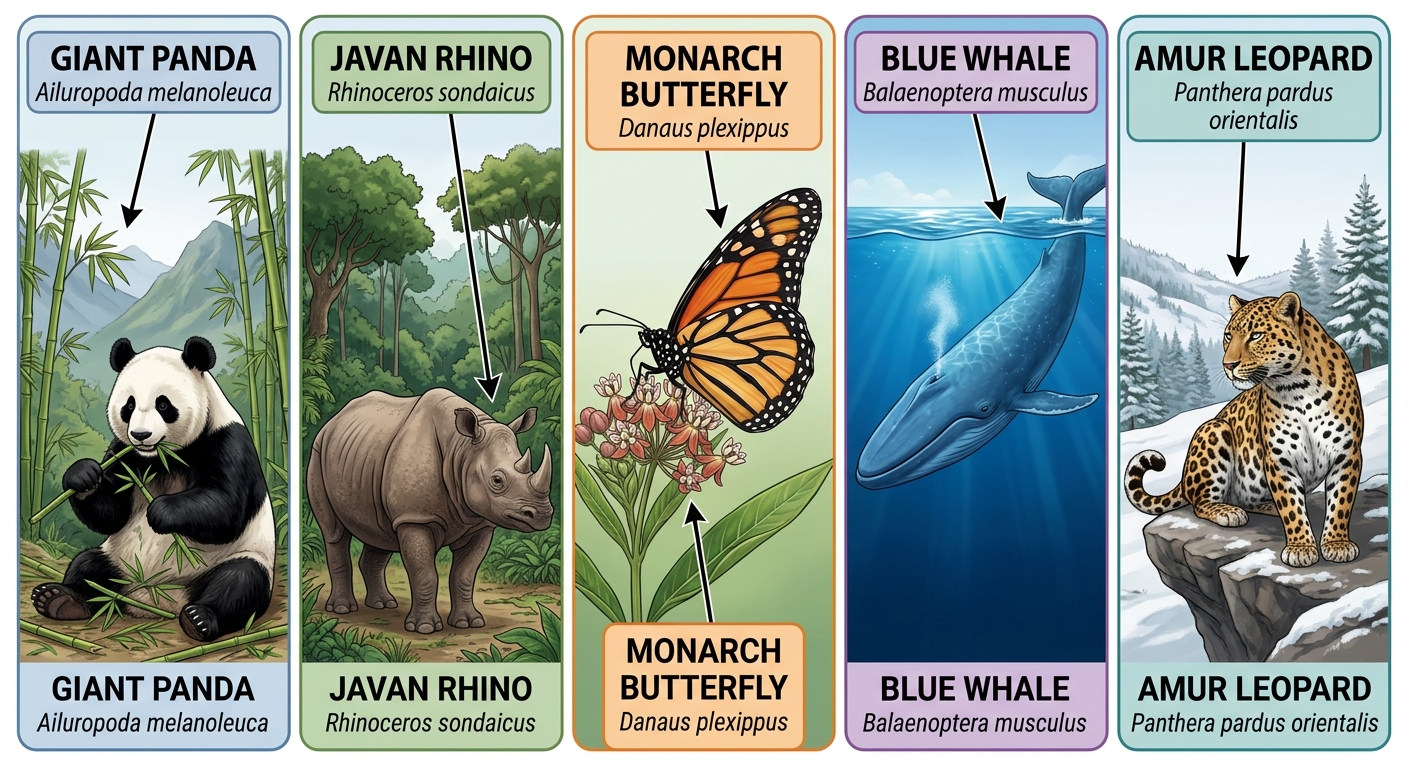
The IUCN Red List classifies species into categories based on extinction risk. Five organisms and their IUCN statuses are listed below.
Giant panda: Vulnerable
Javan rhino: Critically Endangered
Monarch butterfly: Near Threatened
Blue whale: Endangered
Amur leopard: Endangered
Giant panda: Vulnerable
Javan rhino: Critically Endangered
Monarch butterfly: Near Threatened
Blue whale: Endangered
Amur leopard: Endangered
a
Identify the organism listed above that is classified as Critically Endangered by the IUCN. [1]
b
Explain why Critically Endangered represents a more severe conservation concern than Endangered, with reference to the IUCN Red List category structure. [1]

Solutions
2QuestionImportance of Biodiversity in EcosystemsAssessment Practice
3 marks~5 minCriterion C
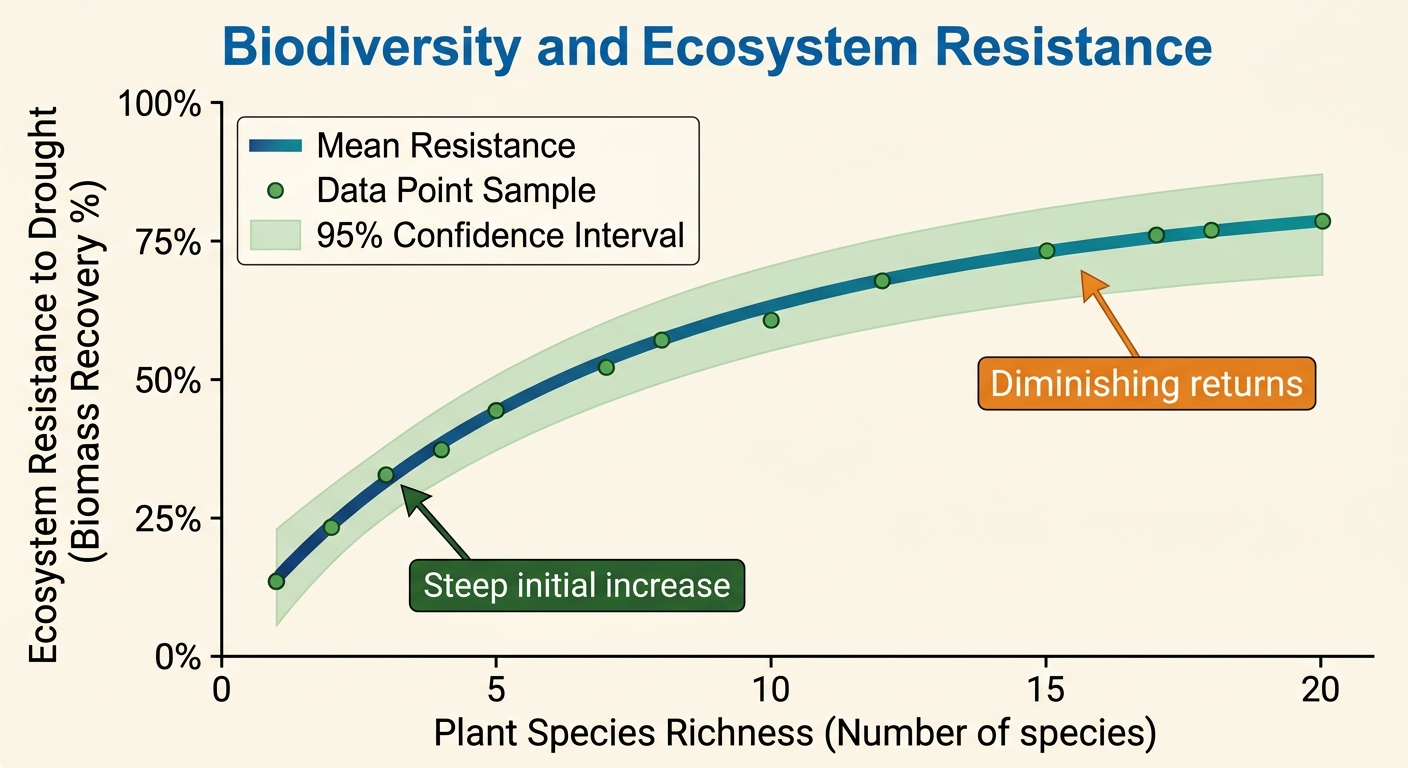
The graph "Biodiversity and Ecosystem Resistance" shows plant species richness (x-axis, 0–20 species) plotted against biomass recovery after drought (y-axis, 0%–100%). The relationship is non-linear: biomass recovery rises steeply between 1 and 8 species, then levels off toward 100% as richness approaches 20 species.
a
Describe the trend shown in the graph. [1]
b
Explain how a greater variety of plant species increases a grassland ecosystem's resistance to drought. [1]
c
Discuss the limitations of concluding from this graph alone that high plant species richness will always protect a grassland ecosystem against drought. [1]
Solutions
3QuestionEndangered Species and ExtinctionConcept Practice
2 marks~3 minCriterion D
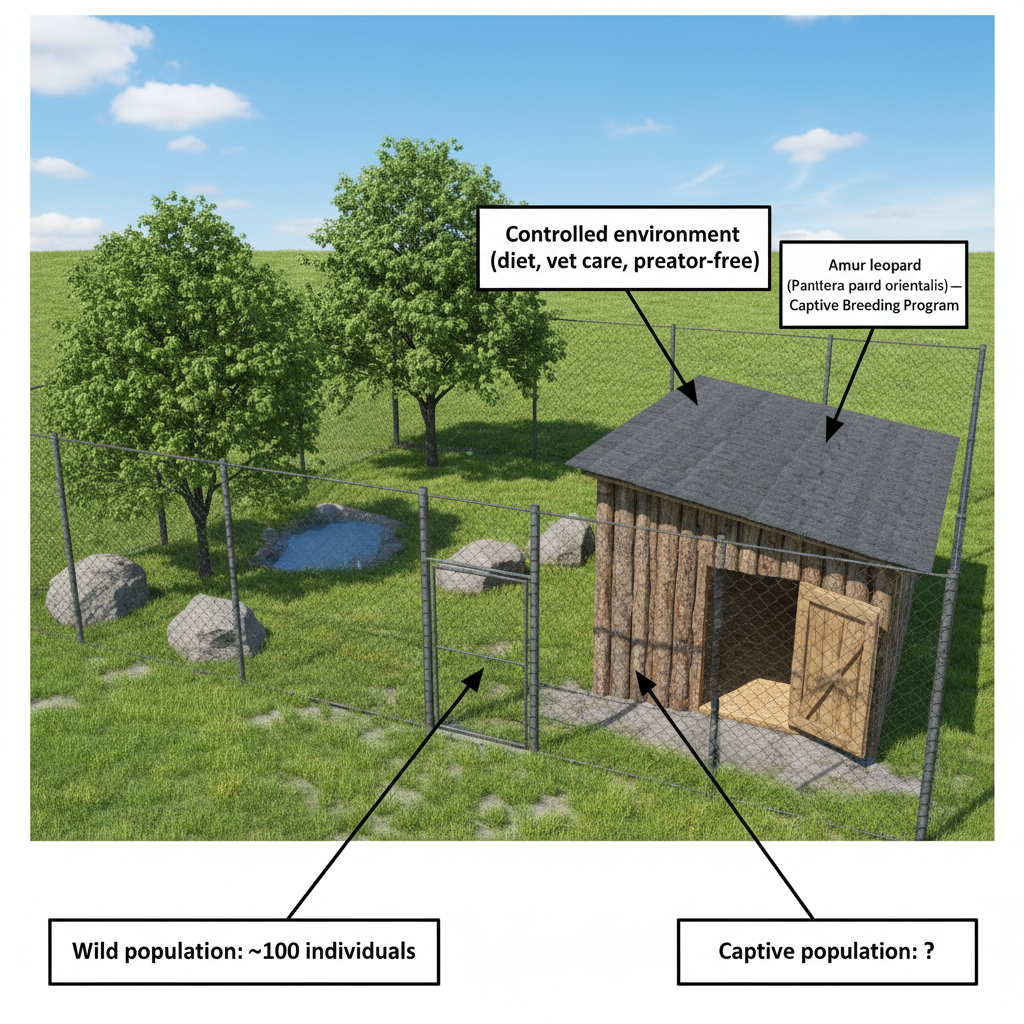
A zoo manages a captive breeding programme for the critically endangered Amur leopard. Fewer than 100 individuals survive in the wild, and the species faces ongoing habitat loss in the Russian Far East.
a
Outline how a captive breeding programme works to conserve the Amur leopard. [1]
b
Discuss one limitation that reduces the long-term effectiveness of this conservation approach. [1]
Solutions
4QuestionImportance of Biodiversity in EcosystemsAssessment Practice
5 marks~8 minCriterion C
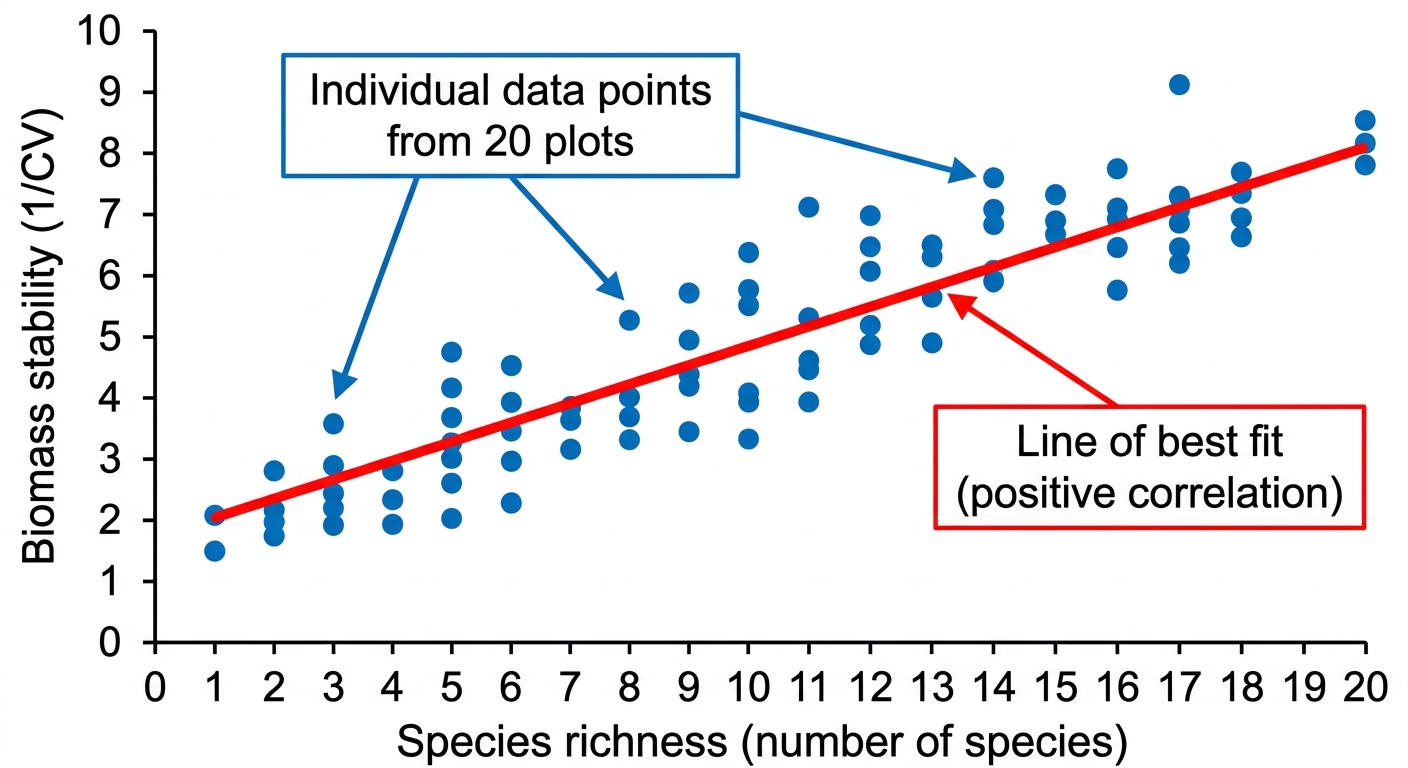
In a long-term grassland experiment, 20 plots were established with species richness ranging from 1 to 20 plant species. Biomass stability — measured as the inverse of the coefficient of variation , where higher values indicate greater stability — was recorded over five years, including two drought years. The graph shows a positive correlation: stability rises from approximately 2 at 1 species to approximately 8 at 20 species, with a best-fit line and visible scatter around it.
a
Describe the pattern shown in the graph. [1]
b
Explain one mechanism — either functional redundancy or species complementarity — that could account for this pattern. [2]
c
Evaluate whether this experimental evidence supports the hypothesis that higher biodiversity increases ecosystem resilience to drought. [2]
Solutions
5QuestionThreats to Biodiversity: Habitat Loss, Pollution, Climate ChangeAssessment Practice
6 marks~9 minCriterion D
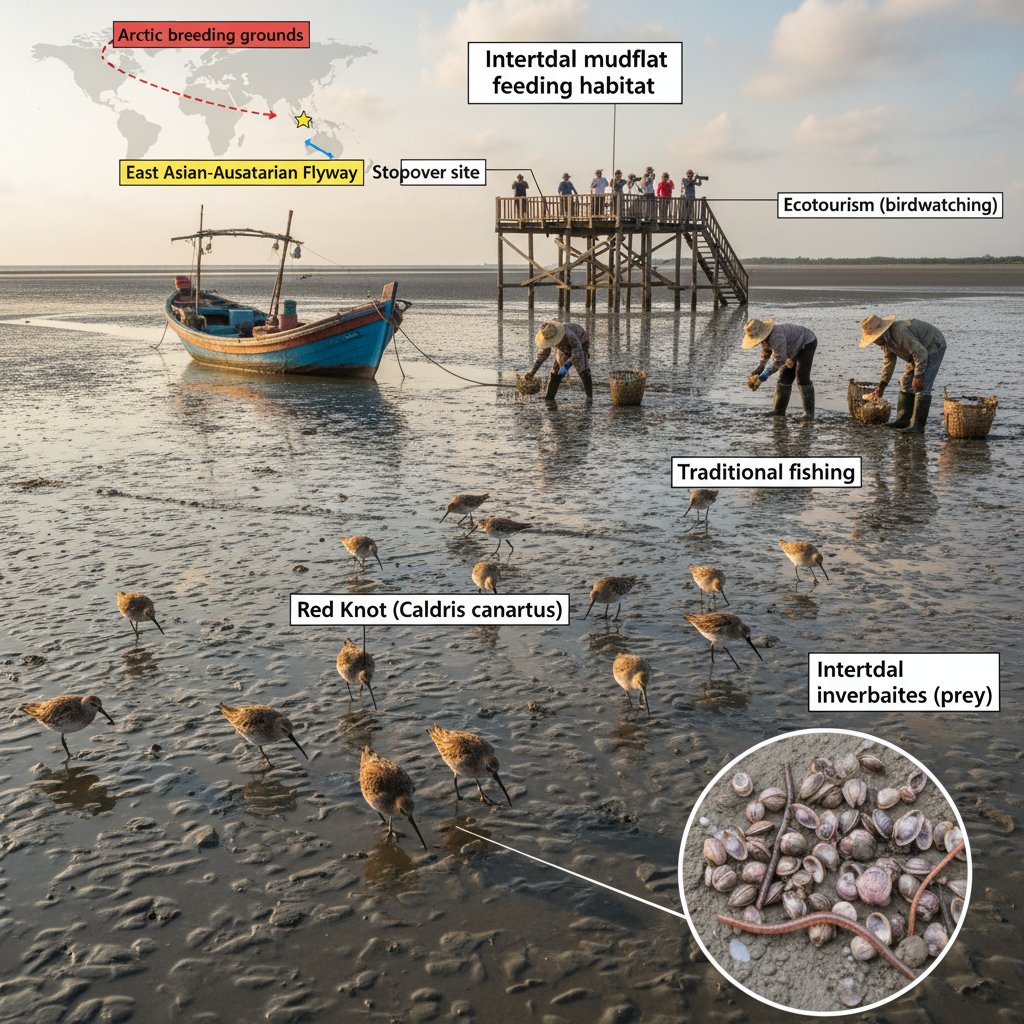
The Red Knot (Calidris canutus) is a migratory shorebird that breeds in the Arctic and winters in Australia, stopping at intertidal mudflats along the East Asian–Australasian Flyway to feed. Climate-driven sea-level rise and altered sediment patterns have caused a 70% population decline at one key stopover site over 30 years. Local communities depend on birdwatching ecotourism and traditional fishing of the same intertidal invertebrates that Red Knots consume.
a
Explain how continued mudflat loss threatens both local ecotourism revenue and traditional fishing practices. [2]
b
Describe the trophic cascade that could result if Red Knot populations collapse, and explain how this would affect intertidal ecosystem function. [2]
c
Evaluate the use of climate model predictions in planning conservation strategies for the Red Knot, including one specific limitation of these models for projections beyond 2050. [2]
Solutions
That's every free question here — 5 of 84.
+79 more questions, plus Mock Papers & Worksheets, are waiting in Premium.