You're viewing free preview questions — 5 questions previewing here — subscribe to unlock 78 more, plus the Full Question Bank, Mock Papers & Worksheets.Upgrade
Biotic and Abiotic Factors — Free MYP4 Biology Practice Questions

1QuestionHow Biotic Factors Influence Population SizeConcept Practice
2 marks~3 minCriterion A
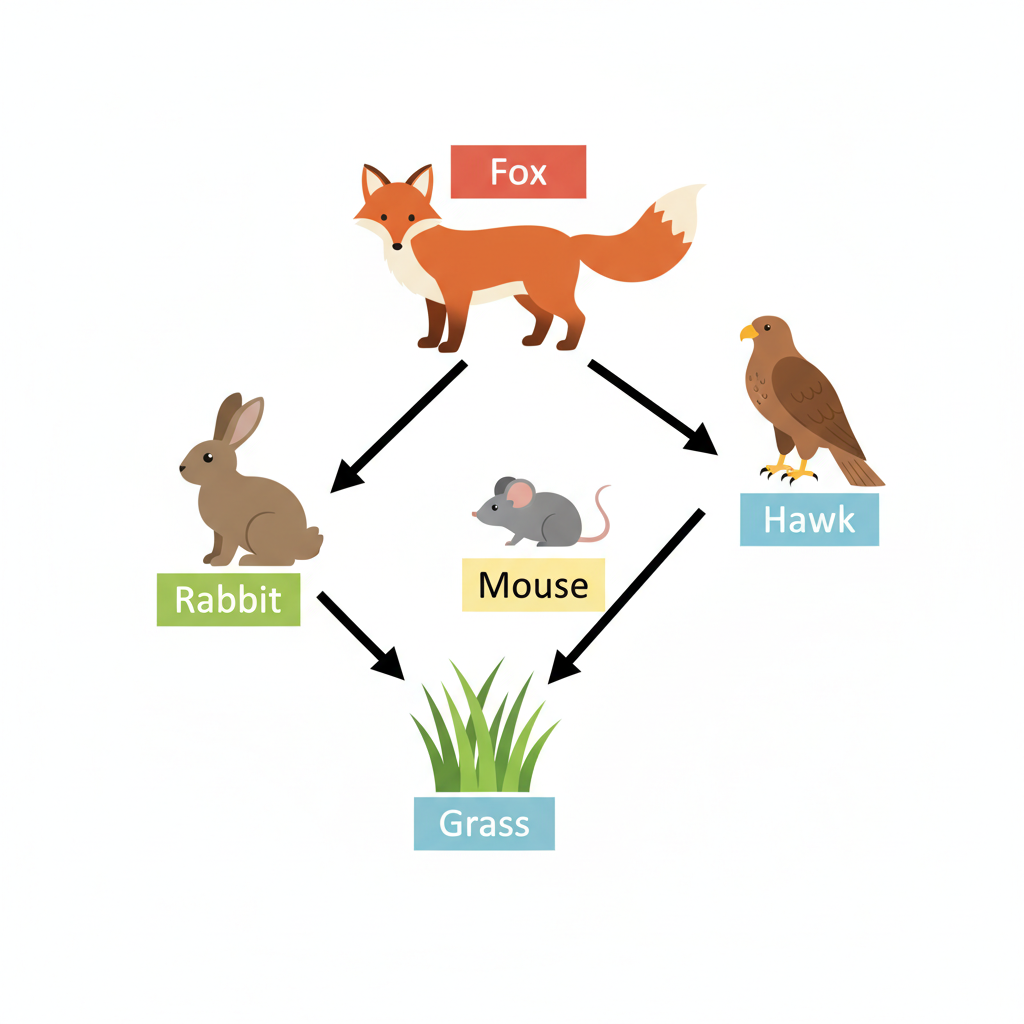
The diagram shows a food web in which grass is eaten by rabbits, and rabbits are eaten by foxes.
a
Identify the organism that is a predator of the rabbit. [1]
b
Explain one effect of this predator on the rabbit population size. [1]

Solutions
2QuestionEcosystem Changes Due to Natural and Human CausesAssessment Practice
3 marks~5 minCriterion A
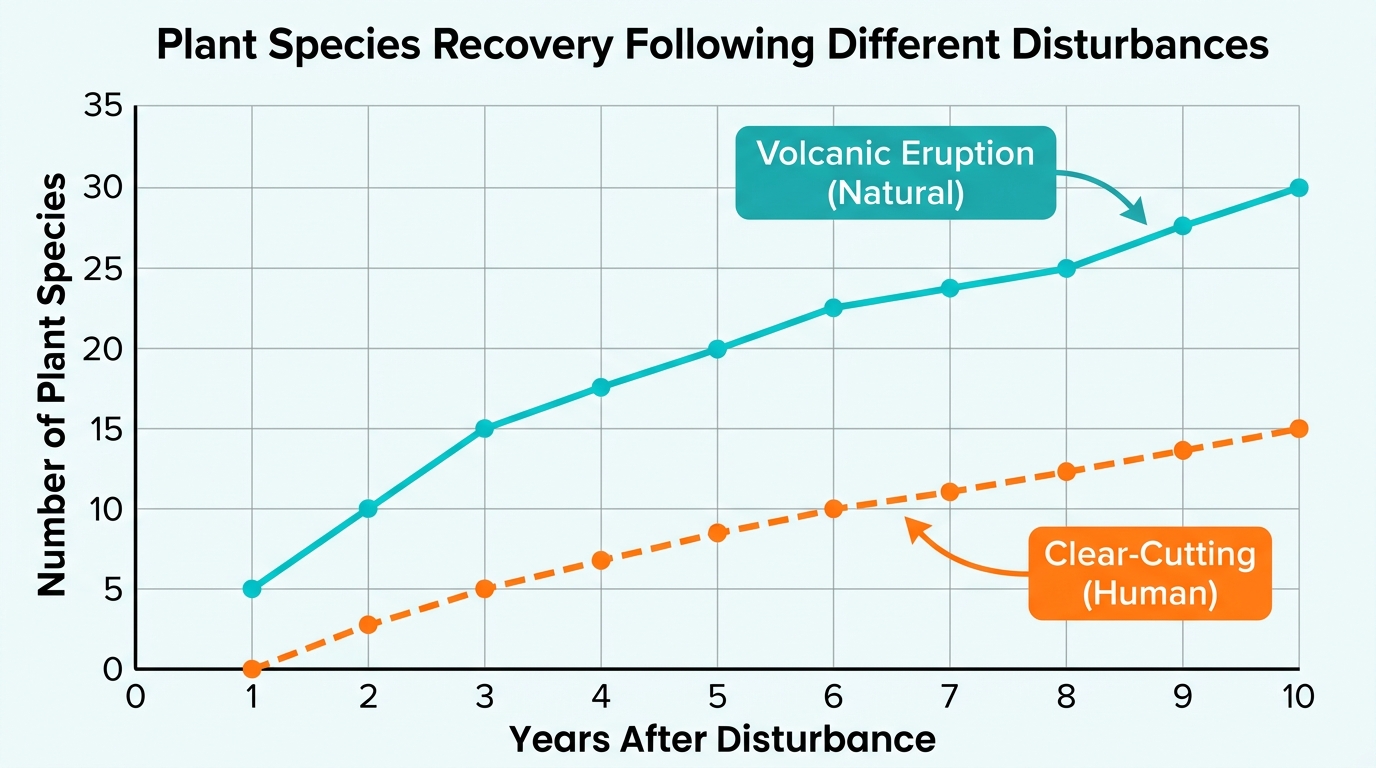
A graph shows plant species recovery in two forest plots over 10 years following different disturbances. In the volcanic eruption plot, species richness begins at 5 in year 1 and rises steadily to 30 by year 10. In the clear-cut plot, species richness begins at 0 in year 1 and reaches only 15 by year 10.
a
Describe the difference in recovery between the two plots. [1]
b
Explain why the volcanic eruption plot recovers more rapidly, referring to soil seed banks and surviving root systems. [1]
c
Analyse why clear-cutting results in slower and less complete recovery than volcanic eruption, despite both being severe disturbances. [1]
Solutions
3QuestionAdaptations to Environmental ConditionsAssessment Practice
4 marks~6 minCriterion C
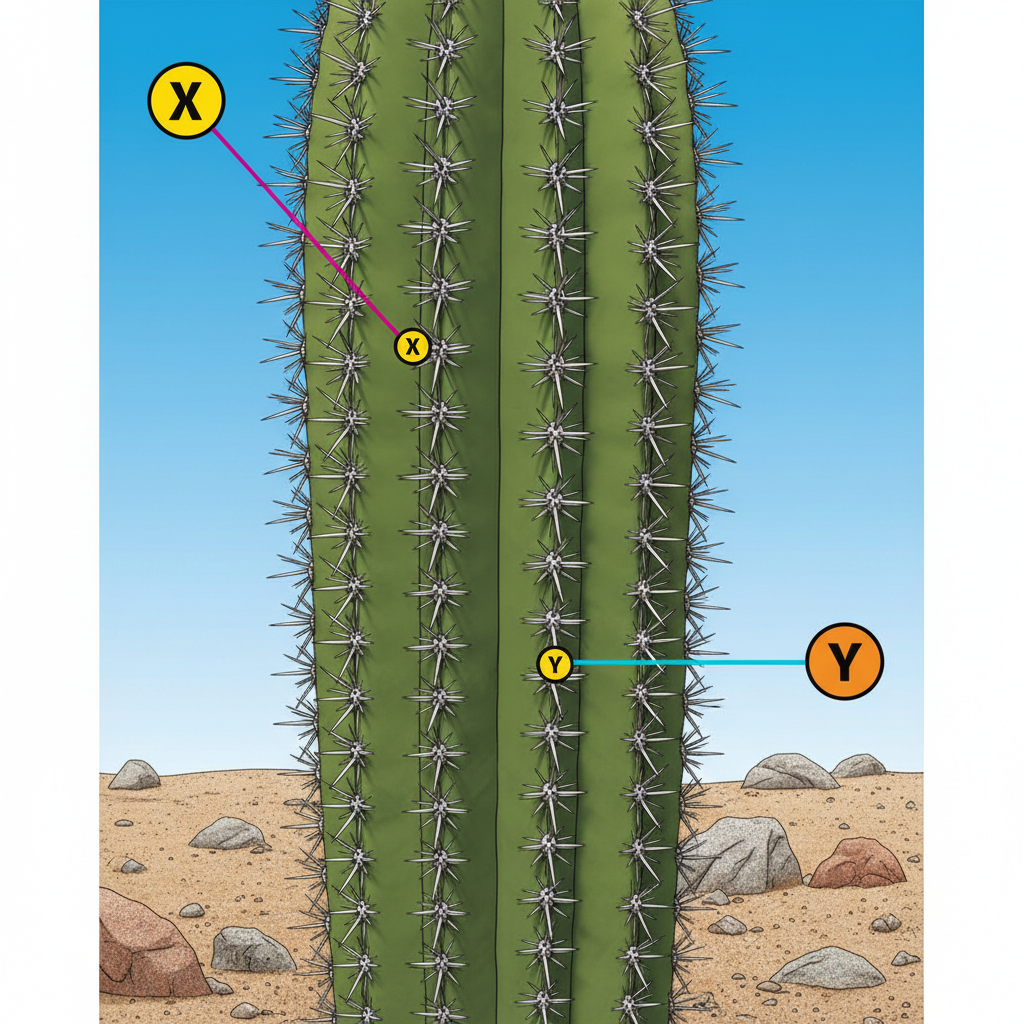
The diagram shows a cactus with two labelled features: Feature X (spines, which are modified leaves) and Feature Y (a thick, waxy stem).
a
Explain how Feature X reduces water loss in a hot, dry environment. [1]
b
Explain how Feature Y reduces water loss in a hot, dry environment. [1]
c
A student claims that replacing the spines with broad, flat leaves would make the cactus better adapted to its desert environment because leaves carry out more photosynthesis. Evaluate this claim. [2]
Solutions
4QuestionAdaptations to Environmental ConditionsAssessment Practice
4 marks~6 minCriterion D
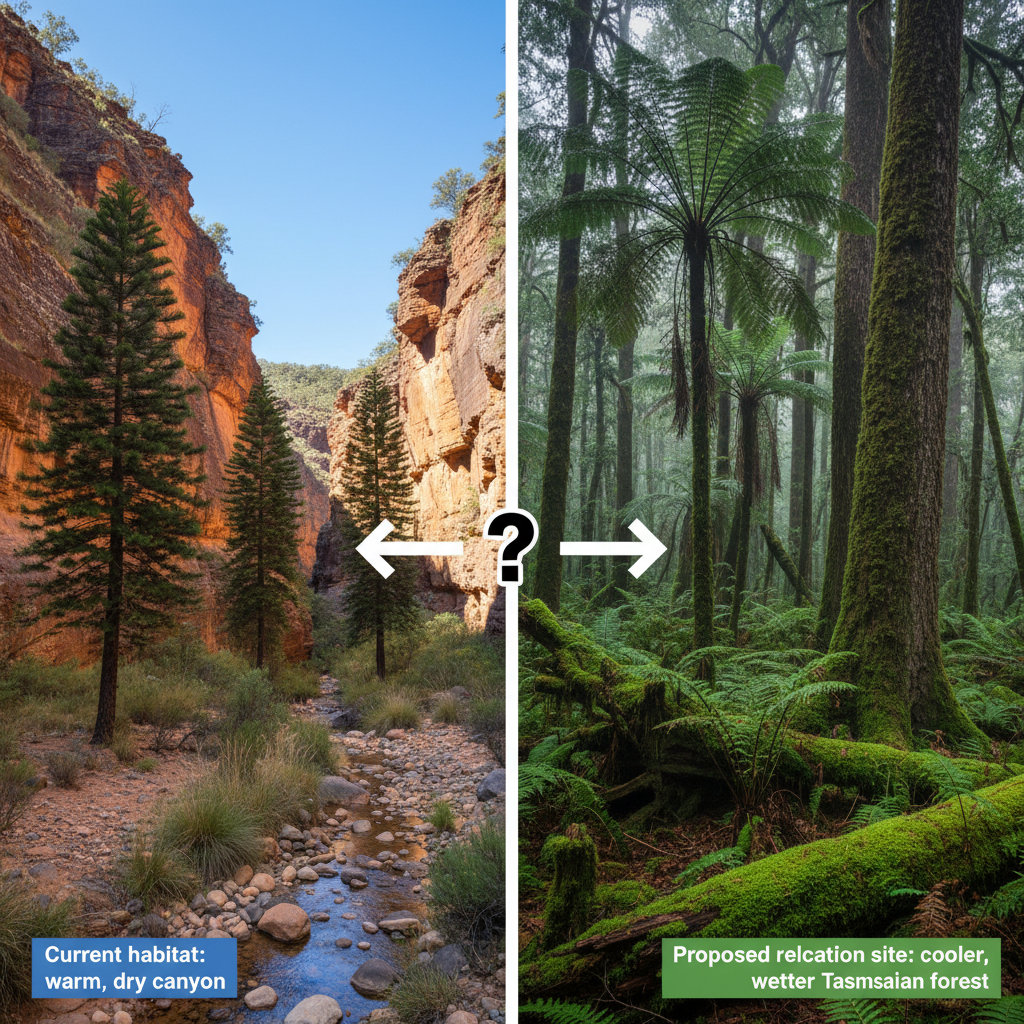
The Wollemi pine (Wollemia nobilis) is a critically endangered tree found only in a remote Australian canyon. Climate change is making its habitat warmer and drier, threatening its survival. Scientists are considering assisted migration: relocating seedlings to a cooler, wetter Tasmanian forest outside the species' natural range.
a
Explain two ecological risks of introducing the Wollemi pine to a new ecosystem in Tasmania. [2]
b
Discuss the ethical dilemma between allowing the Wollemi pine to go extinct naturally and intervening through assisted migration. In your answer, refer to both the value of biodiversity and the precautionary principle. [2]
Solutions
5QuestionHow Biotic Factors Influence Population SizeAssessment Practice
5 marks~8 minCriterion B
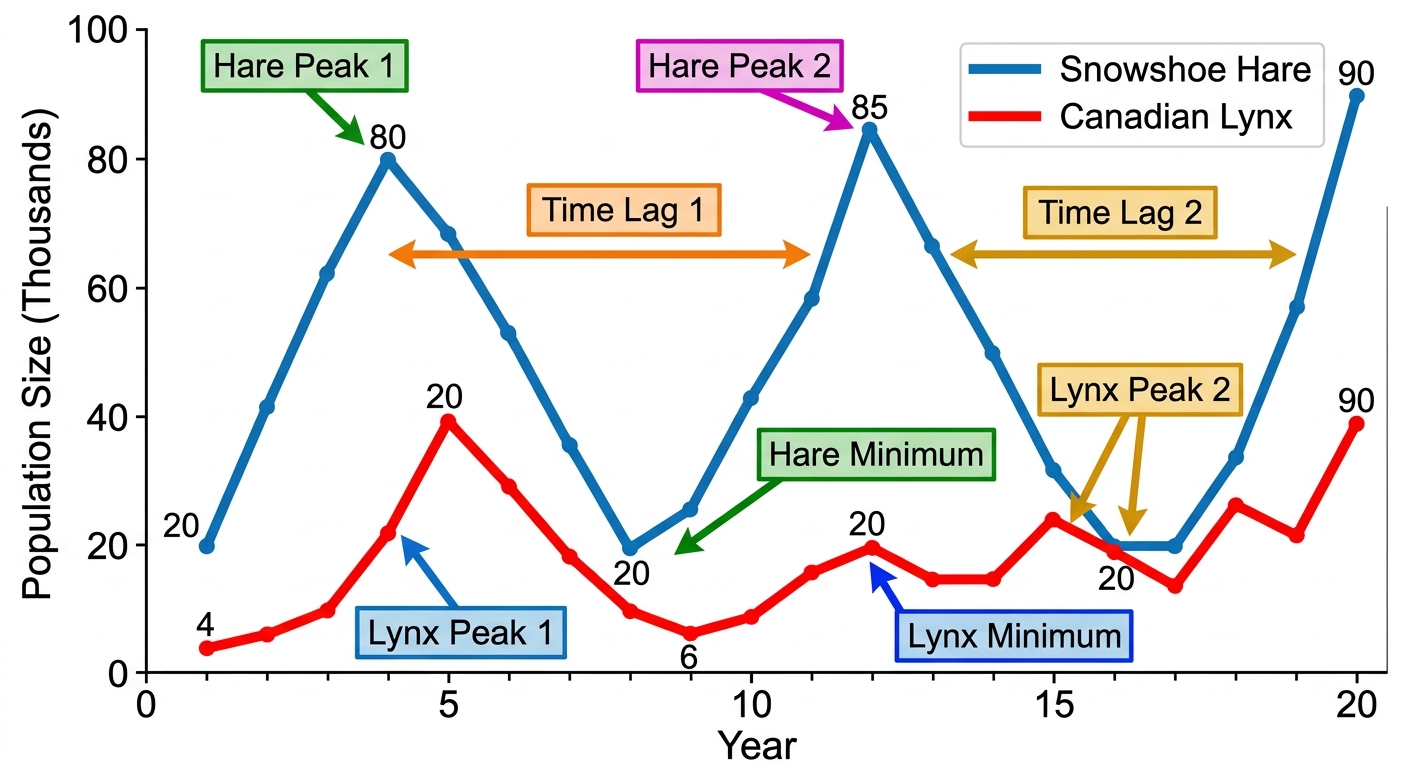
A 20-year study tracked snowshoe hare and Canadian lynx populations in a boreal forest.
A biologist hypothesises that lynx population size is controlled solely by hare availability.
| Year | 1 | 2 | 3 | 4 | 5 | 6 | 7 | 8 | 9 | 10 | 11 | 12 | 13 | 14 | 15 | 16 | 17 | 18 | 19 | 20 |
|---|---|---|---|---|---|---|---|---|---|---|---|---|---|---|---|---|---|---|---|---|
| Hare population (thousands) | 20 | 30 | 40 | 80 | 60 | 50 | 40 | 20 | 25 | 70 | 75 | 85 | 80 | 70 | 60 | 20 | 20 | 30 | 40 | 90 |
| Lynx population (thousands) | 4 | 6 | 8 | 10 | 20 | 18 | 16 | 12 | 6 | 8 | 10 | 20 | 18 | 16 | 14 | 6 | 6 | 8 | 10 | 18 |
A biologist hypothesises that lynx population size is controlled solely by hare availability.
a
Describe the relationship between the hare and lynx populations, using specific values from the data. [2]
b
Identify the time lag in the lynx population's response to changes in hare population size, and explain what biological process this lag reflects. [1]
c
Evaluate the biologist's hypothesis using the concept of time-delayed density dependence. [2]
Solutions
That's every free question here — 5 of 83.
+78 more questions, plus Mock Papers & Worksheets, are waiting in Premium.