You're viewing free preview questions — 5 questions previewing here — subscribe to unlock 85 more, plus the Full Question Bank, Mock Papers & Worksheets.Upgrade
Human Impact and Climate Change — Free MYP4 Biology Practice Questions

1QuestionDeforestation, Urbanization, and Land UseConcept Practice
2 marks~3 minCriterion D
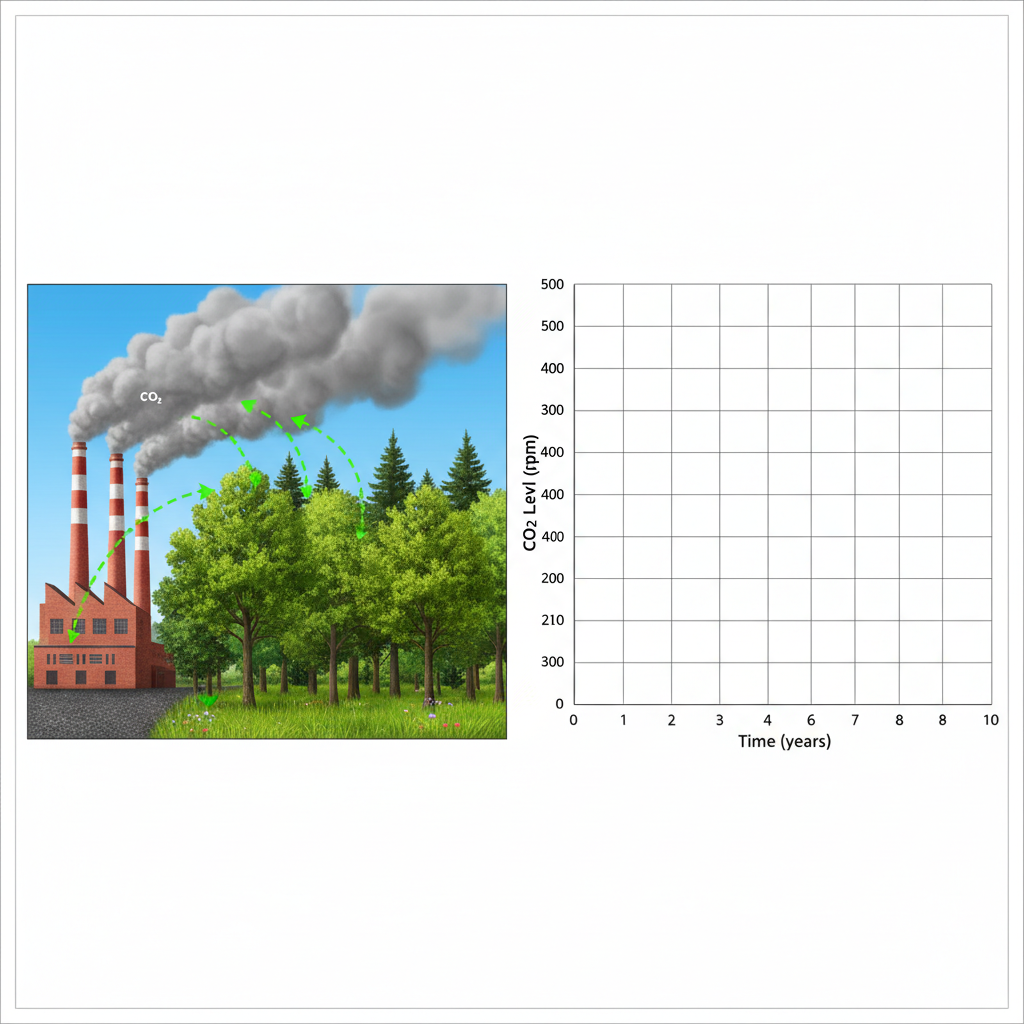
A factory in a forested region emits large quantities of . To offset these emissions, the company funds a reforestation project in a nearby degraded area, planting native tree species across 500 hectares. Critics argue that carbon offset schemes may not represent genuine environmental progress.
a
Describe one way the reforestation project acts as a carbon sink. [1]
b
Evaluate whether carbon offset projects such as this one represent a genuine solution to industrial emissions. [1]

Solutions
2QuestionDeforestation, Urbanization, and Land UseAssessment Practice
6 marks~9 minCriterion A
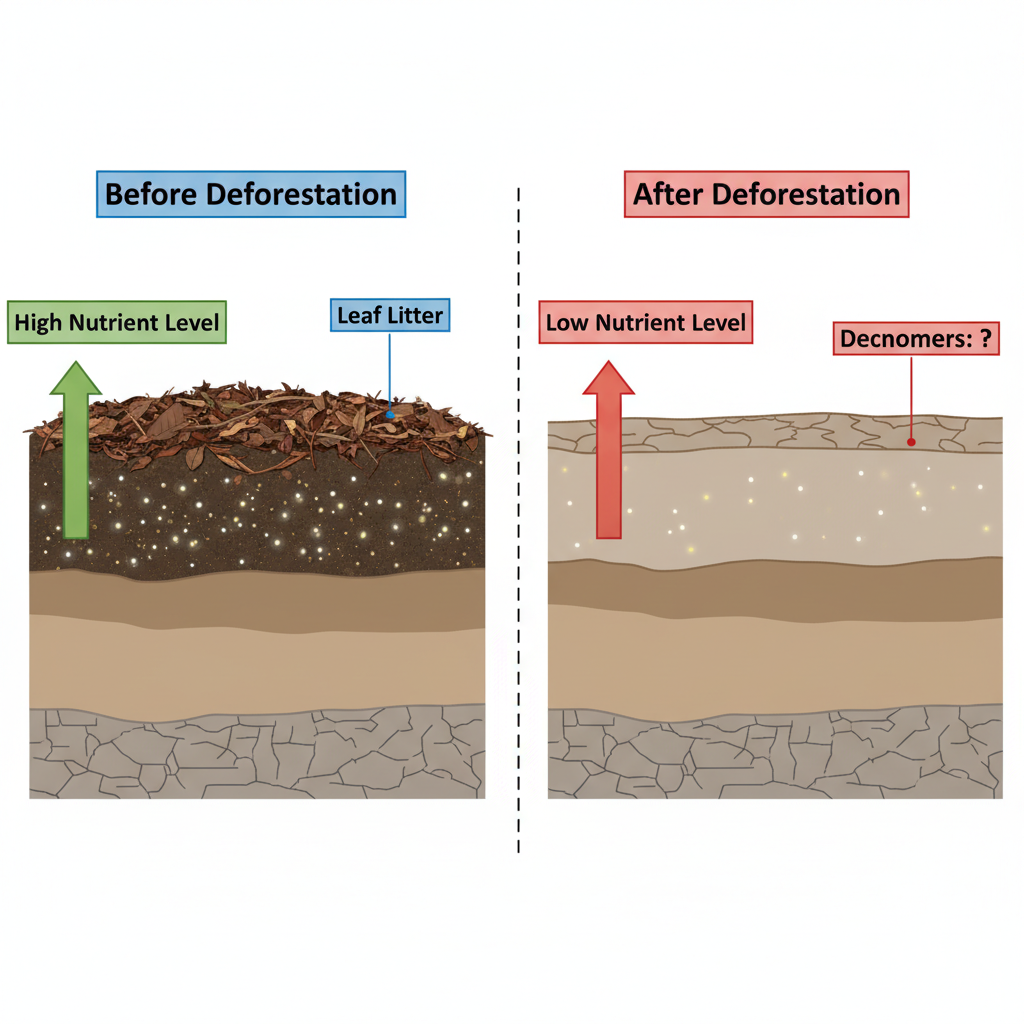
The diagram below shows a tropical forest soil profile before and after deforestation. Before deforestation: a thick leaf litter layer is present, decomposer populations (fungi and bacteria) are large, and nutrient levels are high. After deforestation: leaf litter is absent, decomposer populations are greatly reduced, and nutrient levels are low.
a
State the role of leaf litter in maintaining decomposer populations in the soil. [1]
b
Explain how the loss of leaf litter leads to a decrease in soil fertility, referring to nutrient cycling in your answer. [2]
c
Analyse how decreased soil fertility affects the long-term recovery of the forest ecosystem, considering both vegetation re-establishment and ecological succession. [3]
Solutions
3QuestionDeforestation, Urbanization, and Land UseConcept Practice
2 marks~3 minCriterion A
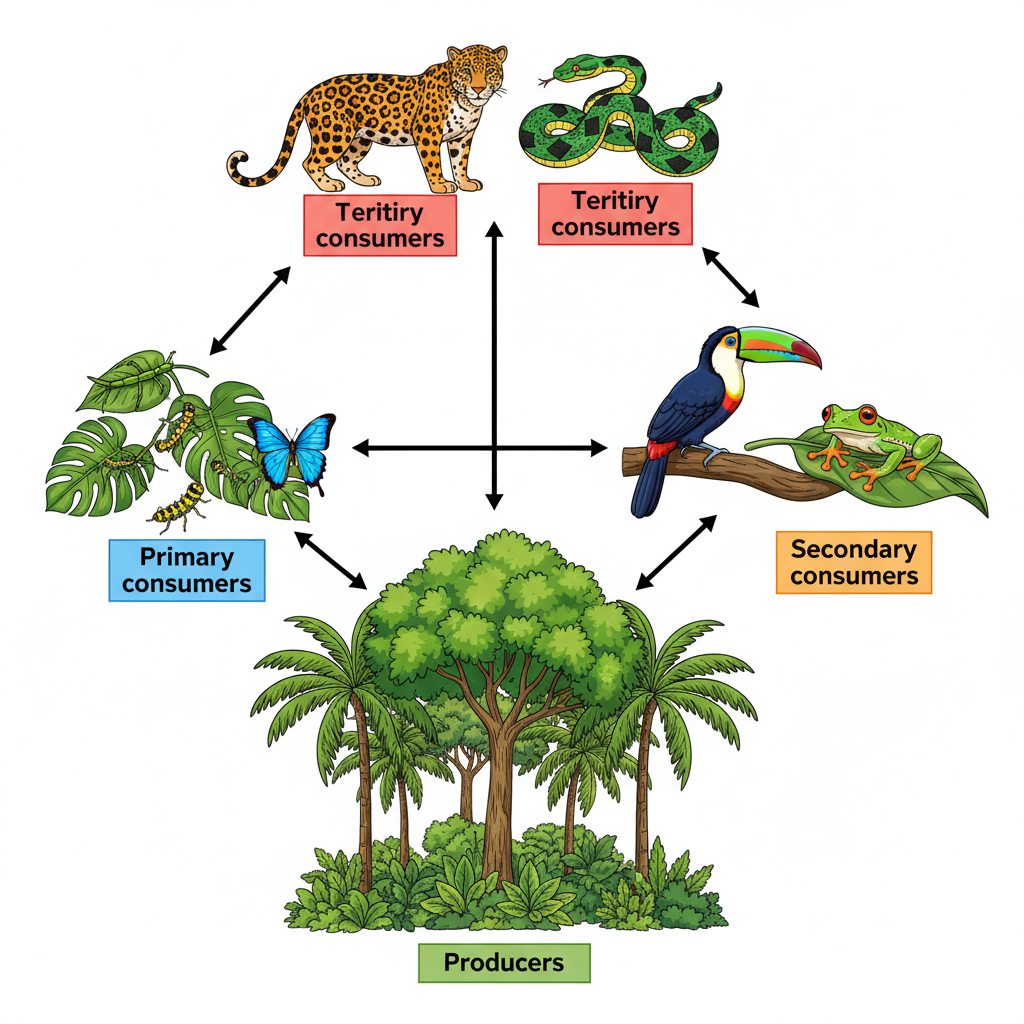
A tropical rainforest food web contains the following organisms:
Producers: trees and shrubs
Primary consumers: insects and caterpillars
Secondary consumers: birds and frogs
Tertiary consumers: jaguars and snakes
Approximately 10% of energy is transferred between each trophic level; the remaining 90% is lost.
Producers: trees and shrubs
Primary consumers: insects and caterpillars
Secondary consumers: birds and frogs
Tertiary consumers: jaguars and snakes
Approximately 10% of energy is transferred between each trophic level; the remaining 90% is lost.
a
State the sequence of energy flow from producers to tertiary consumers, using the terms: producer, primary consumer, secondary consumer, and tertiary consumer. [1]
b
Explain why the number of jaguars in this food web is much smaller than the number of trees and shrubs. [1]
Solutions
4QuestionClimate Action and Global CitizenshipAssessment Practice
6 marks~9 minCriterion C
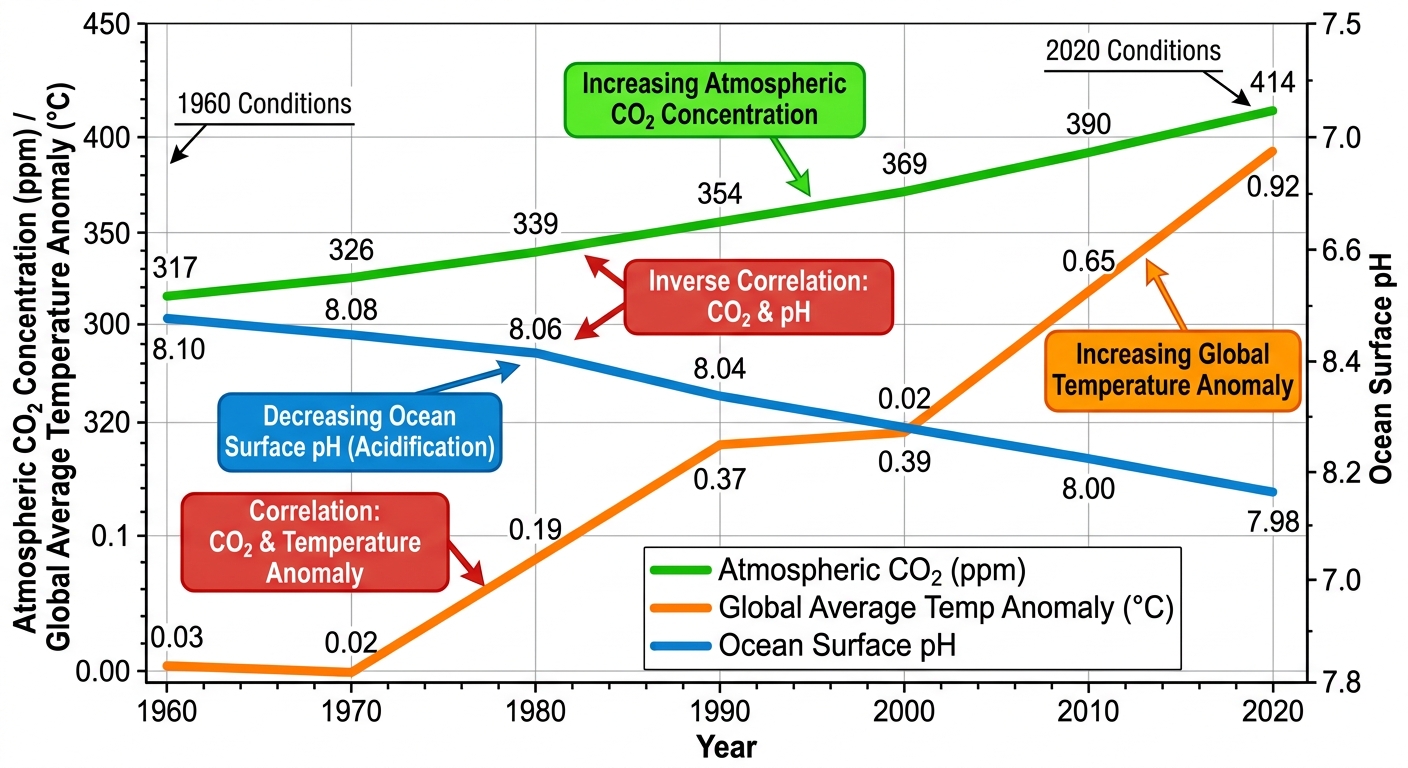
The table below shows changes in atmospheric concentration (ppm), global average temperature anomaly (°C), and ocean surface pH from 1960 to 2020.
| Year | 1960 | 1970 | 1980 | 1990 | 2000 | 2010 | 2020 |
|---|---|---|---|---|---|---|---|
| (ppm) | 317 | 326 | 339 | 354 | 369 | 390 | 414 |
| Temperature anomaly (°C) | 0.03 | 0.02 | 0.19 | 0.37 | 0.39 | 0.65 | 0.92 |
| Ocean pH | 8.10 | 8.08 | 8.06 | 8.04 | 8.02 | 8.00 | 7.98 |
a
Describe the relationship between concentration and temperature anomaly shown in the data. [2]
b
Explain how increasing atmospheric causes ocean acidification, using the chemical reactions involved. [3]
c
A marine biologist argues that the pH change from 8.10 to 7.98 is too small to affect marine life significantly. Using the data and your knowledge of ocean chemistry, evaluate this claim. [1]
Solutions
5QuestionDeforestation, Urbanization, and Land UseAssessment Practice
8 marks~12 minCriterion D
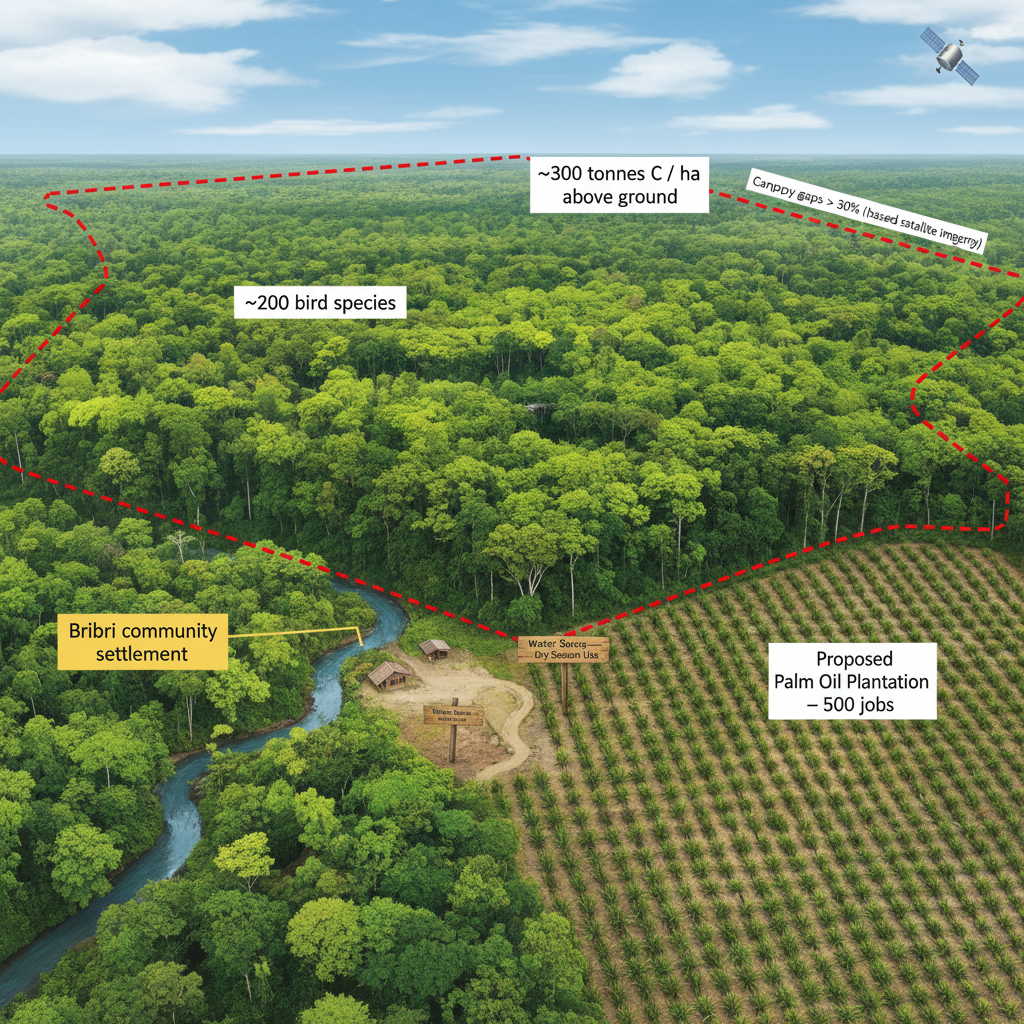
A proposal has been made to convert a 50-year-old secondary forest in Costa Rica into a palm oil plantation. The site supports over 200 bird species, stores an estimated 300 tonnes of carbon per hectare above ground, and serves as the dry-season water source for the Indigenous Bribri community. The developer argues that satellite imagery showing canopy gaps across more than 30% of the area proves the forest is 'degraded', and that the plantation will create 500 local jobs and reduce palm oil imports from deforested regions in Southeast Asia.
a
Identify TWO environmental impacts of replacing this forest with a palm oil plantation. For each impact, refer to a specific ecological concept. [2]
b
Identify TWO societal impacts on the Bribri community, linking each impact to their specific dependence on the forest. [2]
c
Evaluate the developer's use of satellite imagery alone to classify the forest as 'degraded'. In your response, discuss at least TWO limitations of relying solely on remote-sensing data for this environmental impact assessment. [4]
Solutions
That's every free question here — 5 of 90.
+85 more questions, plus Mock Papers & Worksheets, are waiting in Premium.