You're viewing free preview questions — 5 questions previewing here — subscribe to unlock 59 more, plus the Full Question Bank, Mock Papers & Worksheets.Upgrade
Adaptation — Free MYP4 Biology Practice Questions

1QuestionStructural Adaptations in OrganismsConcept Practice
2 marks~3 minCriterion A
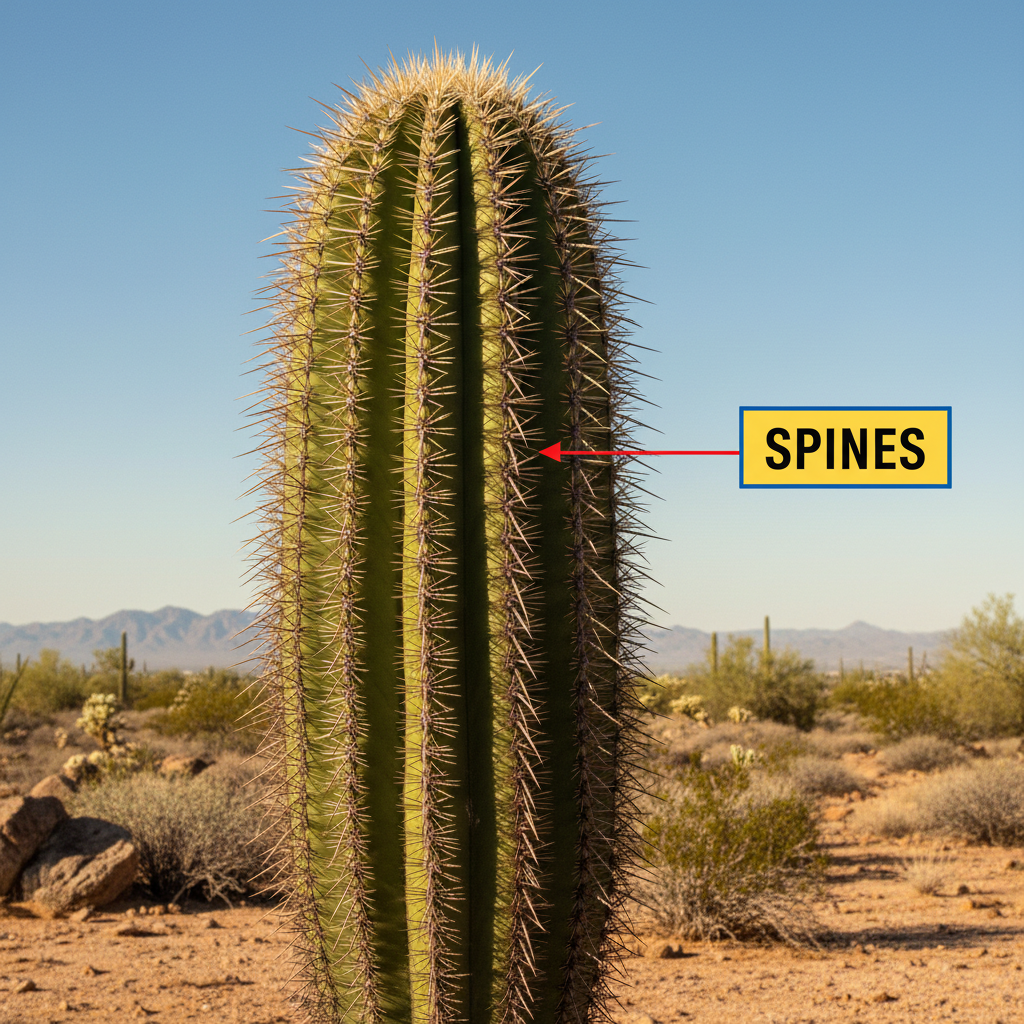
The diagram below shows a cactus plant growing in a desert environment.
Explain how the spines of a cactus function as a structural adaptation that enhances survival in a desert environment. [2]
Explain how the spines of a cactus function as a structural adaptation that enhances survival in a desert environment. [2]

Solutions
2QuestionAdaptation to Changing EnvironmentsAssessment Practice
2 marks~3 minCriterion A
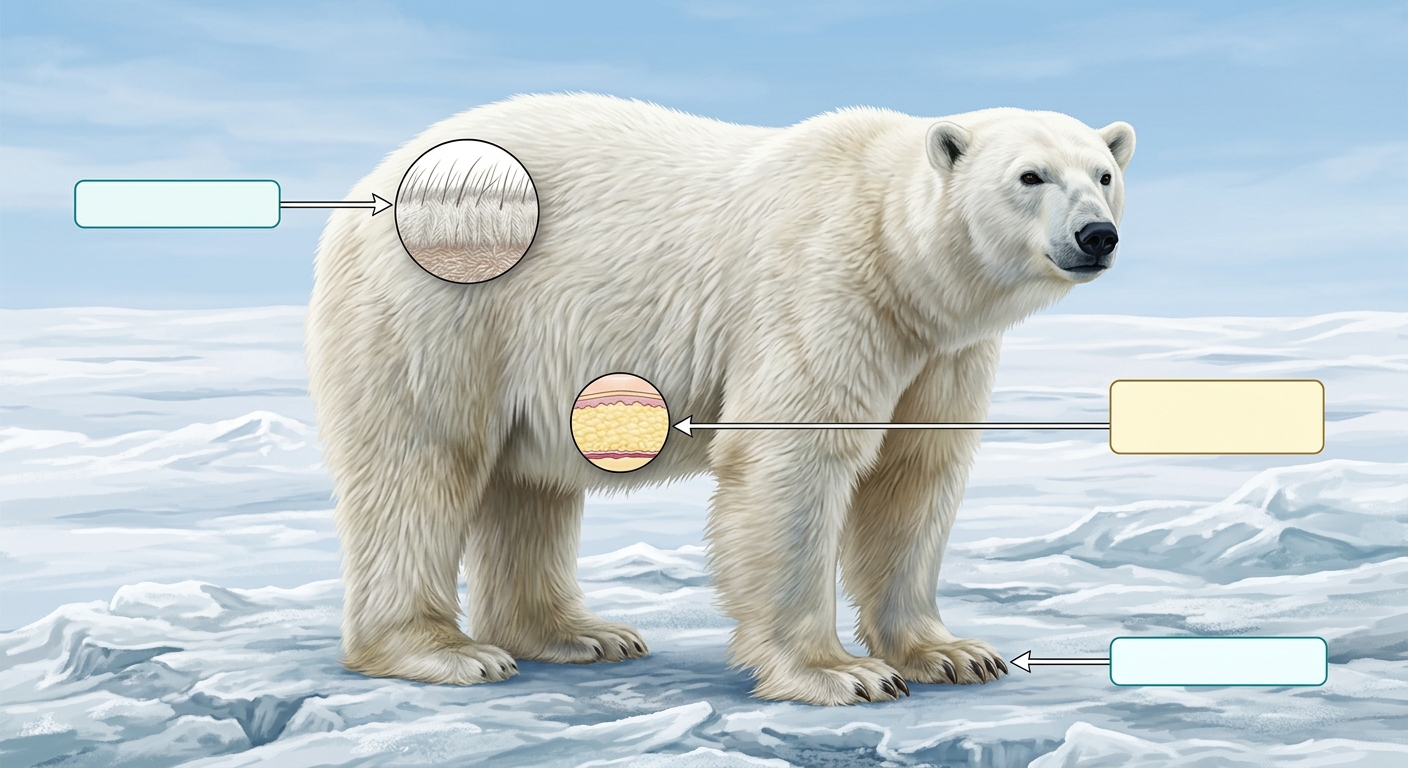
Polar bears (Ursus maritimus) survive in Arctic environments where air temperatures regularly fall below −30 °C and sea ice provides the primary hunting ground.
a
Explain how the blubber layer helps a polar bear survive in its cold Arctic environment. [1]
b
A polar bear's large paws and its thick fur both contribute to survival on sea ice. Explain how each structure serves a different function, and suggest which adaptation is more critical for a bear actively hunting on ice. Justify your answer. [1]
Solutions
3QuestionAdaptation to Changing EnvironmentsAssessment Practice
3 marks~5 minCriterion C
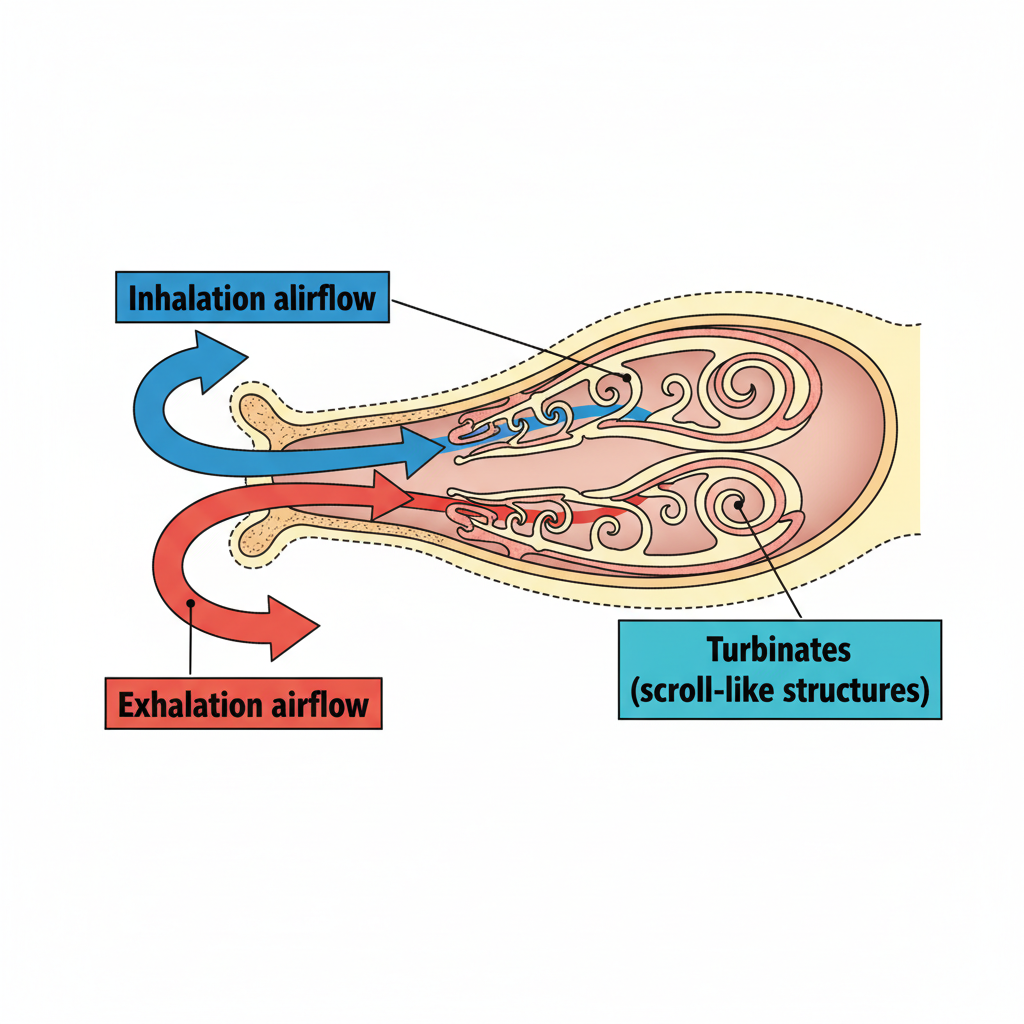
The diagram shows a cross-section of a camel's nasal cavity. Scroll-like structures called turbinates line the nasal passage; arrows indicate airflow direction during both inhalation and exhalation.
a
Explain how the turbinates reduce respiratory water loss in camels during both inhalation and exhalation. [2]
b
A researcher proposes that a camel's kidneys contribute more to overall water conservation than its nasal turbinates. Evaluate this claim by identifying one structural feature of camel kidneys and explaining how it compares in effectiveness to the turbinate mechanism. [1]
Solutions
4QuestionBehavioral AdaptationsAssessment Practice
5 marks~8 minCriterion A
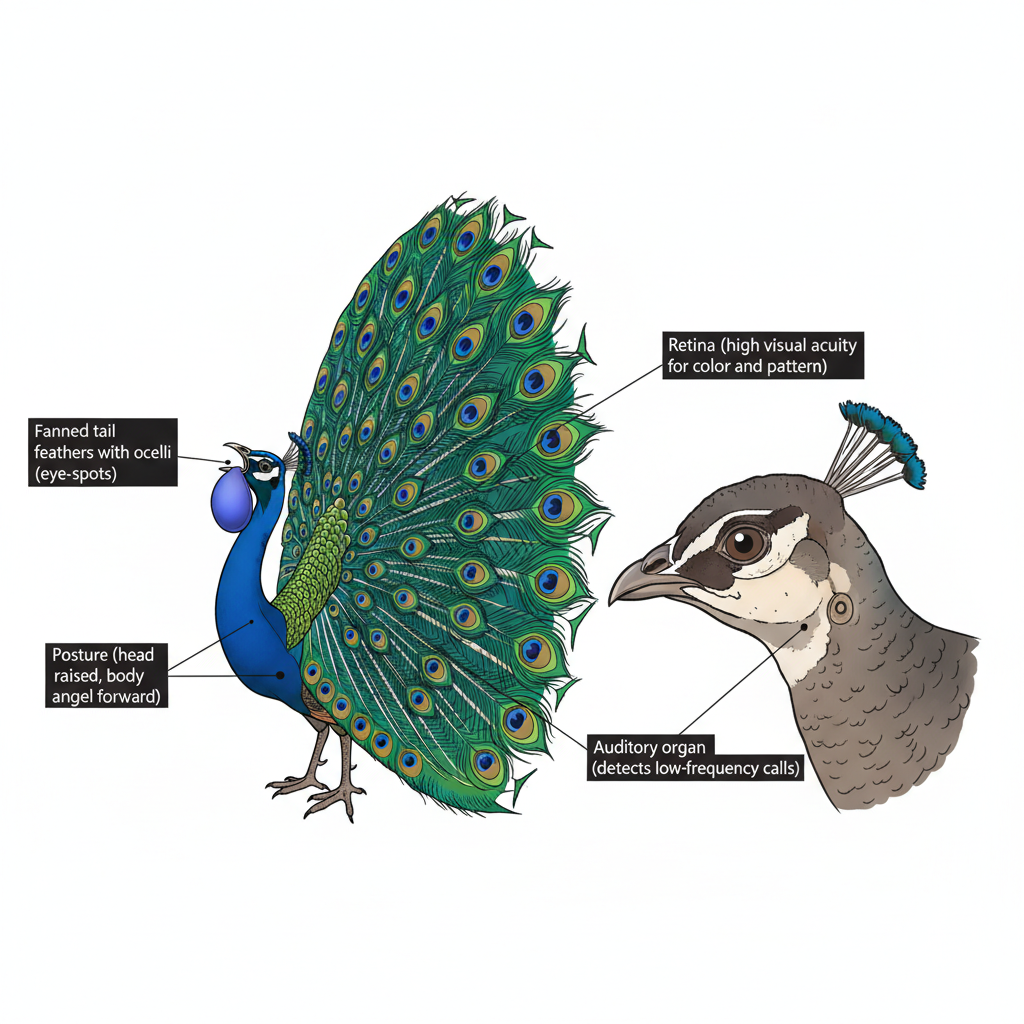
Figure 1 shows a peacock performing a courtship display: fanned tail feathers bearing iridescent eyespots, an upright posture, and an inflated vocal sac. Figure 2 shows a peahen's sensory anatomy, highlighting large laterally positioned eyes and auditory organs.
a
Using Figures 1 and 2, explain how specific features of the peacock's display are detected by the peahen's sensory receptors to produce a species-specific recognition signal. [3]
b
Explain how this behavioural adaptation reduces the likelihood of hybrid offspring being produced. [2]
Solutions
5QuestionAdaptation to Changing EnvironmentsAssessment Practice
6 marks~9 minCriterion D
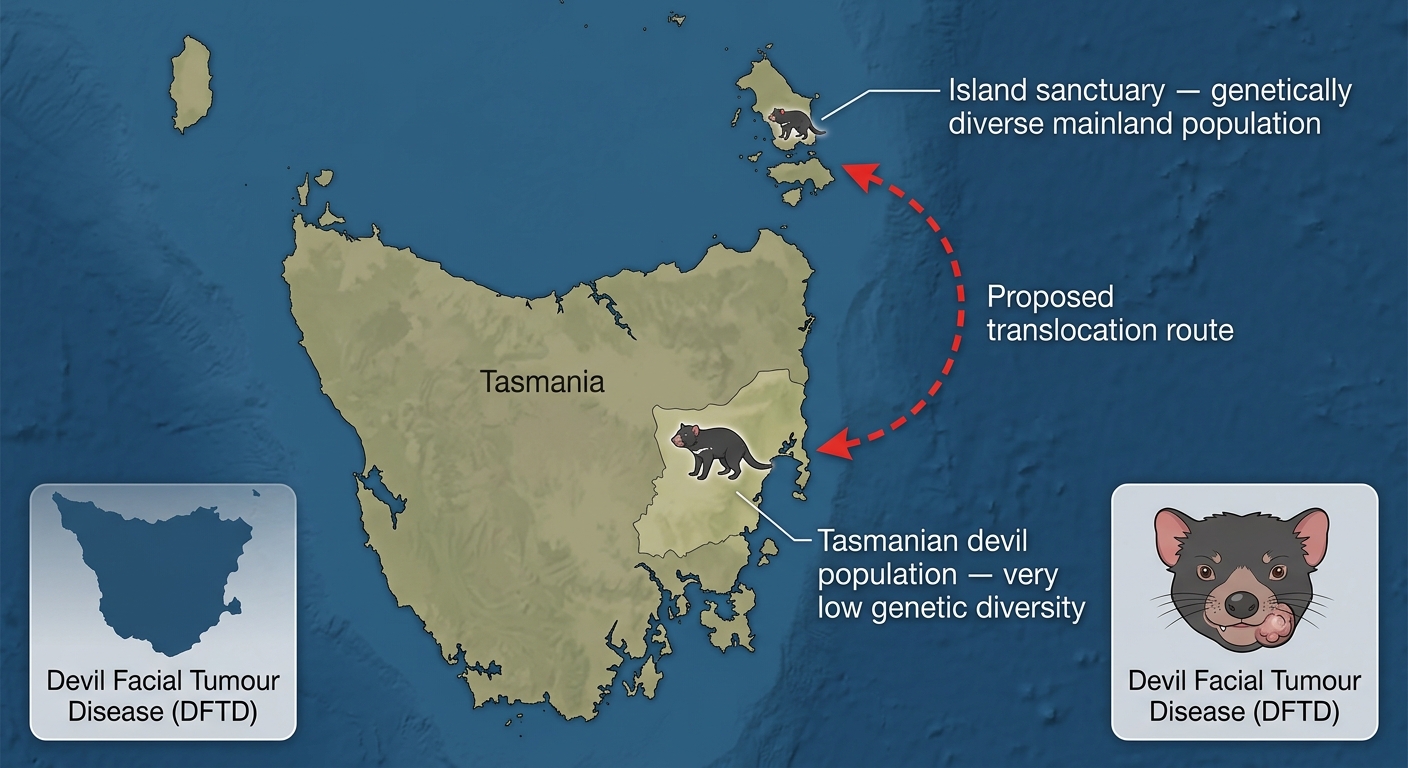
The Tasmanian devil (Sarcophilus harrisii) population has declined severely due to Devil Facial Tumour Disease (DFTD), a contagious cancer that spreads more effectively through genetically uniform populations. Conservation biologists propose a genetic rescue: translocating individuals from a genetically diverse captive population into Tasmania to increase allelic diversity, particularly in immune-related genes, and improve disease resistance. The plan carries potential societal and environmental risks alongside its benefits.
a
Explain the biological basis for why low genetic diversity makes the Tasmanian devil population more susceptible to DFTD. [2]
b
Explain one societal impact and one environmental risk associated with the proposed genetic rescue plan. [2]
c
Evaluate whether the long-term benefits of this genetic rescue plan outweigh its risks, considering the limitations of the approach. [2]
Solutions
That's every free question here — 5 of 64.
+59 more questions, plus Mock Papers & Worksheets, are waiting in Premium.