You're viewing free preview questions — 5 questions previewing here — subscribe to unlock 111 more, plus the Full Question Bank, Mock Papers & Worksheets.Upgrade
Natural Selection — Free MYP4 Biology Practice Questions

1QuestionSelection Pressures in EcosystemsConcept Practice
2 marks~3 minCriterion A
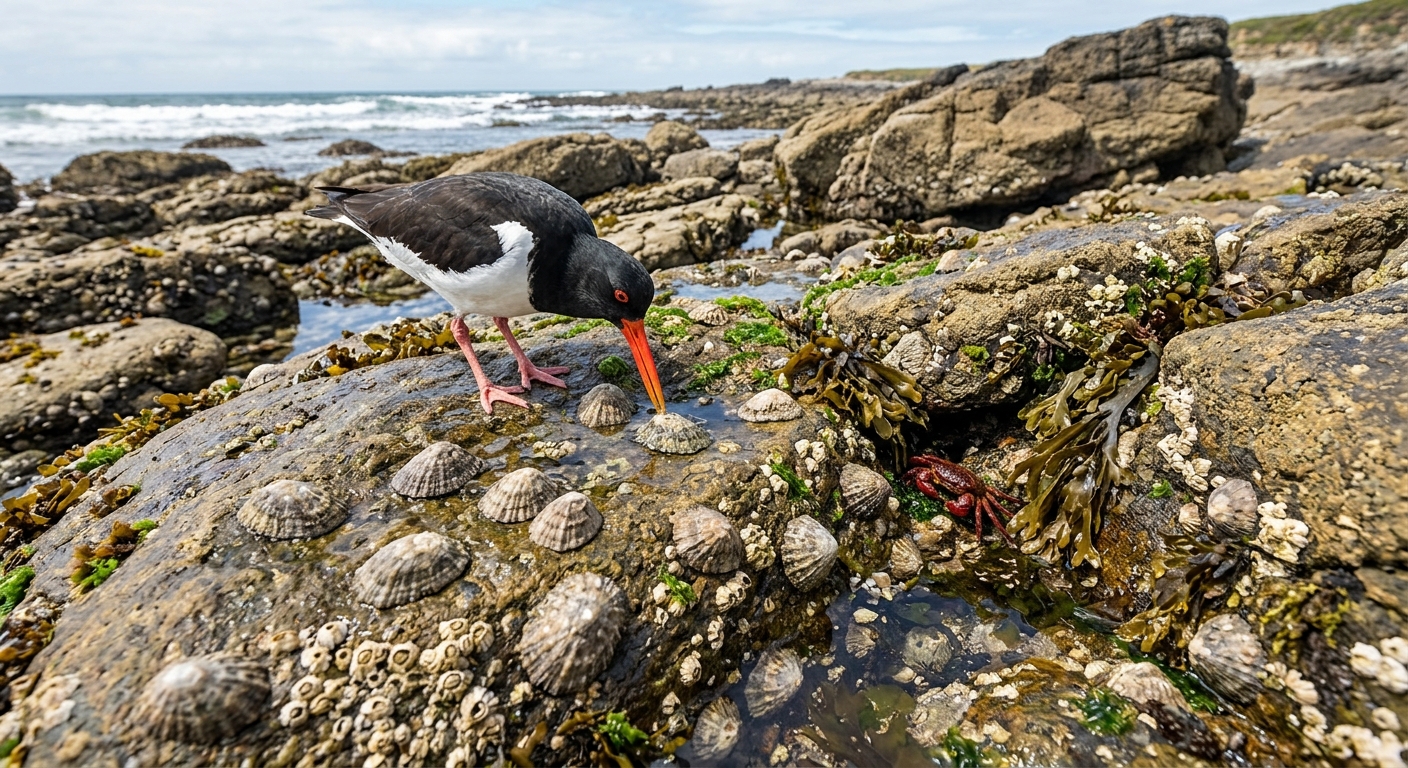
The diagram shows a rocky shore ecosystem containing limpets, barnacles, crabs, and an oystercatcher — a bird that prises limpets from rocks and consumes them.
a
Identify the selection pressure acting on the limpet population in this ecosystem. [1]
b
Explain how this selection pressure could lead to a change in the limpet population over successive generations. [1]

Solutions
2QuestionSurvival of the FittestAssessment Practice
2 marks~3 minCriterion D
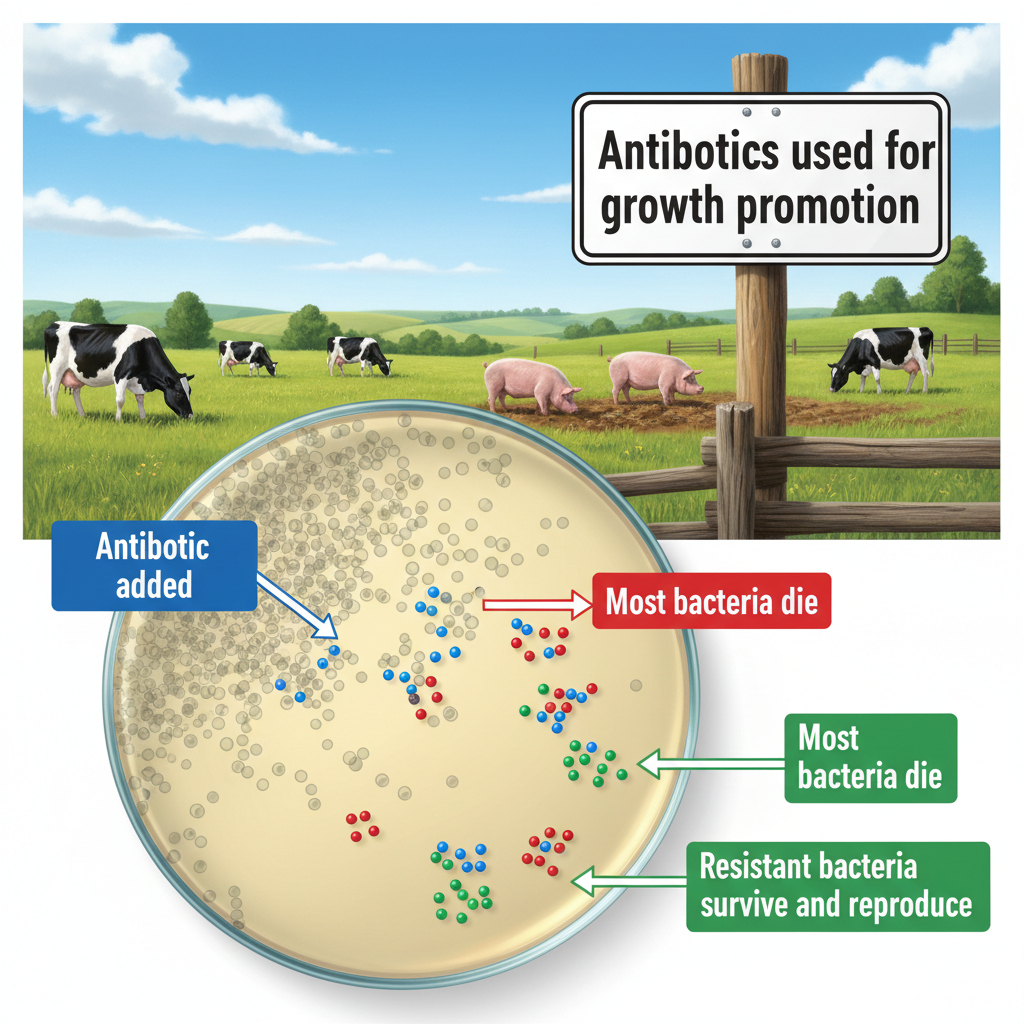
In a hospital ward, doctors observe that a bacterial infection is no longer responding to a commonly prescribed antibiotic. Epidemiologists link this to widespread incomplete antibiotic courses in the local community over several years.
Explain how the concept of survival of the fittest accounts for the development of antibiotic resistance in this bacterial population. [1]
Identify one ethical issue arising from this situation and explain its implications for public health. [1]
Explain how the concept of survival of the fittest accounts for the development of antibiotic resistance in this bacterial population. [1]
Identify one ethical issue arising from this situation and explain its implications for public health. [1]
Solutions
3QuestionDifferential Reproduction and FitnessConcept Practice
2 marks~3 minCriterion D
In a hospital ward, a patient with a bacterial infection is prescribed a ten-day course of antibiotics. After five days, the patient feels better and stops taking the medication. Some bacteria with a resistance mutation have survived.
a
Explain how differential reproduction will change the bacterial population in this patient after treatment stops. [1]
b
Identify one ethical issue that arises for the wider community if many patients behave in this way. [1]

Solutions
4QuestionRole of Environmental Factors in SelectionAssessment Practice
6 marks~9 minCriterion C
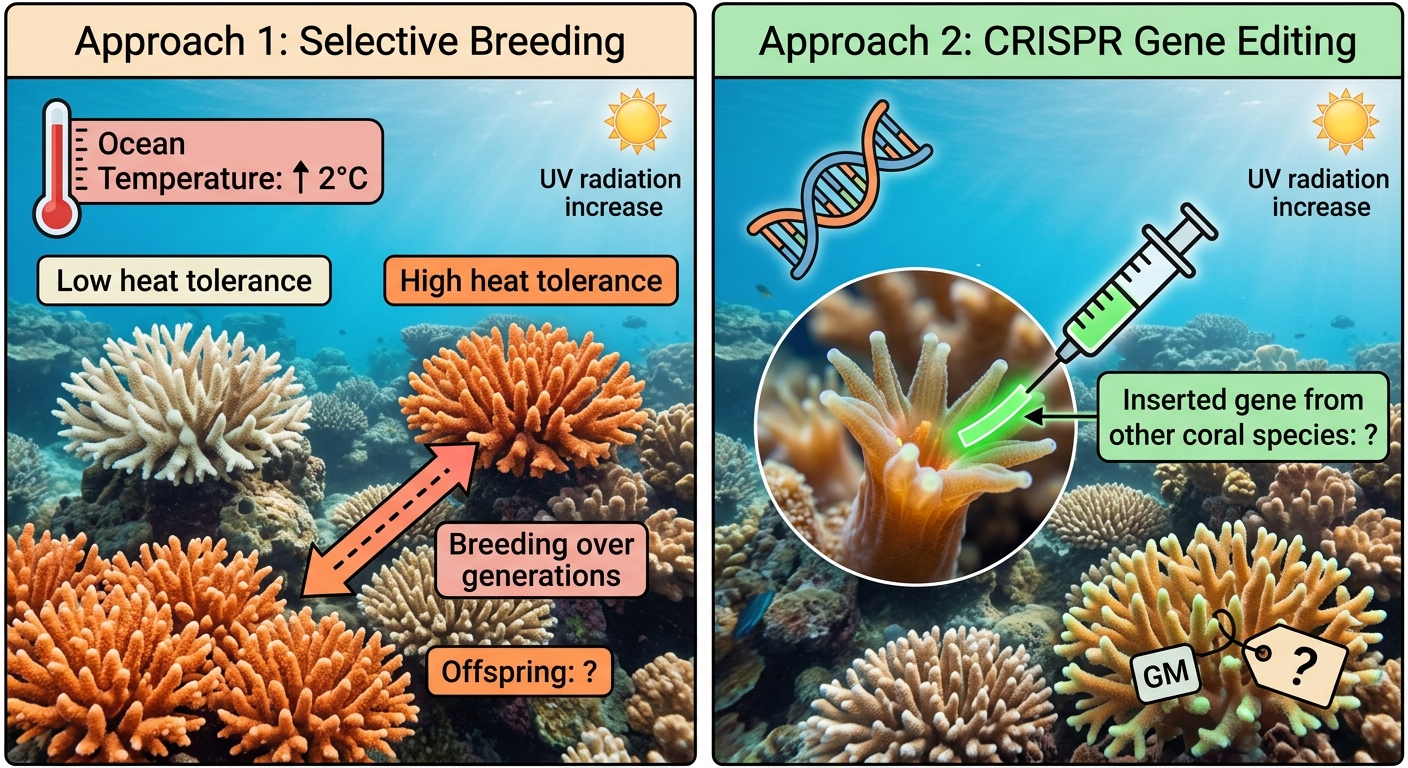
A conservation organisation is evaluating two strategies to help a threatened coral species survive warmer ocean temperatures caused by climate change.
Approach 1 — Selective breeding: Corals with naturally higher heat tolerance are bred together across several generations to increase the prevalence of heat-tolerant traits.
Approach 2 — CRISPR gene editing: A heat-tolerance gene from a different coral species is inserted into the threatened species' genome, producing genetically modified corals for potential release into the wild.
Approach 1 — Selective breeding: Corals with naturally higher heat tolerance are bred together across several generations to increase the prevalence of heat-tolerant traits.
Approach 2 — CRISPR gene editing: A heat-tolerance gene from a different coral species is inserted into the threatened species' genome, producing genetically modified corals for potential release into the wild.
a
Explain how natural selection acts on a coral population as ocean temperatures rise. Your answer must use the terms variation, selection pressure, and allele frequency. [2]
b
Analyse how introducing selectively bred corals versus genetically modified corals would each affect the genetic diversity of the wild coral population. [2]
c
Evaluate whether the conservation benefits of using CRISPR to permanently modify a wild coral species justify the ecological risks and ethical concerns about interfering with natural evolutionary processes. [2]
Solutions
5QuestionDifferential Reproduction and FitnessAssessment Practice
7 marks~11 minCriterion B
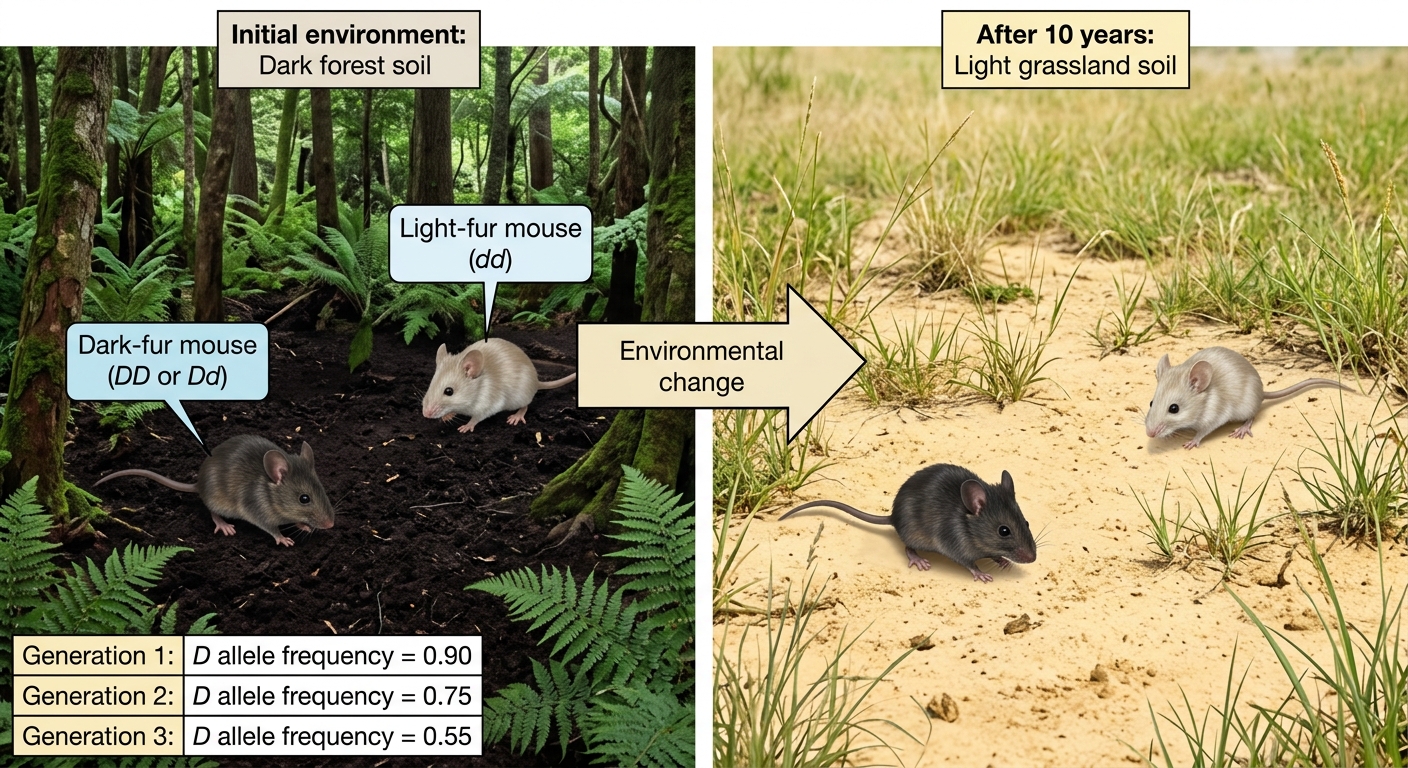
A population of mice lives in a forest with dark soil. Fur colour is controlled by a single gene: allele (dark fur) is dominant over allele (light fur). Over 10 years, the habitat gradually transitions to grassland with light-coloured soil. Allele frequencies recorded across three generations are shown below.
| Generation | 1 | 2 | 3 |
|---|---|---|---|
| allele frequency | 0.90 | 0.75 | 0.55 |
a
Describe the trend in the frequency of the allele across the three generations. [2]
b
Deduce the approximate frequency of the allele in generation 4, justifying your reasoning with reference to the data. [2]
c
Explain how differential reproduction and fitness account for the observed change in allele frequency as the habitat shifts from forest to grassland. [3]
Solutions
That's every free question here — 5 of 116.
+111 more questions, plus Mock Papers & Worksheets, are waiting in Premium.