You're viewing free preview questions — 5 questions previewing here — subscribe to unlock 39 more, plus the Full Question Bank, Mock Papers & Worksheets.Upgrade
Theory of Evolution (Charles Darwin) — Free MYP4 Biology Practice Questions

1QuestionVariation within PopulationsConcept Practice
2 marks~3 minCriterion A
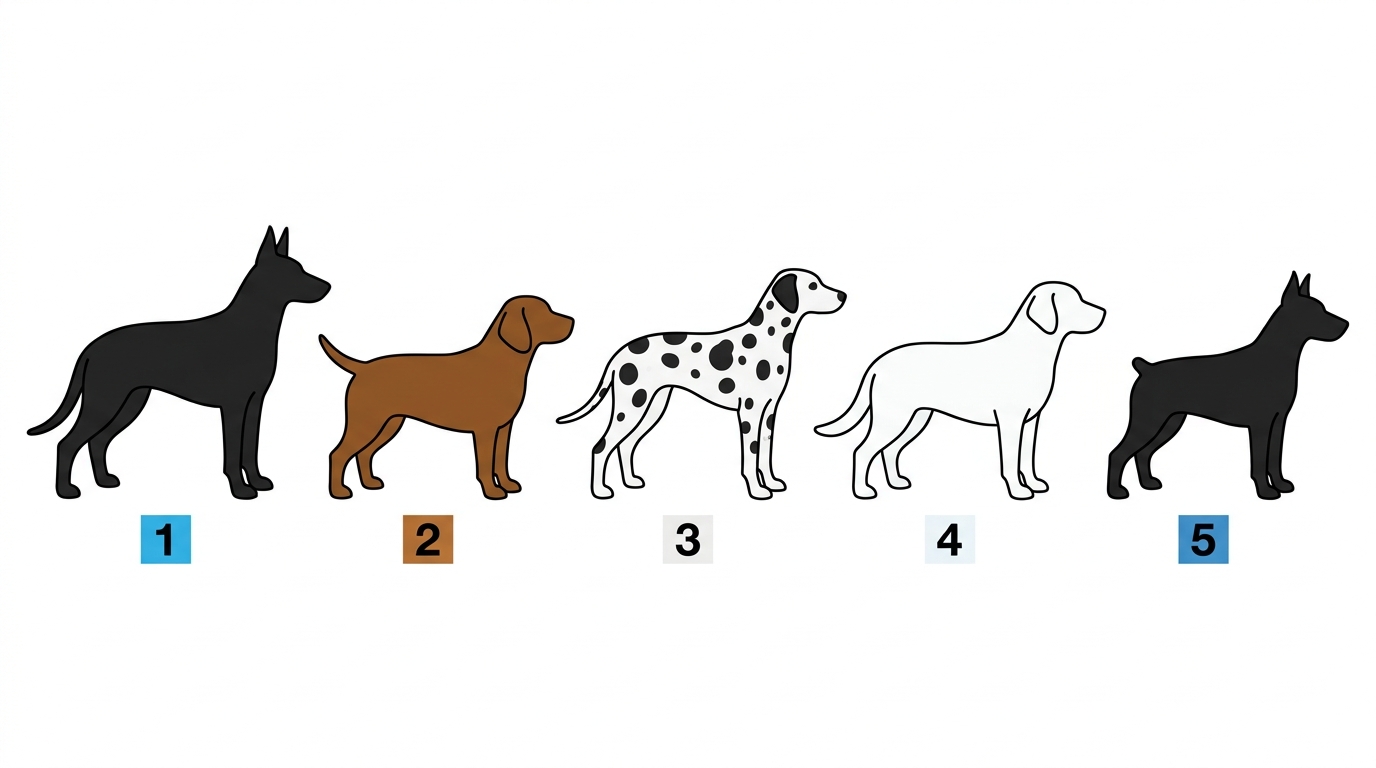
Five dogs were observed for the following traits: ear shape (pointed or floppy), coat colour (black, brown, white, or spotted), and body mass.
Body mass (kg): Dog A: 15 | Dog B: 22 | Dog C: 18 | Dog D: 31 | Dog E: 26
Body mass (kg): Dog A: 15 | Dog B: 22 | Dog C: 18 | Dog D: 31 | Dog E: 26
a
Identify one trait from the data that shows continuous variation and one trait that shows discontinuous variation. [1]
b
Explain why each identified trait belongs to its variation type, using specific values or categories from the data. [1]

Solutions
2QuestionVoyage of the HMS Beagle and ObservationsAssessment Practice
3 marks~5 minCriterion C
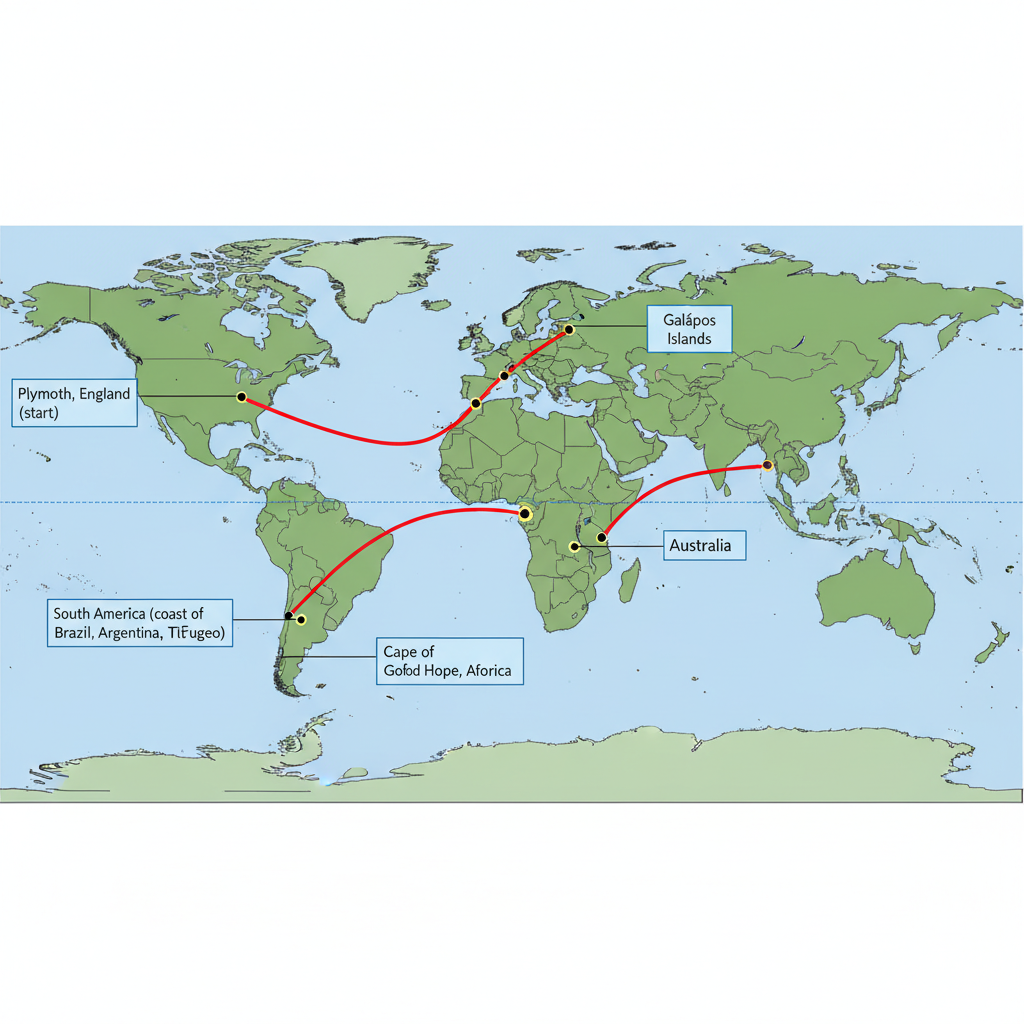
During the HMS Beagle voyage (1831–1836), Charles Darwin visited the Galápagos Islands, where he collected finch specimens from several islands. He later noted that finches on islands with hard, tough seeds tended to have thick, crushing beaks, while finches on islands where insects were the primary food source tended to have slender, pointed beaks.
a
State what is meant by natural selection. [1]
b
Explain how the difference in finch beak shapes across the Galápagos Islands is an example of adaptation. [1]
c
Analyse how Darwin's finch observations from geographically isolated islands provided stronger evidence for natural selection than observations from a single island would have done. [1]
Solutions
3QuestionDevelopment of the Theory of Evolution by Natural SelectionAssessment Practice
5 marks~8 minCriterion C
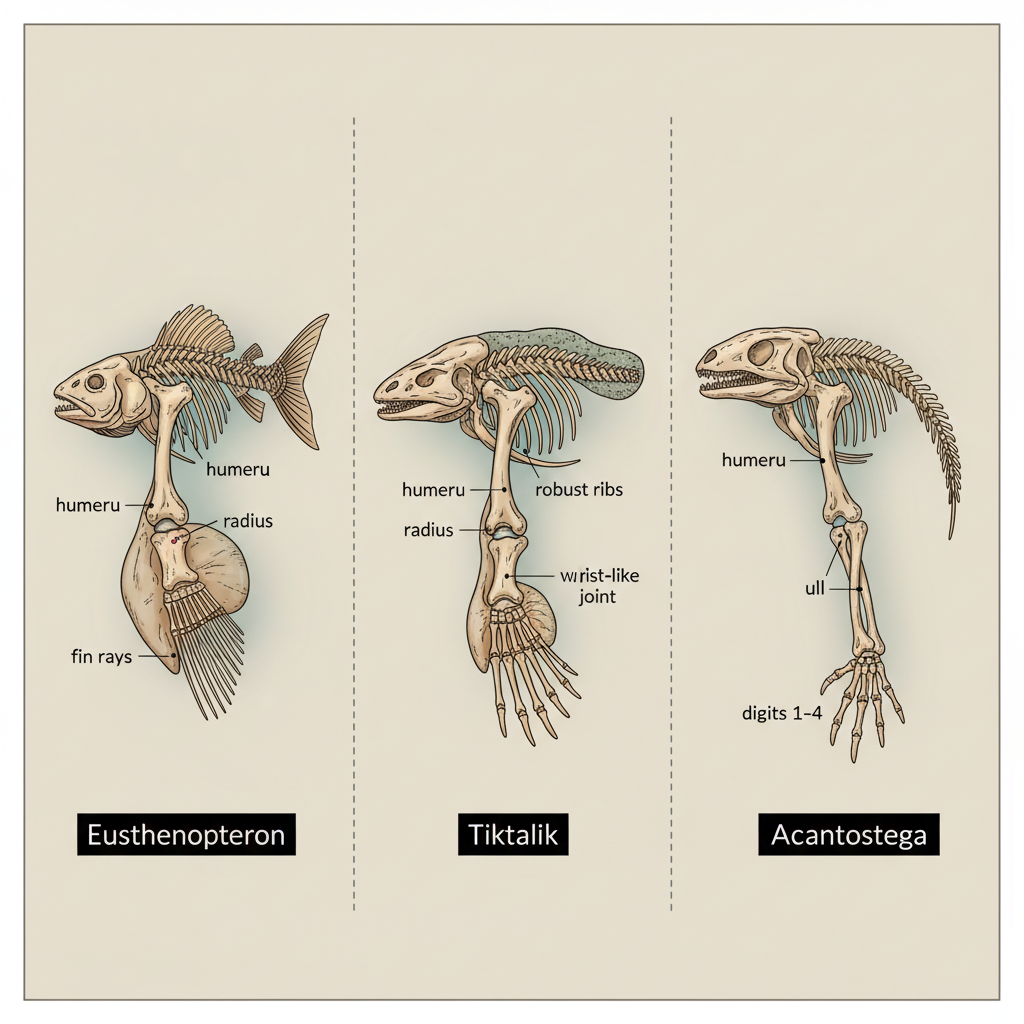
Three fossil species document the fin-to-limb transition:
Eusthenopteron (fish): short humerus, radius, and ulna; fin rays extending from the bones.
Tiktaalik (transitional): longer humerus, radius, and ulna; shorter fin rays retained; wrist-like joint; robust ribs.
Acanthostega (early amphibian): distinct humerus, radius, ulna, and digits; no fin rays.
Eusthenopteron (fish): short humerus, radius, and ulna; fin rays extending from the bones.
Tiktaalik (transitional): longer humerus, radius, and ulna; shorter fin rays retained; wrist-like joint; robust ribs.
Acanthostega (early amphibian): distinct humerus, radius, ulna, and digits; no fin rays.
a
Identify one fish-like feature and one tetrapod-like feature present in Tiktaalik. [2]
b
Explain how the skeletal differences between Eusthenopteron and Acanthostega provide evidence for gradual evolutionary change. [2]
c
Evaluate the claim that "limbs evolved from fins suddenly, without intermediate forms." [1]
Solutions
4QuestionVariation within PopulationsAssessment Practice
6 marks~9 minCriterion A
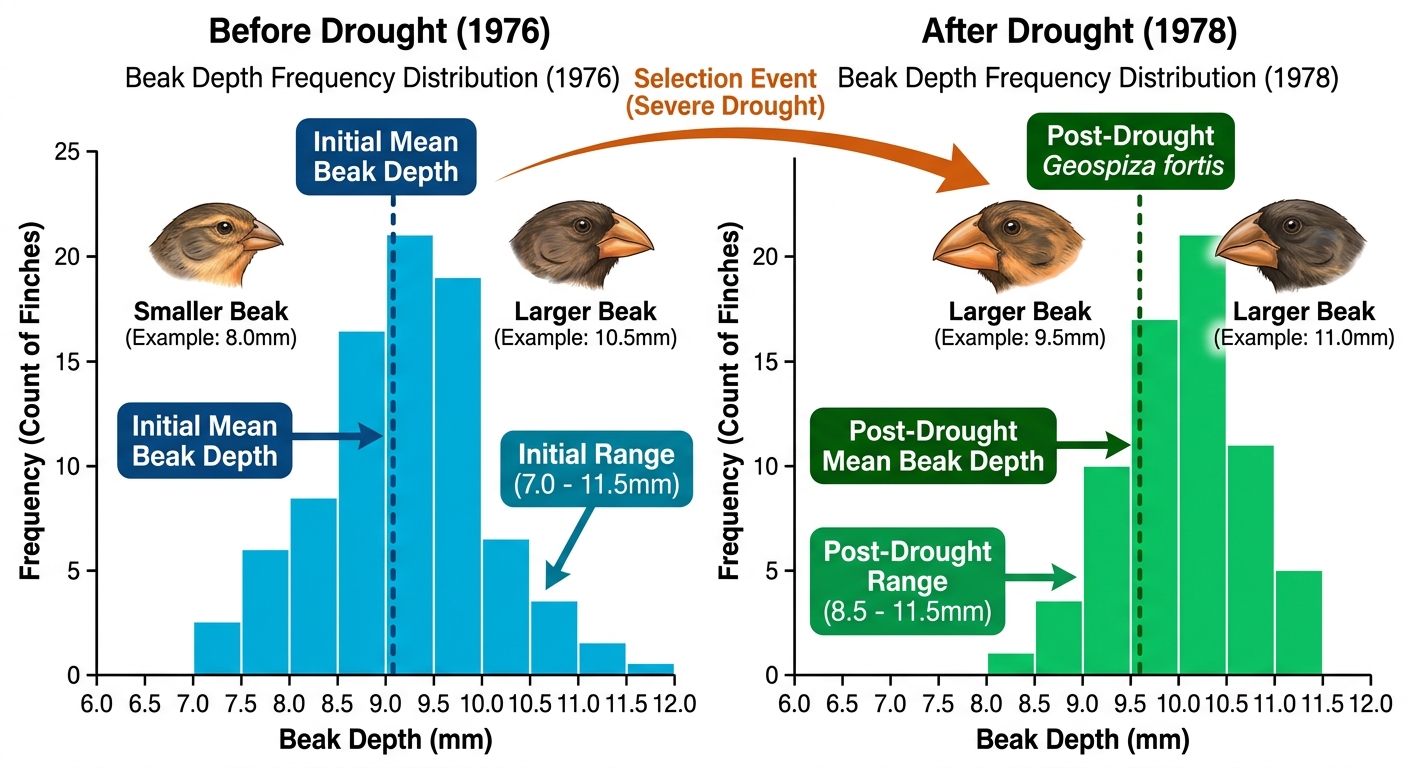
During a severe drought on Daphne Major island, food became scarce and only large, hard seeds remained available. Beak depth measurements were recorded for a population of medium ground finches (Geospiza fortis) before and after the drought:
| Year | 1976 (before drought) | 1978 (after drought) |
|---|---|---|
| Mean beak depth (mm) | 9.2 | 10.1 |
| Range of beak depth (mm) | 7.0–11.5 | 8.5–11.5 |
| Sample size | 100 | 80 |
a
Describe the change in mean beak depth and the change in range of beak depths between 1976 and 1978. [2]
b
Analyse the data to identify which type of natural selection — directional, stabilising, or disruptive — is most likely occurring. [2]
c
Evaluate what would happen to the genetic variation for beak depth in this population if drought conditions persisted for several more generations. [2]
Solutions
5QuestionDevelopment of the Theory of Evolution by Natural SelectionAssessment Practice
8 marks~12 minCriterion D
A large urban hospital has used broad-spectrum antibiotics as a first-line treatment for bacterial infections for 20 years. Over this period, the proportion of infections caused by methicillin-resistant Staphylococcus aureus (MRSA) has risen from 2% to 35%. Scientists model this change as an example of natural selection acting on a bacterial population.
a
Explain how overuse of antibiotics has driven the increase in MRSA infections, using the theory of natural selection. [2]
b
Explain how the rise in MRSA infections could affect both patient mortality rates and hospital healthcare costs. [2]
c
Antibiotic residues from hospitals and farms enter soil and waterways. Evaluate the long-term consequences of this environmental antibiotic exposure for the evolution of bacterial populations in natural ecosystems. [4]
---
---

Solutions
That's every free question here — 5 of 44.
+39 more questions, plus Mock Papers & Worksheets, are waiting in Premium.