You're viewing free preview questions — 4 questions previewing here — subscribe to unlock 80 more, plus the Full Question Bank, Mock Papers & Worksheets.Upgrade
Structure of the Atom — Free MYP4 Chemistry Practice Questions

1QuestionDevelopment of Atomic Models Dalton to BohrConcept Practice
4 marks~6 minCriterion A
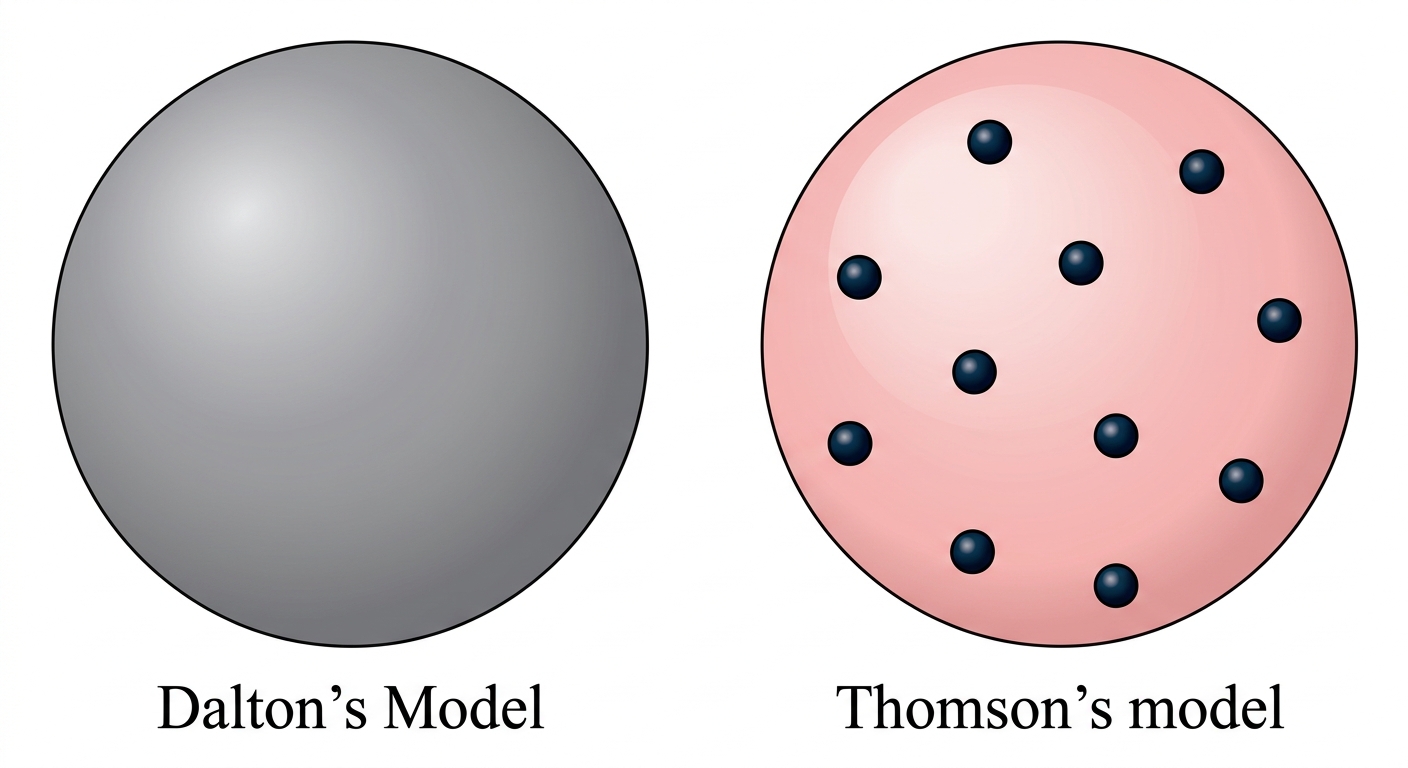
The diagrams below show two historical models of the atom.
Diagram A: Dalton's model — a solid, featureless sphere.
Diagram B: Thomson's model — a sphere of uniform positive charge with electrons embedded within it.
Diagram A: Dalton's model — a solid, featureless sphere.
Diagram B: Thomson's model — a sphere of uniform positive charge with electrons embedded within it.
a
State what Dalton's model proposes about the internal structure of the atom. [1]
b
Describe the internal structure proposed by Thomson's model. [1]
c
Analyse how Thomson's model challenged a fundamental assumption of Dalton's model, and explain what this change implied about the divisibility of the atom. [2]

Solutions
2QuestionAtomic Number Mass Number and Nuclear SymbolAssessment Practice
5 marks~8 minCriterion C
Data
: , abundance , first ionization energy: , abundance , first ionization energy
: , abundance , first ionization energy
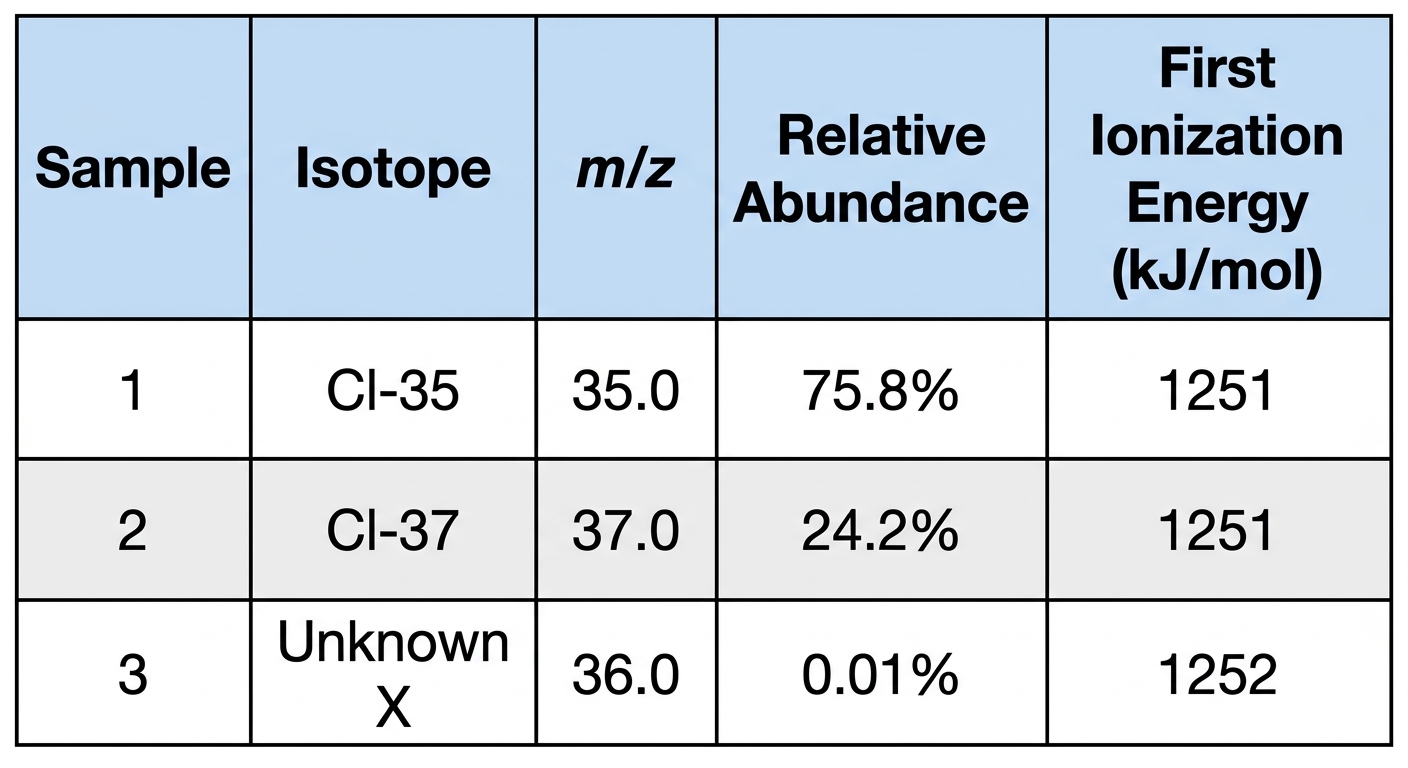
A student investigates the hypothesis: "Atomic number, not mass number, determines the chemical identity of an element." A mass spectrometer analyses two chlorine isotopes and an unknown ion X, giving the following
a
State the number of protons, neutrons, and electrons in (assume singly charged cation). [1]
b
Explain why and are classified as the same element despite having different mass numbers. [2]
c
Evaluate which piece of experimental evidence — ratio, relative abundance, or first ionization energy — provides the strongest support for the hypothesis. Use data from all three species in your answer. [2]
Solutions
3QuestionStructure of the Nucleus and Electron ShellsConcept Practice
2 marks~3 minCriterion B
The electron configurations of the first four elements are:
Hydrogen:
Helium:
Lithium:
Beryllium:
Hydrogen:
Helium:
Lithium:
Beryllium:
a
Identify the pattern in how electrons fill subshells as atomic number increases from hydrogen to beryllium. [1]
b
Deduce the electron configuration of boron (), justifying your answer using the pattern identified in part (a). [1]
Solutions
4QuestionSubatomic Particles Protons Neutrons ElectronsAssessment Practice
6 marks~9 minCriterion D
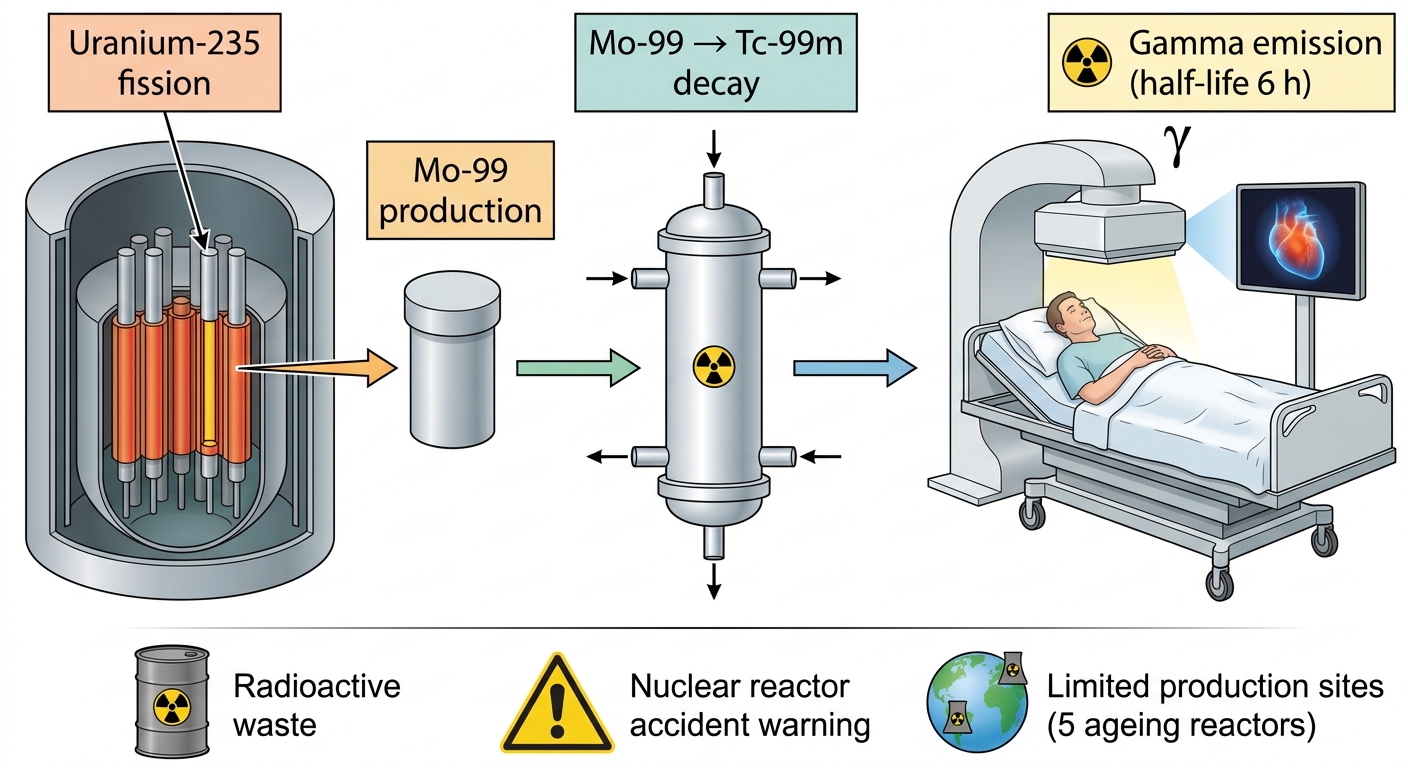
Technetium-99m (Tc) is a radioactive isotope widely used in medical imaging. It is produced from molybdenum-99 (Mo), which is generated by uranium-235 fission in nuclear reactors. Technetium-99m decays by gamma emission with a half-life of 6 hours. Global supply depends on fewer than ten aging reactors, raising concerns about radioactive waste, reactor safety, and nuclear security.
a
Explain how the nuclear properties of technetium-99m make it suitable for medical imaging. [2]
b
Analyse the environmental and supply-chain risks created by the current method of producing molybdenum-99. [2]
c
Evaluate the overall societal trade-offs of continuing to use technetium-99m in healthcare, and justify whether investment in alternative production technologies is warranted. [2]
Solutions
That's every free question here — 4 of 84.
+80 more questions, plus Mock Papers & Worksheets, are waiting in Premium.