You're viewing free preview questions — 6 questions previewing here — subscribe to unlock 127 more, plus the Full Question Bank, Mock Papers & Worksheets.Upgrade
Back

Ionic Covalent and Metallic Bonding — Free MYP4 Chemistry Practice Questions

Free questions

Open in full, with answers, mark scheme and examiner insights.

Question 1Criterion A + C · Band 1-4 · Easy · 5 marksrevisionprep.com

Ions and Formation of Ionic Bonds

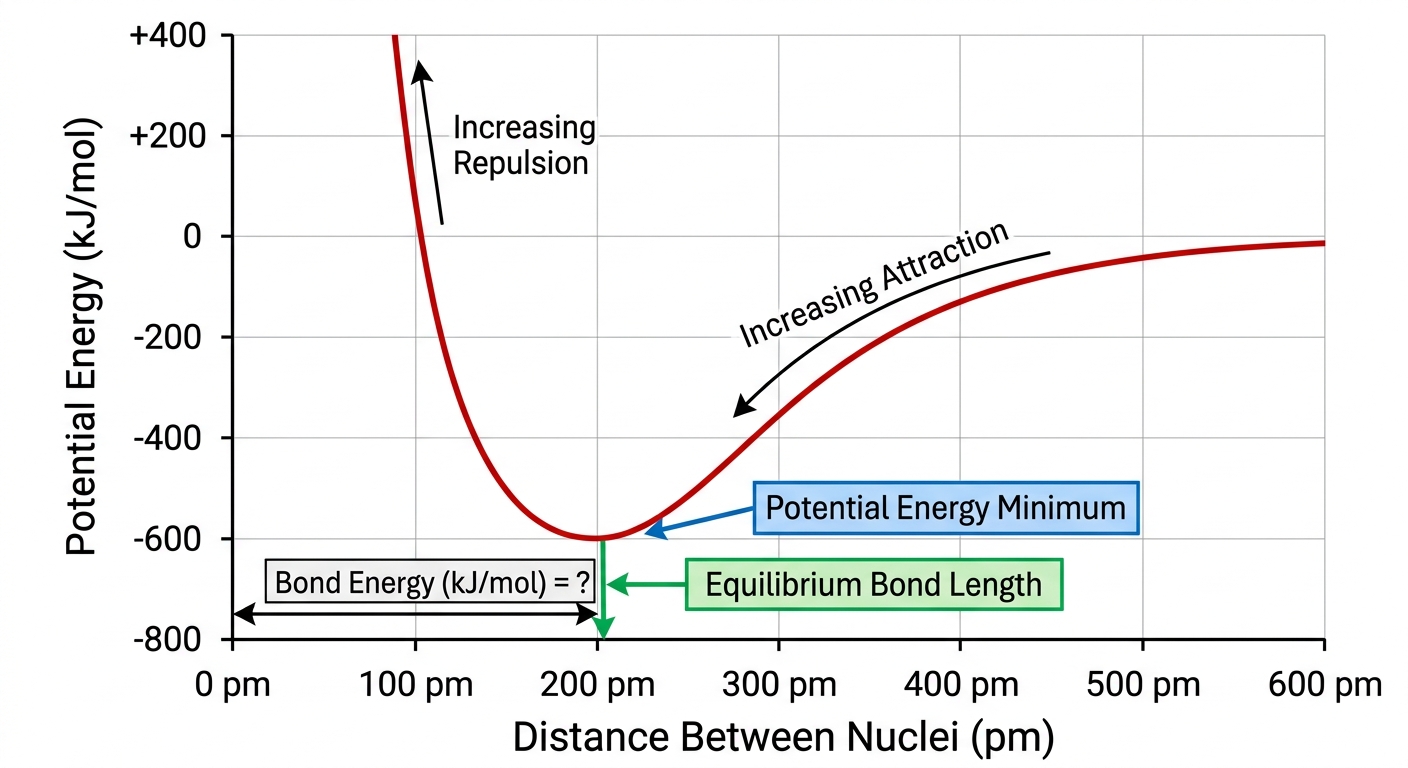
The graph shows how the potential energy of a sodium ion, Na+\text{Na}^{+}, and a chloride ion, Cl−\text{Cl}^{-}, changes as the distance between their nuclei changes. The ions start far apart (right-hand side) and move closer together.
Question diagram
(a)
Use the graph to state the distance between the nuclei at which the potential energy is lowest. [1]Criterion C (ii) · Level 1-2
(b)
Use the graph to estimate the energy released as the ions move from far apart to this distance. [1]Criterion C (ii) · Level 3-4
(c)
Explain why the potential energy decreases as the ions move from 600 pm to the distance in (a). [2]Criterion A (ii) · Level 3-4
(d)
Suggest why the potential energy rises steeply when the nuclei are closer than about 150 pm. [1]Criterion A (ii) · Level 3-4

revisionprep.com

Summary Answer

Not available for this question.

Model Answer

Not available for this question.

Marking Scheme

Not available for this question.

Examiner Insights

Not available for this question.

Question 2Criterion A · Band 1-4 · Easy · 4 marksrevisionprep.com

Formation and Diagrams of Covalent Bonds
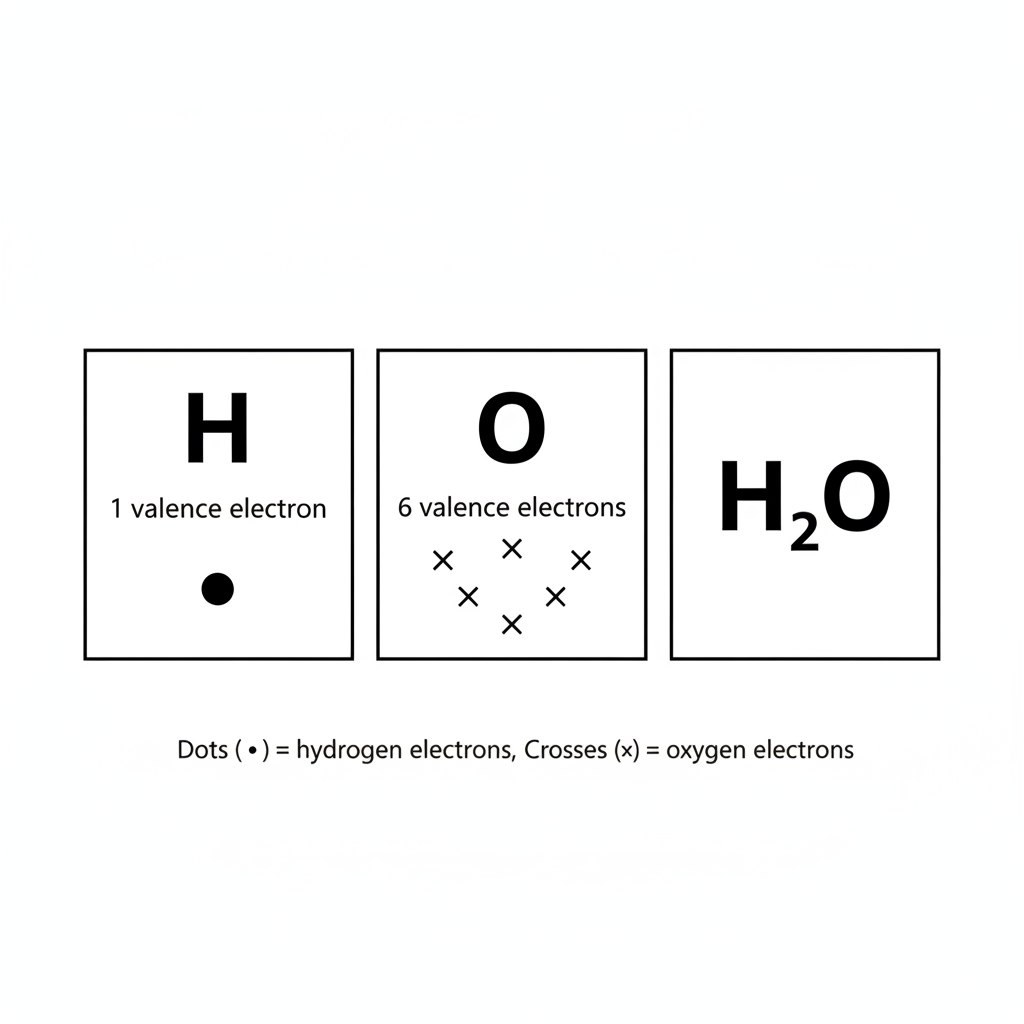
The diagram shows the outer-shell electrons of a hydrogen atom (dot) and an oxygen atom (crosses).
Question diagram
(a)
Draw a dot-and-cross diagram for a water molecule, using the same symbols. [2]Criterion A (ii) · Level 3-4
(b)
State the number of lone pairs on the oxygen atom. [1]Criterion A (i) · Level 1-2
(c)
Explain how sharing electrons gives each atom in water a full outer shell. [1]Criterion A (i) · Level 3-4

revisionprep.com

Summary Answer

Not available for this question.

Model Answer

Not available for this question.

Marking Scheme

Not available for this question.

Examiner Insights

Not available for this question.

Question 3Criterion B · Band 3-6 · Medium · 8 marksrevisionprep.com

Bond strength, melting points and conductivity

A technician finds a jar of white crystals labelled only "X". X is either an ionic compound or a simple molecular (covalent) compound, and it dissolves in water. A student plans to use electrical conductivity to decide which it is.
(a)
Explain why measuring electrical conductivity can distinguish an ionic compound from a simple molecular compound. [2]Criterion B (i) · Level 3-4
(b)
Formulate a hypothesis stating the results you would expect if X is ionic. [1]Criterion B (ii) · Level 3-4
(c)
Design a method for the test. Include the apparatus, how the test is made fair and reliable, and one safety precaution. [5]Criterion B (iv) · Level 5-6

revisionprep.com

Summary Answer

Not available for this question.

Model Answer

Not available for this question.

Marking Scheme

Not available for this question.

Examiner Insights

Not available for this question.

Question 4Criterion C + A · Band 1-6 · Medium · 5 marksrevisionprep.com

Properties of Covalent Compounds

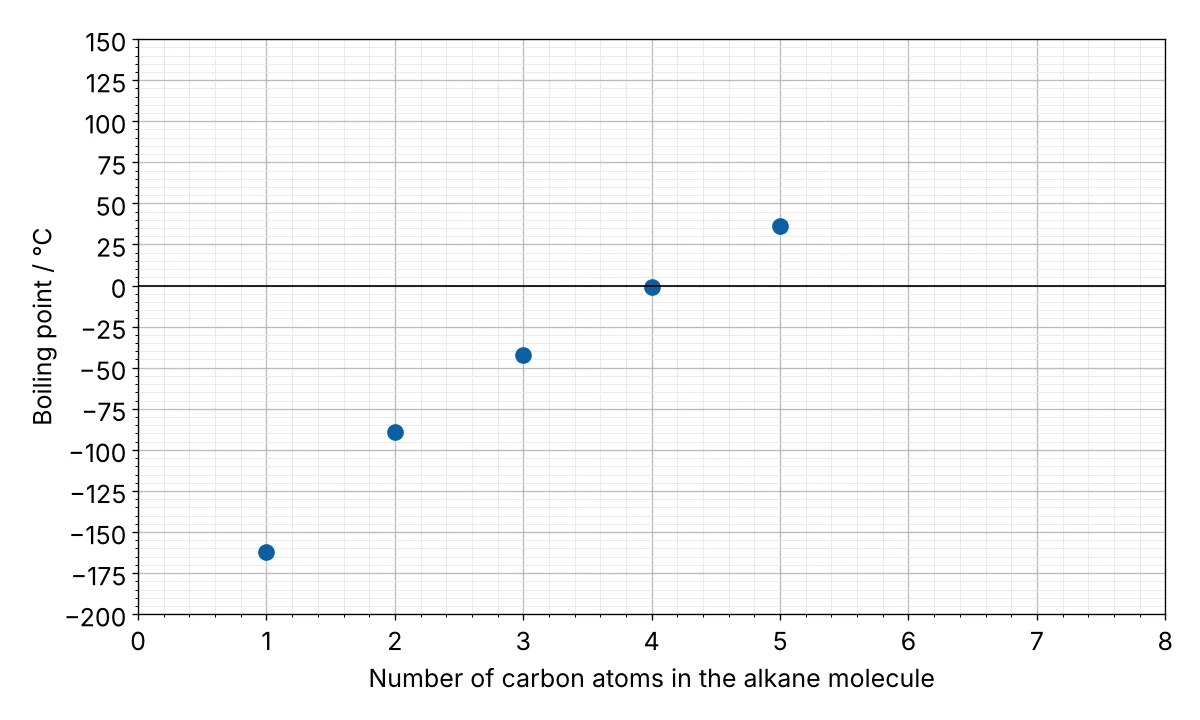
The graph shows the boiling points of the first five alkanes (methane to pentane) plotted against the number of carbon atoms in the molecule.
Question diagram
(a)
Describe the trend shown by the graph. [1]Criterion C (ii) · Level 1-2
(b)
Use the graph to estimate the boiling point of hexane, which has 6 carbon atoms. Explain how you obtained your value. [2]Criterion C (ii) · Level 5-6
(c)
Explain the trend using ideas about forces between molecules. [2]Criterion A (ii) · Level 5-6

revisionprep.com

Summary Answer

Not available for this question.

Model Answer

Not available for this question.

Marking Scheme

Not available for this question.

Examiner Insights

Not available for this question.

Question 5Criterion A + C · Band 3-8 · Challenge · 8 marksrevisionprep.com

Properties of Ionic Compounds

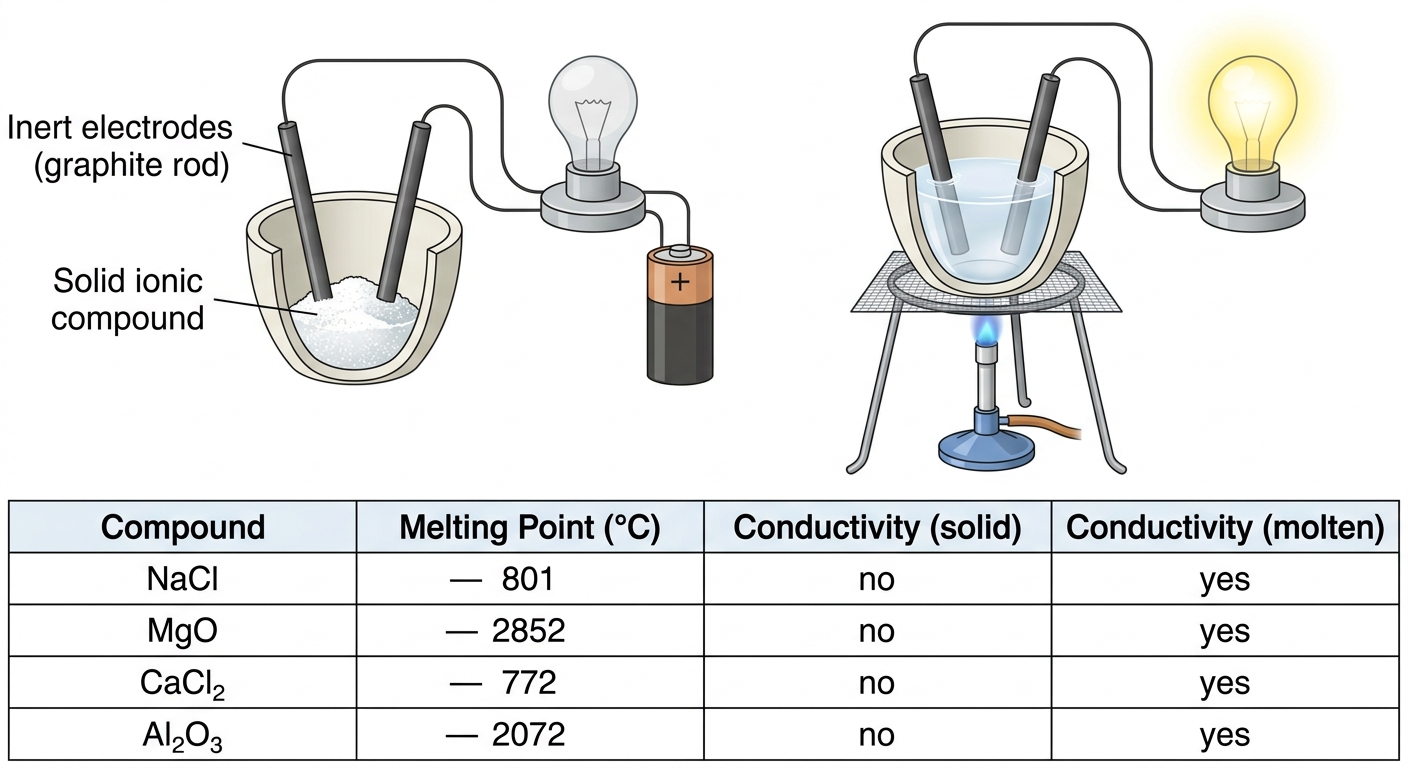
The diagram shows the apparatus a student describes for testing four ionic compounds, together with her table of results. The Bunsen burner can heat the crucible to about 1000 °C.
Question diagram
(a)
Explain why the bulb lights only when the compound is molten. [2]Criterion A (ii) · Level 3-4
(b)
Identify the compound with the highest melting point and explain why it is higher than that of NaCl. [2]Criterion A (ii) · Level 5-6
(c)
Evaluate whether this apparatus could have produced the 'molten' results for MgO and Al2O3\text{Al}_{2}\text{O}_{3}, and suggest how valid evidence for these two compounds could be obtained. [4]Criterion C (iv), C (v) · Level 7-8

revisionprep.com

Summary Answer

Not available for this question.

Model Answer

Not available for this question.

Marking Scheme

Not available for this question.

Examiner Insights

Not available for this question.

Question 6Criterion D + A · Band 3-8 · Challenge · 8 marksrevisionprep.com

Structure and Properties of Metallic Bonds
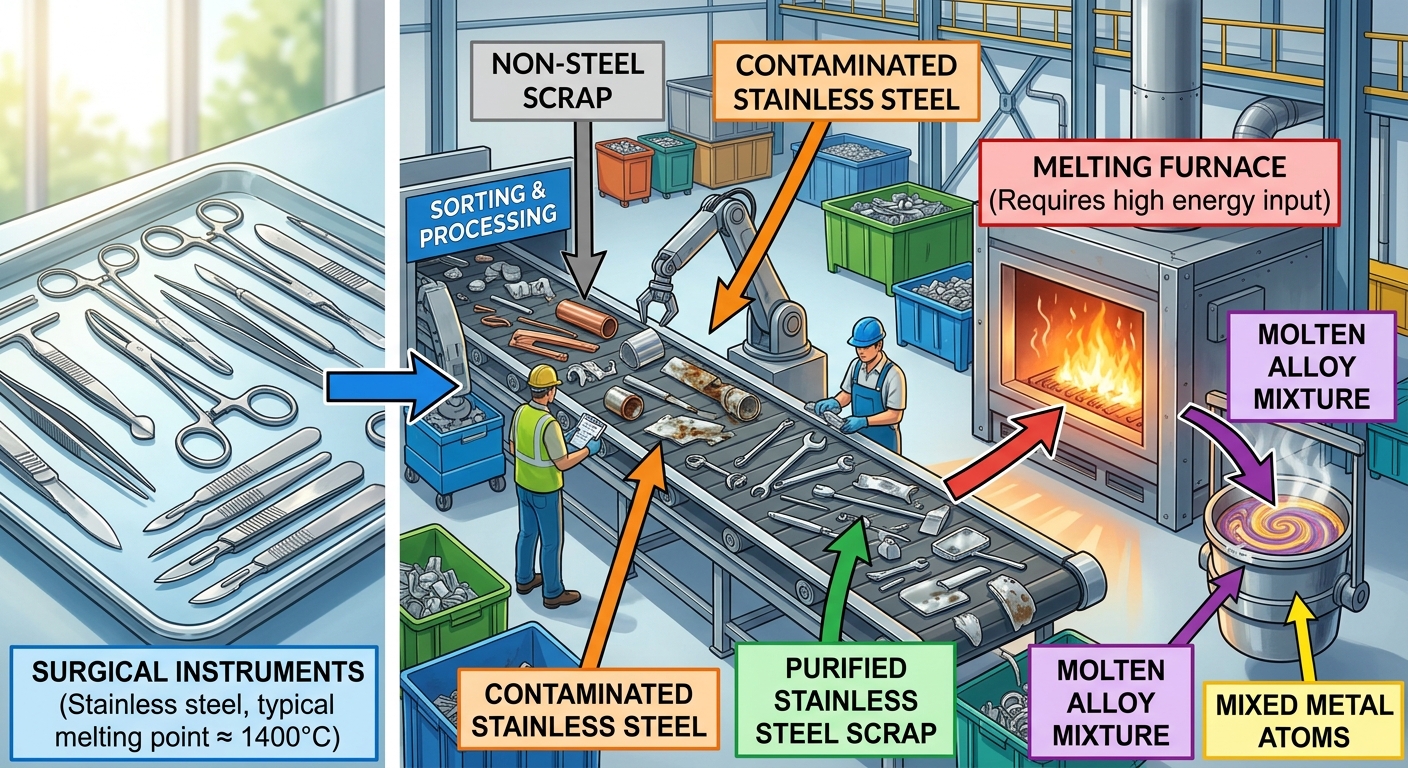
Stainless steel, an alloy of iron, chromium and nickel, is used for surgical instruments. It melts at about 1400 °C, and chromium forms a thin surface layer of chromium(III) oxide that protects it from corrosion. Recycling stainless steel, as shown in the diagram, is energy-intensive because the scrap must be sorted and melted.
Question diagram
(a)
Explain why stainless steel is harder than pure iron. [2]Criterion A (ii) · Level 3-4
(b)
Explain why melting stainless steel for recycling needs a large amount of energy. [1]Criterion D (i) · Level 3-4
(c)
A hospital can use reusable stainless-steel instruments, which are sterilised after each use, or single-use instruments that are thrown away. Discuss the environmental, economic and health implications of the two choices, and reach a conclusion. [5]Criterion D (ii), D (iii) · Level 7-8

revisionprep.com

Summary Answer

Not available for this question.

Model Answer

Not available for this question.

Marking Scheme

Not available for this question.

Examiner Insights

Not available for this question.

That's every free question here — 6 of 133.

+127 more questions, plus Mock Papers & Worksheets, are waiting in Premium.

Upgrade