You're viewing free preview questions — 6 questions previewing here — subscribe to unlock 75 more, plus the Full Question Bank, Mock Papers & Worksheets.Upgrade
Back

Types of Reactions — Free MYP4 Chemistry Practice Questions

Free questions

Open in full, with answers, mark scheme and examiner insights.

Question 1Criterion A · Band 1-4 · Easy · 4 marksrevisionprep.com

Combination and Decomposition Reactions
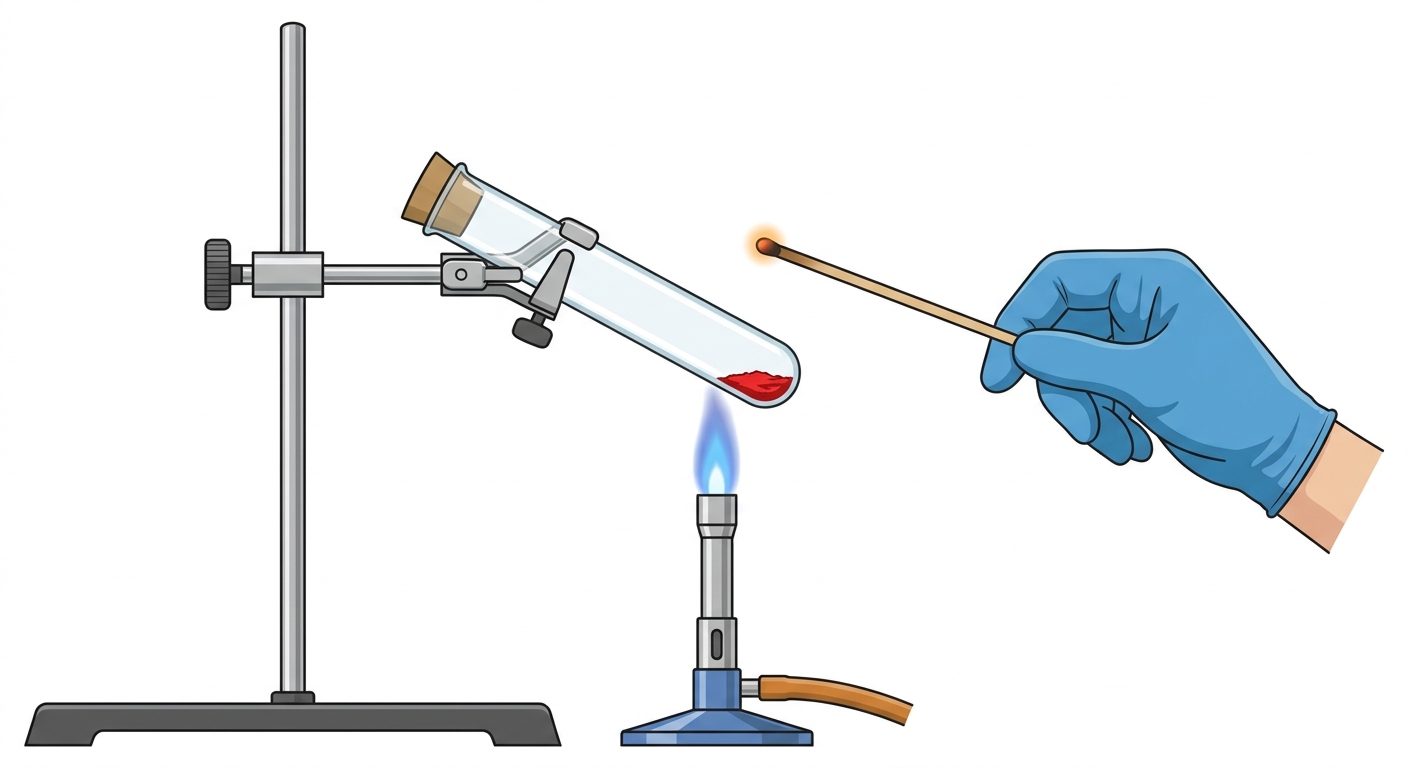
In 1774 Joseph Priestley heated red mercury(II) oxide, HgO, and collected a gas that made a glowing splint burst into flame. The diagram shows the same reaction carried out in a test tube. Silvery droplets collect on the cooler part of the tube.
Question diagram
(a)
Identify the two products of this reaction. [1]Criterion A (i) · Level 1-2
(b)
Write a balanced equation, with state symbols, for this reaction. [2]Criterion A (ii) · Level 3-4
(c)
Suggest why this reaction is now carried out only as a teacher demonstration in a fume cupboard. [1]Criterion A (ii) · Level 3-4

revisionprep.com

Summary Answer

Not available for this question.

Model Answer

Not available for this question.

Marking Scheme

Not available for this question.

Examiner Insights

Not available for this question.

Question 2Criterion A · Band 1-4 · Easy · 7 marksrevisionprep.com

Precipitation and Gas Formation Reactions
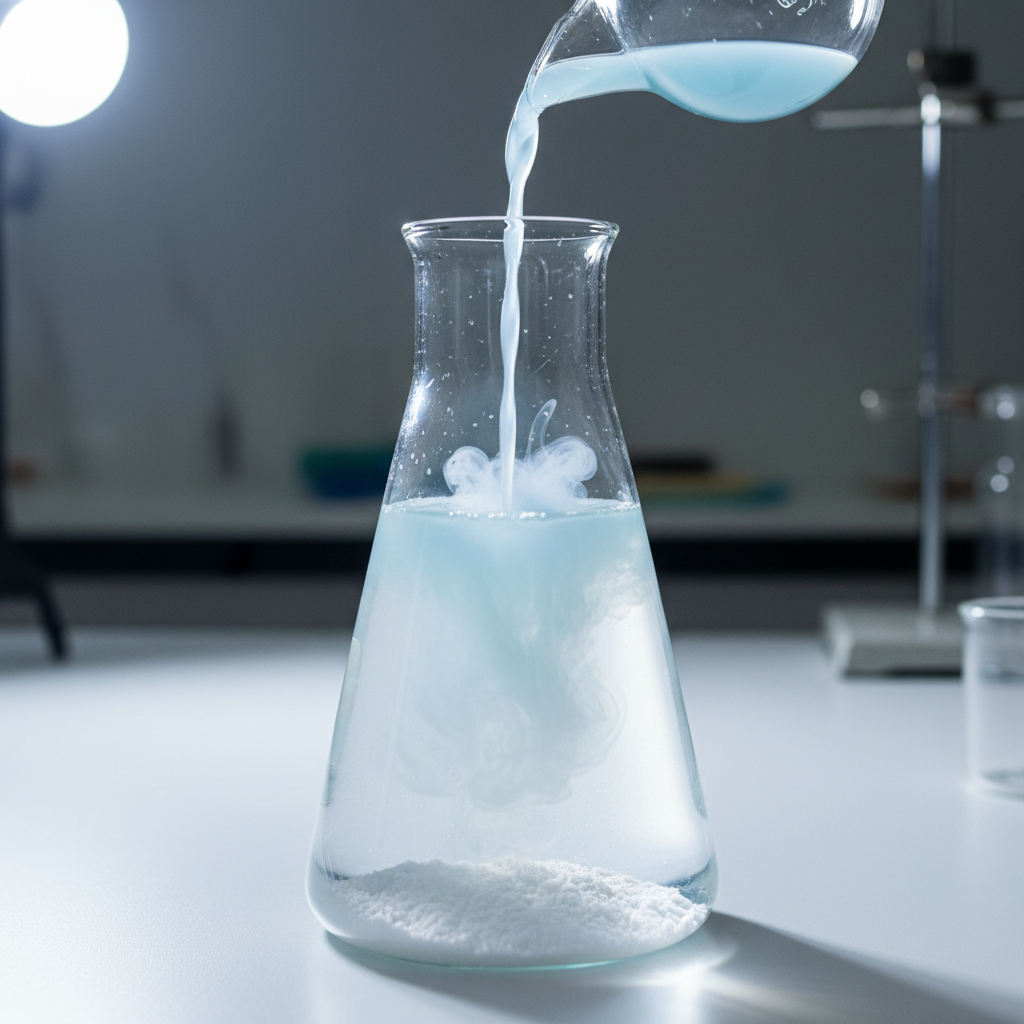
The photograph shows sodium sulfate solution being poured into barium chloride solution. A white solid forms at once and settles to the bottom of the flask.
Question diagram
(a)
Name the white solid and the type of reaction. [1]Criterion A (i) · Level 1-2
(b)
Write a balanced equation, with state symbols, for the reaction. [2]Criterion A (ii) · Level 3-4
(c)
Write the ionic equation for the reaction. [1]Criterion A (ii) · Level 3-4
(d)
Describe how to obtain a pure, dry sample of the white solid from the mixture. [3]Criterion A (ii) · Level 3-4

revisionprep.com

Summary Answer

Not available for this question.

Model Answer

Not available for this question.

Marking Scheme

Not available for this question.

Examiner Insights

Not available for this question.

Question 3Criterion A · Band 1-6 · Medium · 6 marksrevisionprep.com

Combustion Reactions Complete and Incomplete

The diagram shows the structural formulas of methane, CH₄, and octane, C₈H₁₈.
(a)
Explain why methane and octane are both described as hydrocarbons. [1]Criterion A (i) · Level 1-2
(b)
Write a balanced equation, with state symbols, for the complete combustion of octane. [2]Criterion A (ii) · Level 3-4
(c)
Use your equation to state the number of moles of oxygen needed to burn 1 mol of octane completely. [1]Criterion A (ii) · Level 3-4
(d)
Methane needs 2 mol of oxygen per mole. Use this and your answer to (c) to explain why incomplete combustion is more likely for octane in a car engine than for methane in a gas cooker. [2]Criterion A (iii) · Level 5-6

revisionprep.com

Summary Answer

Not available for this question.

Model Answer

Not available for this question.

Marking Scheme

Not available for this question.

Examiner Insights

Not available for this question.

Question 4Criterion C + A · Band 1-6 · Medium · 7 marksrevisionprep.com

Observing chemical change: colour, gas, temperature, precipitate
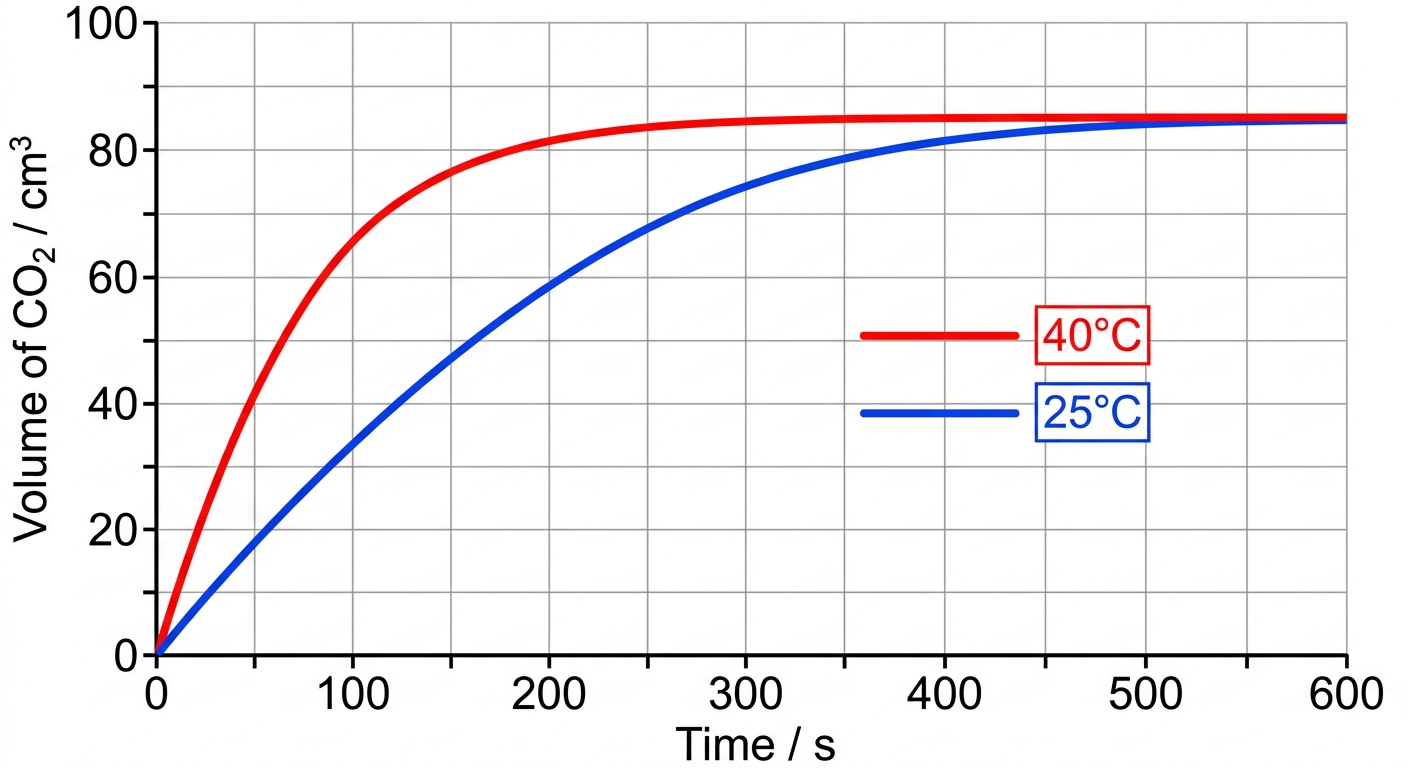
Marble chips (calcium carbonate) react with excess dilute hydrochloric acid at 25 °C and at 40 °C. The same mass of marble chips is used each time. The graph shows the volume of carbon dioxide collected. One mole of gas occupies 24 000 cm³ under these conditions.
Question diagram
(a)
State two observations in the flask, other than the gas collected, that would show a reaction is taking place. [1]Criterion A (i) · Level 1-2
(b)
Use the graph to determine the final volume of carbon dioxide. [1]Criterion C (ii) · Level 1-2
(c)
Calculate the mass of calcium carbonate that reacted. Molar mass of CaCO₃ = 100.1 g mol⁻¹ [2]Criterion C (i) · Level 3-4
(d)
Explain why both curves level off at the same volume. [1]

(e) Explain, in terms of particles, why the 40 °C curve is steeper at the start. [2]
Criterion C (ii) · Level 5-6

revisionprep.com

Summary Answer

Not available for this question.

Model Answer

Not available for this question.

Marking Scheme

Not available for this question.

Examiner Insights

Not available for this question.

Question 5Criterion D · Band 3-8 · Challenge · 8 marksrevisionprep.com

Combination and Decomposition Reactions

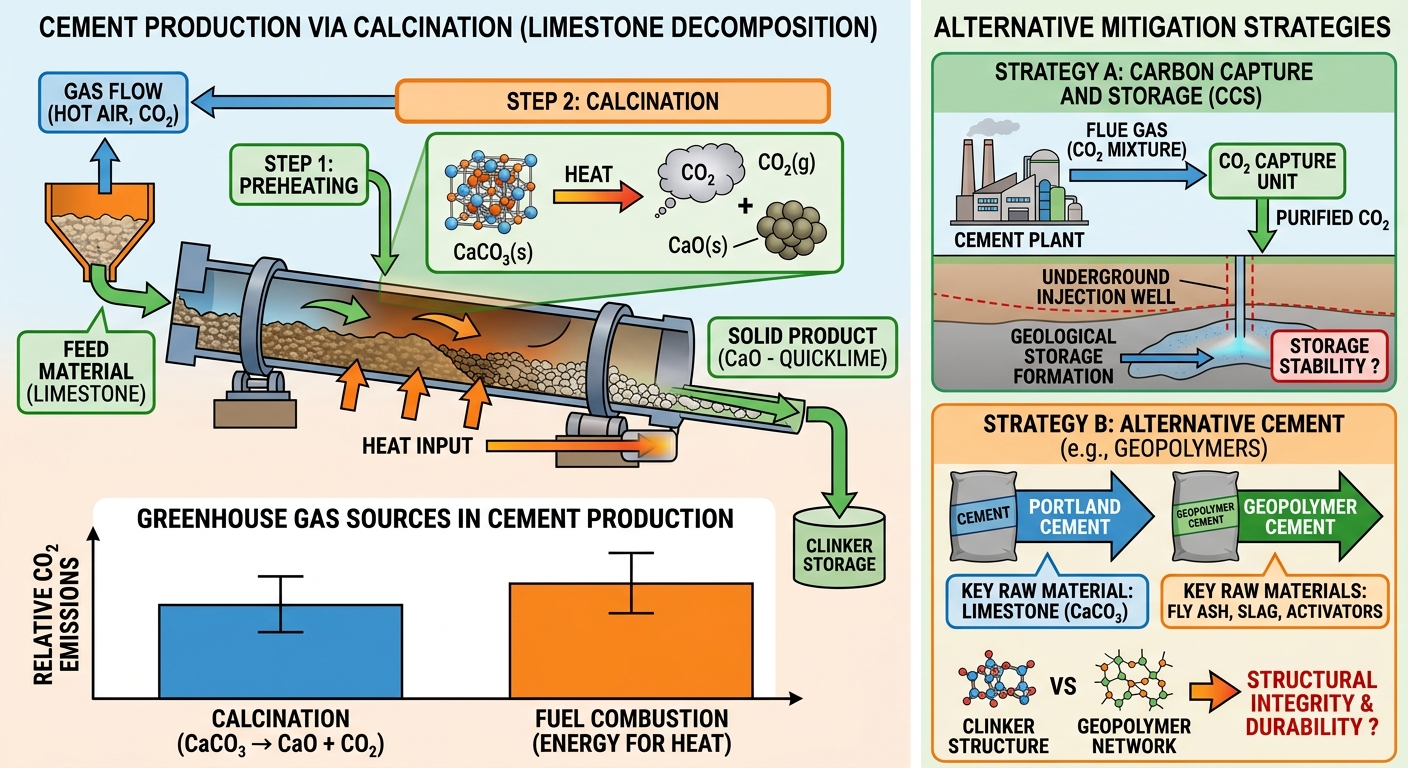
The infographic summarises how cement is made and two strategies for reducing its carbon dioxide emissions. Cement production releases about 8% of the world's carbon dioxide emissions.

Carbon capture and storage (CCS) can capture up to about 90% of the carbon dioxide from a kiln, but it is expensive and uses extra energy. Geopolymer cements are made from industrial waste such as fly ash and slag and use no limestone, but their long-term durability is still being tested and many building codes do not yet allow them.
Question diagram
(a)
Using the infographic, explain why geopolymer cement avoids the carbon dioxide released in the calcination step. [2]Criterion D (i) · Level 3-4
(b)
Outline how carbon capture and storage reduces emissions and state one risk of storing carbon dioxide underground. [2]Criterion D (i) · Level 3-4
(c)
Evaluate geopolymer cement and carbon capture and storage as ways of reducing carbon dioxide emissions from cement worldwide. Consider at least two of economic, environmental and social factors, and reach a conclusion. [4]Criterion D (ii), D (iii) · Level 7-8

revisionprep.com

Summary Answer

Not available for this question.

Model Answer

Not available for this question.

Marking Scheme

Not available for this question.

Examiner Insights

Not available for this question.

Question 6Criterion B · Band 5-8 · Challenge · 11 marksrevisionprep.com

Single and Double Displacement Reactions

A student wants to answer the research question: How does the reactivity of a metal affect the temperature rise when the metal is added to copper(II) sulfate solution?

Available: powdered magnesium, zinc, iron and copper; 0.50 mol dm⁻³ copper(II) sulfate solution; polystyrene cups with lids; a thermometer; a balance; a measuring cylinder.
(a)
Formulate a testable hypothesis for this investigation and explain it using scientific reasoning. [2]Criterion B (ii) · Level 5-6
(b)
Identify the independent variable, the dependent variable and two control variables. [2]Criterion B (iii) · Level 5-6
(c)
Explain why the metal, not the copper(II) sulfate, should be in excess in every test. [3]Criterion B (iii) · Level 7-8
(d)
Describe a method that would collect sufficient, relevant data. [4]Criterion B (iv) · Level 7-8

revisionprep.com

Summary Answer

Not available for this question.

Model Answer

Not available for this question.

Marking Scheme

Not available for this question.

Examiner Insights

Not available for this question.

That's every free question here — 6 of 81.

+75 more questions, plus Mock Papers & Worksheets, are waiting in Premium.

Upgrade