You're viewing free preview questions — 4 questions previewing here — subscribe to unlock 80 more, plus the Full Question Bank, Mock Papers & Worksheets.Upgrade
Balancing Equations and Conservation of Mass — Free MYP4 Chemistry Practice Questions

1QuestionMass Changes in Closed and Open SystemsConcept Practice
2 marks~3 minCriterion A
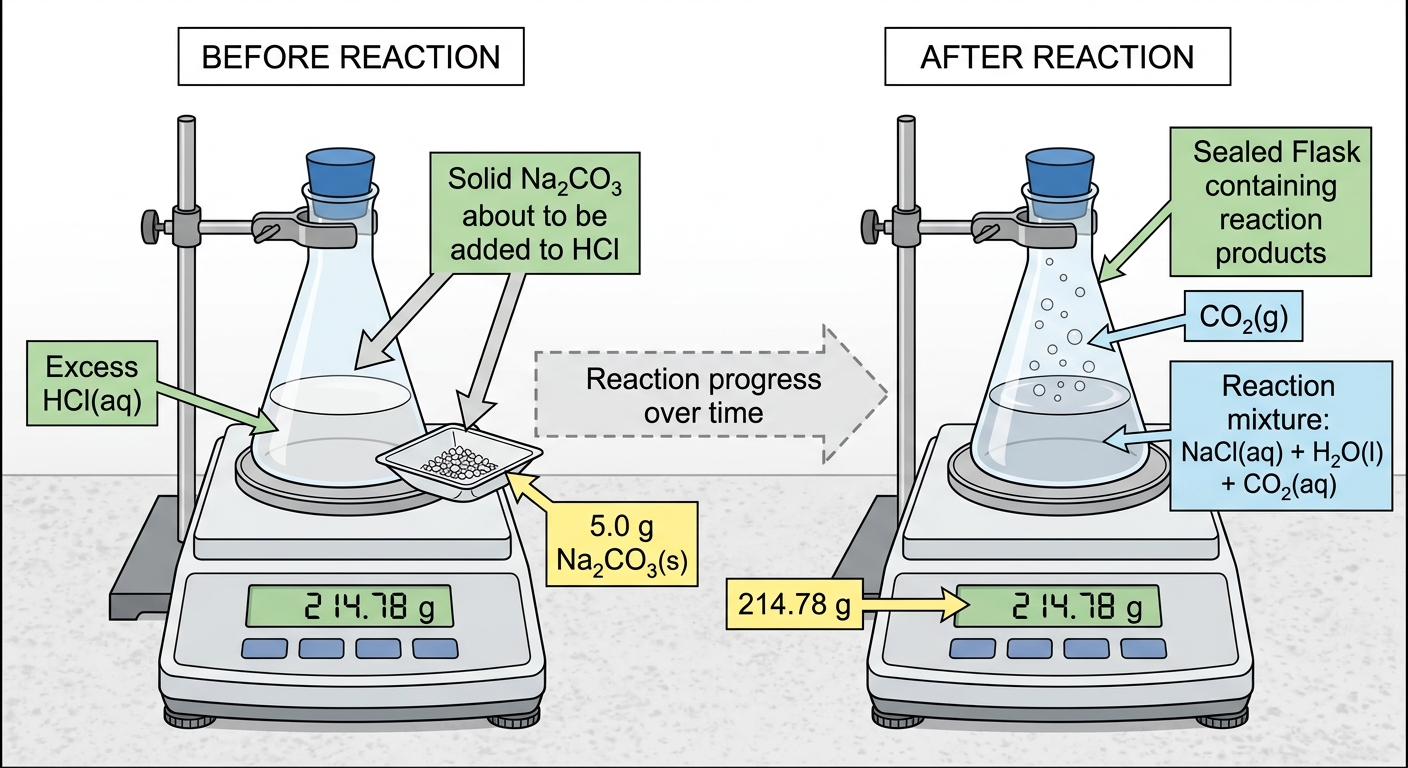
A student adds 5.0 g of sodium carbonate () to a sealed flask containing excess hydrochloric acid (). The reaction is:
The student records the total mass of the sealed flask before and after the reaction and finds it unchanged.
The student records the total mass of the sealed flask before and after the reaction and finds it unchanged.
a
State the law that explains why the total mass remains unchanged. [1]
b
Explain why the mass would decrease if the flask were left open during the same reaction. [1]

Solutions
2QuestionBalancing Simple Chemical EquationsAssessment Practice
2 marks~3 minCriterion D
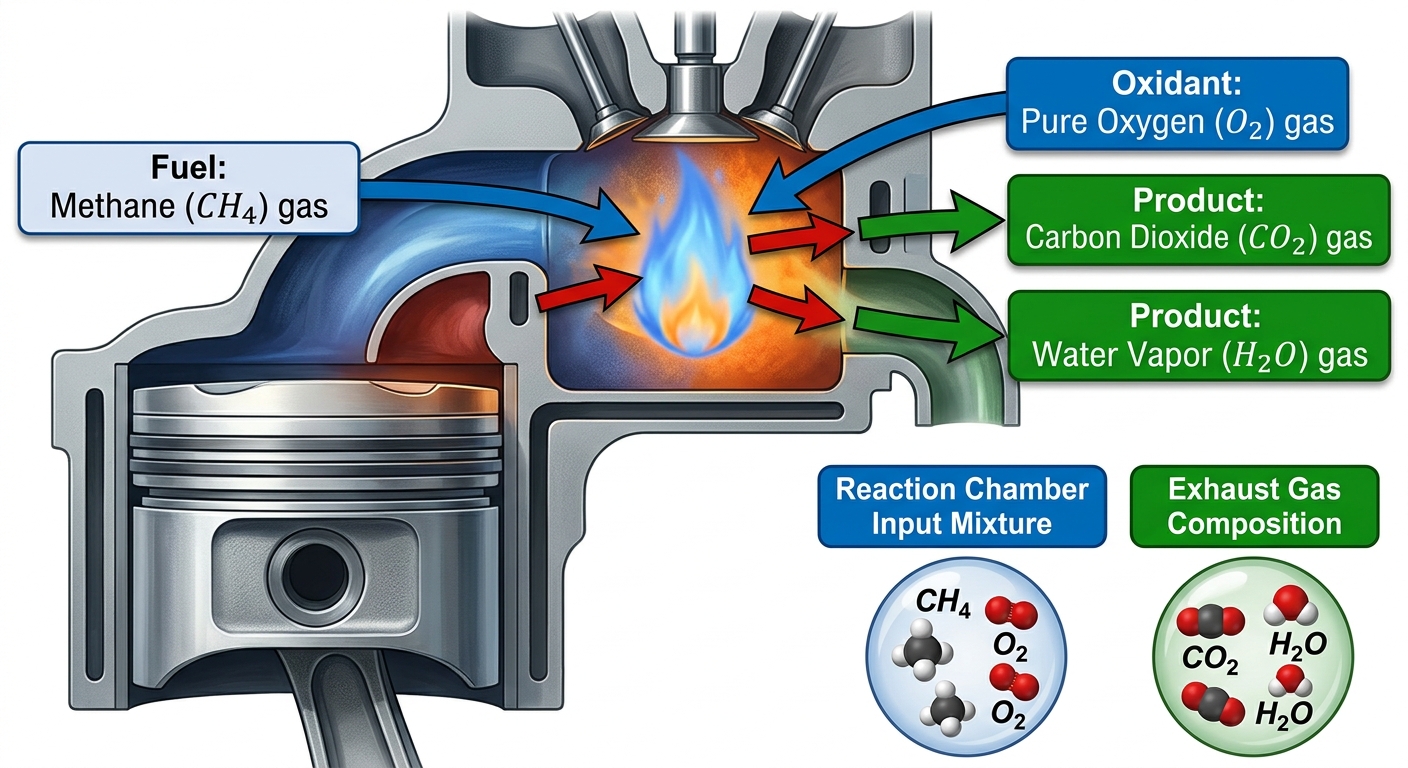
Natural gas power stations burn methane according to:
a
Identify one environmental impact of methane combustion that can be deduced directly from this equation. [1]
b
Evaluate one limitation of using this equation to model the environmental impact of real-world natural gas combustion. [1]
Solutions
3QuestionBalancing Complex Reactions with Polyatomic IonsAssessment Practice
4 marks~6 minCriterion C
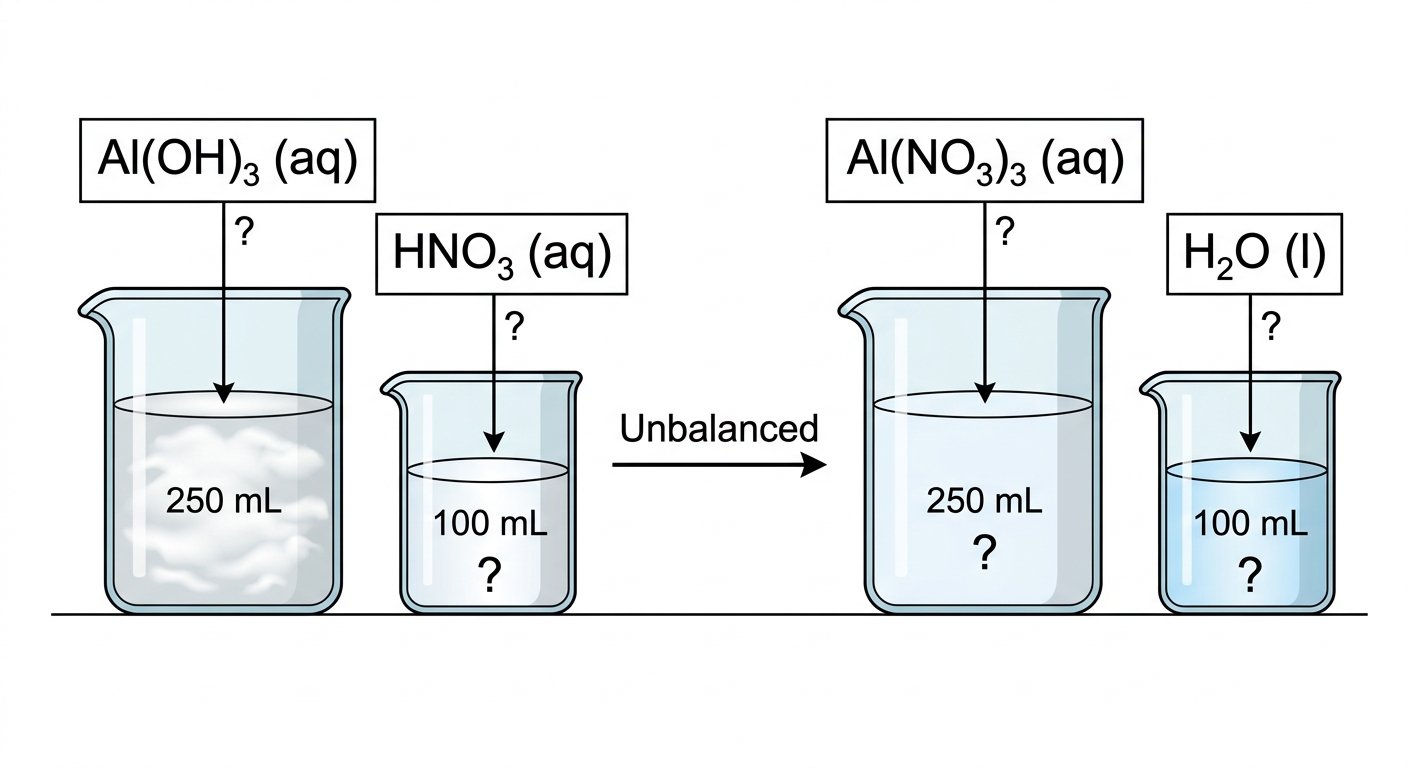
Aluminium hydroxide reacts with nitric acid according to the unbalanced equation:
a
Construct the balanced equation, treating the nitrate ion () as a single unit. [2]
b
Justify why the coefficient of water in the balanced equation must be 3, using the conservation of mass. Your answer must account for both hydrogen and oxygen atoms. [2]
Solutions
4QuestionBalancing Simple Chemical EquationsAssessment Practice
6 marks~9 minCriterion B
When a hydrocarbon burns completely in excess oxygen, the only products are carbon dioxide () and water (). The table below shows combustion data for four alkanes.
| Hydrocarbon | ||||
|---|---|---|---|---|
| molecules produced | 1 | 2 | 3 | 4 |
| molecules produced | 2 | 3 | 4 | 5 |
a
Deduce the relationship between the molecular formula of a hydrocarbon and the number of and molecules produced during complete combustion. [2]
b
Predict the number of and molecules produced when one molecule of pentane () burns completely in excess oxygen, and explain your reasoning. [2]
c
A student claims: "The pattern in the table is just a coincidence — it does not have to follow the law of conservation of mass." Justify whether this claim is correct or incorrect, using the balanced equation for the complete combustion of pentane as evidence. [2]
Solutions
That's every free question here — 4 of 84.
+80 more questions, plus Mock Papers & Worksheets, are waiting in Premium.