You're viewing free preview questions — 4 questions previewing here — subscribe to unlock 93 more, plus the Full Question Bank, Mock Papers & Worksheets.Upgrade
Ionic Covalent and Metallic Bonding — Free MYP4 Chemistry Practice Questions

1QuestionBond strength, melting points and conductivityConcept Practice
2 marks~3 minCriterion A
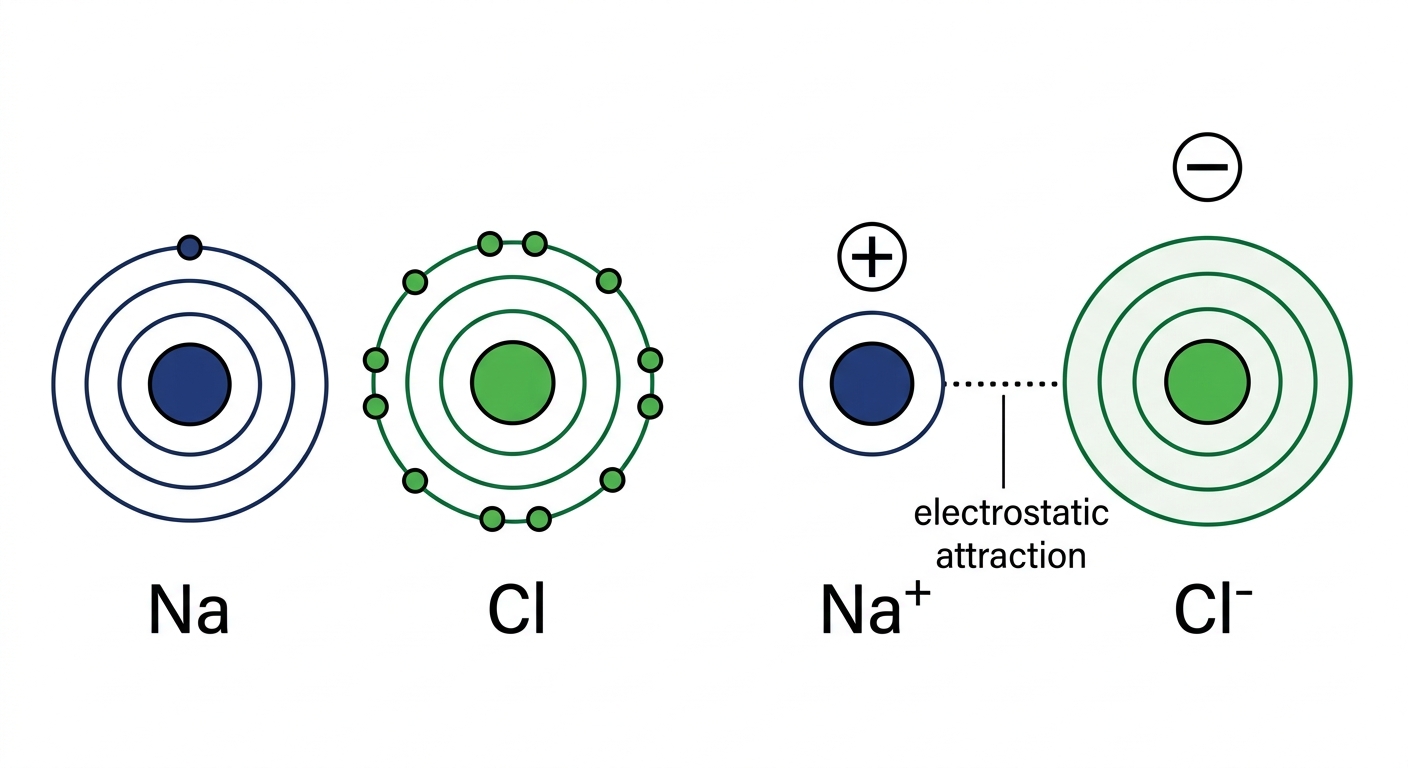
The diagram shows sodium and chlorine atoms before and after forming sodium chloride, .
a
Describe the electron transfer that occurs when a sodium atom reacts with a chlorine atom to form ions. Include the correct ion symbols in your answer. [1]
b
Explain how the ions formed in part (a) produce a stable ionic compound. [1]

Solutions
2QuestionFormation and Diagrams of Covalent BondsAssessment Practice
6 marks~9 minCriterion C
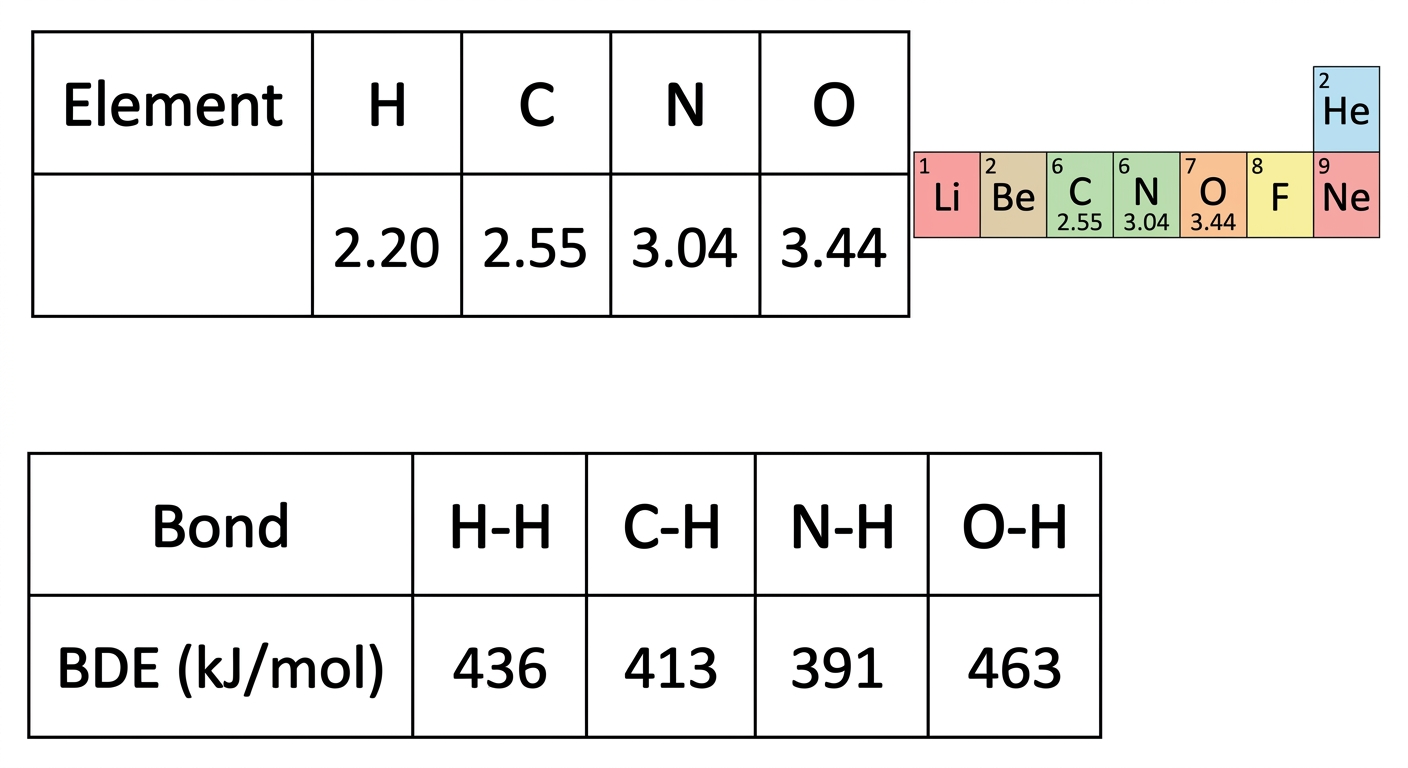
The table below shows electronegativity (EN) values on the Pauling scale and bond dissociation energies (BDE) at 298 K for bonds between hydrogen and selected second-period non-metals.
| Element | H | C | N | O |
|---|---|---|---|---|
| EN | 2.20 | 2.55 | 3.04 | 3.44 |
| Bond | H–H | C–H | N–H | O–H |
|---|---|---|---|---|
| BDE (kJ mol) | 436 | 413 | 391 | 463 |
a
Calculate the electronegativity difference, , for each of the four bonds. [1]
b
Deduce the order of the four bonds from least polar to most polar, and explain how the electronegativity differences support this order. [2]
c
Analyse the relationship between bond polarity and bond dissociation energy. Identify one bond whose BDE does not follow the trend expected from polarity alone, and justify your answer by referring to atomic properties. [3]
Solutions
3QuestionStructure and Properties of Metallic BondsAssessment Practice
8 marks~12 minCriterion D
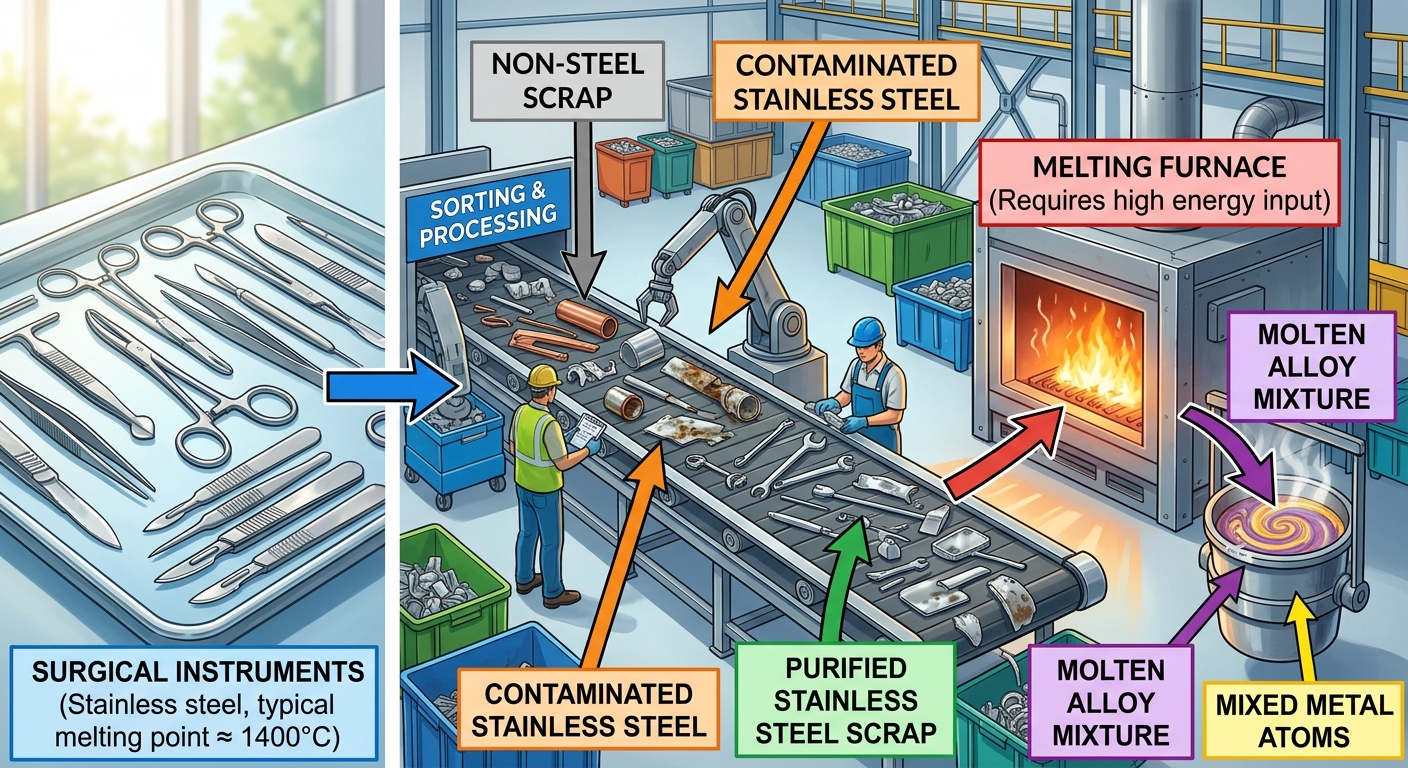
Stainless steel, an alloy of iron, chromium, and nickel, is widely used for surgical instruments. Its melting point is approximately , and chromium forms a surface oxide layer () that resists corrosion. Recycling stainless steel is energy-intensive and requires separation of its alloy components to meet medical-grade purity standards.
a
Explain how the metallic bonding structure of stainless steel accounts for both its high strength and its corrosion resistance. [2]
b
Discuss the societal benefits of stainless steel surgical instruments for the healthcare sector, addressing both health and economic dimensions. [2]
c
Analyse the environmental costs of recycling stainless steel, considering its high melting point and the challenges of separating its alloy components. [2]
d
Evaluate whether the societal benefits of stainless steel surgical instruments outweigh the environmental costs, and justify one strategy to reduce the environmental impact of its production or recycling. [2]
Solutions
4QuestionStructure and Properties of Metallic BondsAssessment Practice
4 marks~6 minCriterion B
The table below shows the melting points of Group 1 metals.
| Element | Li | Na | K | Rb | Cs |
|---|---|---|---|---|---|
| Melting point (°C) | 180 | 98 | 64 | 39 | 28 |
a
Describe the trend in melting points down Group 1. [1]
b
Deduce the melting point of francium (Fr), the next element in Group 1, and justify your prediction using metallic bonding theory. [3]
Solutions
That's every free question here — 4 of 97.
+93 more questions, plus Mock Papers & Worksheets, are waiting in Premium.