You're viewing free preview questions — 4 questions previewing here — subscribe to unlock 64 more, plus the Full Question Bank, Mock Papers & Worksheets.Upgrade
Particle Model and Kinetic Theory — Free MYP4 Chemistry Practice Questions

1QuestionExplaining macroscopic properties using particle theoryConcept Practice
2 marks~3 minCriterion A
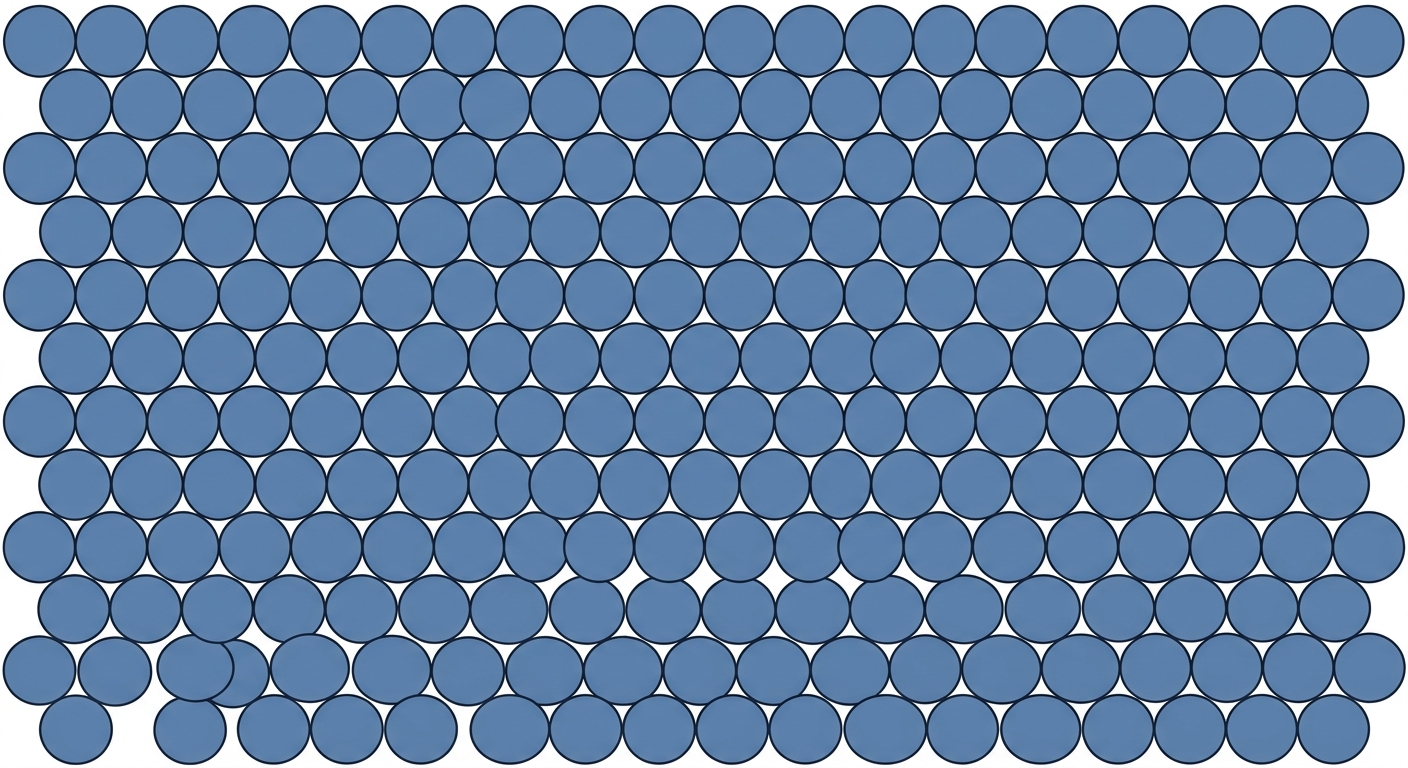
The diagram shows particles arranged in a regular, tightly packed lattice with negligible spaces between them.
a
Identify the state of matter shown in the diagram. [1]
b
Explain one macroscopic property of this state of matter using the particle arrangement shown. [1]

Solutions
2QuestionParticle motion in solids, liquids, and gasesAssessment Practice
3 marks~5 minCriterion C
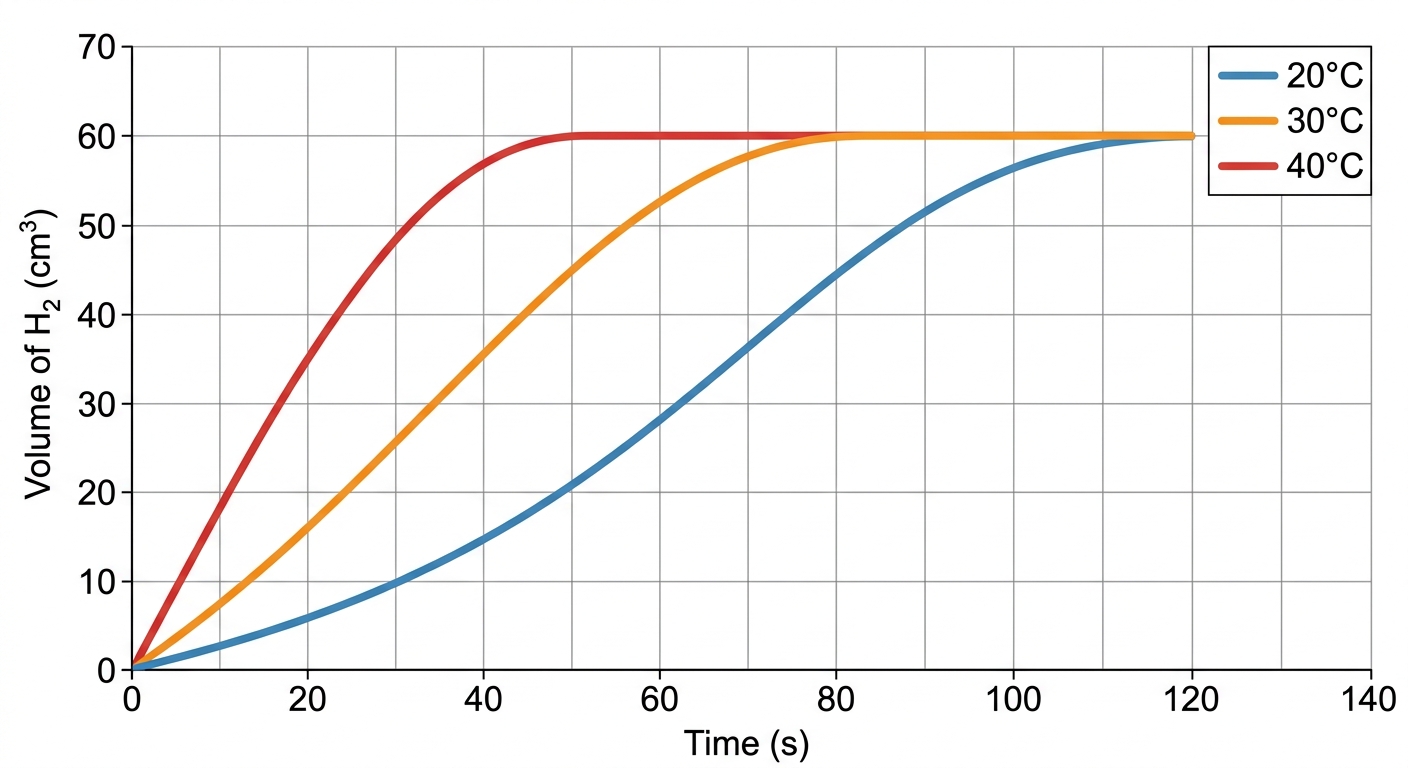
The graph below shows the volume of gas produced over time when magnesium ribbon reacts with excess hydrochloric acid at three temperatures: 20°C, 30°C, and 40°C. All three curves reach a final volume of 60 cm³, but the reaction completes at 120 s, 80 s, and 50 s respectively.
a
State what the graph shows about how increasing temperature affects the rate of reaction. [1]
b
Using the particle model, explain why increasing temperature produces this effect. [1]
c
All three reactions produce exactly 60 cm³ of . Analyse what this tells you about the amount of magnesium used, and explain why temperature alone cannot change this outcome. [1]
Solutions
3QuestionSpacing and forces between particlesConcept Practice
4 marks~6 minCriterion B
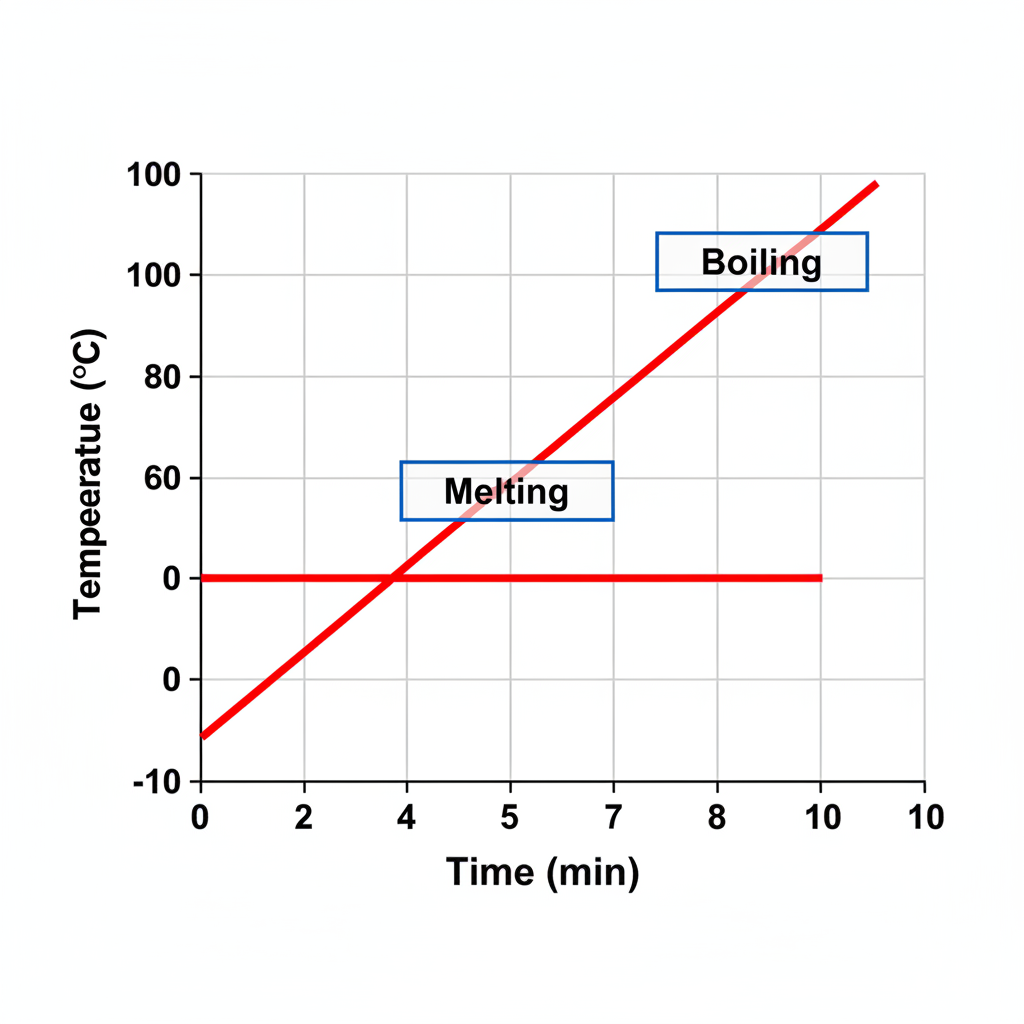
The heating curve below shows temperature vs. time for a 100 g sample of substance X being heated at a constant rate. The curve has two plateaus: one at 0°C (melting) and one at 100°C (boiling).
Temperature (°C): -10 → 0 (plateau) → 20 → 100 (plateau) → 110
Time (min): 0 → 2 → 4 → 6 → 8 → 10
Temperature (°C): -10 → 0 (plateau) → 20 → 100 (plateau) → 110
Time (min): 0 → 2 → 4 → 6 → 8 → 10
a
During the plateaus, what happens to the spacing between particles and the forces between them? Explain briefly.
b
Predict how the heating curve would differ for a 100 g sample of substance Y, which has a higher specific heat capacity than X but the same melting and boiling points. Justify your prediction by referring to energy, spacing, and forces.
Solutions
4QuestionExplaining macroscopic properties using particle theoryAssessment Practice
5 marks~8 minCriterion D
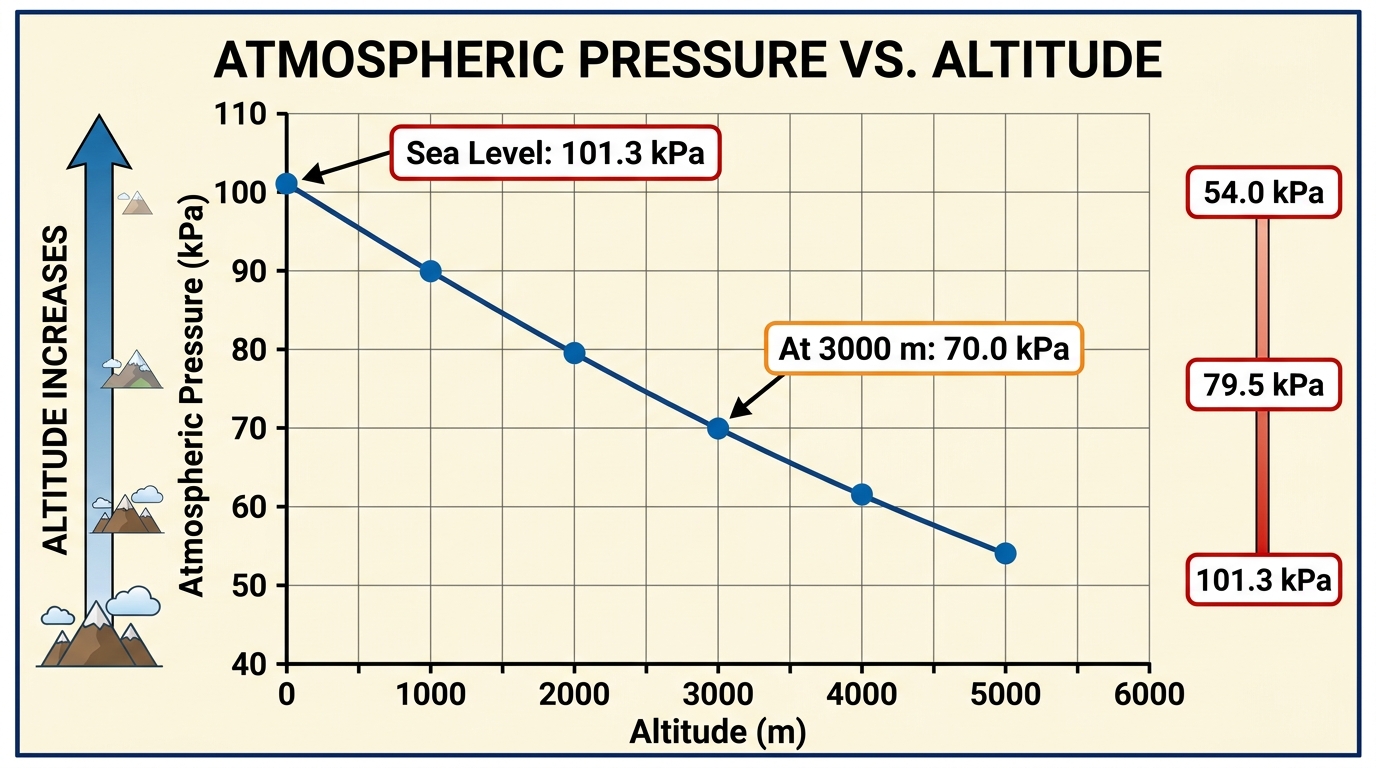
At sea level (), atmospheric pressure is and water boils at . At , pressure falls to and water boils at .
| Altitude (m) | 0 | 1000 | 2000 | 3000 | 4000 | 5000 |
|---|---|---|---|---|---|---|
| Atmospheric pressure (kPa) | 101.3 | 89.9 | 79.5 | 70.0 | 61.6 | 54.0 |
a
Explain what must happen at the particle level for water to boil. [1]
b
Explain how the data show that atmospheric pressure affects the boiling point of water. [2]
c
A mountaineer claims that food cooked in boiling water at will take longer to cook than at sea level. Evaluate this claim using particle theory and the data provided. [2]
Solutions
That's every free question here — 4 of 68.
+64 more questions, plus Mock Papers & Worksheets, are waiting in Premium.