You're viewing free preview questions — 4 questions previewing here — subscribe to unlock 77 more, plus the Full Question Bank, Mock Papers & Worksheets.Upgrade
Distillation and fractional distillation — Free MYP4 Chemistry Practice Questions

1QuestionFractionating column and temperature gradientConcept Practice
2 marks~3 minCriterion A
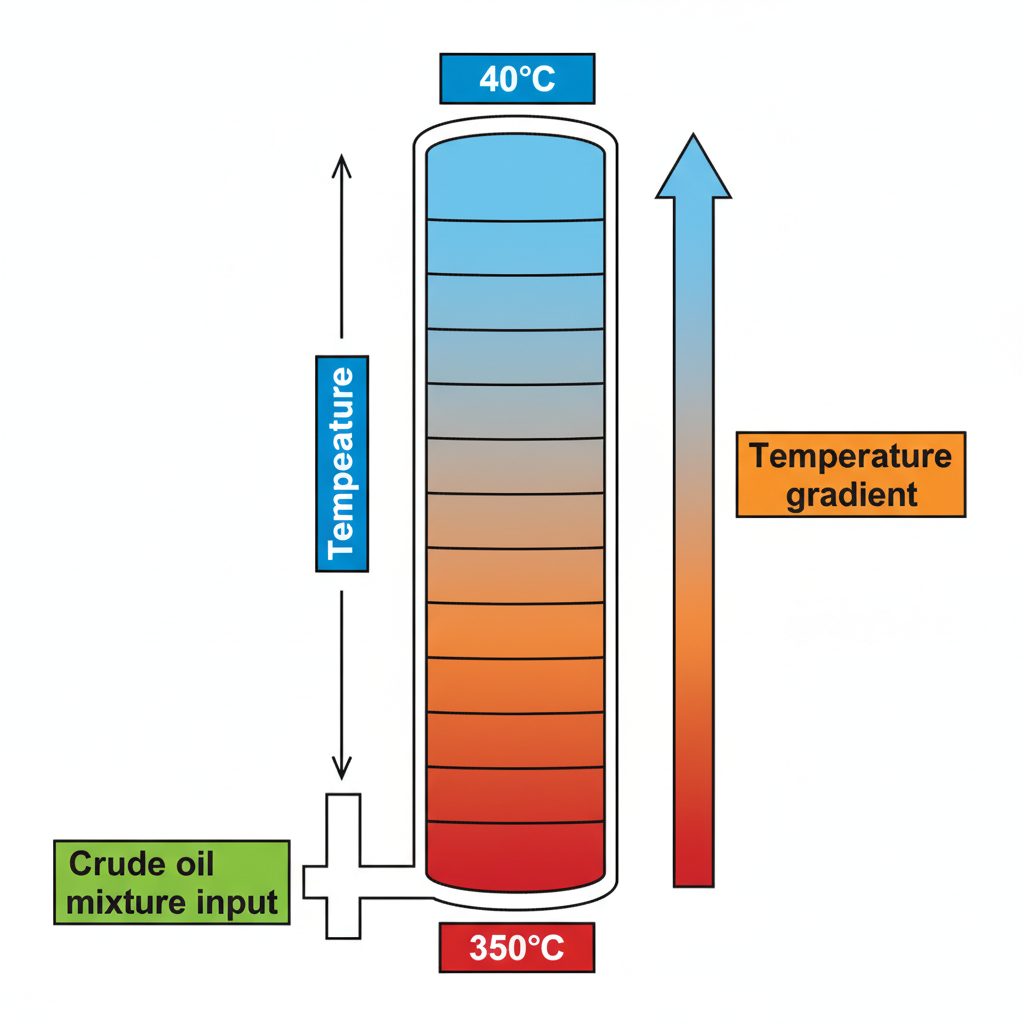
A fractionating column separates crude oil using a temperature gradient: at the base and at the top. A mixture of hydrocarbon vapours enters at the bottom and rises through the column.
a
Explain how the temperature gradient drives vaporization and condensation as hydrocarbons rise through the column. [1]
b
Explain why different hydrocarbons condense at different levels within the column. [1]

Solutions
2QuestionBoiling point differences in separationAssessment Practice
5 marks~8 minCriterion C
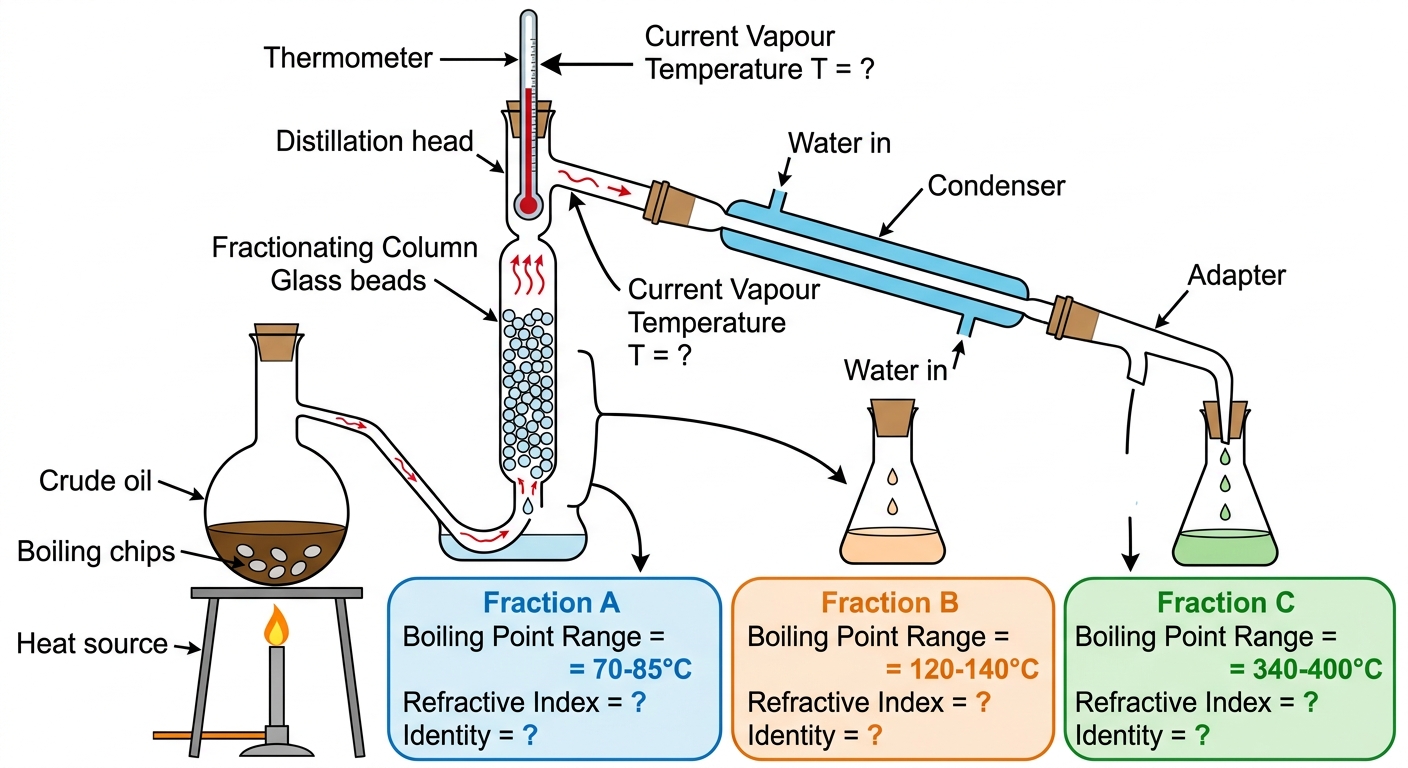
A student performs fractional distillation on a crude oil sample and collects three fractions, recording their boiling point ranges:
Fraction A:
Fraction B:
Fraction C:
Reference boiling points of pure alkanes:
Octane ():
Hexadecane ():
The student hypothesises that Fraction B is pure octane.
Fraction A:
Fraction B:
Fraction C:
Reference boiling points of pure alkanes:
Octane ():
Hexadecane ():
The student hypothesises that Fraction B is pure octane.
a
State the boiling point of pure octane and explain what a fixed, single boiling point indicates about the purity of a substance. [1]
b
Using the data provided, deduce whether Fraction B could contain hexadecane. Justify your answer with reference to the boiling point values. [2]
c
Evaluate the student's hypothesis that Fraction B is pure octane, using the boiling point range of Fraction B as evidence. [2]
Solutions
3QuestionSimple distillation (separating solvent from solution)Concept Practice
3 marks~5 minCriterion B
A chemist needs to recover a solvent from a salt solution using simple distillation. The boiling points of three candidate solvents at standard atmospheric pressure are given below.
| Liquid | Boiling point (°C) |
|---|---|
| Water | 100 |
| Ethanol | 78 |
| Propanone | 56 |
a
State the trend in boiling points shown in the data. [1]
b
Identify which liquid would be most easily separated from a salt solution by simple distillation. [1]
c
Explain why a lower boiling point makes a liquid easier to separate from a salt solution using simple distillation. [1]
Solutions
4QuestionBoiling point differences in separationAssessment Practice
6 marks~9 minCriterion D
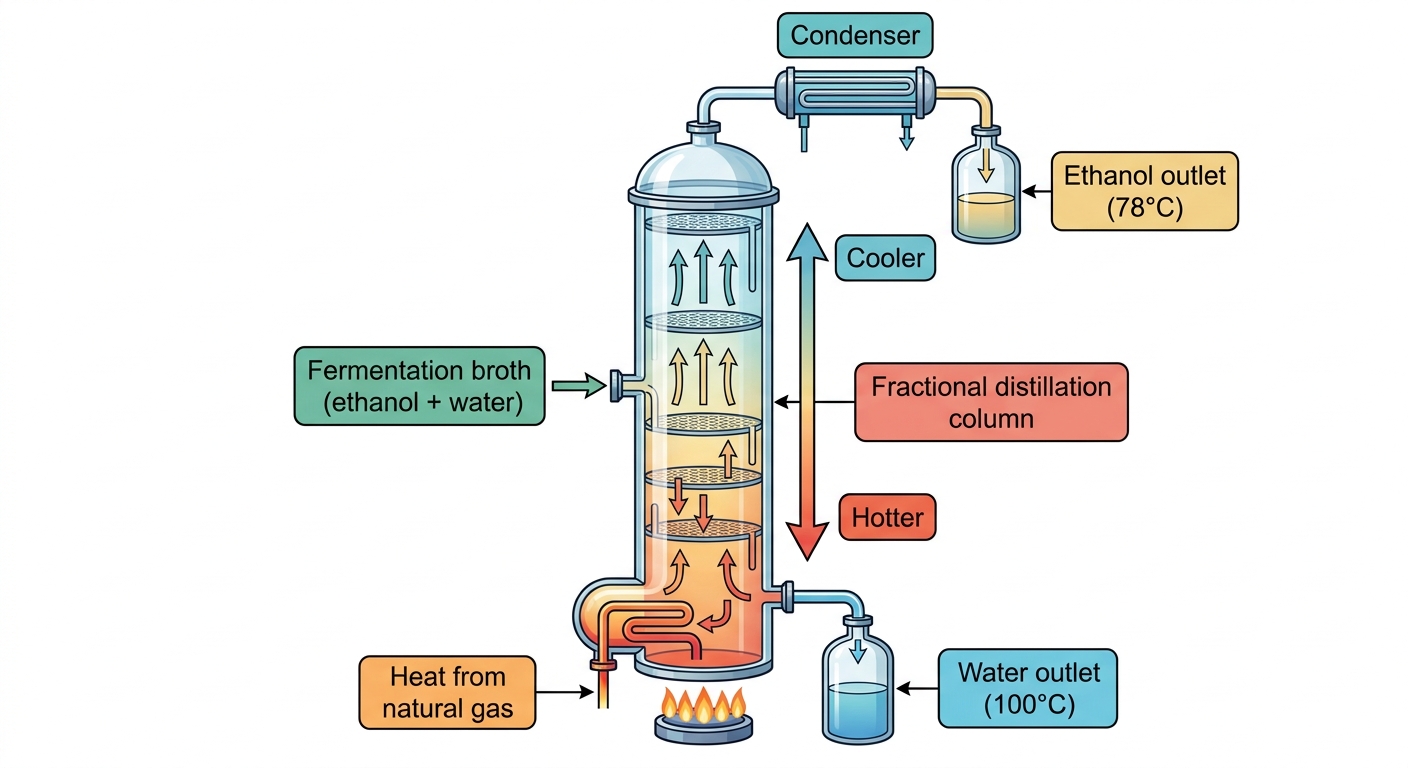
A biofuel plant uses fractional distillation to separate ethanol (boiling point ) from a fermentation broth containing water (boiling point ) and other organic compounds. The distillation column is heated continuously by burning natural gas.
a
Explain how the difference in boiling points between ethanol and water enables their separation by fractional distillation. [2]
b
Analyse how the energy requirement of the distillation column influences the overall carbon footprint of the biofuel plant. [2]
c
Evaluate whether fractional distillation powered by natural gas can be considered a genuinely sustainable method for biofuel production. [2]
Solutions
That's every free question here — 4 of 81.
+77 more questions, plus Mock Papers & Worksheets, are waiting in Premium.