You're viewing free preview questions — 4 questions previewing here — subscribe to unlock 75 more, plus the Full Question Bank, Mock Papers & Worksheets.Upgrade
Pure and Impure Substances — Free MYP4 Chemistry Practice Questions

1QuestionDefinition of mixtures and types (homogeneous vs heterogeneous)Concept Practice
2 marks~3 minCriterion A
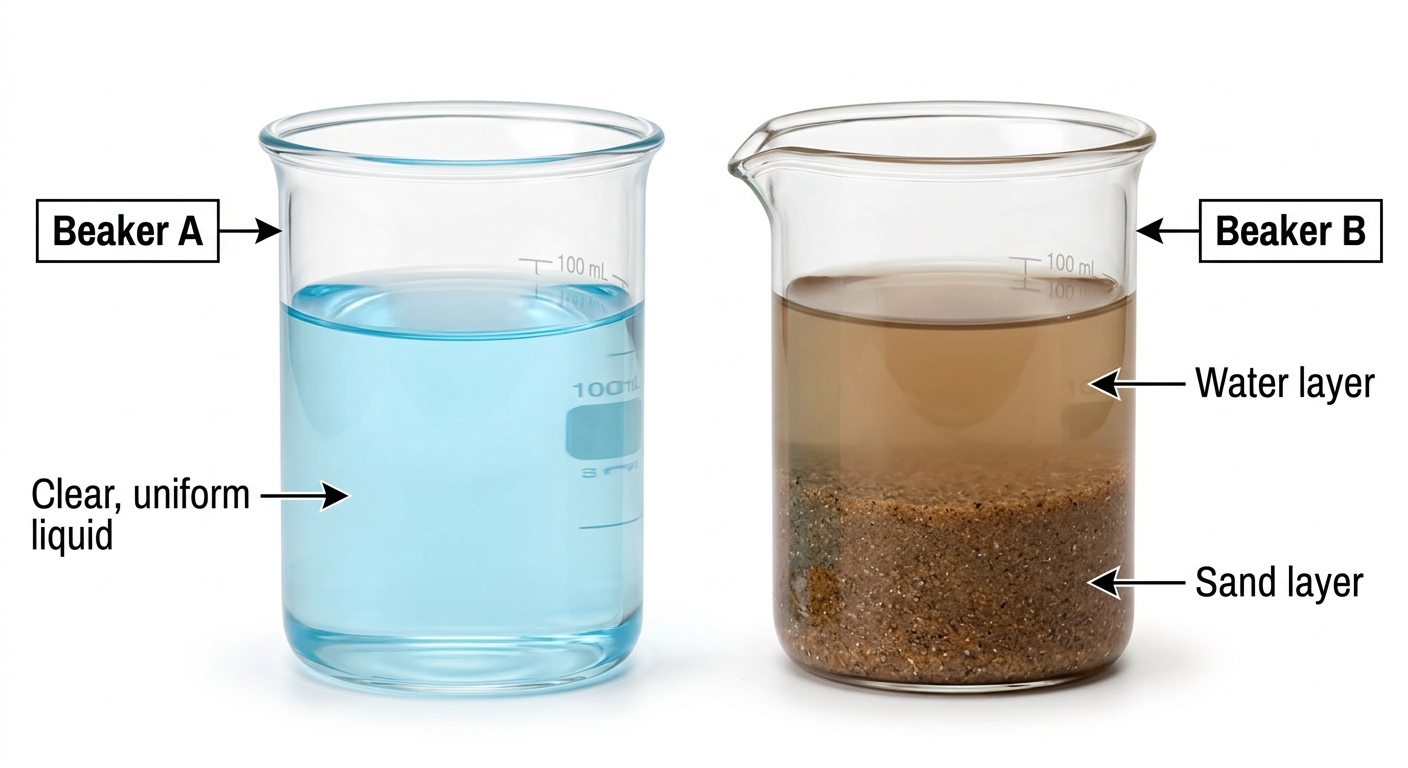
A technician prepares two samples in a school laboratory. Sample A is a saltwater solution that appears clear and uniform throughout. Sample B is a mixture of olive oil and water, which separates into two distinct visible layers.
a
Identify which sample is a homogeneous mixture and which is a heterogeneous mixture. [1]
b
Explain why Sample B cannot be classified as a homogeneous mixture, even if the layers are briefly shaken together. [1]

Solutions
2QuestionPhysical vs chemical properties in identifying purityAssessment Practice
3 marks~5 minCriterion C
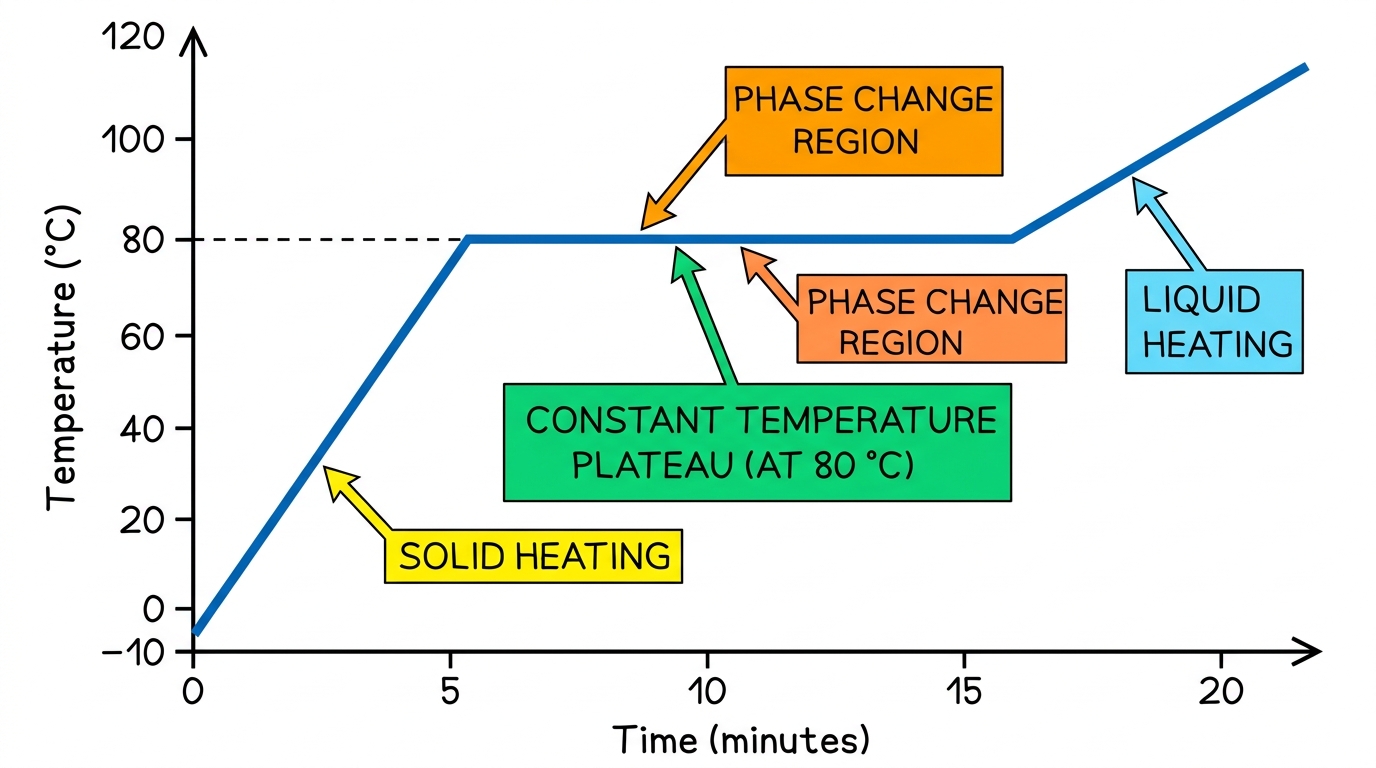
A sample of an unknown white solid is heated steadily. Its temperature rises, holds constant at for several minutes, then rises again, as shown in the graph.
a
Identify what the plateau at represents. [1]
b
Explain why a pure substance produces a plateau at a single fixed temperature, whereas an impure substance does not. [1]
c
Analyse how the graph provides evidence that melting point, as a physical property, can be used to assess the purity of this sample. [1]
Solutions
3QuestionPhysical vs chemical properties in identifying purityAssessment Practice
5 marks~8 minCriterion D
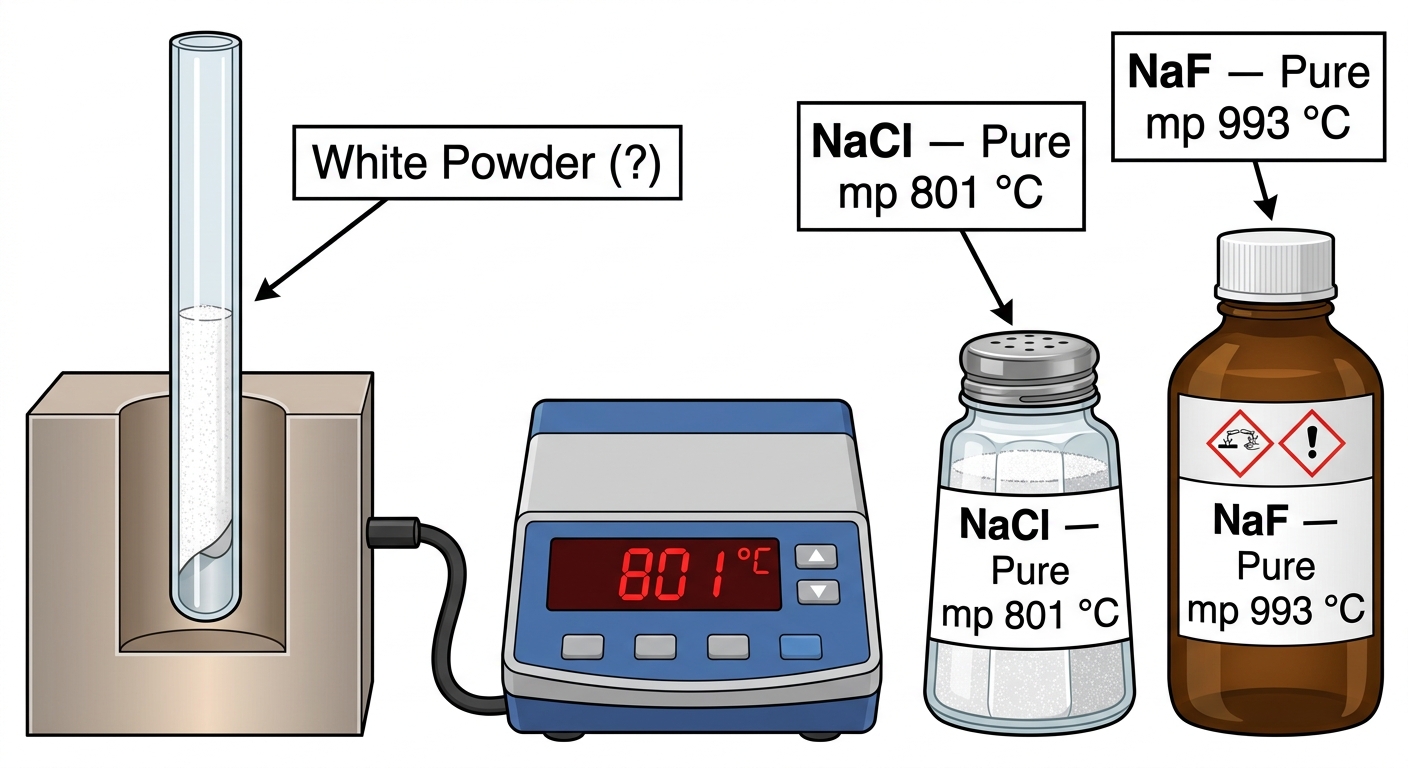
A white powder is discovered near an abandoned factory. It may be pure table salt (, melting point ) or sodium fluoride (, melting point ), a toxic industrial compound. A scientist measures the powder's melting point as and observes that melting occurs over a sharp, narrow temperature range.
a
Deduce the identity and purity of the powder from the melting point data. [2]
b
Explain why a melting point measurement alone is insufficient to guarantee the powder is safe for use in food preparation. [3]
Solutions
4QuestionDefinition of pure substances (elements vs compounds)Assessment Practice
8 marks~12 minCriterion B
The table below shows the mass of oxygen that combines with 1.00 g of nitrogen in three nitrogen–oxygen compounds.
| Compound | |||
|---|---|---|---|
| Mass of O per 1.00 g N | 0.571 g | 1.14 g | 2.28 g |
a
Deduce the pattern in the masses of oxygen combining with 1.00 g of nitrogen across the three compounds. [2]
b
Calculate the mass of oxygen that combines with 1.00 g of nitrogen in , showing all working. [3]
c
Analyse how the oxygen masses for all four compounds — , , , and — support the law of multiple proportions and atomic theory. [3]
Solutions
That's every free question here — 4 of 79.
+75 more questions, plus Mock Papers & Worksheets, are waiting in Premium.