You're viewing free preview questions — 4 questions previewing here — subscribe to unlock 72 more, plus the Full Question Bank, Mock Papers & Worksheets.Upgrade
Solutions, colloids and suspensions — Free MYP4 Chemistry Practice Questions

1QuestionReal-life examples (milk, fog, muddy water)Concept Practice
2 marks~3 minCriterion A
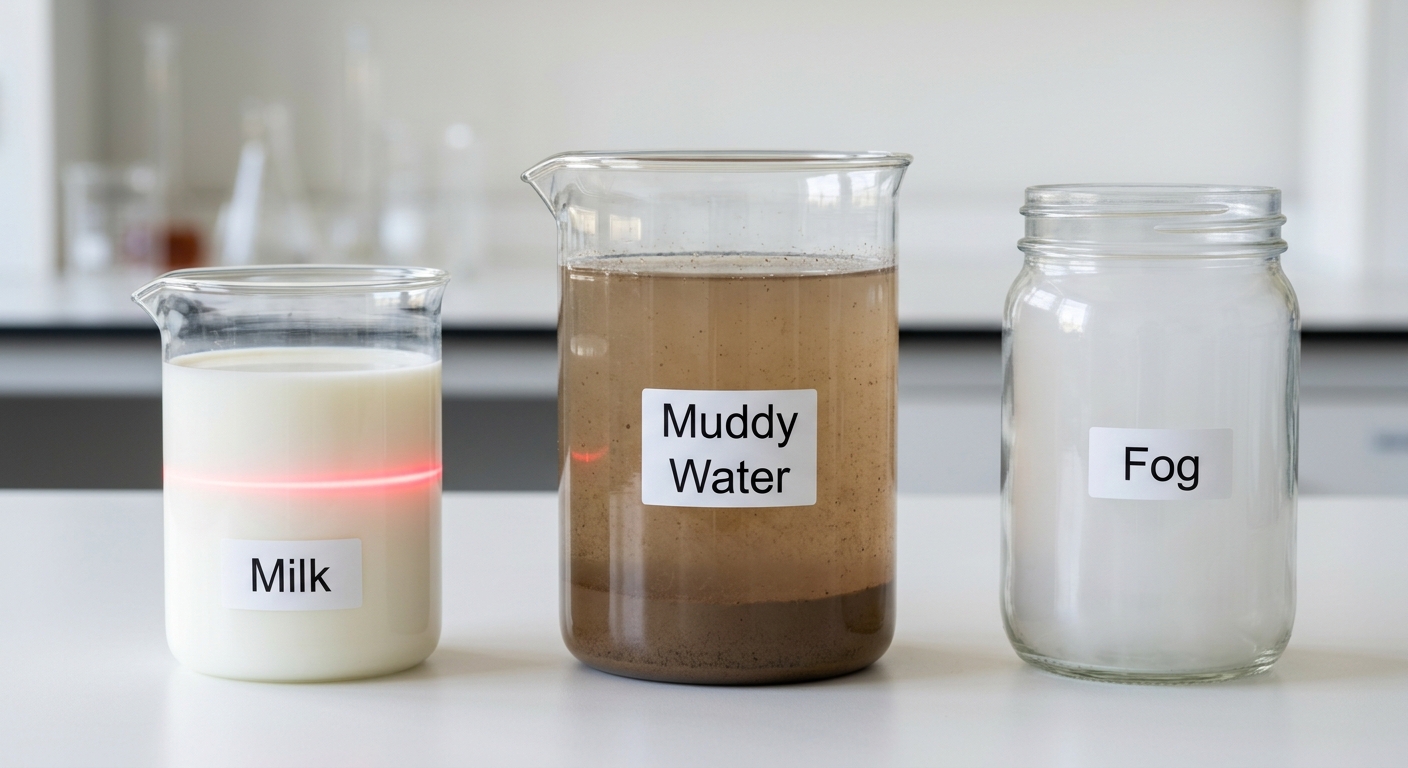
A diagram shows three samples: a glass of milk with a visible light beam passing through it, a beaker of muddy water with particles settled at the bottom, and a jar of fog with a visible light beam passing through it.
a
Identify which sample is a suspension. [1]
b
The diagram shows a light beam passing through both milk and fog. Deduce what this observation reveals about the nature of the particles in these two samples. [1]

Solutions
2QuestionDefinition and properties of solutions (homogeneous mixtures)Assessment Practice
3 marks~5 minCriterion C
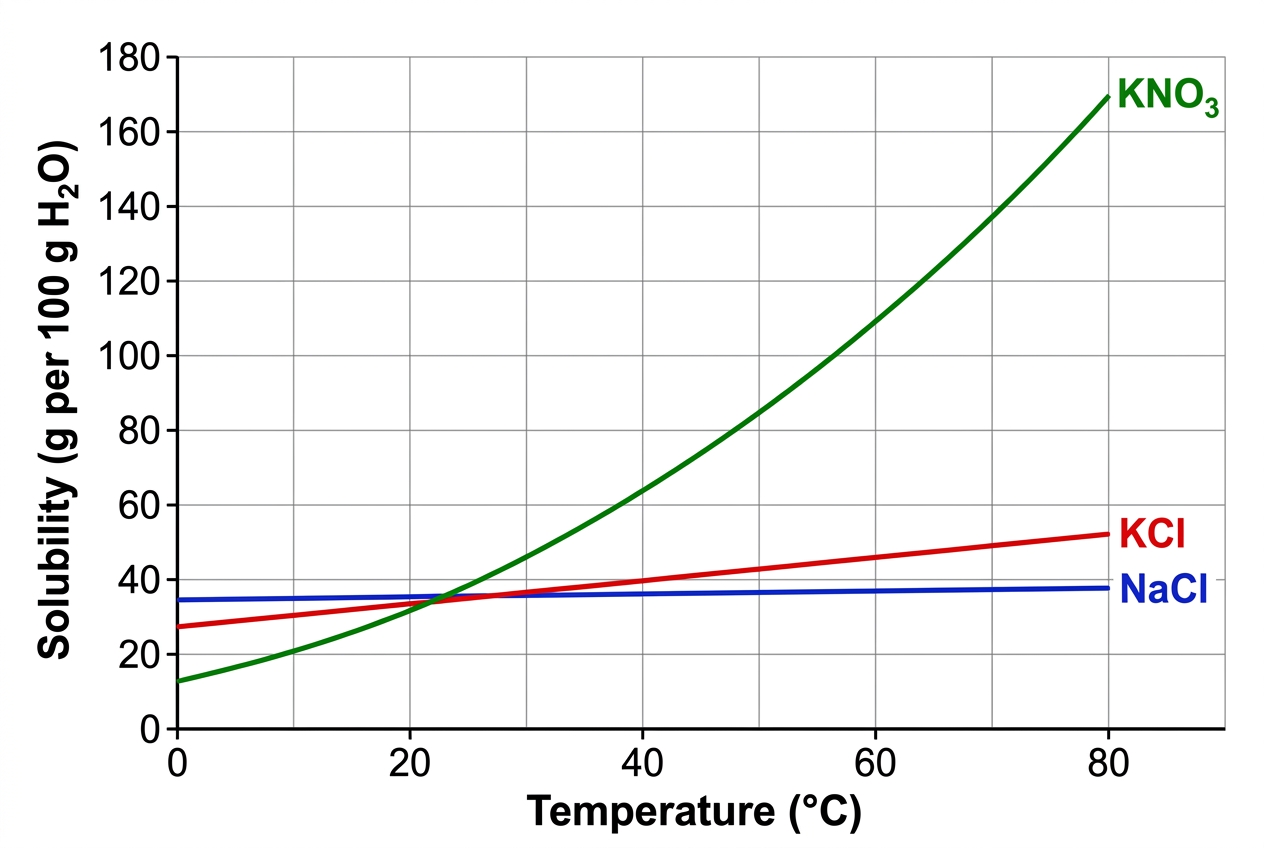
The graph below shows the solubility of potassium chloride (), sodium chloride (), and potassium nitrate () in water across a temperature range of 0 °C to 80 °C.
| Temperature (°C) | 0 | 20 | 40 | 60 | 80 |
|---|---|---|---|---|---|
| (g / 100 g ) | 28 | 34 | 40 | 45 | 51 |
| (g / 100 g ) | 35 | 36 | 37 | 37 | 38 |
| (g / 100 g ) | 13 | 32 | 64 | 110 | 169 |
a
Describe the trend in solubility for each solute as temperature increases. [1]
b
Identify which solute has the greatest solubility at 20 °C and state its value. [1]
c
A chemist claims that a higher solubility at room temperature means a more stable homogeneous mixture can be formed. Evaluate this claim using the data provided. [1]
Solutions
3QuestionReal-life examples (milk, fog, muddy water)Assessment Practice
5 marks~8 minCriterion D
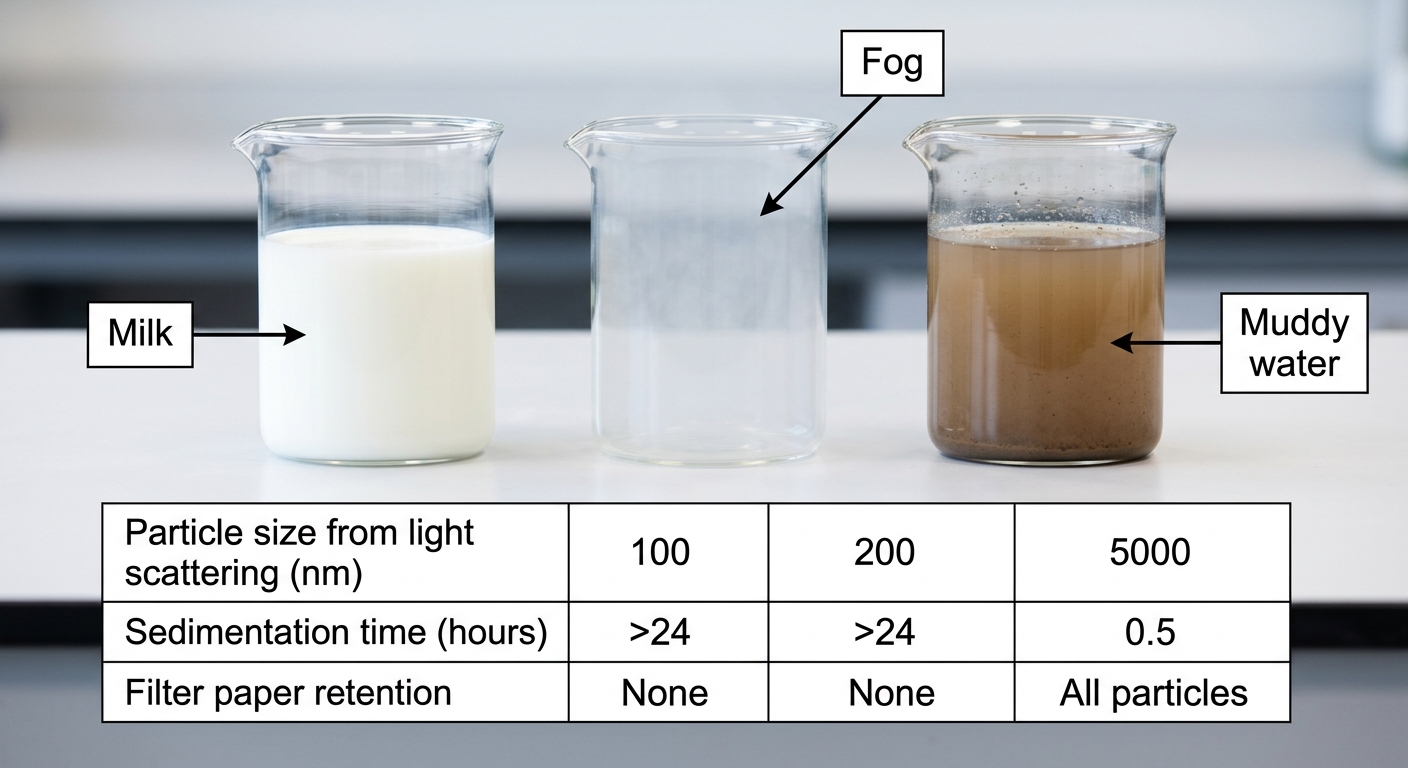
A student hypothesises that milk, fog, and muddy water are all true solutions because they appear uniform to the naked eye. The following data were collected to test this hypothesis.
Sample — Milk — Fog — Muddy water
Sample — Milk — Fog — Muddy water
| Particle size (nm): 100 | 200 | 5000 |
|---|---|---|
| Sedimentation time (h): >24 | >24 | 0.5 |
| Filter paper retention: none | none | all particles |
a
Define the terms solution, colloid, and suspension using particle size ranges. [1]
b
Using the particle size data, deduce the classification of each sample. [2]
c
Evaluate whether the experimental evidence supports or refutes the student's hypothesis. Justify your conclusion by referring to all three data columns. [2]
Solutions
4QuestionParticle size differences (solution vs colloid vs suspension)Assessment Practice
6 marks~9 minCriterion B
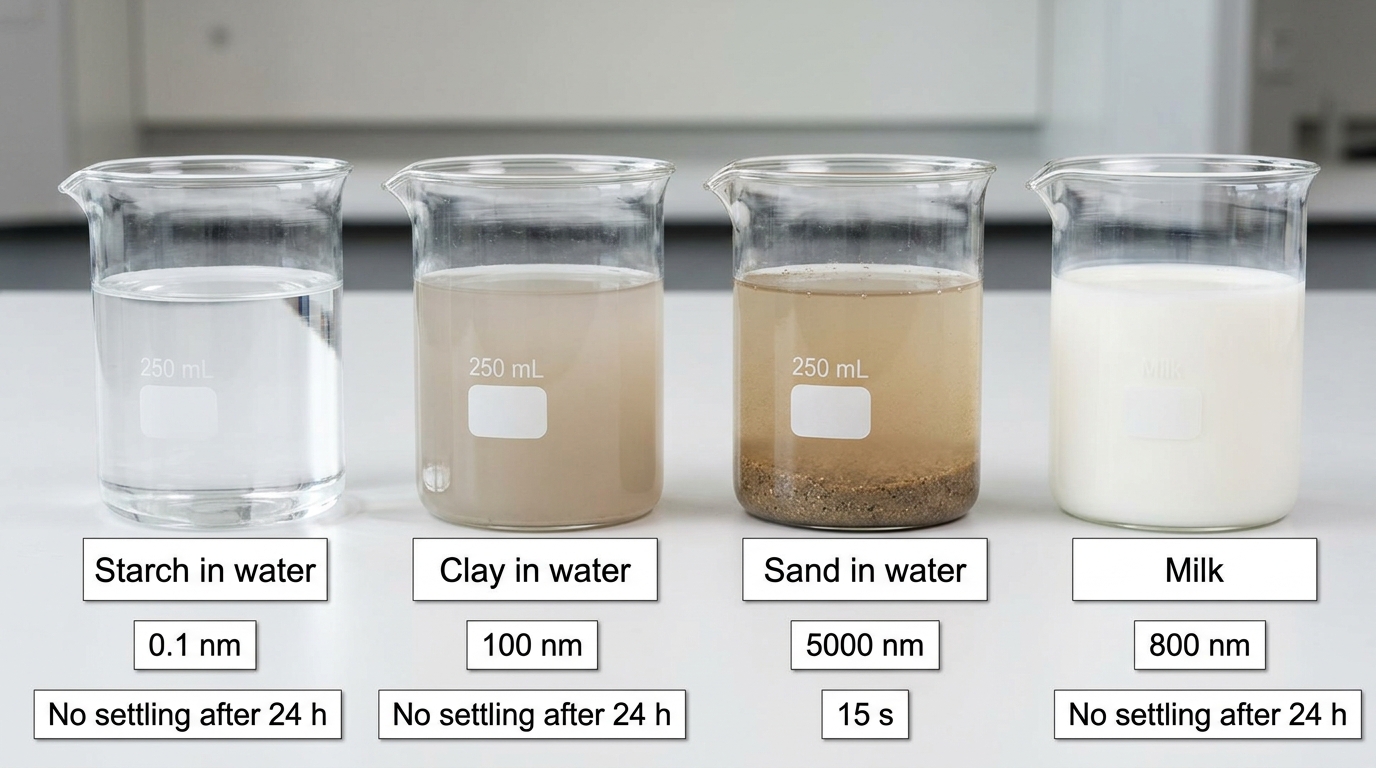
Four mixtures were tested under identical conditions (still water, 20 °C). Results are shown below.
| Mixture — Starch in water | Particle diameter (nm): | Settling: No settling after 24 h |
|---|---|---|
| Mixture — Clay in water | Particle diameter (nm): | Settling: No settling after 24 h |
| Mixture — Sand in water | Particle diameter (nm): | Settling: 15 seconds |
| Mixture — Milk | Particle diameter (nm): | Settling: No settling after 24 h |
a
Classify each mixture as a solution, colloid, or suspension. Justify each classification using both particle diameter and settling behaviour. [2]
b
Deduce a general rule linking particle diameter to mixture type, using the pattern shown in the data above. [2]
c
A student dissolves gelatin in hot water and allows it to cool. The gelatin particles have an average diameter of nm. Evaluate whether this mixture will behave as a solution, colloid, or suspension, and identify one condition that, if changed, could cause the mixture to settle visibly. [2]
Solutions
That's every free question here — 4 of 76.
+72 more questions, plus Mock Papers & Worksheets, are waiting in Premium.