You're viewing free preview questions — 6 questions previewing here — subscribe to unlock 74 more, plus the Full Question Bank, Mock Papers & Worksheets.Upgrade
Back

Collision Theory and activation energy — Free MYP4 Chemistry Practice Questions

Free questions

Open in full, with answers, mark scheme and examiner insights.

Question 1Criterion A · Band 1-2 · Easy · 3 marksrevisionprep.com

Conditions for successful collisions (energy + orientation)

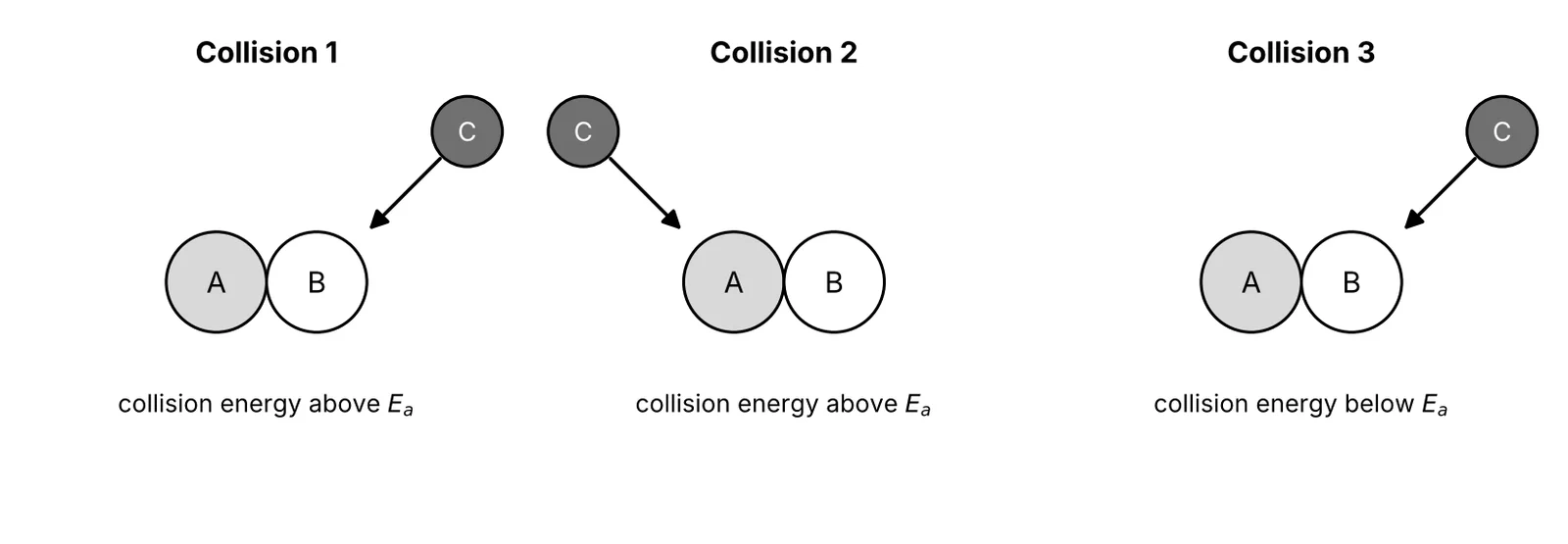
Molecule AB reacts with atom C:

AB + C → A + BC

The diagram shows three collisions between AB and C. For a reaction, C must hit the B end of the molecule.
Question diagram
(a)
Identify the collision that leads to a reaction. [1]Criterion A (i) · Level 1-2
(b)
Explain why collision 2 does not lead to a reaction. [1]Criterion A (ii) · Level 1-2
(c)
Explain why collision 3 does not lead to a reaction. [1]Criterion A (ii) · Level 1-2

revisionprep.com

Summary Answer

Not available for this question.

Model Answer

Not available for this question.

Marking Scheme

Not available for this question.

Examiner Insights

Not available for this question.

Question 2Criterion A · Band 3-4 · Easy · 6 marksrevisionprep.com

Definition of activation energy

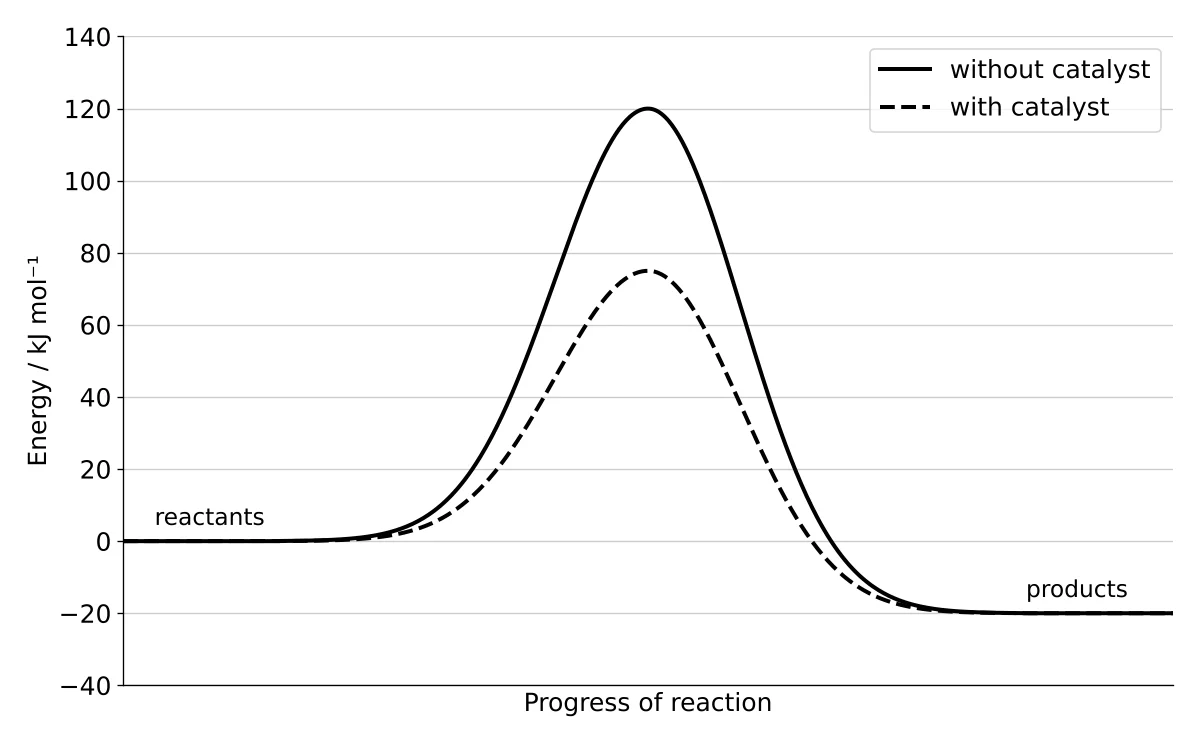
The energy profile shows the same reaction with and without a catalyst.
Question diagram
(a)
Determine the activation energy for the reaction without a catalyst and with the catalyst. [2]Criterion A (ii) · Level 3-4
(b)
Determine the enthalpy change, ΔH, for the reaction. [1]Criterion A (ii) · Level 3-4
(c)
Explain, using collision theory, why the catalysed reaction is faster at the same temperature. [2]Criterion A (i) · Level 3-4
(d)
A student claims that the catalyst makes the reaction more exothermic. Use the diagram to evaluate this claim. [1]Criterion A (iii) · Level 3-4

revisionprep.com

Summary Answer

Not available for this question.

Model Answer

Not available for this question.

Marking Scheme

Not available for this question.

Examiner Insights

Not available for this question.

Question 3Criterion B · Band 5-6 · Medium · 8 marksrevisionprep.com

Basics of Collision Theory

A student plans to investigate how the concentration of hydrochloric acid affects the rate of its reaction with magnesium ribbon.

Mg(s) + 2HCl(aq) → MgCl₂(aq) + H₂(g)

The student will collect the hydrogen in an upturned measuring cylinder filled with water.
(a)
Formulate a testable hypothesis and explain it using scientific reasoning. [3]Criterion B (ii) · Level 5-6
(b)
Describe how the independent variable will be changed, including a suitable range and number of values. [2]Criterion B (iii) · Level 5-6
(c)
Identify two variables that must be controlled and explain why one of them would affect the results if it were not controlled. [2]Criterion B (iii) · Level 5-6
(d)
Explain why the student should measure the volume of hydrogen at regular time intervals rather than only recording the total volume at the end. [1]Criterion B (iii) · Level 5-6

revisionprep.com

Summary Answer

Not available for this question.

Model Answer

Not available for this question.

Marking Scheme

Not available for this question.

Examiner Insights

Not available for this question.

Question 4Criterion C + A · Band 3-6 · Medium · 6 marksrevisionprep.com

Effect of activation energy on reaction rate
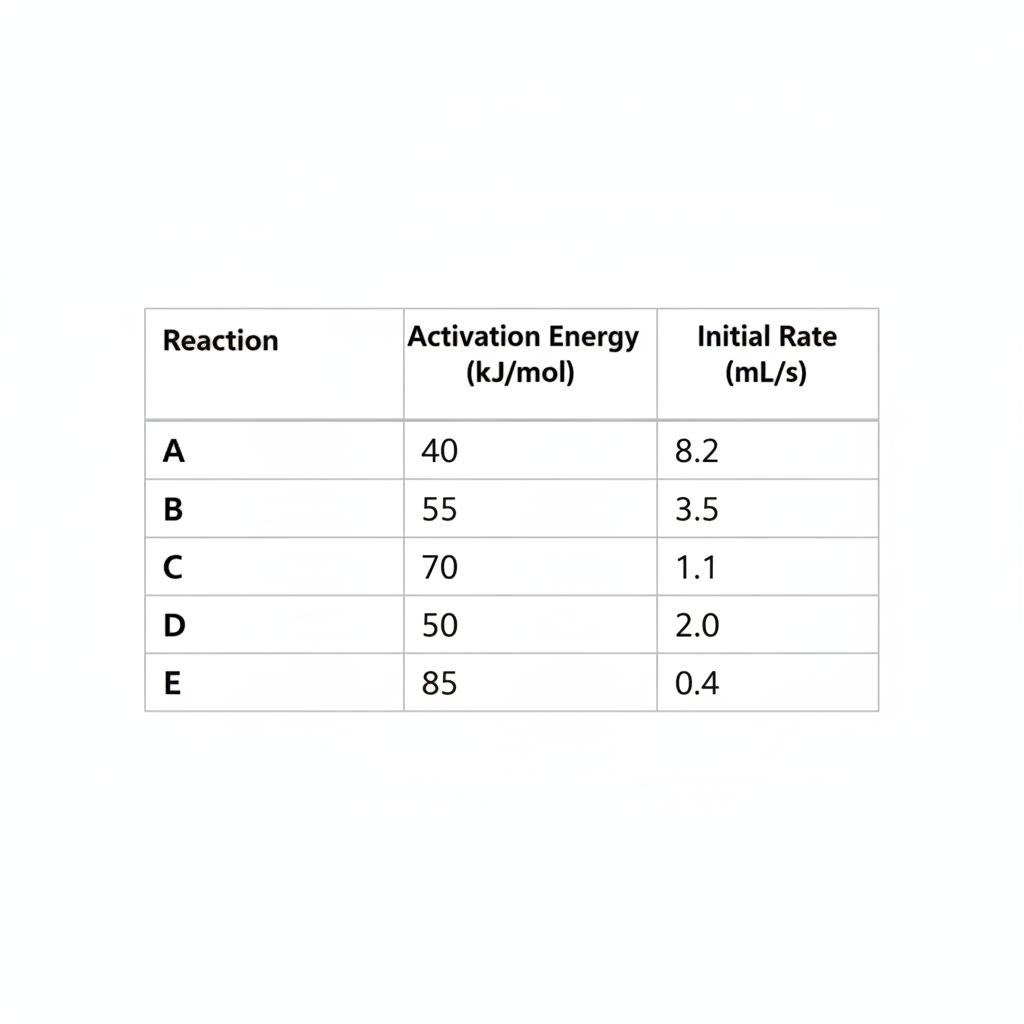
Five different catalysts are tested for the decomposition of hydrogen peroxide at the same temperature. The table gives the activation energy with each catalyst and the initial rate of oxygen production.
Question diagram
(a)
Describe the trend between activation energy and initial rate shown by reactions A, B, C and E. [1]Criterion C (ii) · Level 3-4
(b)
Identify the anomalous result. Justify your choice using the data. [2]Criterion C (ii) · Level 5-6
(c)
Suggest one experimental reason for the anomalous result. [1]Criterion C (iv) · Level 3-4
(d)
Explain the trend in (a) using collision theory. [2]Criterion A (i) · Level 3-4

revisionprep.com

Summary Answer

Not available for this question.

Model Answer

Not available for this question.

Marking Scheme

Not available for this question.

Examiner Insights

Not available for this question.

Question 5Criterion D + A · Band 3-8 · Challenge · 8 marksrevisionprep.com

Basics of Collision Theory

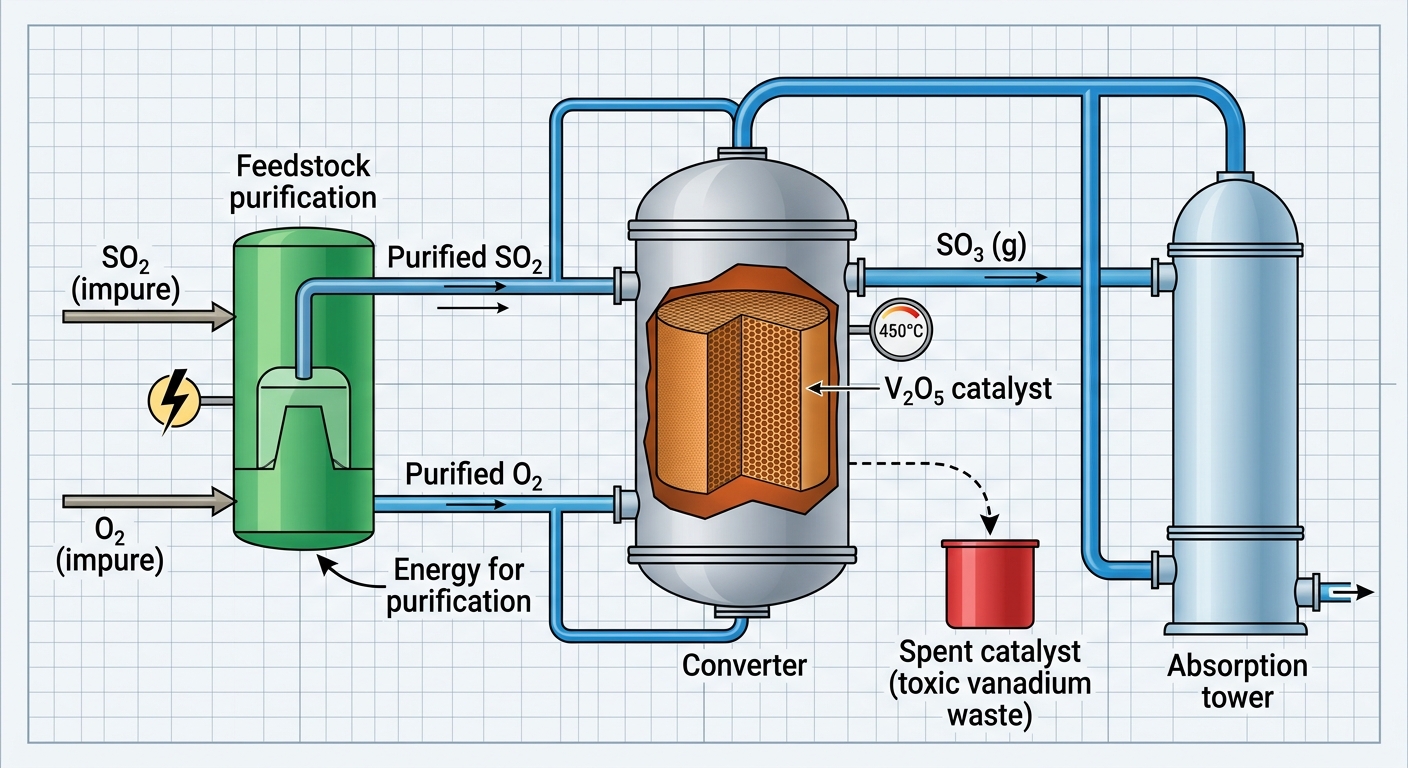
The diagram shows part of a Contact process plant that makes sulfur trioxide for sulfuric acid manufacture:

2SO₂(g) + O₂(g) → 2SO₃(g)

The gases are purified before they pass over pellets of vanadium(V) oxide, V₂O₅, at about 450 °C. Spent catalyst is removed as toxic vanadium waste.
Question diagram
(a)
Explain how the vanadium(V) oxide increases the rate of reaction. [2]Criterion A (i) · Level 3-4
(b)
Suggest why the gases must be purified before they reach the catalyst. [1]Criterion D (i) · Level 3-4
(c)
Explain why using the catalyst lowers the energy cost of running the plant. [2]Criterion D (i) · Level 5-6
(d)
Discuss one benefit to society and one environmental cost of using this catalyst. [3]Criterion D (ii) · Level 7-8

revisionprep.com

Summary Answer

Not available for this question.

Model Answer

Not available for this question.

Marking Scheme

Not available for this question.

Examiner Insights

Not available for this question.

Question 6Criterion A · Band 1-8 · Challenge · 6 marksrevisionprep.com

Energy distribution of particles (qualitative graph)
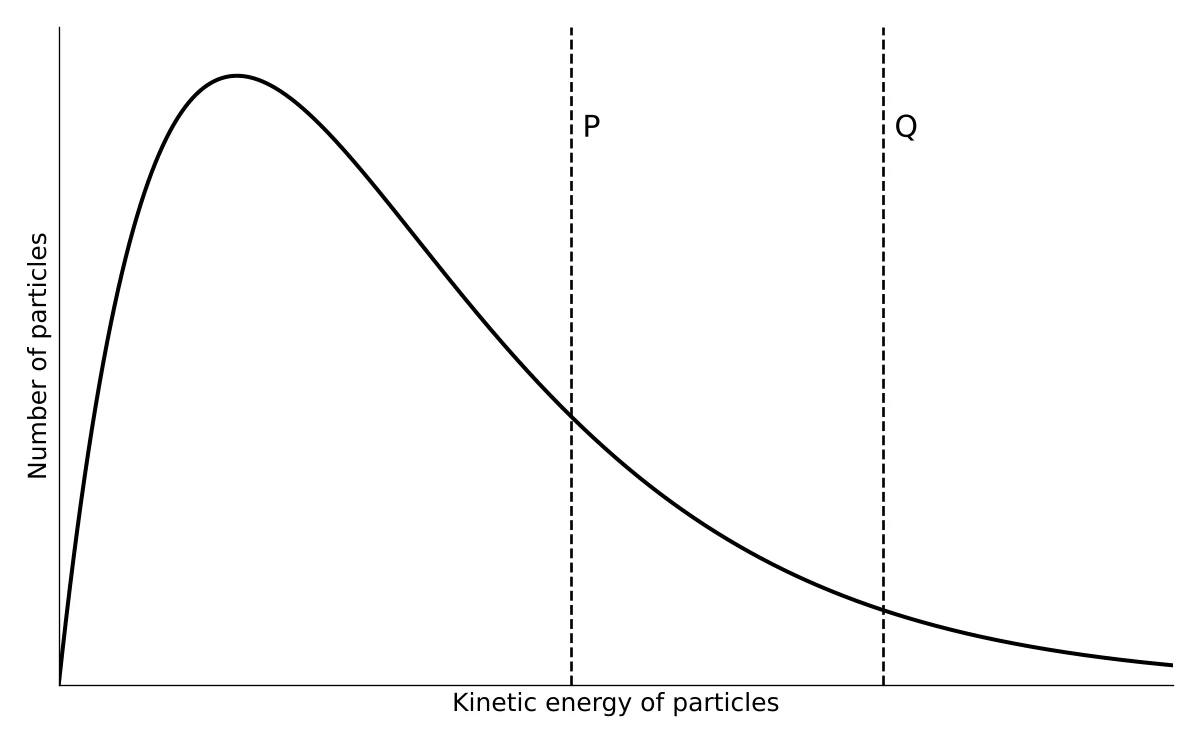
The graph shows the distribution of kinetic energies of the particles in a gas mixture at a constant temperature. The dashed lines P and Q mark the activation energy for the same reaction with a catalyst and without a catalyst.
Question diagram
(a)
Identify which line, P or Q, shows the activation energy with the catalyst. [1]Criterion A (i) · Level 1-2
(b)
Explain why only one curve is needed to show both the catalysed and the uncatalysed reaction. [1]Criterion A (ii) · Level 5-6
(c)
Use the graph to explain how the catalyst increases the rate of reaction. [2]Criterion A (ii) · Level 3-4
(d)
Compare how this diagram would change if, instead of adding a catalyst, the temperature were raised. [2]Criterion A (iii) · Level 7-8

revisionprep.com

Summary Answer

Not available for this question.

Model Answer

Not available for this question.

Marking Scheme

Not available for this question.

Examiner Insights

Not available for this question.

That's every free question here — 6 of 80.

+74 more questions, plus Mock Papers & Worksheets, are waiting in Premium.

Upgrade