You're viewing free preview questions — 6 questions previewing here — subscribe to unlock 59 more, plus the Full Question Bank, Mock Papers & Worksheets.Upgrade
Back

Endothermic and exothermic reactions — Free MYP4 Chemistry Practice Questions

Free questions

Open in full, with answers, mark scheme and examiner insights.

Question 1Criterion A · Band 1-4 · Easy · 4 marksrevisionprep.com

Definition of endothermic vs exothermic reactions

Chemical reactions are classified by the direction in which energy is transferred.
(a)
Define the term exothermic reaction. [1]Criterion A (i) · Level 1-2
(b)
Define the term endothermic reaction. [1]Criterion A (i) · Level 1-2
(c)
Explain why the products of an exothermic reaction store less chemical energy than the reactants. [2]Criterion A (i) · Level 3-4

revisionprep.com

Summary Answer

Not available for this question.

Model Answer

Not available for this question.

Marking Scheme

Not available for this question.

Examiner Insights

Not available for this question.

Question 2Criterion A · Band 1-4 · Easy · 4 marksrevisionprep.com

Energy transfer between system and surroundings
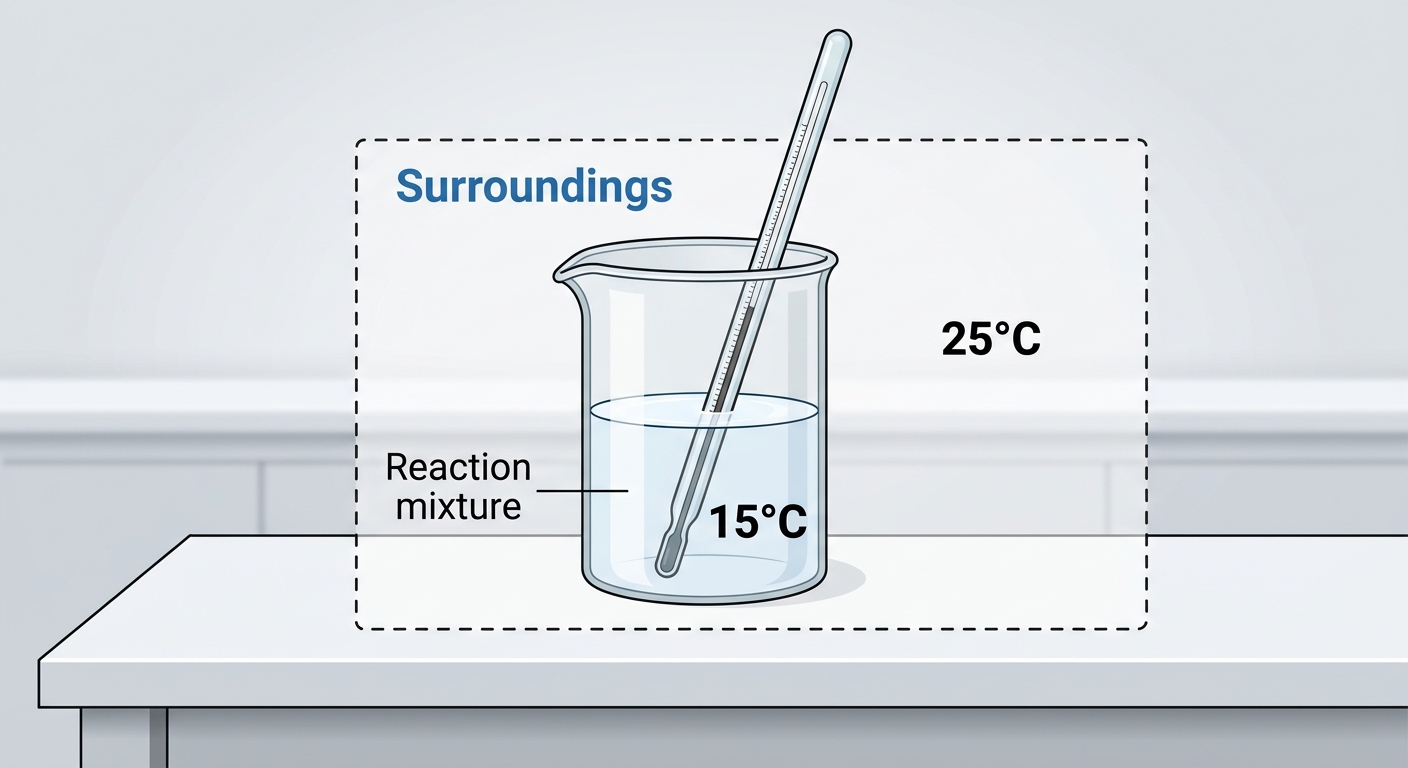
The diagram shows ammonium nitrate dissolving in water in a beaker. The reaction mixture is at 15 °C and the air around it is at 25 °C.
Question diagram
(a)
Identify the system and the surroundings in this experiment. [2]Criterion A (i) · Level 1-2
(b)
Deduce the direction of energy transfer between the system and the surroundings. Justify your answer using the temperatures. [2]Criterion A (ii) · Level 3-4

revisionprep.com

Summary Answer

Not available for this question.

Model Answer

Not available for this question.

Marking Scheme

Not available for this question.

Examiner Insights

Not available for this question.

Question 3Criterion B · Band 3-6 · Medium · 10 marksrevisionprep.com

Definition of endothermic vs exothermic reactions

Instant cold packs contain solid ammonium chloride and a bag of water. When the bag is broken, the solid dissolves and the pack becomes cold. A student wants to investigate how the mass of ammonium chloride dissolved in 50 cm³ of water affects the decrease in temperature.
(a)
Formulate a hypothesis for this investigation and explain it using scientific reasoning. [2]Criterion B (ii) · Level 5-6
(b)
State the independent and dependent variables. [2]Criterion B (iii) · Level 3-4
(c)
Explain how two control variables would be kept constant. [2]Criterion B (iii) · Level 5-6
(d)
Design a method that would collect sufficient, reliable data, including one safety precaution. [4]Criterion B (iii), B (iv) · Level 5-6

revisionprep.com

Summary Answer

Not available for this question.

Model Answer

Not available for this question.

Marking Scheme

Not available for this question.

Examiner Insights

Not available for this question.

Question 4Criterion C · Band 3-6 · Medium · 7 marksrevisionprep.com

Temperature changes during reactions

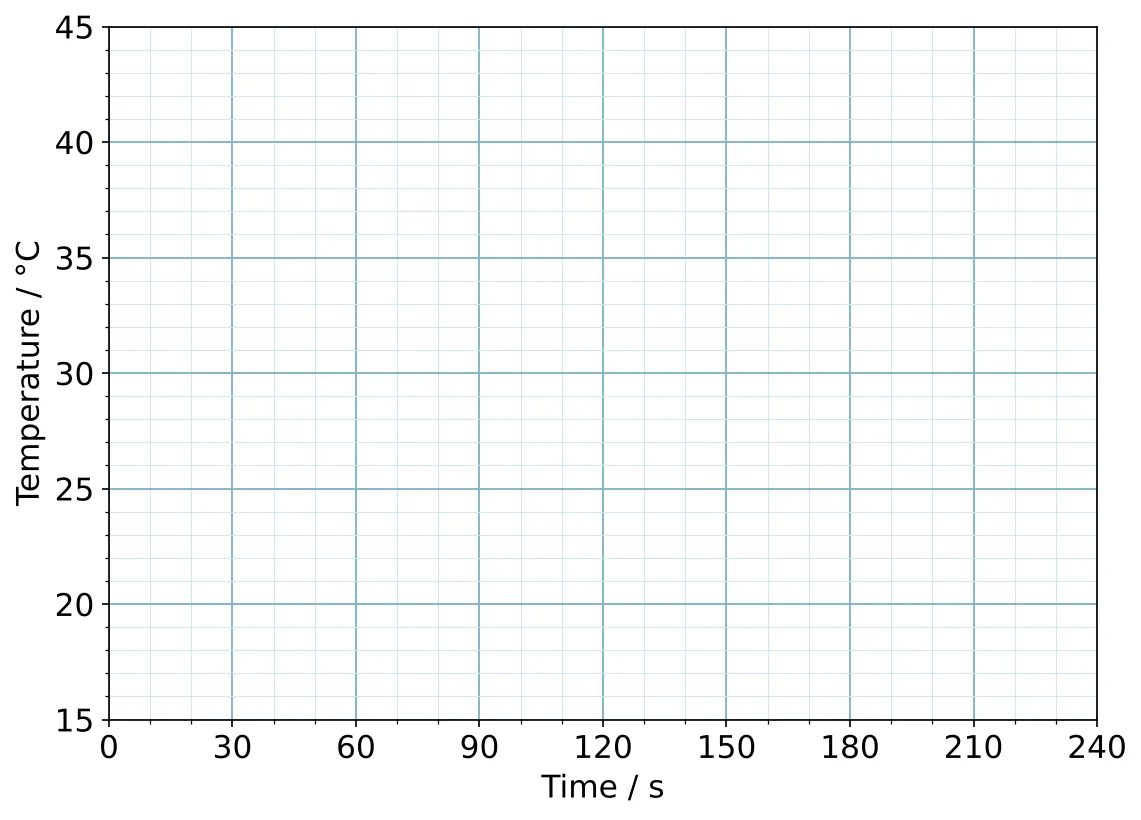
A student added excess zinc powder to 50 cm³ of 0.50 mol dm⁻³ copper(II) sulfate solution in a polystyrene cup and recorded the temperature.

Time / s0306090120150180210240
Temperature / °C21.030.537.040.541.541.040.239.338.5


Assume the solution has a mass of 50 g and a specific heat capacity of 4.18 J g⁻¹ °C⁻¹.
Question diagram
(a)
Plot the data on the grid and draw a smooth curve. [3]Criterion C (i) · Level 3-4
(b)
Use your graph to state the maximum temperature and determine the temperature rise. [2]Criterion C (ii) · Level 3-4
(c)
Calculate the energy released by the reaction. [2]Criterion C (i) · Level 5-6

revisionprep.com

Summary Answer

Not available for this question.

Model Answer

Not available for this question.

Marking Scheme

Not available for this question.

Examiner Insights

Not available for this question.

Question 5Criterion A + D · Band 1-8 · Challenge · 10 marksrevisionprep.com

Examples (combustion vs thermal decomposition)
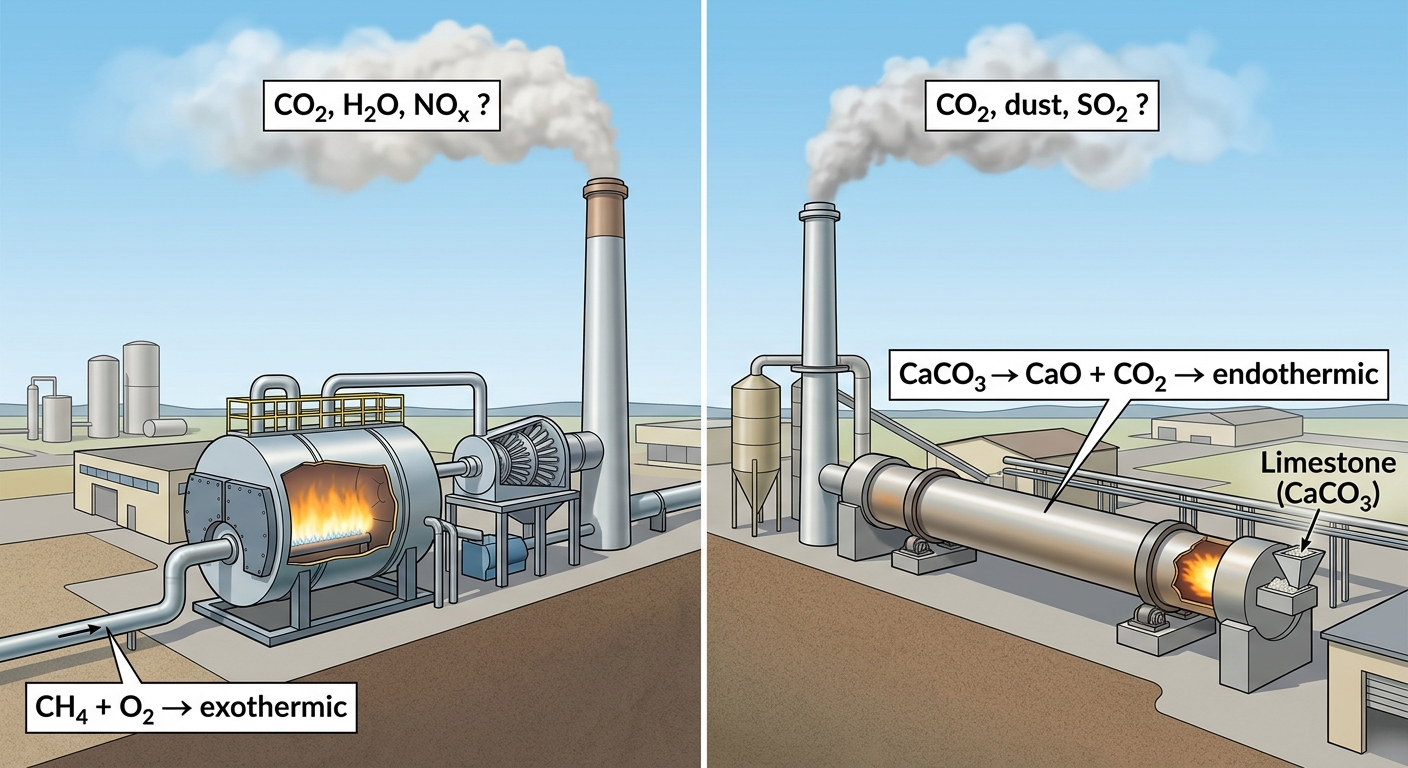
The diagram shows two industrial plants. A power station burns methane to generate electricity. A cement works heats limestone (calcium carbonate) in a kiln to make lime (calcium oxide); the kiln is heated by burning fuel.
Question diagram
(a)
Identify the type of energy change in each plant's main reaction. [1]Criterion A (i) · Level 1-2
(b)
Explain why the cement works must burn fuel to make lime. [2]Criterion A (ii) · Level 3-4
(c)
Explain why making lime releases carbon dioxide from two different sources. [2]Criterion A (ii) · Level 5-6
(d)
Discuss two ways the cement industry could reduce its carbon dioxide emissions, and the implications of each. [5]Criterion D (ii), D (iii) · Level 7-8

revisionprep.com

Summary Answer

Not available for this question.

Model Answer

Not available for this question.

Marking Scheme

Not available for this question.

Examiner Insights

Not available for this question.

Question 6Criterion D + A · Band 1-8 · Challenge · 8 marksrevisionprep.com

Identifying reaction type from descriptions or data

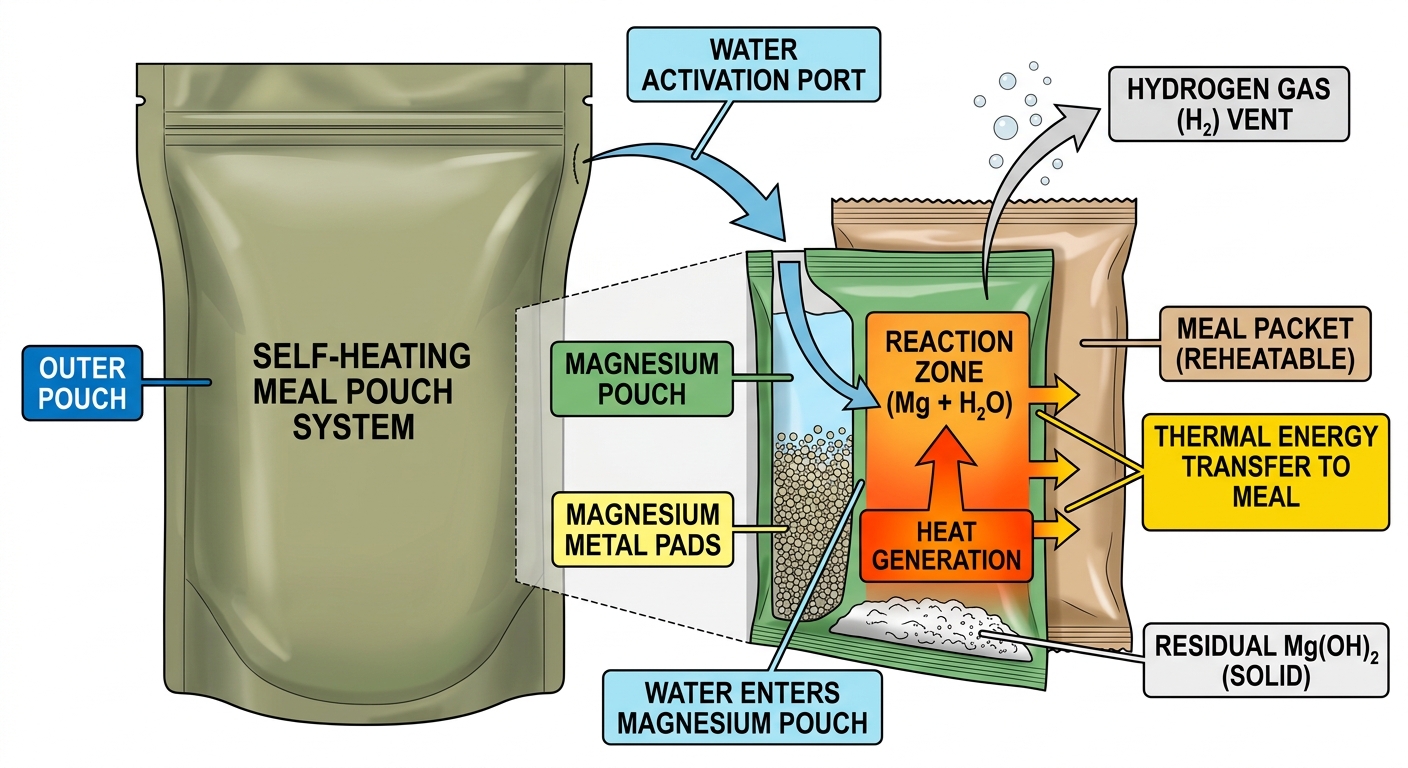
The diagram shows a self-heating meal pouch used by hikers and rescue teams. When water is added, magnesium reacts with it and heats the meal:

Mg(s) + 2H₂O(l) → Mg(OH)₂(s) + H₂(g)
Question diagram
(a)
Deduce whether the reaction is exothermic or endothermic, giving one piece of evidence from the information. [1]Criterion A (ii) · Level 1-2
(b)
Explain why the pouch has a vent that lets hydrogen escape. [2]Criterion A (ii) · Level 3-4
(c)
Discuss the implications of using self-heating meal pouches in disaster relief, considering both the benefits to people and the effects on the environment. [5]Criterion D (ii), D (iii) · Level 7-8

revisionprep.com

Summary Answer

Not available for this question.

Model Answer

Not available for this question.

Marking Scheme

Not available for this question.

Examiner Insights

Not available for this question.

That's every free question here — 6 of 65.

+59 more questions, plus Mock Papers & Worksheets, are waiting in Premium.

Upgrade