You're viewing free preview questions — 6 questions previewing here — subscribe to unlock 64 more, plus the Full Question Bank, Mock Papers & Worksheets.Upgrade
Back

Factors affecting rate: temperature, concentration, surface area and catalysts — Free MYP4 Chemistry Practice Questions

Free questions

Open in full, with answers, mark scheme and examiner insights.

Question 1Criterion C · Band 1-2 · Easy · 2 marksrevisionprep.com

Interpreting rate graphs and experimental data
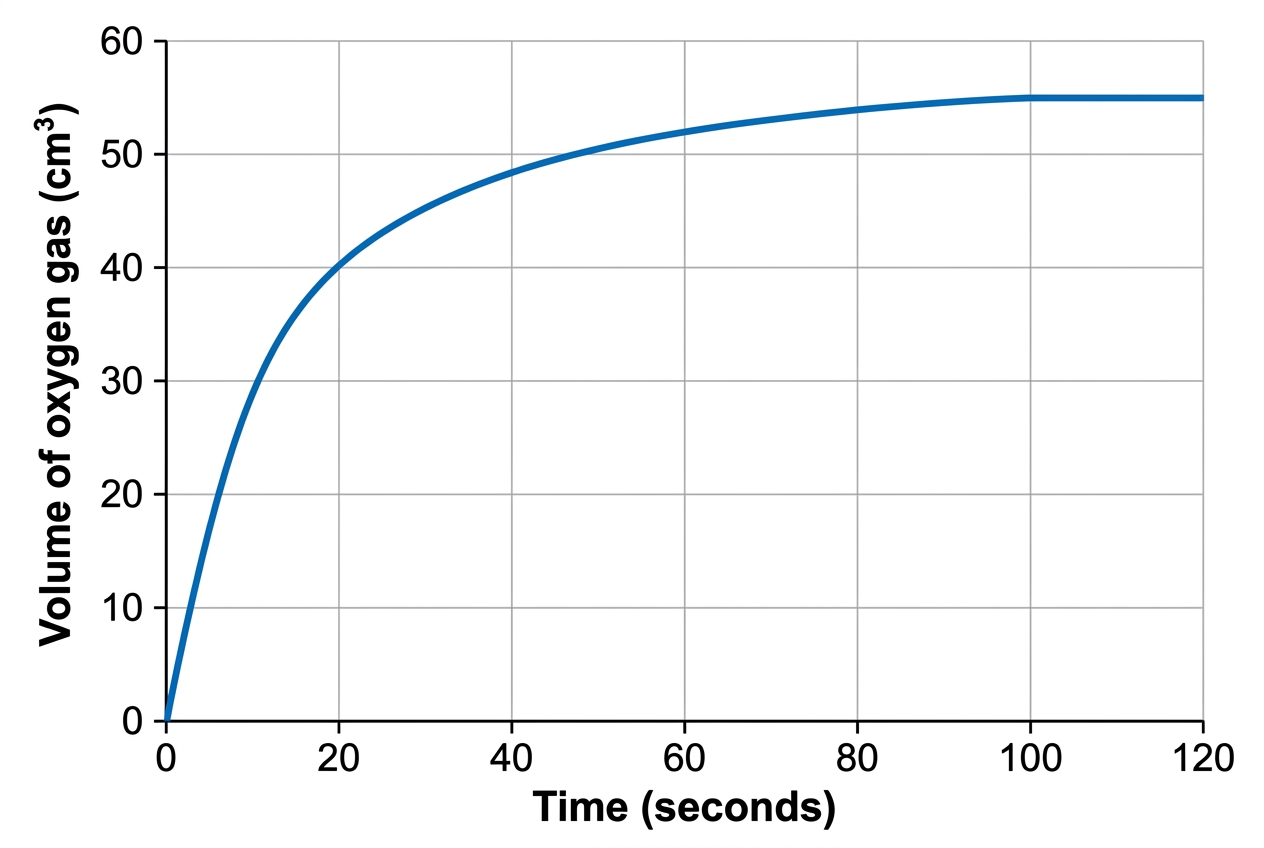
Hydrogen peroxide decomposes with manganese(IV) oxide as a catalyst. The graph shows the volume of oxygen collected.
Question diagram
(a)
State the total volume of oxygen produced. [1]Criterion C (ii) · Level 1-2
(b)
State the time at which the reaction stops. [1]Criterion C (ii) · Level 1-2

revisionprep.com

Summary Answer

Not available for this question.

Model Answer

Not available for this question.

Marking Scheme

Not available for this question.

Examiner Insights

Not available for this question.

Question 2Criterion B · Band 1-4 · Easy · 3 marksrevisionprep.com

Methods of measuring rate of reaction (gas syringe, mass loss, disappearing cross)

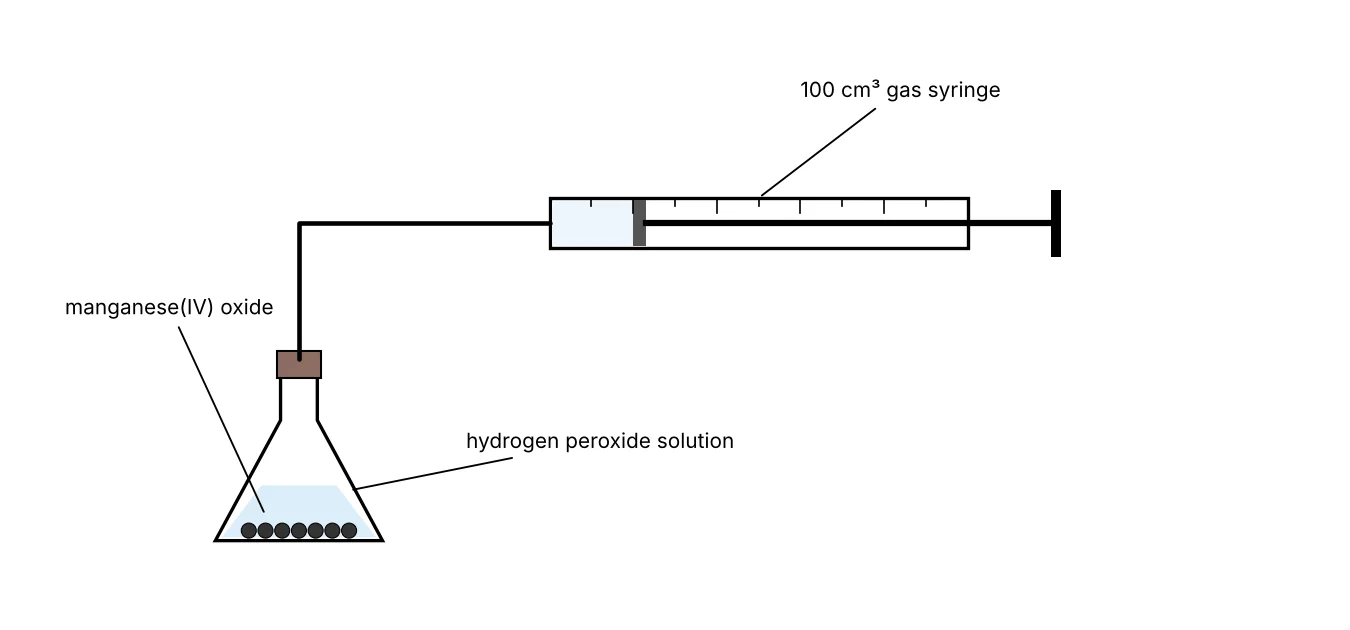
A student plans to plot a graph of the volume of oxygen against time for the decomposition of hydrogen peroxide with a catalyst. A 100 cm³ gas syringe is available.

The diagram shows the apparatus.
Question diagram
(a)
State the independent and dependent variables for this plot. [1]Criterion B (iii) · Level 1-2
(b)
Explain how the student will know that the reaction has finished. [1]Criterion B (iii) · Level 3-4
(c)
Suggest how the student should choose the amount of hydrogen peroxide, given the gas syringe used. [1]Criterion B (iv) · Level 3-4

revisionprep.com

Summary Answer

Not available for this question.

Model Answer

Not available for this question.

Marking Scheme

Not available for this question.

Examiner Insights

Not available for this question.

Question 3Criterion A + C · Band 3-6 · Medium · 7 marksrevisionprep.com

Surface area and its role in solid reactions
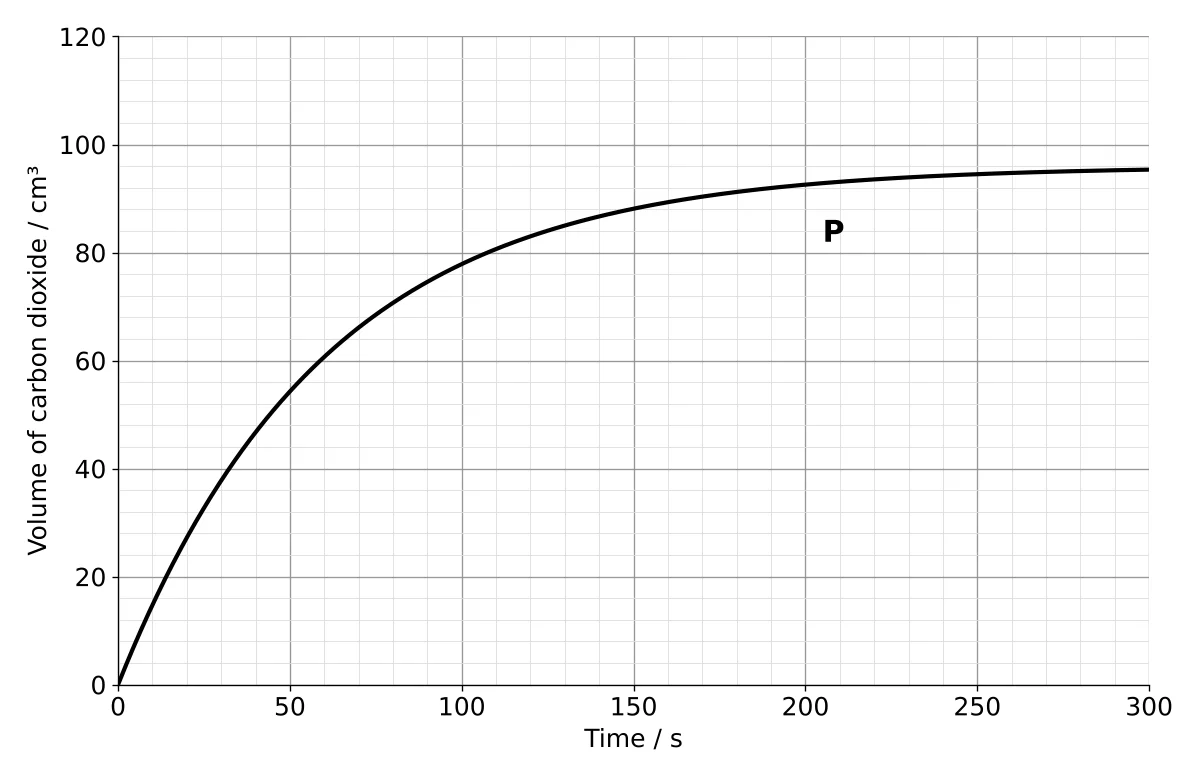
Curve P on the graph shows the volume of carbon dioxide produced when 0.40 g of small marble chips reacts with excess hydrochloric acid.
Question diagram
(a)
Use the graph to determine the average rate of reaction for curve P over the first 50 s. [2]Criterion C (ii) · Level 3-4
(b)
Sketch, on a copy of the graph, the curve you would expect for 0.40 g of powdered marble with the same acid. [2]Criterion A (ii) · Level 3-4
(c)
Sketch the curve you would expect for 0.20 g of the same small chips, and explain its final volume. [3]Criterion A (ii) · Level 5-6

revisionprep.com

Summary Answer

Not available for this question.

Model Answer

Not available for this question.

Marking Scheme

Not available for this question.

Examiner Insights

Not available for this question.

Question 4Criterion A + D · Band 1-6 · Medium · 6 marksrevisionprep.com

Catalysts and lowering activation energy
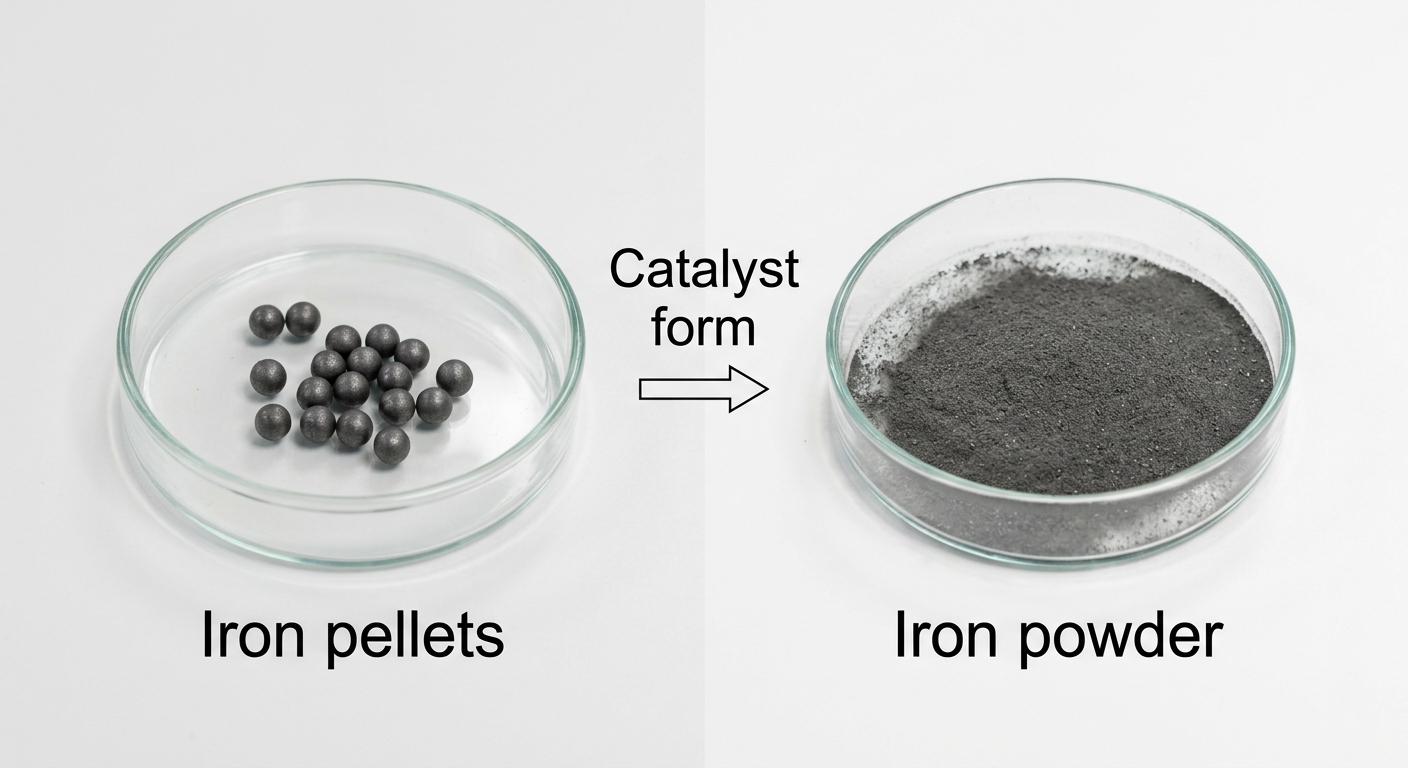
The photograph shows two forms of iron that can be used as the catalyst in a gas-phase industrial reaction: pellets and powder of equal mass.
Question diagram
(a)
Explain why the powdered iron gives a faster reaction than the pellets. [2]Criterion A (i) · Level 3-4
(b)
State what happens to the mass of the iron during the reaction. [1]Criterion A (i) · Level 1-2
(c)
Industrial catalysts are often made as small porous pellets rather than fine powder. Suggest one practical reason for this, and evaluate the trade-off involved. [3]Criterion D (i), D (ii) · Level 5-6

revisionprep.com

Summary Answer

Not available for this question.

Model Answer

Not available for this question.

Marking Scheme

Not available for this question.

Examiner Insights

Not available for this question.

Question 5Criterion D + A · Band 3-8 · Challenge · 8 marksrevisionprep.com

Effect of temperature on particle energy and collisions
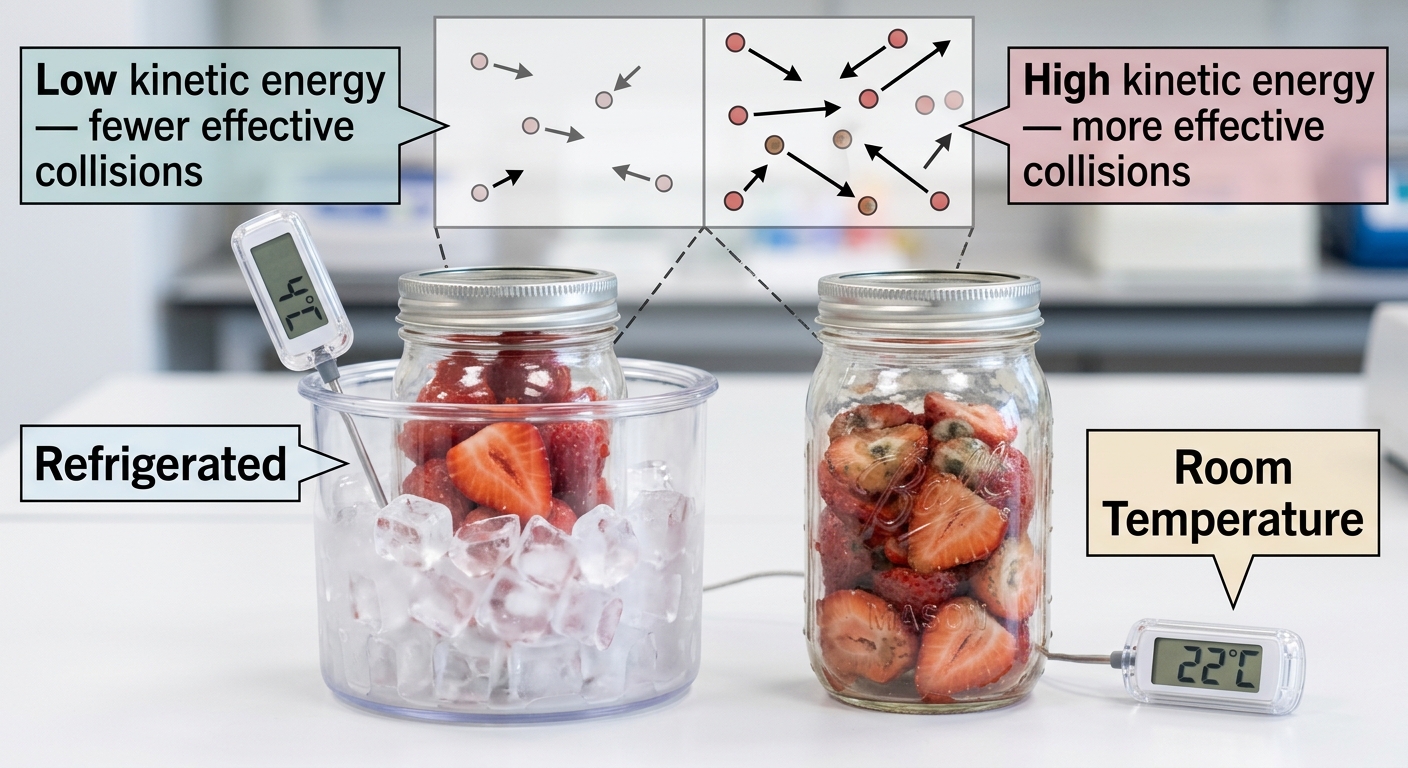
The photograph shows strawberries stored for the same time in a refrigerator at about 4 °C and on a shelf at 22 °C.
Question diagram
(a)
Use the rule that the rate of a reaction roughly doubles for every 10 °C rise to estimate how many times faster the spoilage reactions are at 22 °C than at 4 °C. [2]Criterion A (ii) · Level 5-6
(b)
Supermarkets in hot countries keep fruit refrigerated from farm to shop. Discuss two implications of this cold chain, from two different perspectives. [5]Criterion D (ii) · Level 7-8
(c)
Vacuum packing also slows spoilage. Name the factor affecting rate that vacuum packing changes. [1]Criterion D (i) · Level 3-4

revisionprep.com

Summary Answer

Not available for this question.

Model Answer

Not available for this question.

Marking Scheme

Not available for this question.

Examiner Insights

Not available for this question.

Question 6Criterion A + D · Band 3-8 · Challenge · 8 marksrevisionprep.com

Effect of concentration on collision frequency
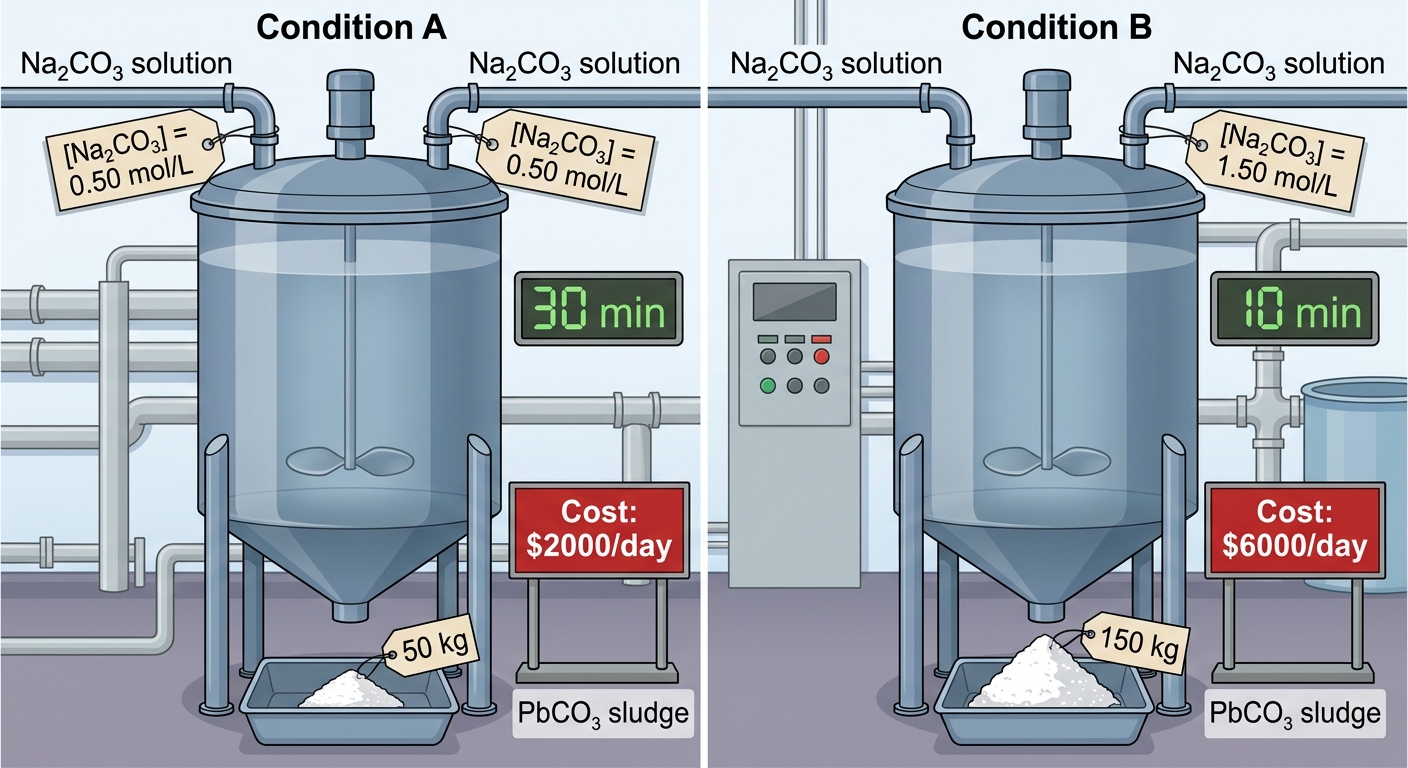
A company removes lead ions from wastewater by adding sodium carbonate solution, which precipitates lead carbonate (sludge). The diagram compares two ways of running the plant. Because each batch is treated faster in Condition B, the plant treats three times as much wastewater per day.
Question diagram
(a)
Explain, using collision theory, why each batch is treated faster in Condition B. [2]Criterion A (ii) · Level 3-4
(b)
Calculate the cost per kilogram of sludge removed for each condition. [2]Criterion A (ii) · Level 3-4
(c)
Evaluate whether the company should choose Condition B. Refer to two different perspectives. [4]Criterion D (ii) · Level 7-8

revisionprep.com

Summary Answer

Not available for this question.

Model Answer

Not available for this question.

Marking Scheme

Not available for this question.

Examiner Insights

Not available for this question.

That's every free question here — 6 of 70.

+64 more questions, plus Mock Papers & Worksheets, are waiting in Premium.

Upgrade