You're viewing free preview questions — 6 questions previewing here — subscribe to unlock 64 more, plus the Full Question Bank, Mock Papers & Worksheets.Upgrade
Back

Reversible Reactions and Equilibrium (qualitative) — Free MYP4 Chemistry Practice Questions

Free questions

Open in full, with answers, mark scheme and examiner insights.

Question 1Criterion A + D · Band 3-4 · Easy · 4 marksrevisionprep.com

Definition of reversible reactions

The diagram shows the main stages in the manufacture of ammonia.

N2(g)+3H2(g)⇌2NH3(g)\mathrm{N_2(g) + 3H_2(g) \rightleftharpoons 2NH_3(g)}

The gas leaving the reaction chamber contains only about 15% ammonia.
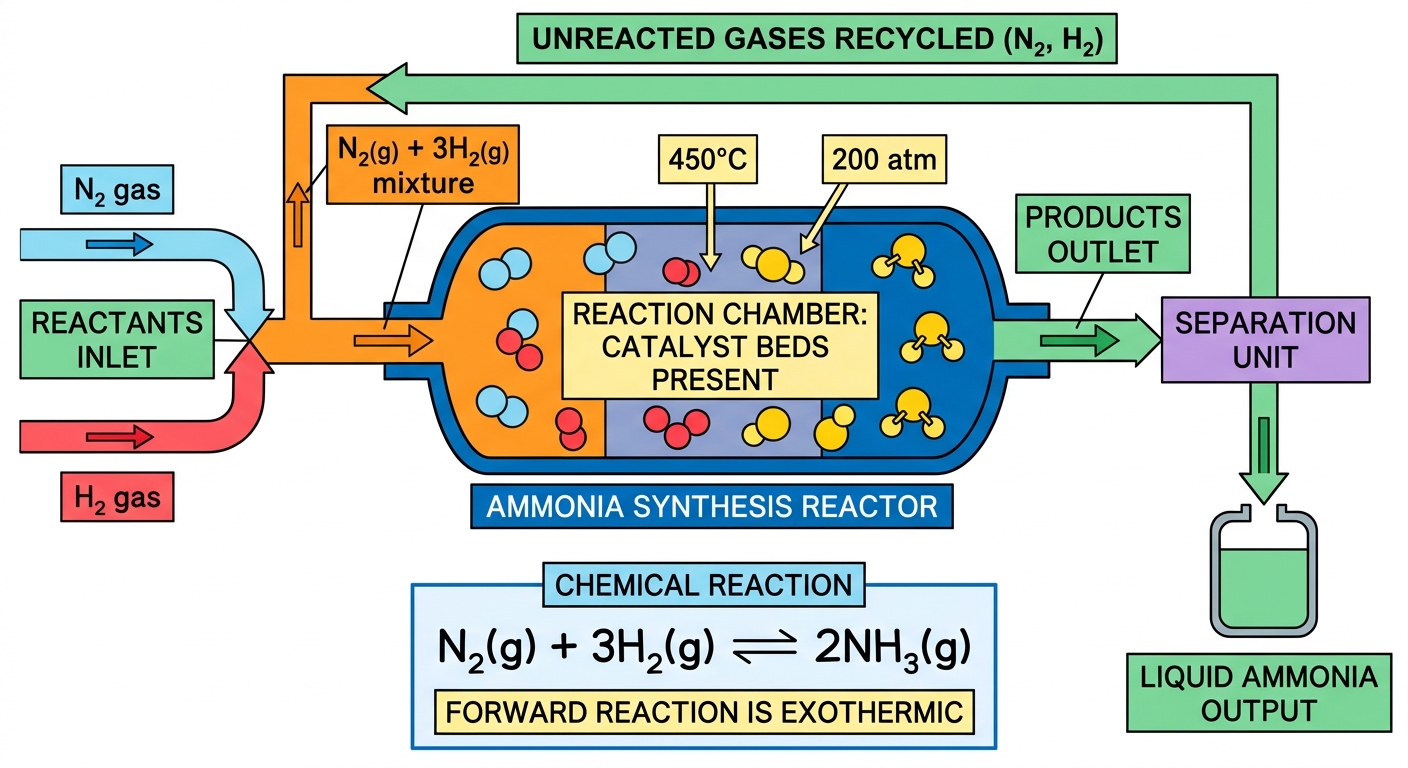
Question diagram
(a)
Explain why the gas leaving the reaction chamber still contains nitrogen and hydrogen. [2]Criterion A (i) · Level 3-4
(b)
Explain two benefits to the manufacturer of recycling the unreacted gases. [2]Criterion D (i) · Level 3-4

revisionprep.com

Summary Answer

Not available for this question.

Model Answer

Not available for this question.

Marking Scheme

Not available for this question.

Examiner Insights

Not available for this question.

Question 2Criterion A · Band 1-4 · Easy · 4 marksrevisionprep.com

Dynamic equilibrium (forward rate = backward rate)
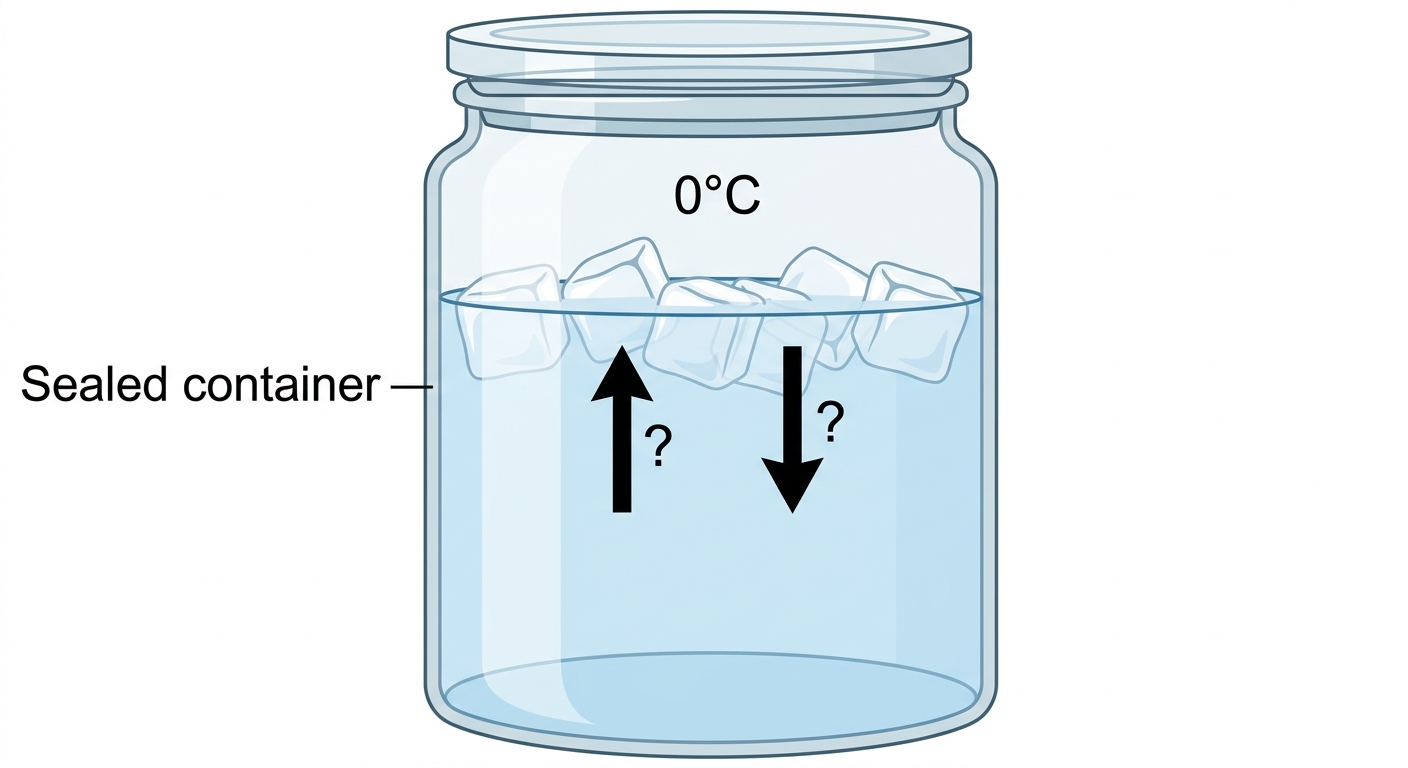
The diagram shows a sealed jar of ice and water kept at exactly 0 °C. The arrows represent two opposite changes of state.
Question diagram
(a)
Name the two processes represented by the arrows. [1]Criterion A (i) · Level 1-2
(b)
The mass of ice stays the same for many hours. Explain why, even though water molecules are still changing state. [2]Criterion A (ii) · Level 3-4
(c)
Predict what happens if the jar is moved to a room at 5 °C, and explain your prediction. [1]Criterion A (ii) · Level 3-4

revisionprep.com

Summary Answer

Not available for this question.

Model Answer

Not available for this question.

Marking Scheme

Not available for this question.

Examiner Insights

Not available for this question.

Question 3Criterion C + A · Band 3-6 · Medium · 8 marksrevisionprep.com

Closed system requirement for equilibrium

A student injects different amounts of nitrogen dioxide into a sealed gas syringe held at a constant high temperature. When the colour stops changing, she measures the concentrations of both gases (M=mol dm−3\mathrm{M = mol\ dm^{-3}}).

2NO2(g)⇌N2O4(g)\mathrm{2NO_2(g) \rightleftharpoons N_2O_4(g)}

[NO2]eq[\mathrm{NO_2}]_{eq} / mol dm⁻³: 0.10, 0.20, 0.40, 0.60, 0.80

[N2O4]eq[\mathrm{N_2O_4}]_{eq} / mol dm⁻³: 0.01, 0.03, 0.11, 0.25, 0.45
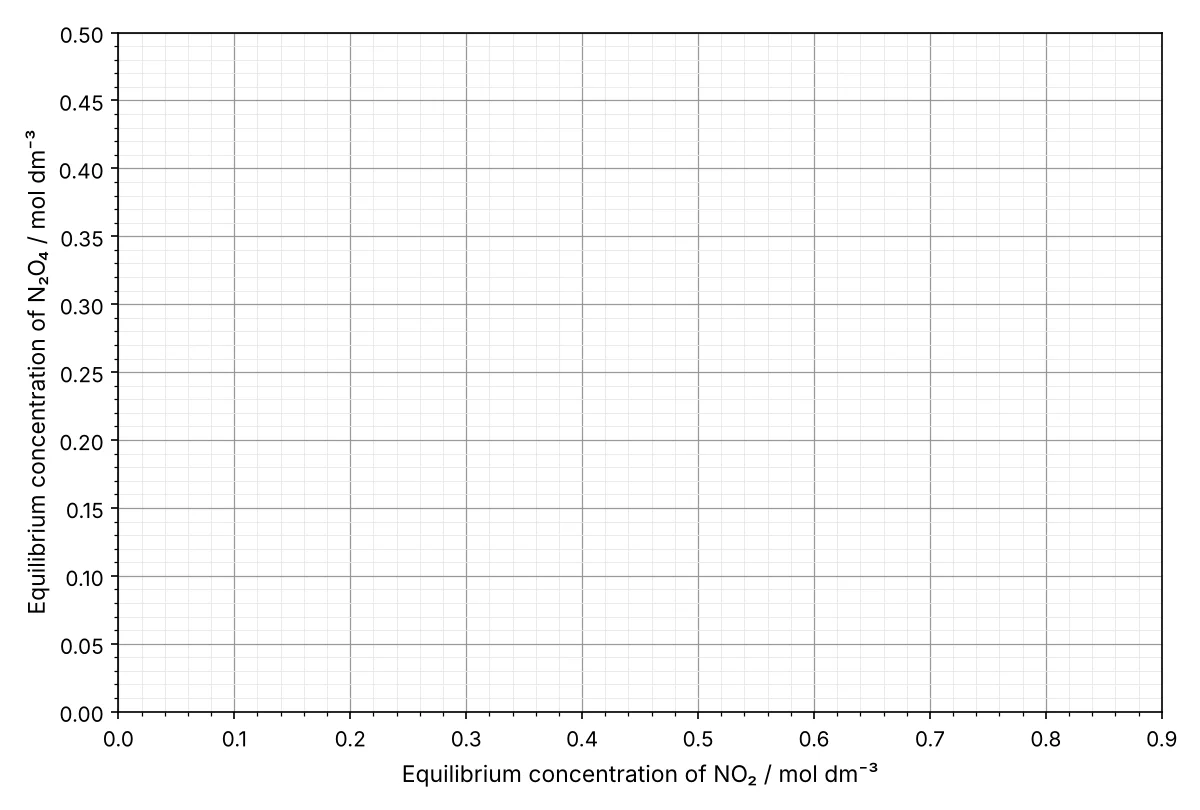
Question diagram
(a)
Plot the data on the grid and draw a smooth curve of best fit. [3]Criterion C (i) · Level 3-4
(b)
Describe the relationship shown by your graph. [2]Criterion C (ii) · Level 5-6
(c)
Use your graph to estimate [N2O4]eq[\mathrm{N_2O_4}]_{eq} when [NO2]eq[\mathrm{NO_2}]_{eq} = 0.70 mol dm⁻³. [1]Criterion C (ii) · Level 3-4
(d)
Explain, using Le Chatelier's principle, why injecting more NO2\mathrm{NO_2} increases the concentration of N2O4\mathrm{N_2O_4} at equilibrium. [2]Criterion A (ii) · Level 5-6

revisionprep.com

Summary Answer

Not available for this question.

Model Answer

Not available for this question.

Marking Scheme

Not available for this question.

Examiner Insights

Not available for this question.

Question 4Criterion A + D · Band 5-6 · Medium · 4 marksrevisionprep.com

Effect of changes in conditions (temperature, concentration – basic idea)
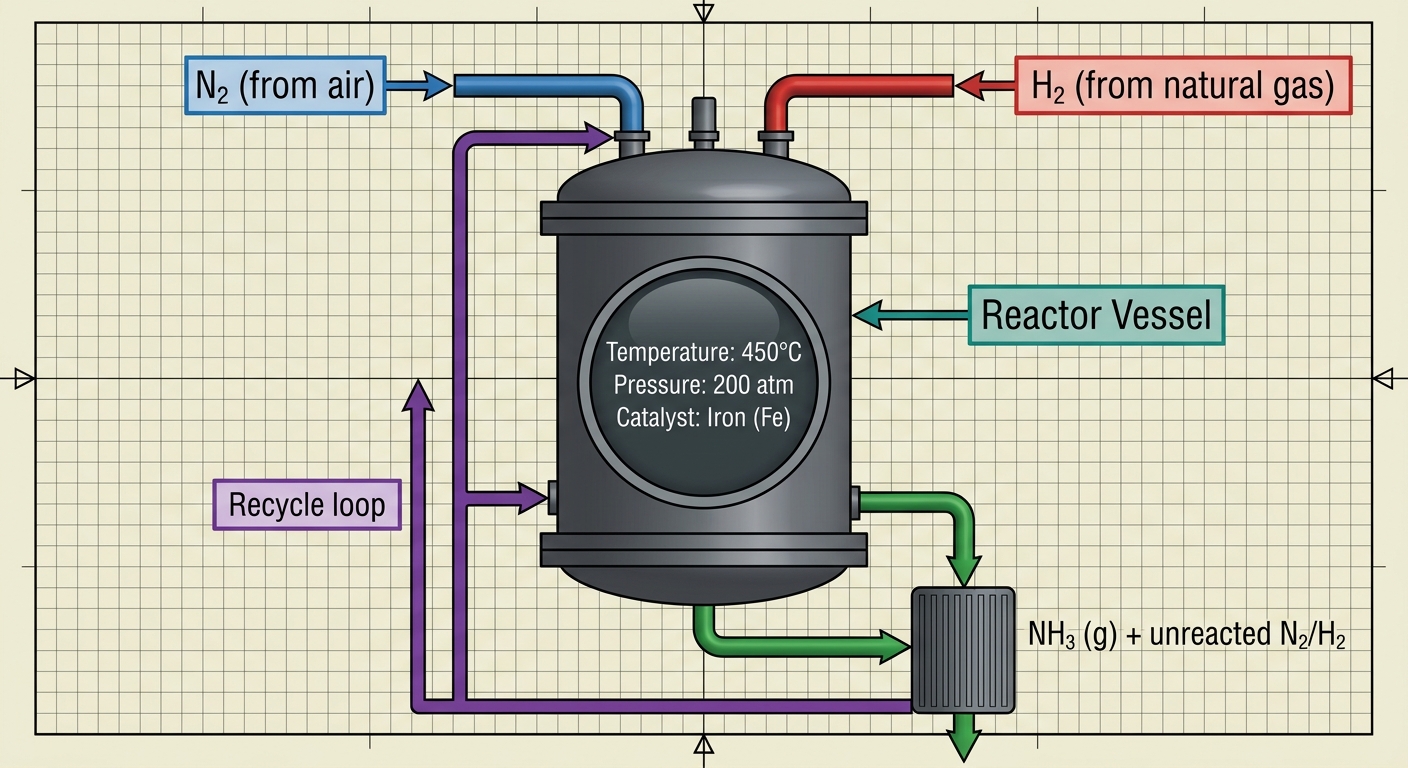
The diagram shows a reactor in an ammonia plant. The gas mixture leaving the reactor is cooled in the unit at the bottom right, where liquid ammonia is removed. The remaining nitrogen and hydrogen, now containing very little ammonia, are returned to the reactor through the recycle loop.

N2(g)+3H2(g)⇌2NH3(g)ΔH=−92 kJ mol−1\mathrm{N_2(g) + 3H_2(g) \rightleftharpoons 2NH_3(g)} \qquad \Delta H = -92 \text{ kJ mol}^{-1}
Question diagram
(a)
Explain why feeding the reactor with gas that contains very little ammonia increases the amount of ammonia formed. [2]Criterion A (ii) · Level 5-6
(b)
The plant manager wants ammonia to be produced faster without lowering the equilibrium yield. Suggest one change to the conditions shown on the diagram and explain your choice. [2]Criterion D (i) · Level 5-6

revisionprep.com

Summary Answer

Not available for this question.

Model Answer

Not available for this question.

Marking Scheme

Not available for this question.

Examiner Insights

Not available for this question.

Question 5Criterion B · Band 5-8 · Challenge · 8 marksrevisionprep.com

Real-life examples (industrial processes, biological systems)

Water companies can measure iron in drinking water using the blood-red complex formed by iron(III) ions and thiocyanate ions:

Fe3+(aq)+SCN−(aq)⇌FeSCN2+(aq)\mathrm{Fe^{3+}(aq) + SCN^-(aq) \rightleftharpoons FeSCN^{2+}(aq)}

The deeper the red colour, the higher the concentration of FeSCN2+\mathrm{FeSCN^{2+}}. Students plan to investigate how the concentration of thiocyanate ions affects the position of this equilibrium. They have 0.010 mol dm⁻³ iron(III) nitrate, 0.10 mol dm⁻³ potassium thiocyanate, distilled water, burettes, test tubes and a colorimeter.
(a)
Formulate a hypothesis and explain it using scientific reasoning. [2]Criterion B (ii) · Level 5-6
(b)
Explain how the students should vary the thiocyanate concentration while keeping the total volume the same. Identify the dependent variable and two control variables. [4]Criterion B (iii) · Level 5-6
(c)
Explain why the total volume must be the same in every tube. [1]Criterion B (iii) · Level 7-8
(d)
Explain how they will collect sufficient, relevant data. [1]Criterion B (iii) · Level 5-6

revisionprep.com

Summary Answer

Not available for this question.

Model Answer

Not available for this question.

Marking Scheme

Not available for this question.

Examiner Insights

Not available for this question.

Question 6Criterion D + A · Band 3-8 · Challenge · 8 marksrevisionprep.com

Haber process: conditions and compromise (qualitative)

The Haber process makes ammonia from nitrogen and hydrogen:

N₂(g) + 3H₂(g) ⇌ 2NH₃(g) ΔH = −92 kJ mol⁻¹

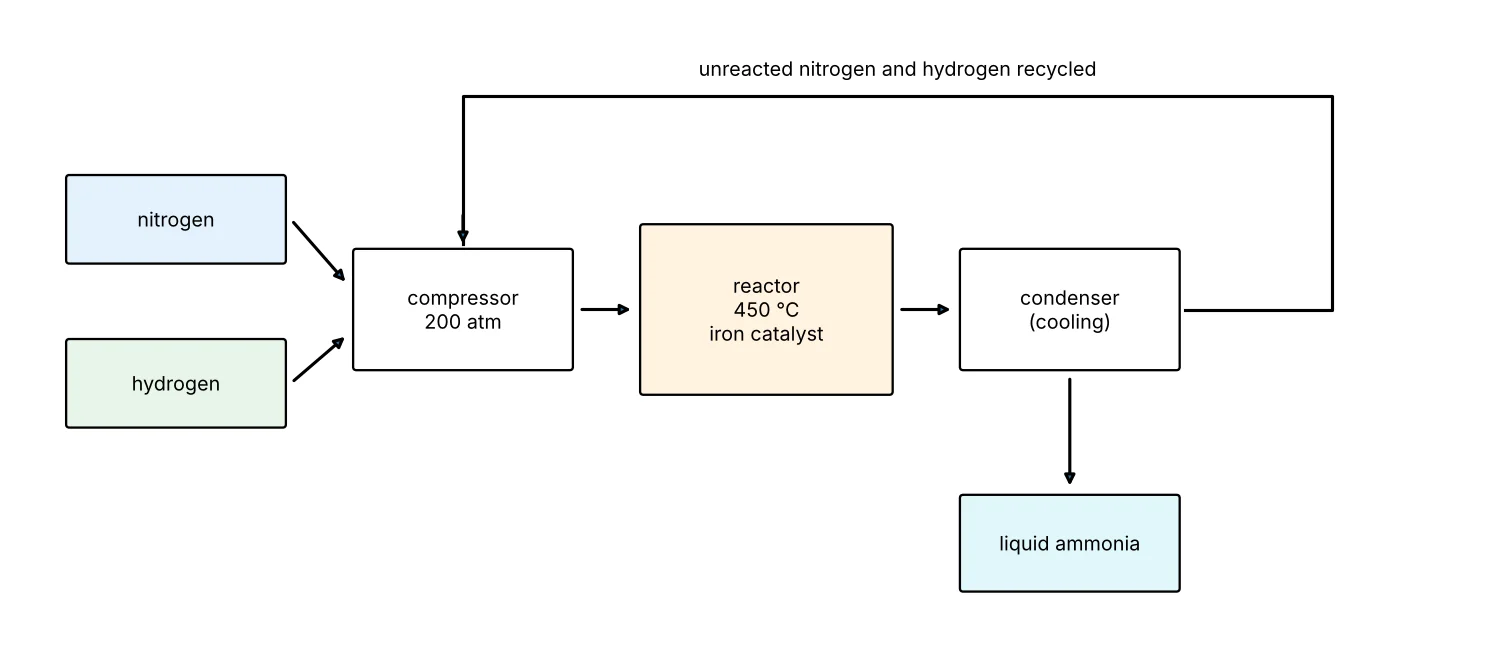
A typical plant runs at about 200 atmospheres. Unreacted nitrogen and hydrogen are separated from the ammonia and recycled.

The diagram shows the main stages of the plant.
Question diagram
(a)
Predict the effect of a high pressure on the equilibrium yield of ammonia. Explain your prediction. [2]Criterion A (ii) · Level 5-6
(b)
Explain why the unreacted gases are recycled. [1]Criterion D (i) · Level 3-4
(c)
Engineers propose raising the pressure from 200 to 300 atmospheres. Evaluate this proposal. [5]Criterion D (ii) · Level 7-8

revisionprep.com

Summary Answer

Not available for this question.

Model Answer

Not available for this question.

Marking Scheme

Not available for this question.

Examiner Insights

Not available for this question.

That's every free question here — 6 of 70.

+64 more questions, plus Mock Papers & Worksheets, are waiting in Premium.

Upgrade