You're viewing free preview questions — 4 questions previewing here — subscribe to unlock 62 more, plus the Full Question Bank, Mock Papers & Worksheets.Upgrade
Exponents Powers and Roots — Free MYP4 Mathematics (Standard) Practice Questions

1QuestionLaws of Exponents for Integer PowersConcept Practice
2 marks~3 minCriterion B
Explain why holds true, using repeated multiplication in your reasoning. [1]
Support your explanation with the example , showing each repeated-multiplication step clearly. [1]
Support your explanation with the example , showing each repeated-multiplication step clearly. [1]
Solutions

2QuestionSquare Roots and Cube RootsAssessment Practice
2 marks~3 minCriterion D
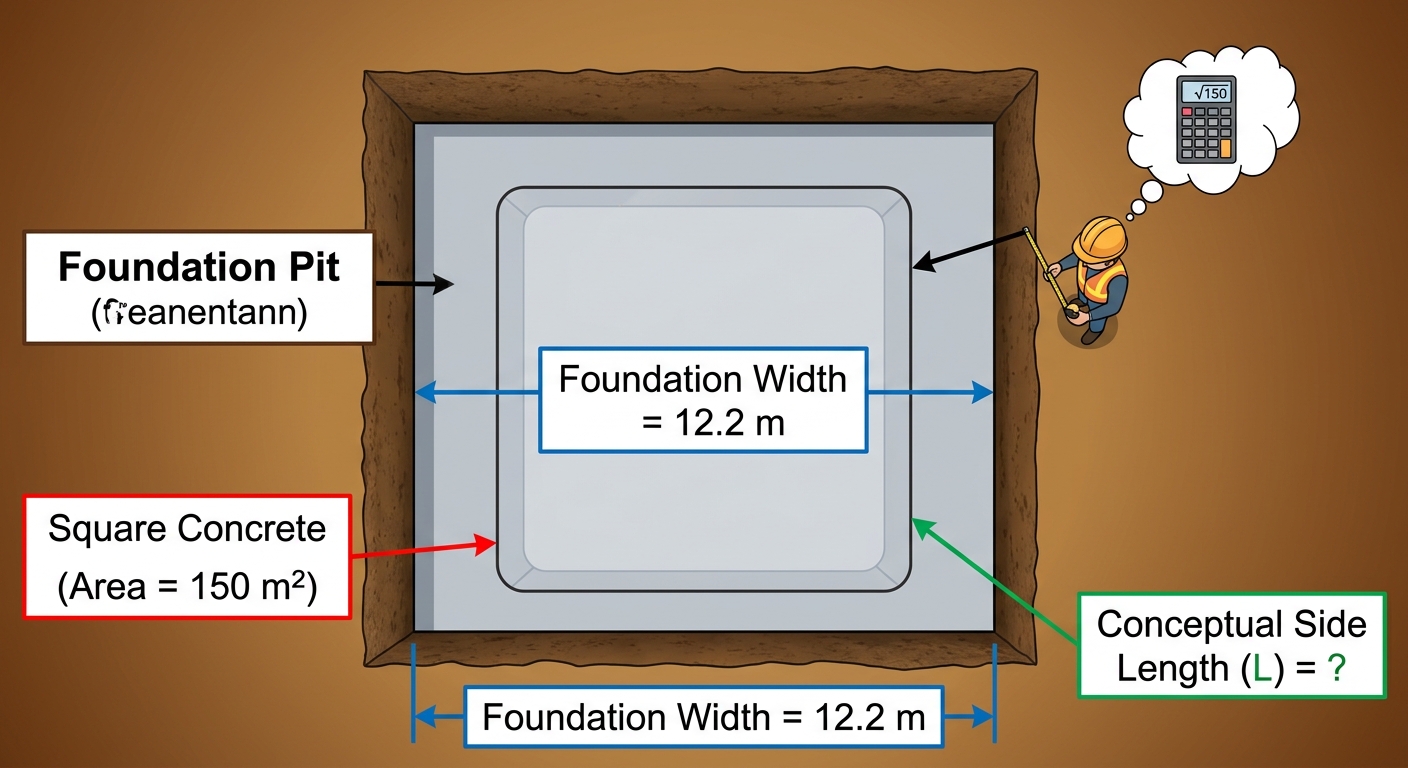
A square concrete slab has an area of . A foundation measures wide.
a
Calculate the side length of the slab, giving your answer to one decimal place. [1]
b
The construction manager states: "An estimate is good enough — we don't need the exact value." Using your result from part (a), advise the manager whether a one-decimal-place estimate is sufficient to decide if the slab fits the foundation. [1]
Solutions
3QuestionLaws of Exponents for Integer PowersAssessment Practice
4 marks~6 minCriterion C
A biologist models two bacterial populations. Population A grows according to , where is the population size (thousands) and is time in hours. Population B decays and is modelled by .
a
Show that , stating the law of exponents used. [1]
b
Describe the geometric transformation that maps the graph of onto the graph of , explaining how the change in exponent produces this transformation. [2]
c
At hours, Population A has reached 8 thousand. Calculate the size of Population B at the same time, then justify whether this value is a realistic prediction for a decaying bacterial culture. [1]
Solutions
4QuestionSimplifying Expressions with ExponentsAssessment Practice
6 marks~9 minCriterion A
A materials scientist models the thermal conductivity of a composite alloy using the expression
where , , , represent measurable physical parameters, all positive and non-zero.
where , , , represent measurable physical parameters, all positive and non-zero.
a
Show that the expression simplifies to , stating each law of exponents you apply. [4]
b
The scientist states: "Because the outer exponent is negative, the simplified expression must always be less than 1." Critique this claim, justifying your reasoning with a specific numerical counterexample. [2]
Solutions
That's every free question here — 4 of 66.
+62 more questions, plus Mock Papers & Worksheets, are waiting in Premium.