You're viewing free preview questions — 4 questions previewing here — subscribe to unlock 75 more, plus the Full Question Bank, Mock Papers & Worksheets.Upgrade
Operations with Fractions and Decimals — Free MYP4 Mathematics (Standard) Practice Questions

1QuestionMultiplication and Division of FractionsConcept Practice
2 marks~3 minCriterion A
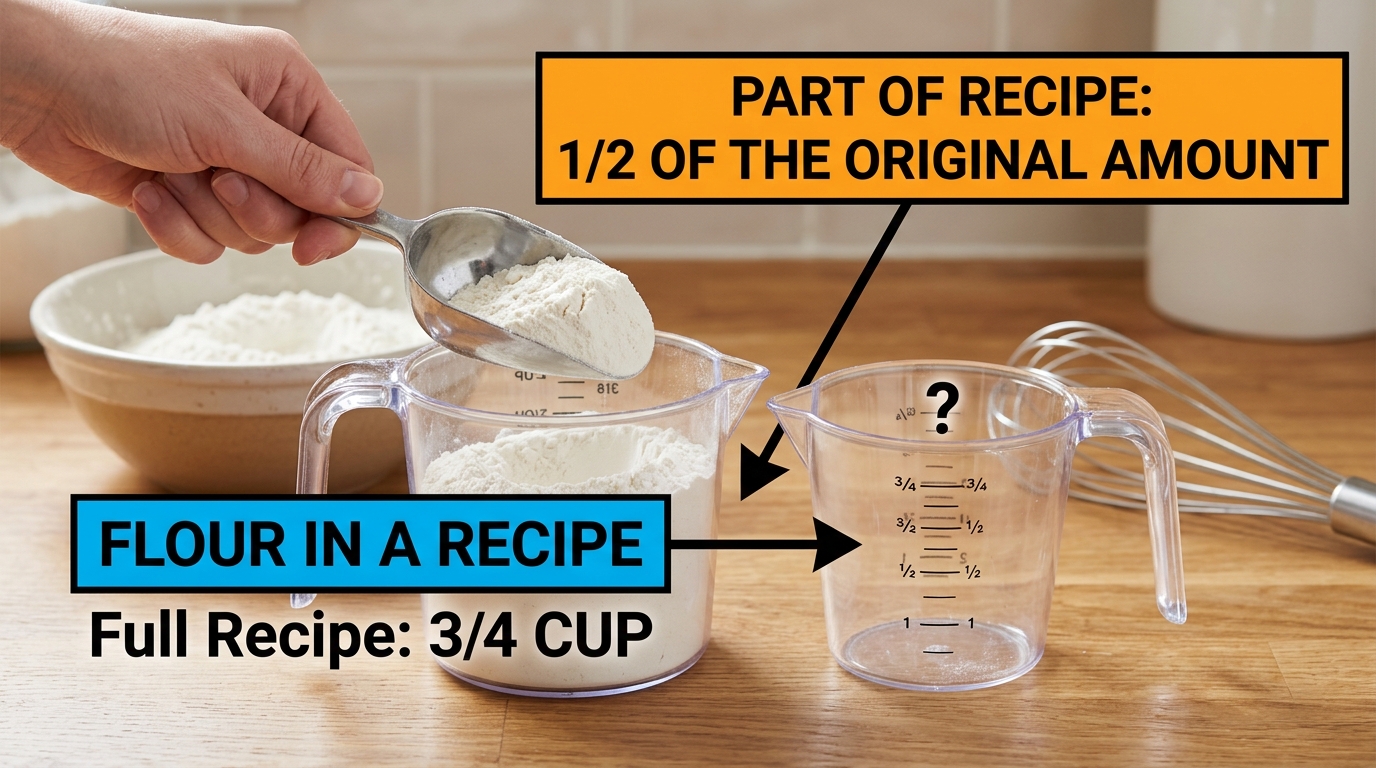
A nutritionist is scaling down a granola recipe. The full batch requires cup of rolled oats, but she is making of the batch.
a
Calculate the amount of rolled oats needed. [1]
b
Standard dry measuring cups come in sizes cup and cup. Justify whether the calculated amount can be measured exactly using these cups. [1]

Solutions
2QuestionOrder of Operations with Mixed Numbers and DecimalsAssessment Practice
2 marks~3 minCriterion C
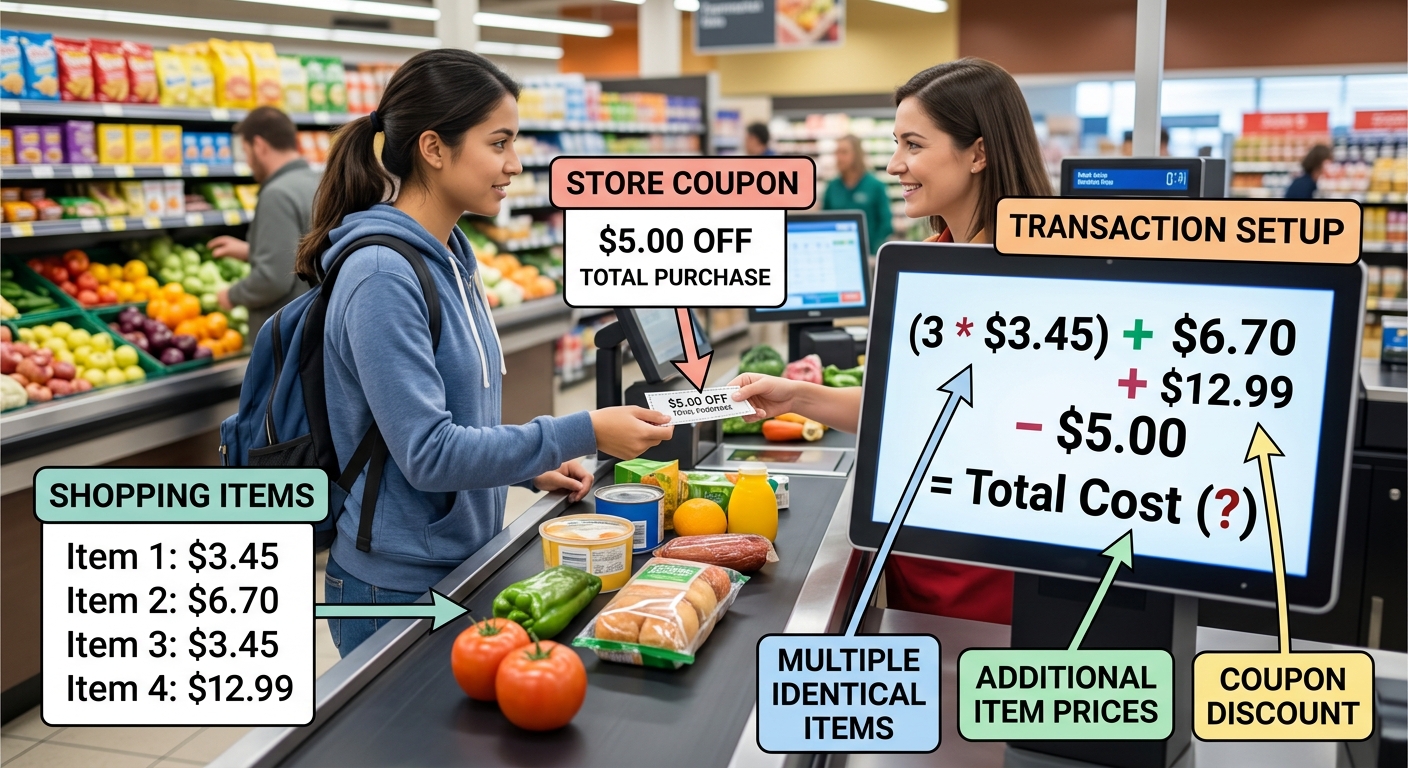
A student purchases 4 cinema tickets at dollars each and applies a dollar voucher to the total bill.
a
Calculate the amount the student pays, showing the correct order of operations. [1]
b
The student's friend argues that the voucher should be subtracted from one ticket price before multiplying. Justify whether the friend's interpretation is mathematically valid, referring to the real-world transaction. [1]
Solutions
3QuestionMultiplication and Division of FractionsAssessment Practice
4 marks~6 minCriterion D
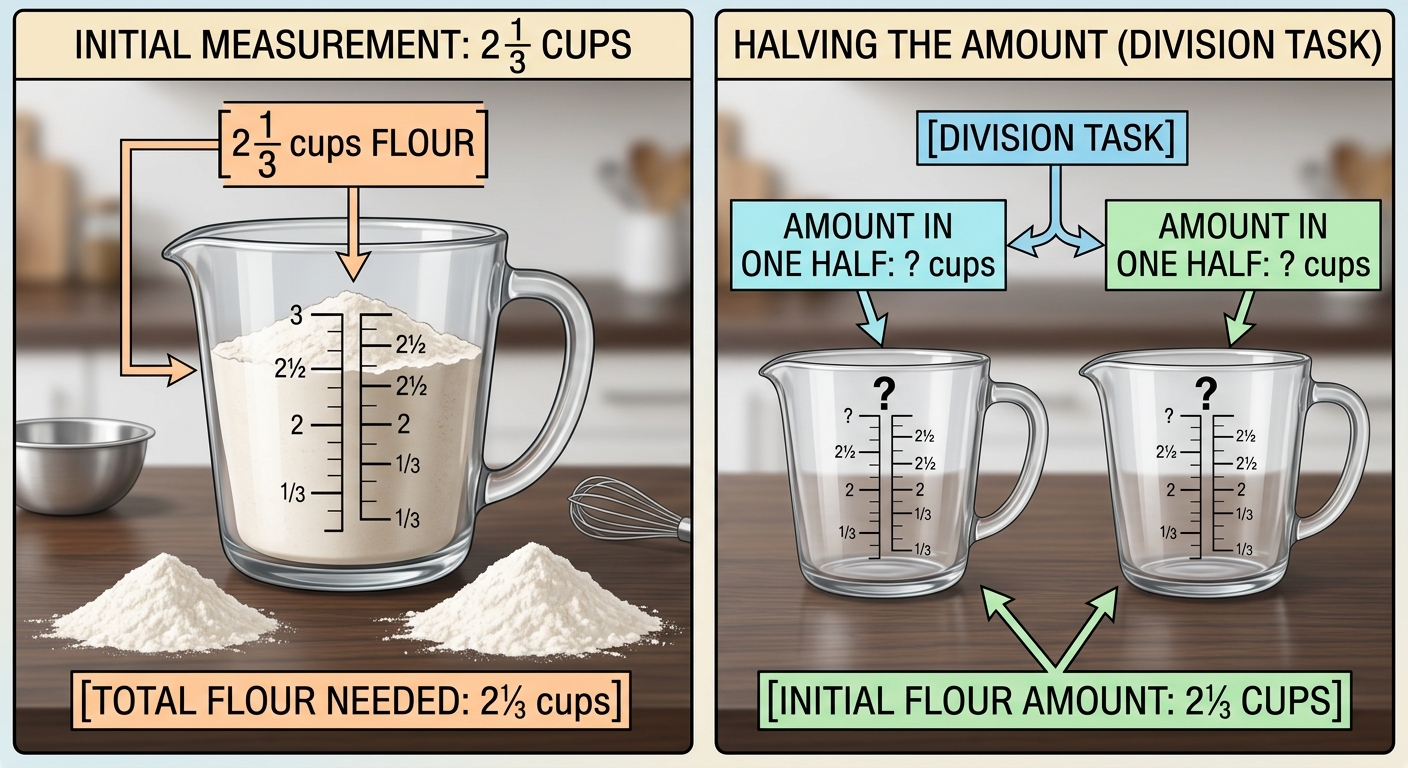
A baker is halving a recipe that requires cups of flour. The baker mistakenly calculates cups instead of halving correctly.
a
Show that the correct amount of flour needed is cups. [2]
b
The baker measures cups using a set of cups marked in increments of cup. Advise the baker whether fraction arithmetic remains a reliable method for scaling this recipe, given the measurement tools available. [2]
Solutions
4QuestionAddition and Subtraction of FractionsAssessment Practice
5 marks~8 minCriterion B
A pharmacist mixes two liquid medicines in equal parts. Medicine A is administered at of a standard dose per millilitre, and Medicine B at of a standard dose per millilitre, where is a positive integer. The combined concentration per millilitre is .
a
Calculate each sum for , expressing each result as a single fraction in simplest form.
[2]
[2]
b
Explain the pattern you observe in the numerators and denominators of your results. [1]
c
Deduce the combined concentration when , without performing the full calculation. [1]
d
A safe combined concentration must remain below of a standard dose per millilitre. Using the general rule , advise the pharmacist whether the mixture is safe for all values of , and state the smallest value of for which it becomes safe. [1]
Solutions
That's every free question here — 4 of 79.
+75 more questions, plus Mock Papers & Worksheets, are waiting in Premium.