You're viewing free preview questions — 4 questions previewing here — subscribe to unlock 84 more, plus the Full Question Bank, Mock Papers & Worksheets.Upgrade
Scientific Notation and Standard Form — Free MYP4 Mathematics (Standard) Practice Questions

1QuestionMultiplying and Dividing Numbers in Scientific NotationConcept Practice
2 marks~3 minCriterion A
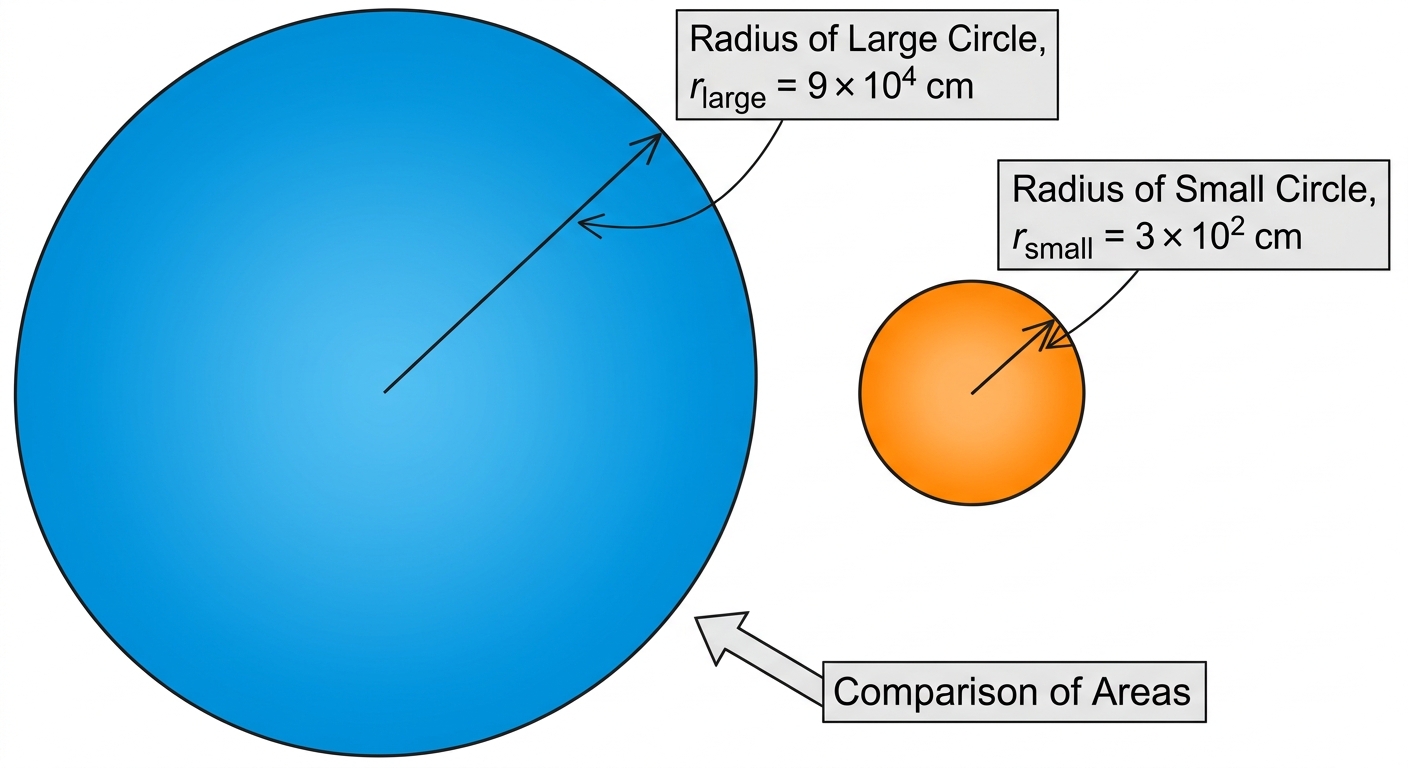
A satellite imaging system captures two circular coverage zones. The large zone has a radius of km and the small zone has a radius of km.
Using , calculate the ratio of the area of the large zone to the area of the small zone. Express your answer in scientific notation. [1]
A minimum coverage ratio of is required for the large zone to be classified as a primary zone. Justify whether the large zone meets this classification. [1]
Using , calculate the ratio of the area of the large zone to the area of the small zone. Express your answer in scientific notation. [1]
A minimum coverage ratio of is required for the large zone to be classified as a primary zone. Justify whether the large zone meets this classification. [1]

Solutions
2QuestionMultiplying and Dividing Numbers in Scientific NotationAssessment Practice
6 marks~9 minCriterion C
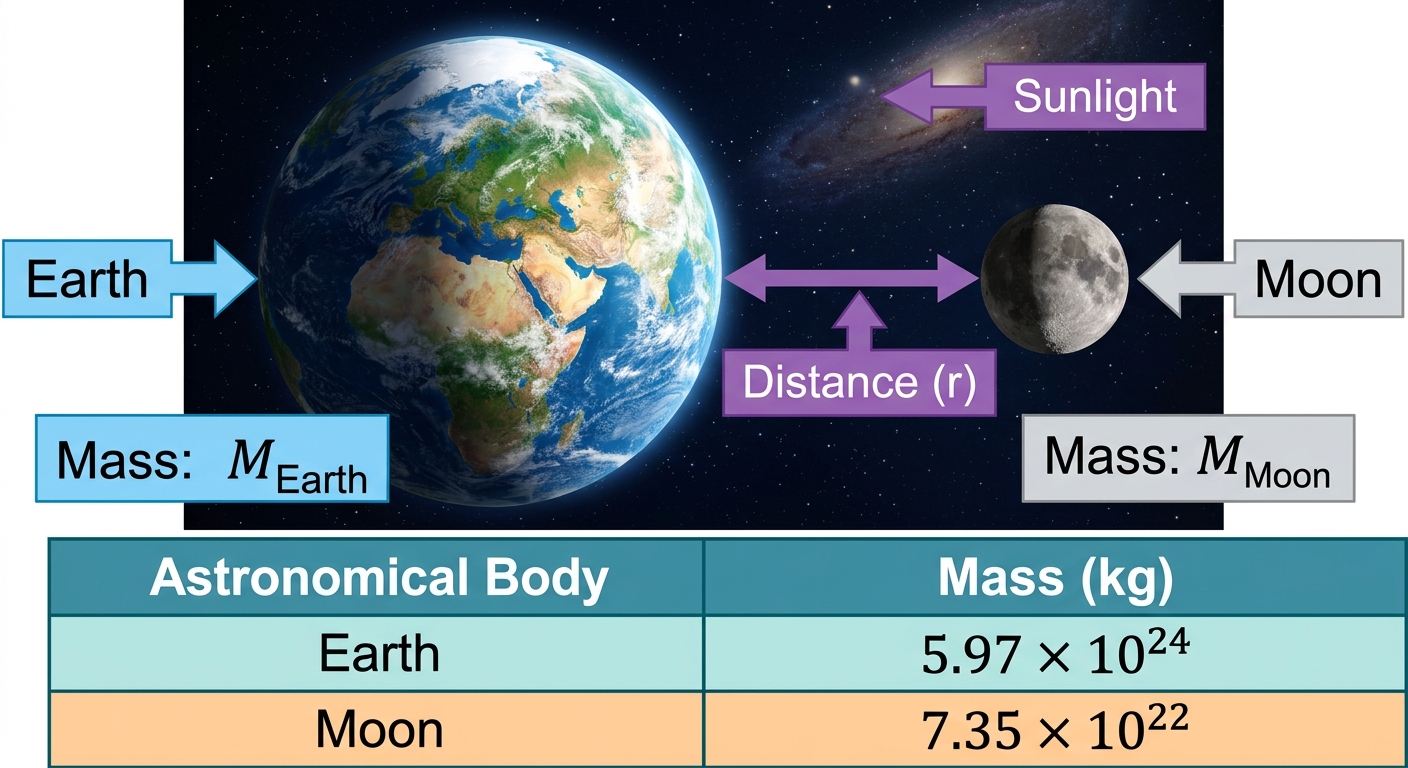
The mass of Earth is kg and the mass of the Moon is kg.
a
Calculate the ratio of the mass of Earth to the mass of the Moon. Express your answer in scientific notation to three significant figures. [2]
b
Explain why scientific notation is appropriate when comparing astronomical masses, and explain how rounding to three significant figures affects the reliability of the ratio calculated in part (a). [2]
c
A scientist states: "This ratio means Earth is approximately 81 times more massive than the Moon, so the Moon has a negligible gravitational influence on Earth." Critique this statement, using your result from part (a) and your knowledge of real-world gravitational effects. [2]
Solutions
3QuestionConverting Between FormsConcept Practice
3 marks~5 minCriterion B
A spacecraft's distance from Earth is recorded using powers of .
| Power of | ||||
|---|---|---|---|---|
| Decimal equivalent |
a
State the number of zeros in the decimal equivalent of and of . [1]
b
Explain the relationship between the exponent in a power of and the number of zeros in its decimal equivalent, using at least two values from the table to support your explanation. [1]
c
A scientist states: "Because has 6 zeros, a distance of km is exactly one million kilometres — large enough to matter in space navigation." Justify whether the scientist's reasoning about the number of zeros is mathematically correct, and explain what this means for expressing large distances in standard form. [1]
Solutions
4QuestionApplications in Science and Engineering ContextsAssessment Practice
6 marks~9 minCriterion D
An astronomer uses the distance modulus formula
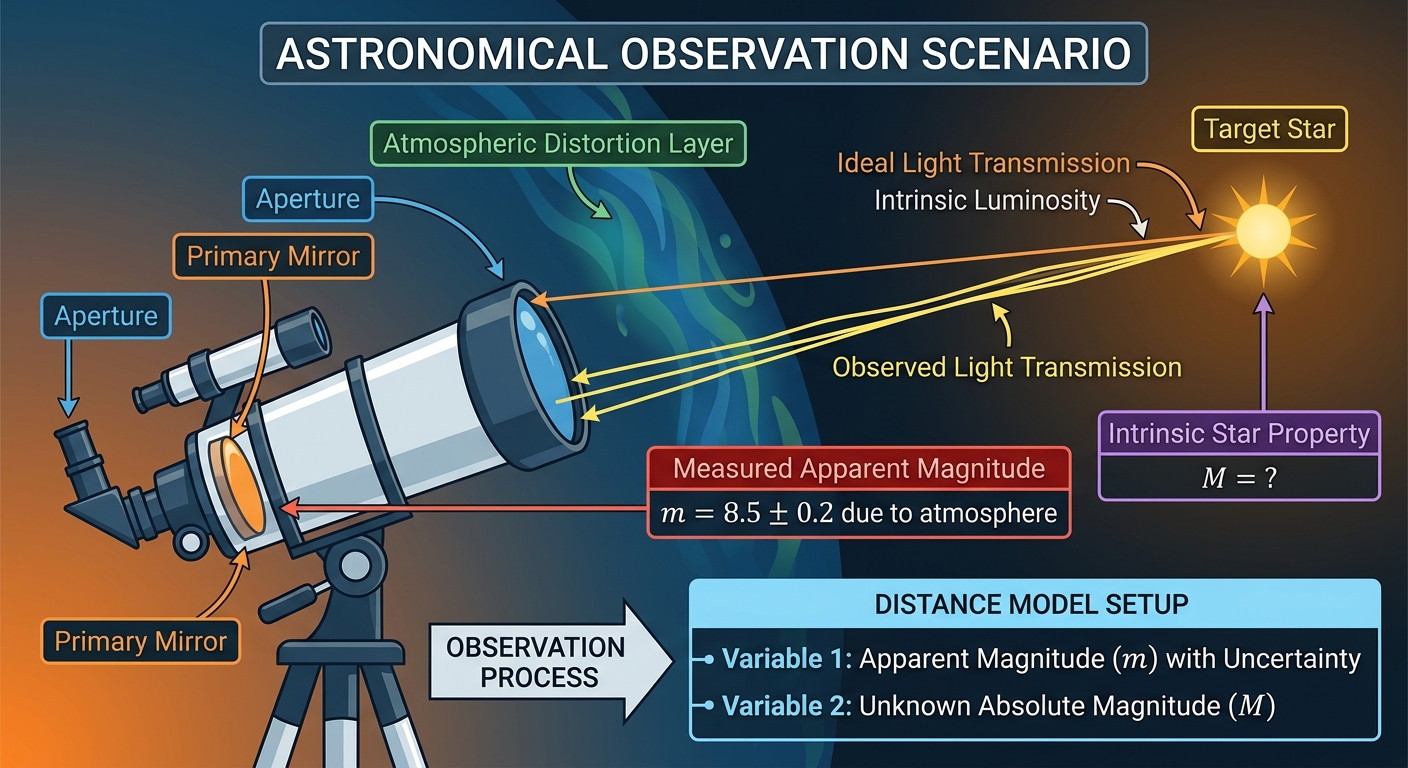
to estimate the distance (in parsecs) to a star, where is the apparent magnitude and is the absolute magnitude.
For a particular star, and the measured apparent magnitude is due to atmospheric distortion.
to estimate the distance (in parsecs) to a star, where is the apparent magnitude and is the absolute magnitude.
For a particular star, and the measured apparent magnitude is due to atmospheric distortion.
a
Calculate the distance to the star using . [2]
b
Calculate the distances corresponding to and . Express both answers in scientific notation to 3 significant figures. [2]
c
The astronomer claims the distance modulus formula gives a reliable estimate of this star's distance. Justify whether this claim is valid, using your results from parts (a) and (b) and considering that interstellar dust dims starlight. [2]
Solutions
That's every free question here — 4 of 88.
+84 more questions, plus Mock Papers & Worksheets, are waiting in Premium.