You're viewing free preview questions — 5 questions previewing here — subscribe to unlock 93 more, plus the Full Question Bank, Mock Papers & Worksheets.Upgrade
Forms of Radiation: Properties, Uses & Detection — Free MYP4 Physics Practice Questions

1QuestionPractical uses in Sterilization/ Medical imaging/ Industrial thickness controlConcept Practice
2 marks~3 minCriterion A
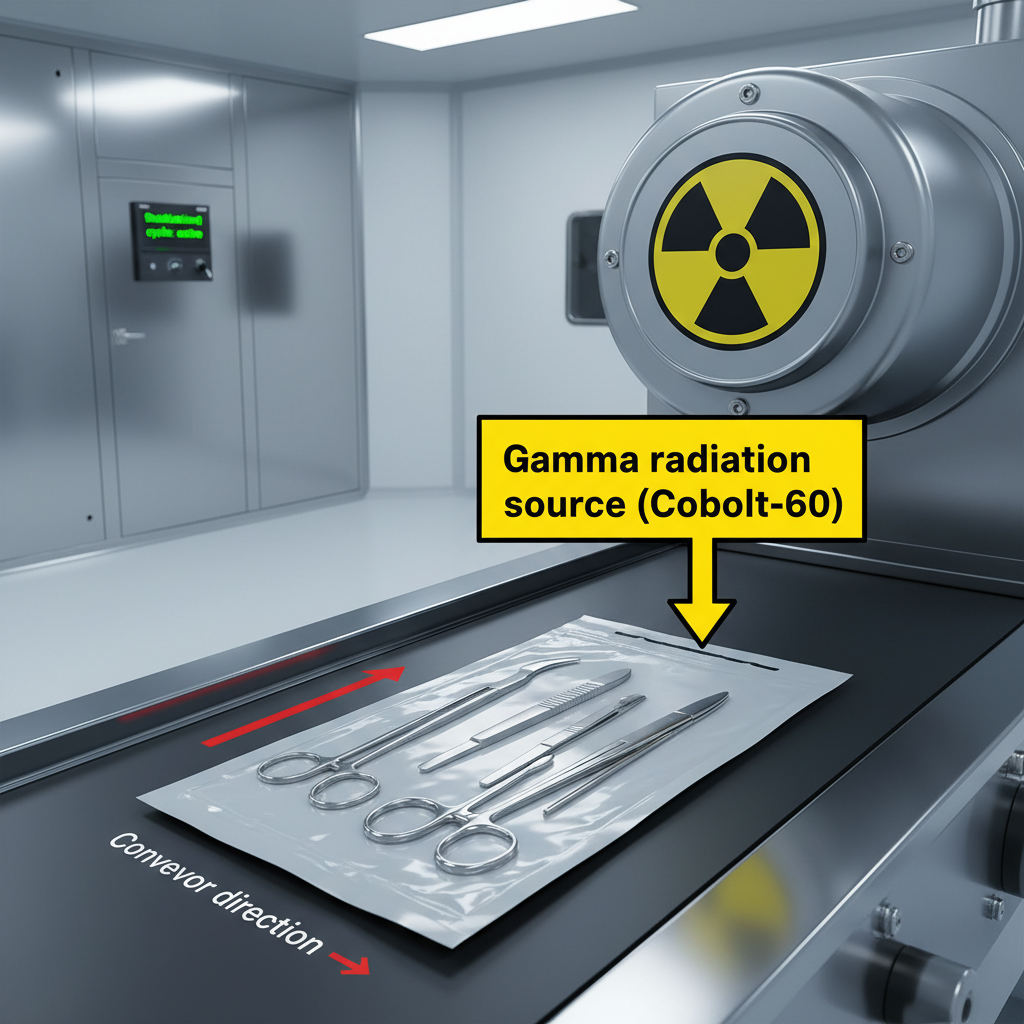
Medical facilities use gamma radiation from cobalt-60 (Co) sources to sterilize single-use items such as syringes, surgical gloves, and wound dressings. The radiation penetrates sealed packaging, destroying microorganisms without requiring the items to be unwrapped.
a
Outline how gamma radiation sterilizes packaged medical equipment without opening the packaging. [1]
b
Identify one limitation of using Co gamma sources for sterilization in a hospital supply facility. [1]

Solutions
2QuestionDeflection in electric and magnetic fieldsAssessment Practice
5 marks~8 minCriterion A
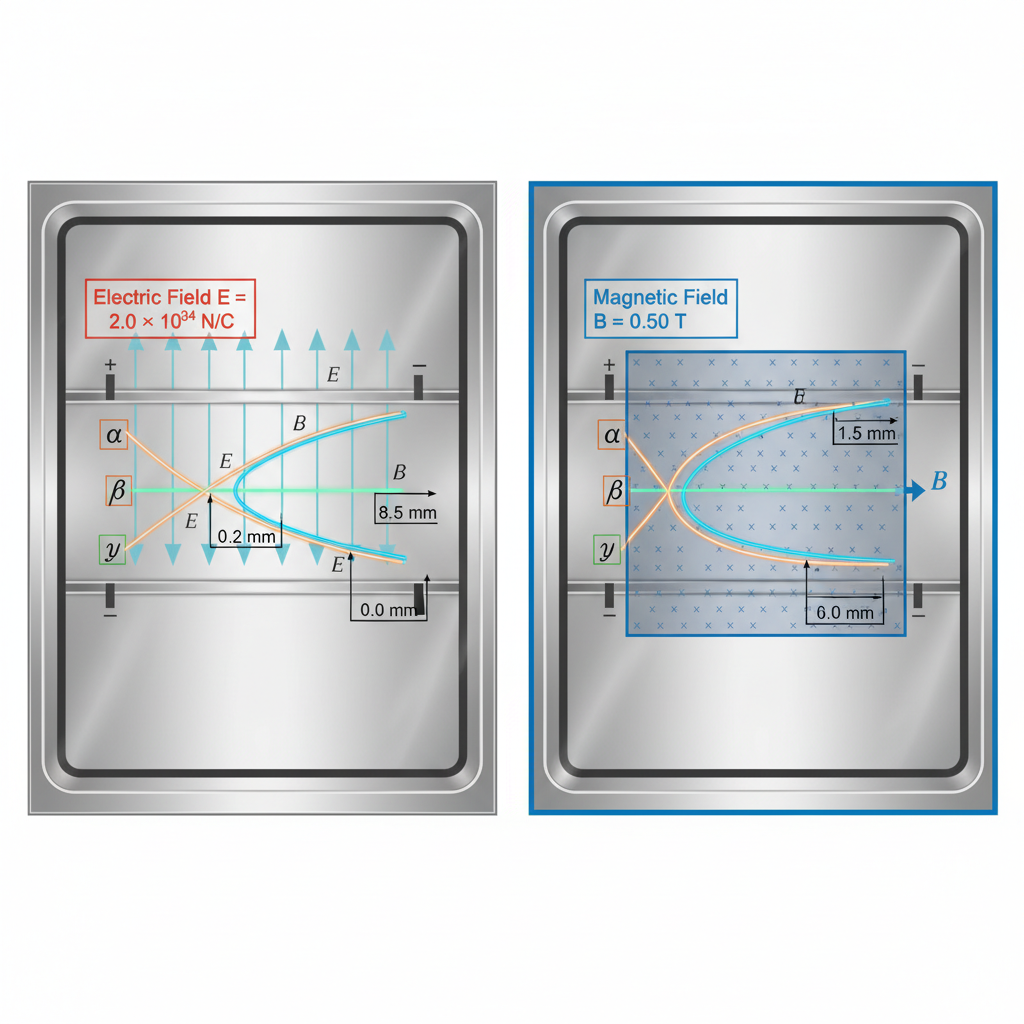
In an experiment, alpha, beta, and gamma radiation pass through a uniform electric field of strength and a separate uniform magnetic field of strength .
Particle properties:
Gamma:
Particle properties:
| Alpha | charge | mass kg | speed m/s |
|---|---|---|---|
| Beta | charge | mass kg | speed m/s |
Gamma:
a
Calculate the electric force and magnetic force acting on the alpha particle. [2]
b
Show that the beta particle experiences a greater force than the alpha particle in the magnetic field, and explain why this produces a larger deflection despite beta having a smaller charge. [2]
c
Evaluate which radiation type is deflected most in each field, justifying your answer using charge-to-mass ratios and the accelerations experienced by each particle. [1]
Solutions
3QuestionBackground radiation: Natural sources (cosmic, rocks), Artificial sourcesConcept Practice
2 marks~3 minCriterion D
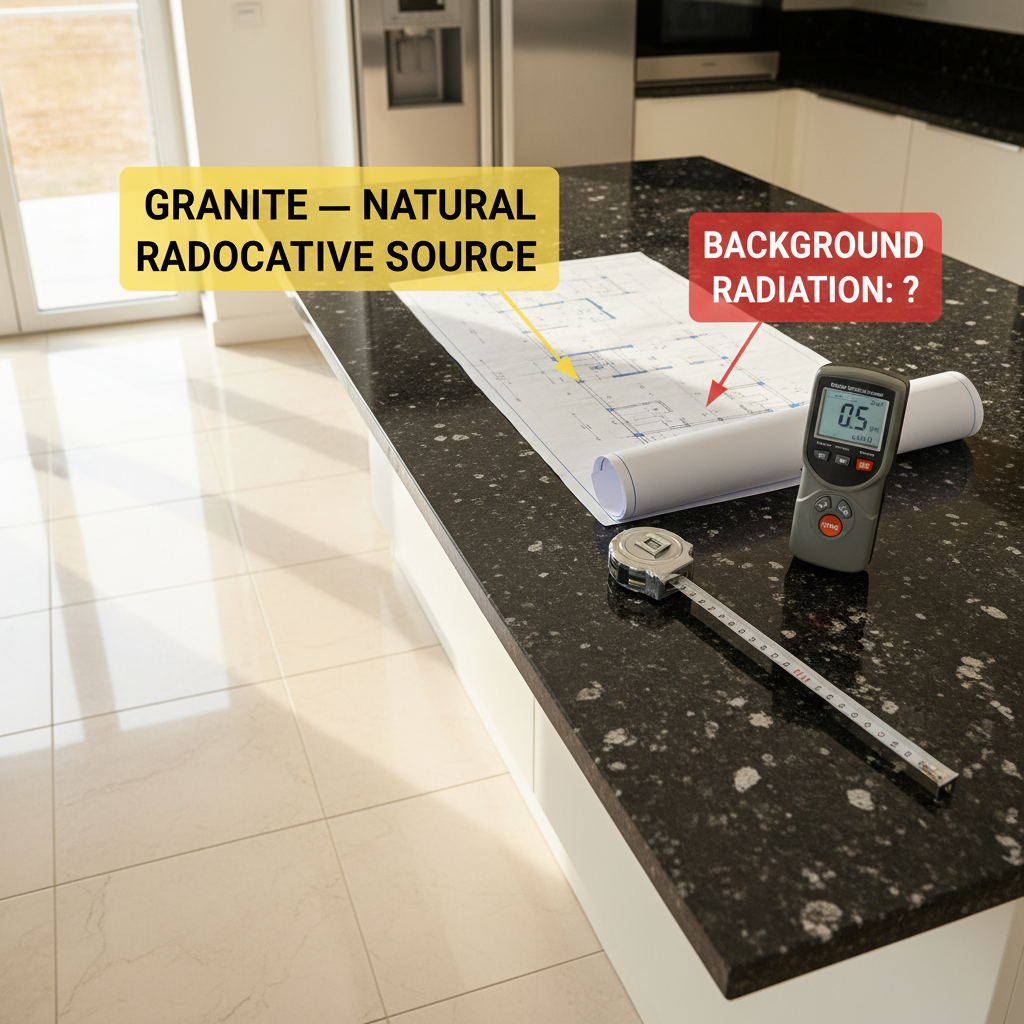
Granite bedrock releases radon gas, a radioactive decay product, which can accumulate inside buildings constructed on such geology.
a
Identify one real-world application of the knowledge that granite is a natural source of background radiation. [1]
b
Describe one societal impact that could result if this radiation source is not accounted for in building design. [1]
Solutions
4QuestionBackground radiation: Natural sources (cosmic, rocks), Artificial sourcesAssessment Practice
5 marks~8 minCriterion C
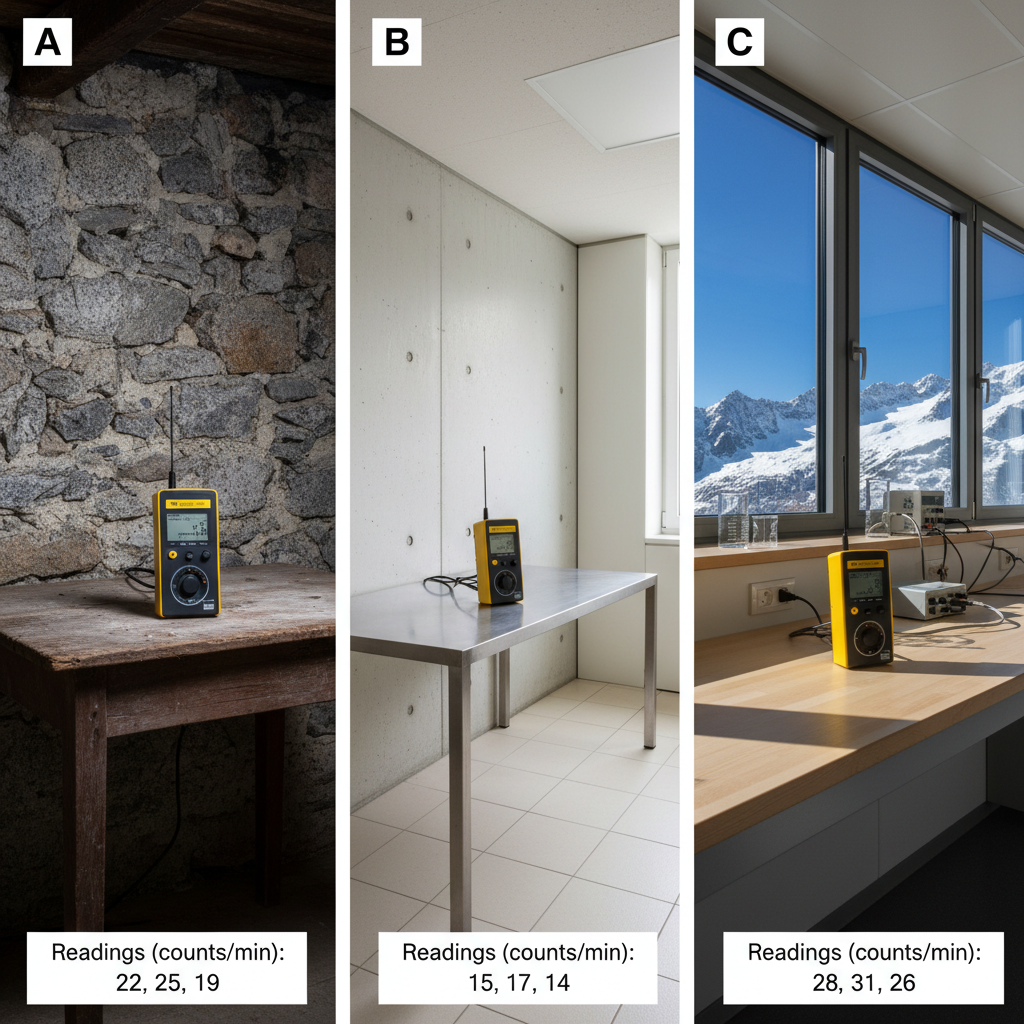
A student uses a Geiger counter to measure background radiation at three locations, recording counts per minute three times at each:
| Location A (basement of a granite building) | 22 | 25 | 19 |
|---|---|---|---|
| Location B (ground floor of a concrete building) | 15 | 17 | 14 |
| Location C (high-altitude mountain laboratory) | 28 | 31 | 26 |
a
Calculate the mean count rate for each location. [3]
b
A classmate claims that "background radiation is constant everywhere on Earth." Evaluate this claim using your calculated mean count rates, and discuss how differences in cosmic ray intensity and the radioactivity of geological materials may account for the pattern observed across the three locations. [2]
Solutions
5QuestionDetection methods: Geiger-Müller counter, Photographic filmAssessment Practice
8 marks~12 minCriterion D
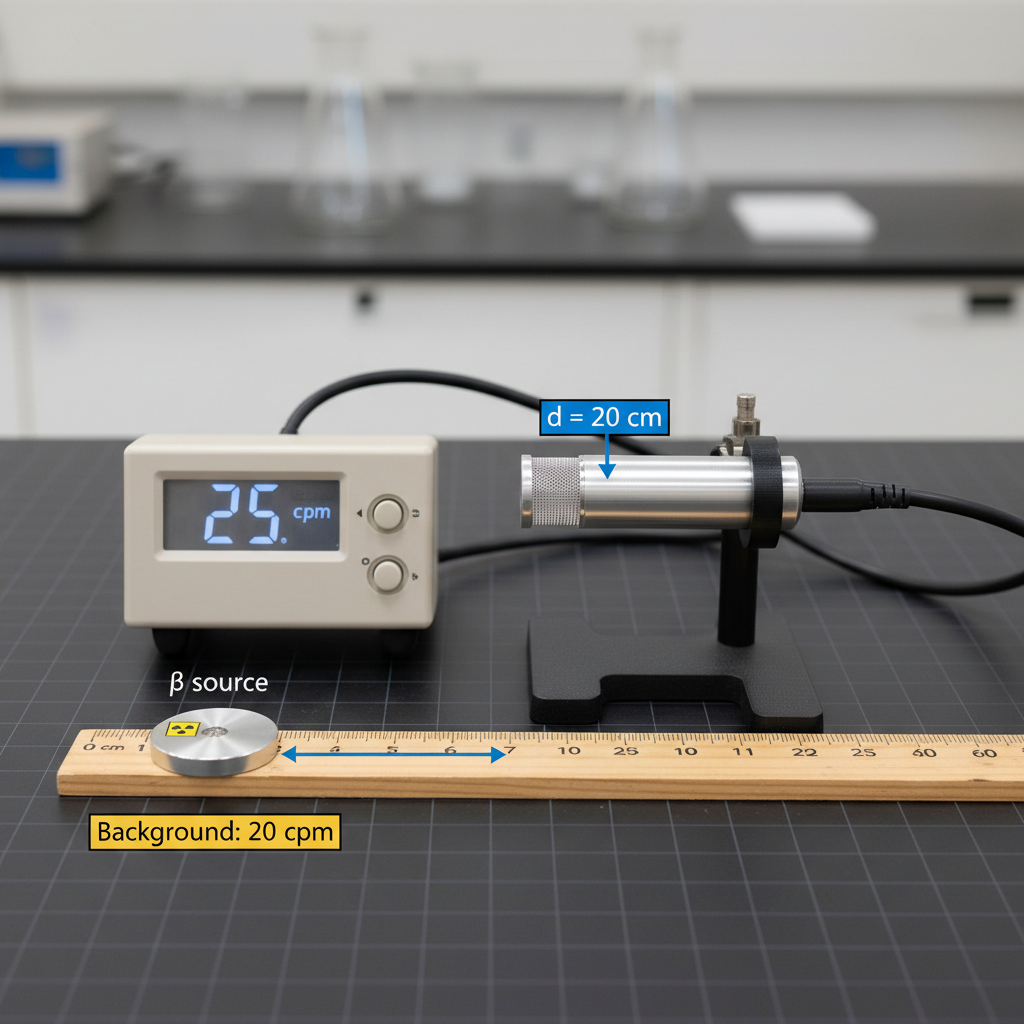
A student uses a Geiger–Müller (GM) counter to measure the count rate from a beta-emitting point source at several distances. The background count rate is 20 counts per minute (cpm). The corrected count rates (background already subtracted) are:
The inverse-square law states that count rate , where is the distance from the source.
| Distance (cm) | 10 | 20 | 30 | 40 | 50 |
|---|---|---|---|---|---|
| Corrected count rate (cpm) | 980 | 245 | 109 | 61 | 39 |
The inverse-square law states that count rate , where is the distance from the source.
a
Show that the expected corrected count rate at cm, using cm as the reference, is 245 cpm. [2]
b
Calculate the percentage difference between the measured and expected corrected count rates at cm and at cm. Use:
[2]
[2]
c
Evaluate whether the experimental data support the inverse-square law model for beta radiation. In your answer, use the percentage differences from (b), consider why background radiation was subtracted before comparison, and identify one experimental factor that could cause deviations from the inverse-square law at larger distances. [4]
Solutions
That's every free question here — 5 of 98.
+93 more questions, plus Mock Papers & Worksheets, are waiting in Premium.