You're viewing free preview questions — 5 questions previewing here — subscribe to unlock 83 more, plus the Full Question Bank, Mock Papers & Worksheets.Upgrade
Sound Waves and Their Behavior — Free MYP4 Physics Practice Questions

1QuestionApplications Sonar Ultrasound and Musical InstrumentsConcept Practice
2 marks~3 minCriterion A
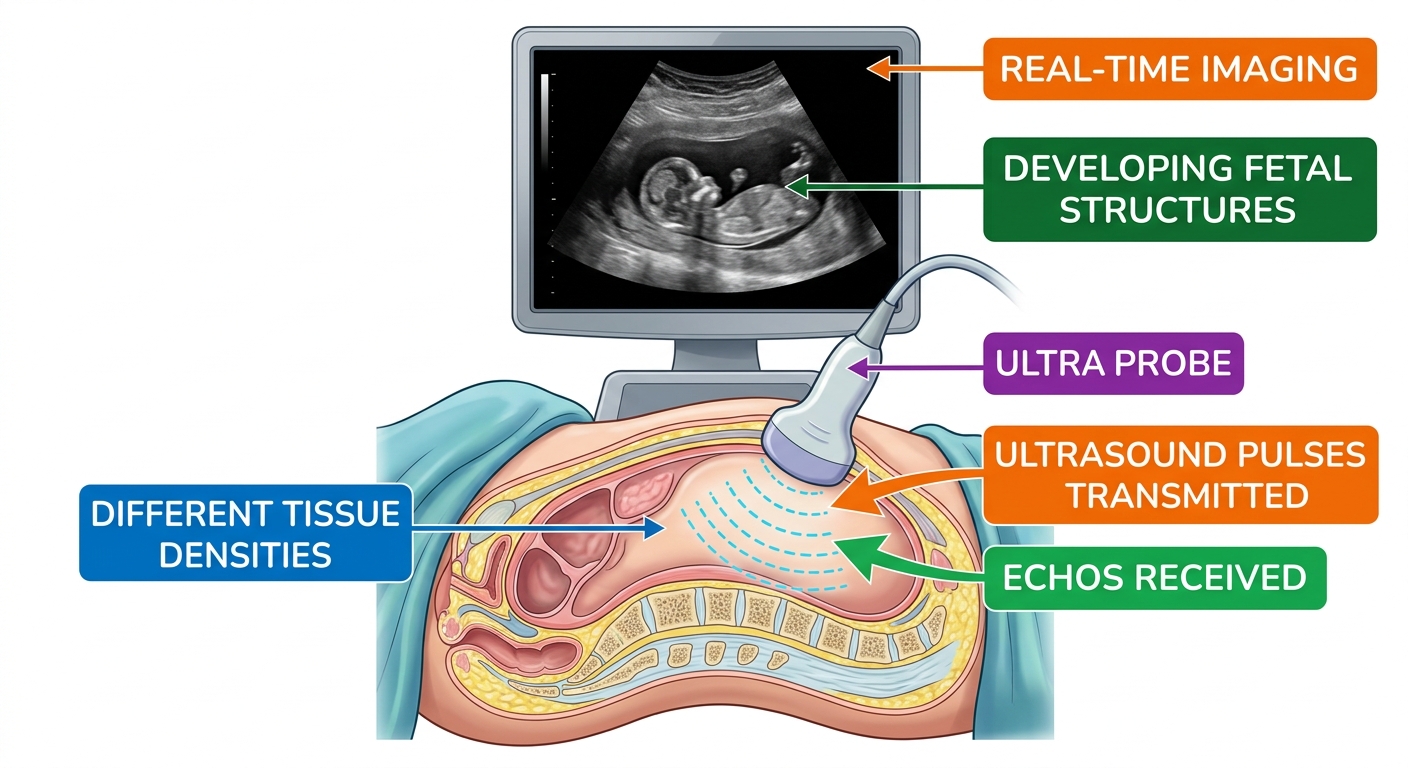
Ultrasound scanners used in hospitals emit sound waves at frequencies above 20 000 Hz to produce images of internal structures.
a
State one medical application of ultrasound technology. [1]
b
Explain one limitation that reduces the effectiveness of ultrasound imaging in a specific clinical situation. [1]

Solutions
2QuestionApplications Sonar Ultrasound and Musical InstrumentsAssessment Practice
3 marks~5 minCriterion A
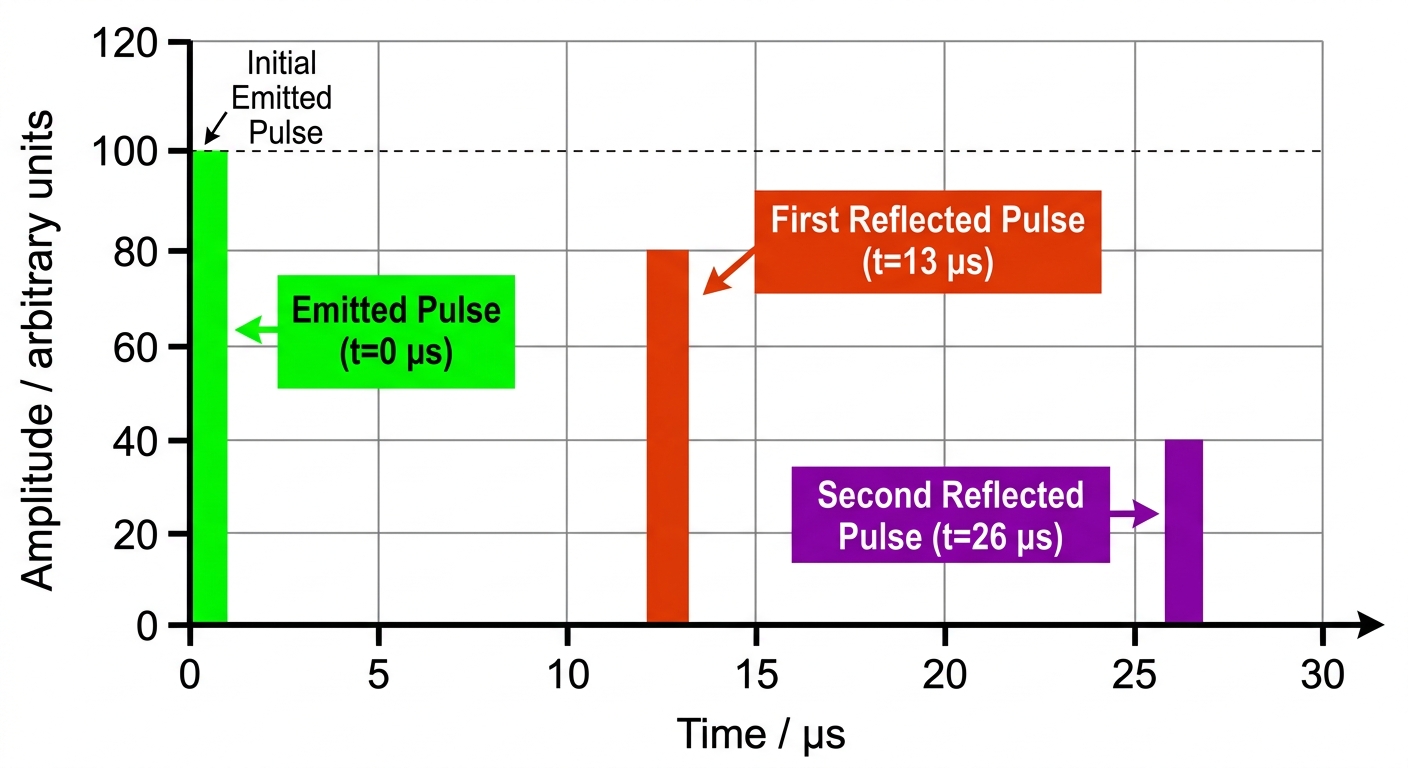
An ultrasound pulse is emitted at and travels through layers of skin, fat, and muscle. The first reflected pulse returns at with an amplitude equal to of the emitted pulse. The second reflected pulse returns at with an amplitude equal to of the emitted pulse.
a
State one mechanism by which the ultrasound pulse loses energy as it travels through biological tissue. [1]
b
Explain how acoustic impedance mismatch at a tissue boundary determines the amplitude of a reflected pulse. [1]
c
Using the data provided, explain why the second reflected pulse has a smaller amplitude than the first. [1]
Solutions
3QuestionApplications Sonar Ultrasound and Musical InstrumentsAssessment Practice
4 marks~6 minCriterion B
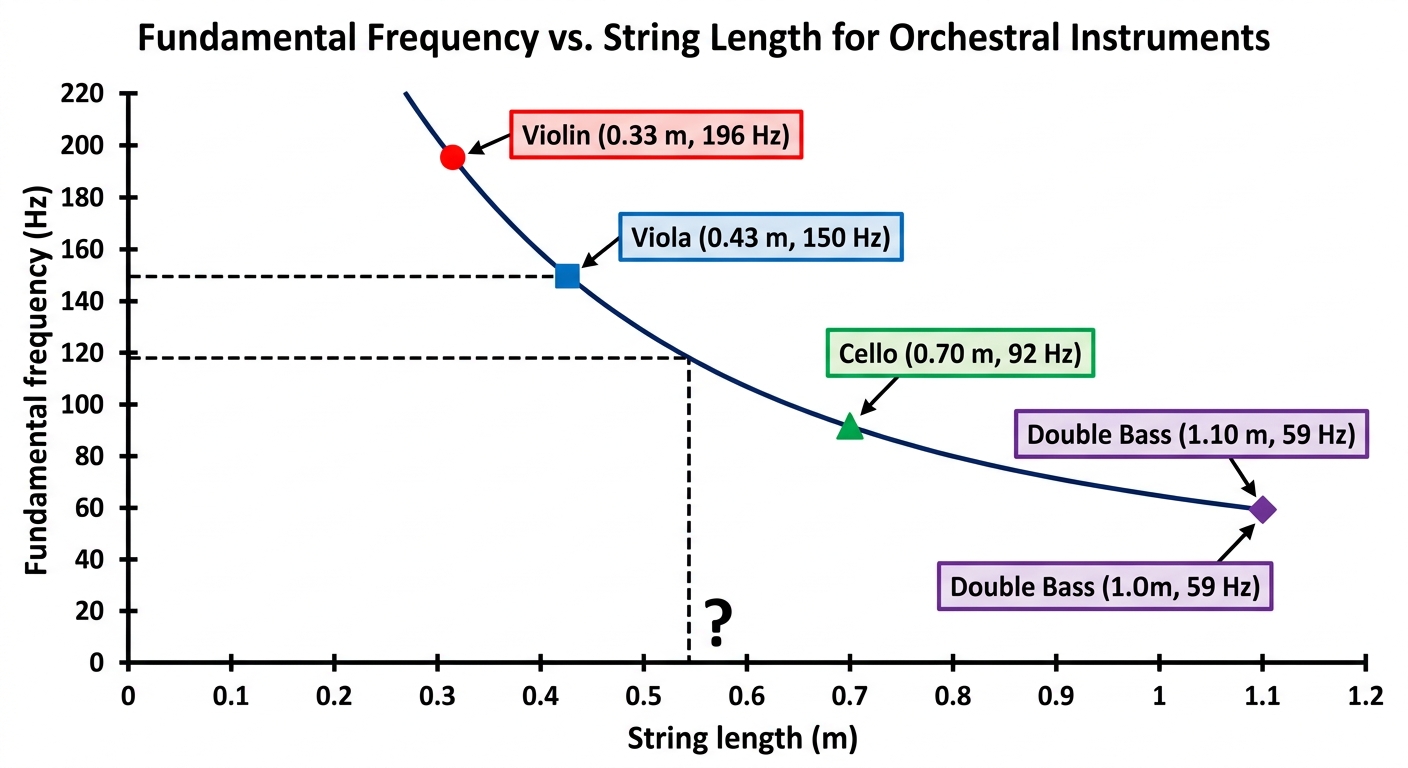
The table below shows string lengths and fundamental frequencies for four orchestral string instruments.
| Instrument | Violin | Viola | Cello | Double Bass |
|---|---|---|---|---|
| String length (m) | 0.33 | 0.43 | 0.70 | 1.10 |
| Fundamental frequency (Hz) | 196 | 150 | 92 | 59 |
a
Deduce the fundamental frequency of a string instrument with a string length of 0.55 m. Support your answer with a calculation using the pattern in the data. [2]
b
Justify the relationship between string length and fundamental frequency using the wave equation and the condition for a standing wave on a string fixed at both ends. [2]
Solutions
4QuestionSpeed of Sound in Solids Liquids and GasesAssessment Practice
5 marks~8 minCriterion C
The kinetic-molecular model predicts the speed of sound in a medium using
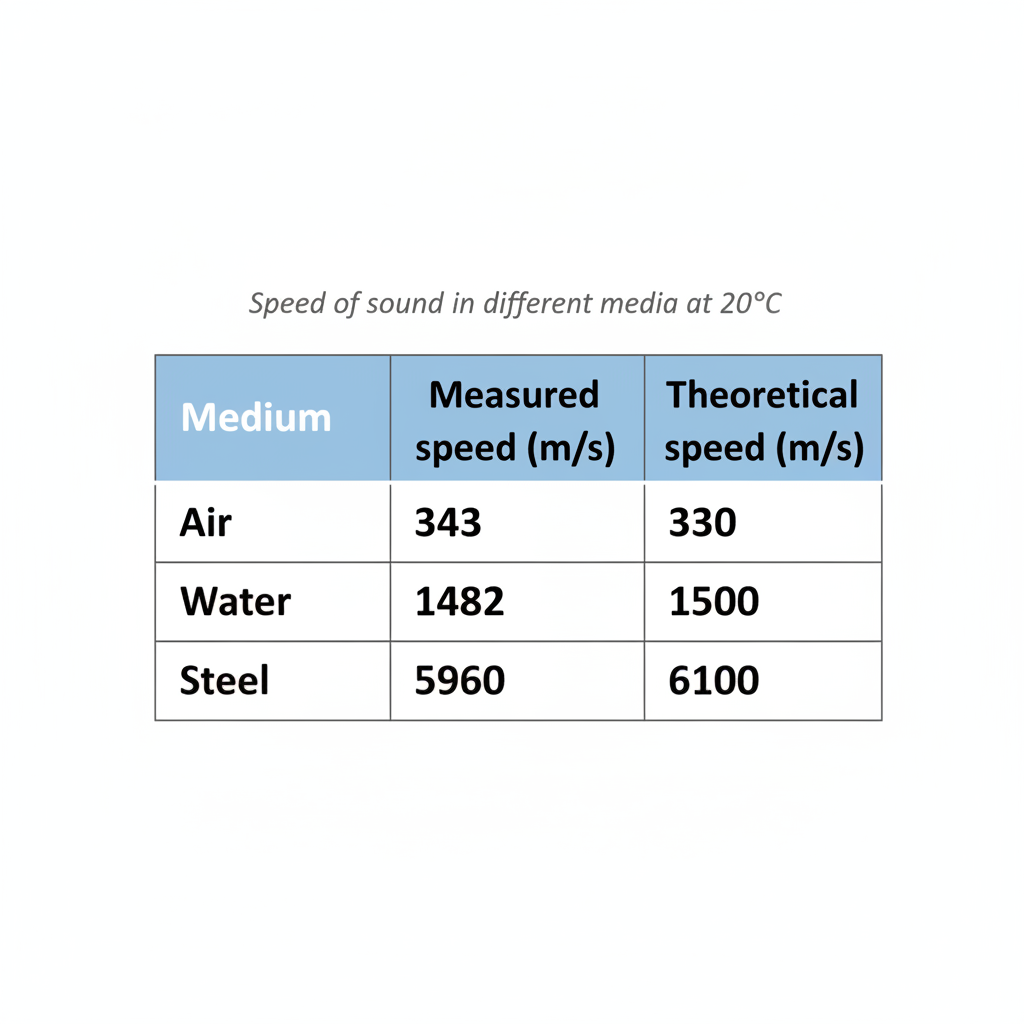
where is the bulk modulus and is the density. Measured and theoretical speeds of sound at 20°C are given below.
Percentage discrepancy is defined as
where is the bulk modulus and is the density. Measured and theoretical speeds of sound at 20°C are given below.
| Medium | Measured speed (m/s) | Theoretical speed (m/s) |
|---|---|---|
| Air | 343 | 330 |
| Water | 1482 | 1500 |
| Steel | 5960 | 6100 |
Percentage discrepancy is defined as
a
Calculate the percentage discrepancy for each medium. [3]
b
Deduce which state of matter the kinetic-molecular model describes most accurately, using your results from (a). [1]
c
Evaluate the overall validity of the kinetic-molecular model for predicting the speed of sound across all three states of matter. [1]
Solutions
5QuestionApplications Sonar Ultrasound and Musical InstrumentsAssessment Practice
6 marks~9 minCriterion D
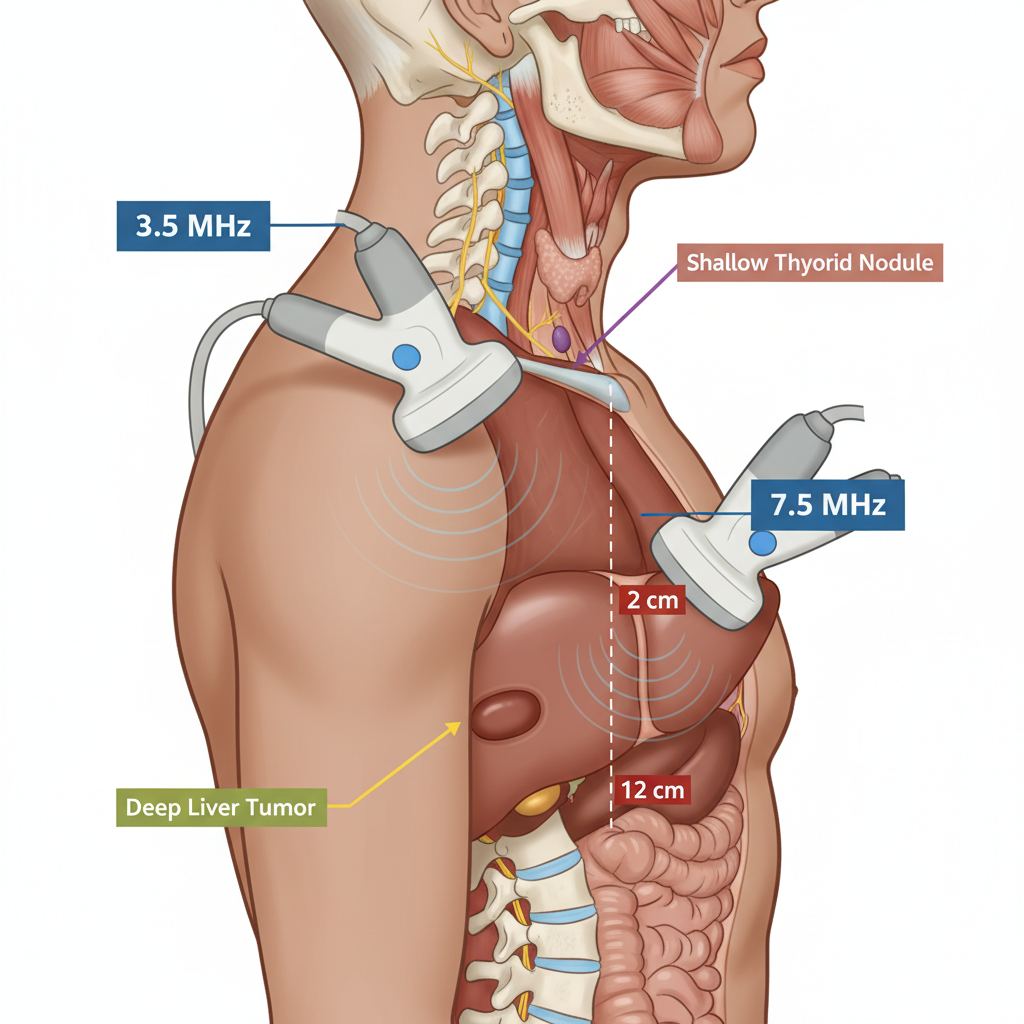
A medical technician uses ultrasound to examine two structures: a liver tumour approximately 12 cm below the skin and a thyroid nodule approximately 2 cm below the skin. Two probes are available: one at 3.5 MHz and one at 7.5 MHz. The speed of ultrasound in human tissue is .
a
Calculate the wavelength of the 3.5 MHz ultrasound in tissue. [1]
b
The 7.5 MHz probe produces a wavelength of m in tissue. Deduce how this shorter wavelength affects the minimum size of structure that can be detected, and state one consequence for imaging deep tissue. [2]
c
Evaluate which probe is more appropriate for each examination. In your response, analyse the trade-off between resolution and penetration depth, and discuss how the assumption of uniform tissue density may limit the accuracy of either probe. [3]
Solutions
That's every free question here — 5 of 88.
+83 more questions, plus Mock Papers & Worksheets, are waiting in Premium.