You're viewing free preview questions — 5 questions previewing here — subscribe to unlock 76 more, plus the Full Question Bank, Mock Papers & Worksheets.Upgrade
Energy Transformations in Real-World Devices — Free MYP4 Physics Practice Questions

1QuestionEnergy Changes in Light Bulbs Motors and ToastersConcept Practice
2 marks~3 minCriterion A
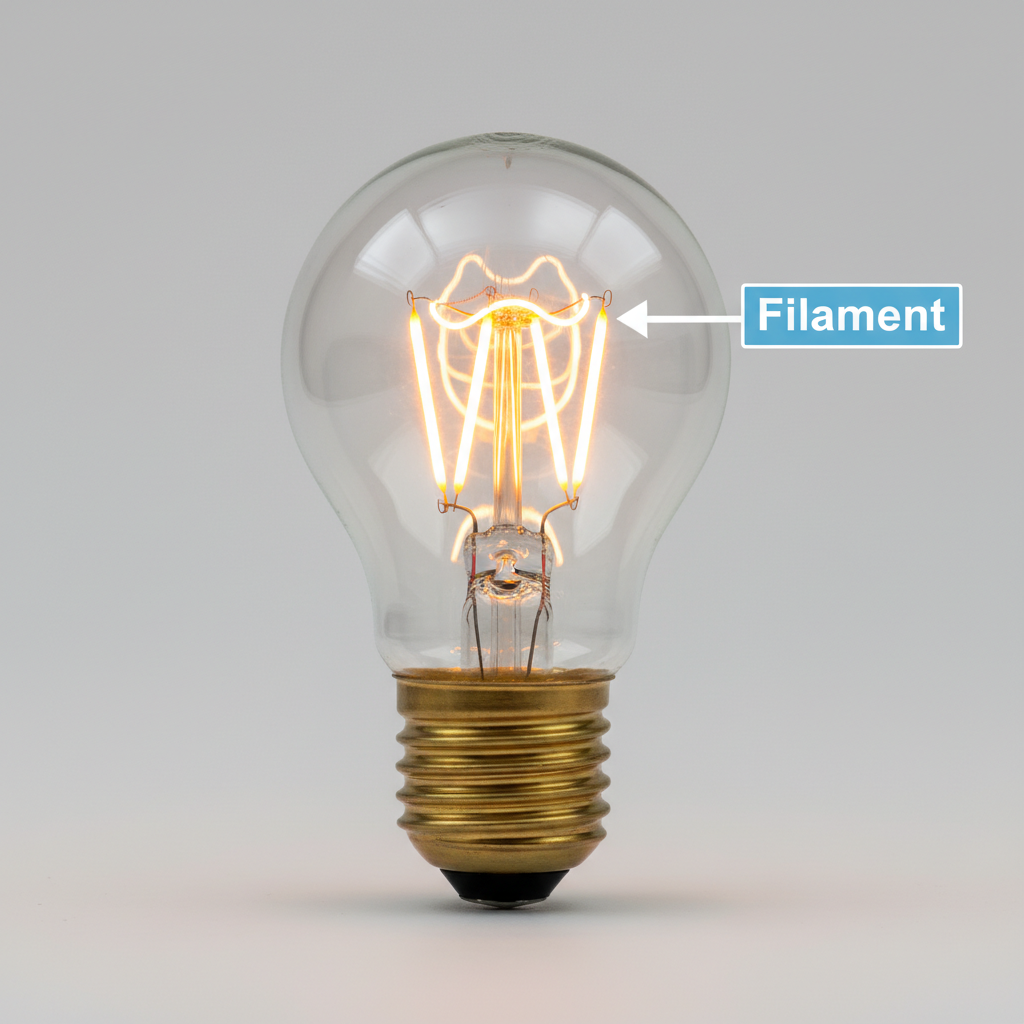
A 60 W incandescent light bulb converts electrical energy in its tungsten filament, reaching temperatures above 2500 °C. Only about 5% of the input energy is converted to visible light; the remainder is lost to the surroundings.
a
Identify the two primary forms of energy emitted by the filament when the bulb is switched on. [1]
b
Explain why the filament of an incandescent bulb is considered inefficient as a lighting device, referring to the energy data given. [1]

Solutions
2QuestionIdentifying Input and Output Energy FormsAssessment Practice
2 marks~3 minCriterion C
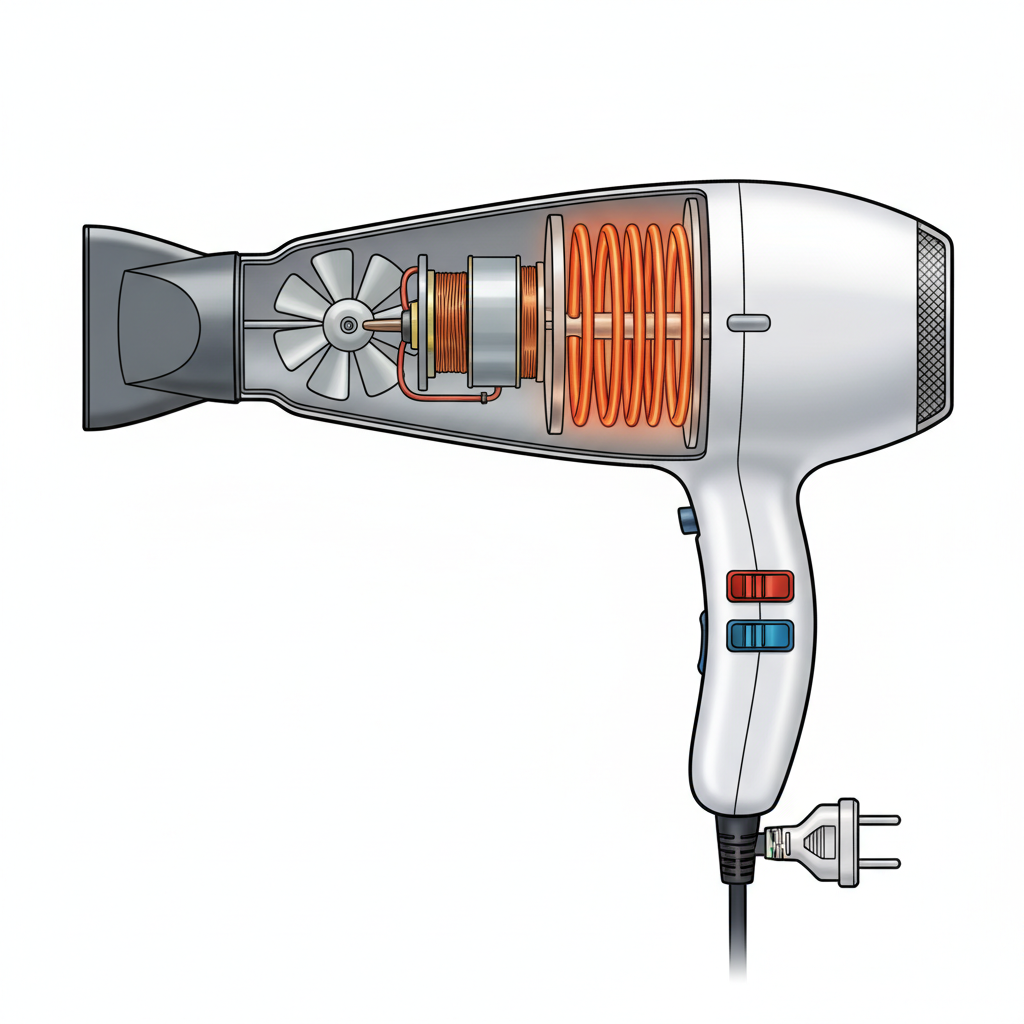
A hairdryer draws of electrical energy per second. Its heating element dissipates as thermal energy; the remaining input powers the fan motor.
a
Calculate the power delivered to the fan motor as kinetic energy of the air. [1]
b
A student claims the hairdryer operates at efficiency because all of input is accounted for as thermal and kinetic energy output. Explain why this claim is incorrect, referring to the second law of thermodynamics. [1]
Solutions
3QuestionIdentifying Input and Output Energy FormsAssessment Practice
3 marks~5 minCriterion C
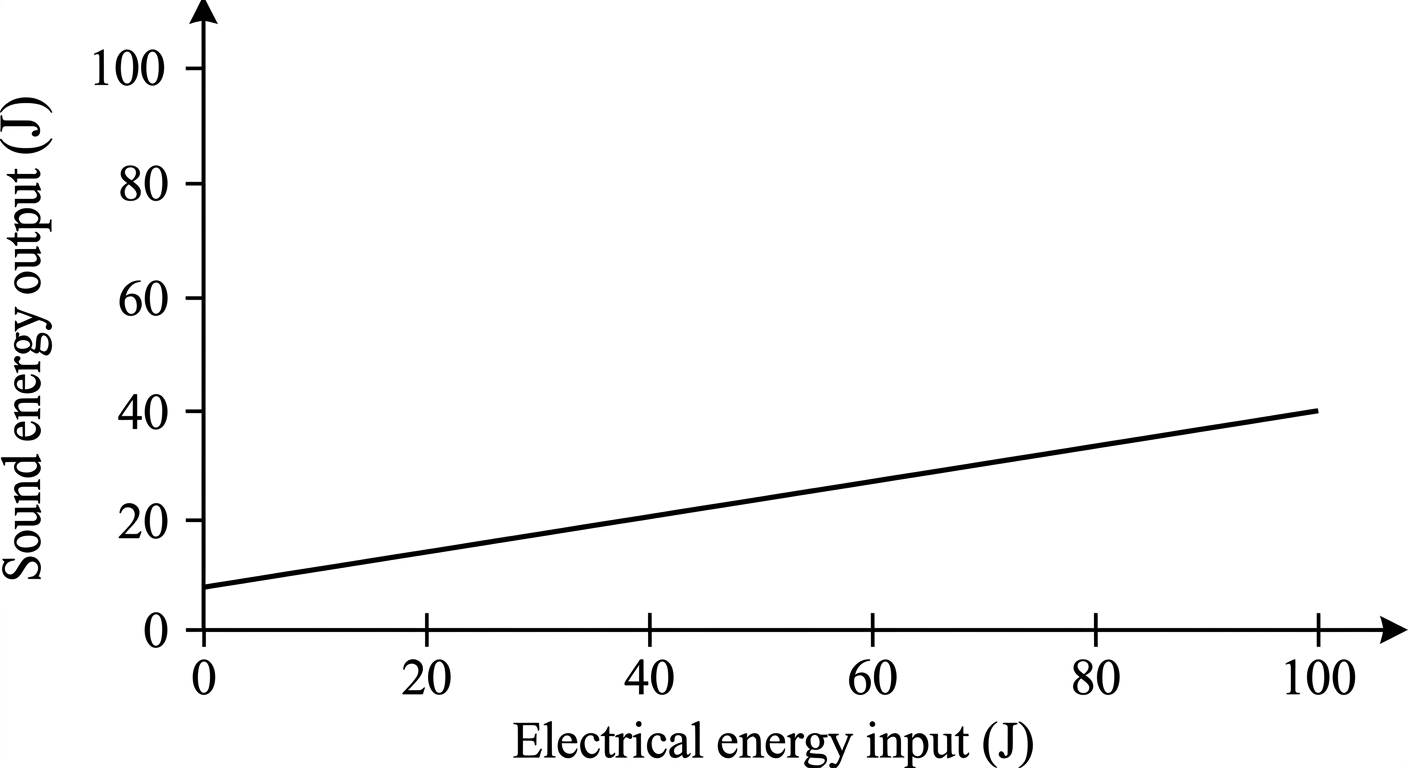
A loudspeaker is supplied with electrical energy. The graph below shows sound energy output (J) plotted against electrical energy input (J) for this loudspeaker. The relationship is linear, and the line of best fit does not pass through the origin — the sound energy output is always less than the electrical energy input.
a
State the primary energy transformation occurring in the loudspeaker. [1]
b
Explain why the sound energy output is always less than the electrical energy input. [1]
c
Analyse how the graph could be used to compare the efficiency of two different loudspeakers, and explain what a steeper gradient would indicate about energy losses. [1]
Solutions
4QuestionEnergy Changes in Light Bulbs Motors and ToastersAssessment Practice
3 marks~5 minCriterion A
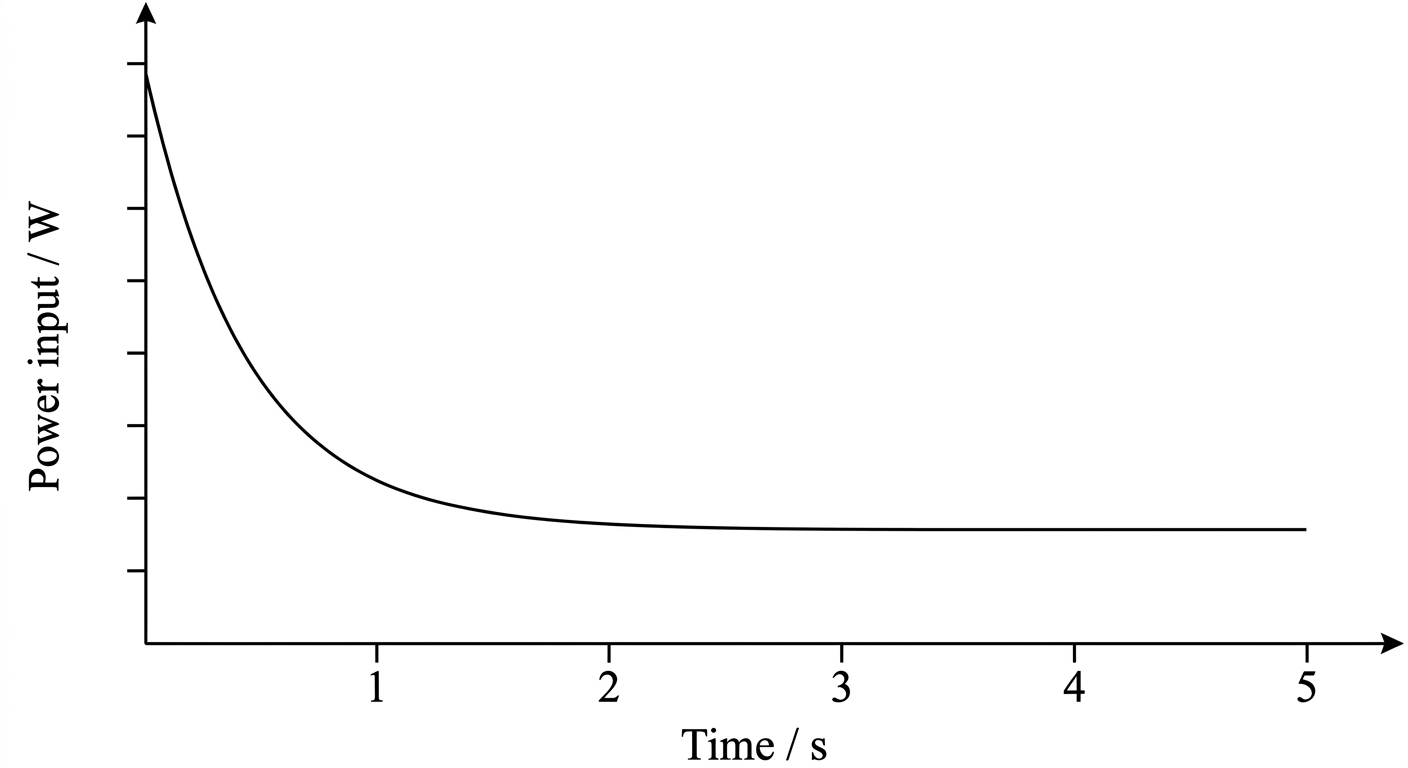
When an incandescent light bulb is switched on, the tungsten filament starts at room temperature. The graph shows electrical power input surging immediately after switch-on, then falling to a constant steady-state value over the first few seconds.
a
Explain why the power input is highest at the moment the bulb is switched on. [1]
b
Explain how the energy transformation occurring in the filament causes the power input to decrease during the first few seconds. [1]
c
Analyse the steady-state condition reached by the filament, identifying the energy transformations involved and explaining why power input no longer changes. [1]
Solutions
5QuestionBattery to Mechanical Energy ConversionAssessment Practice
12 marks~18 minCriterion D
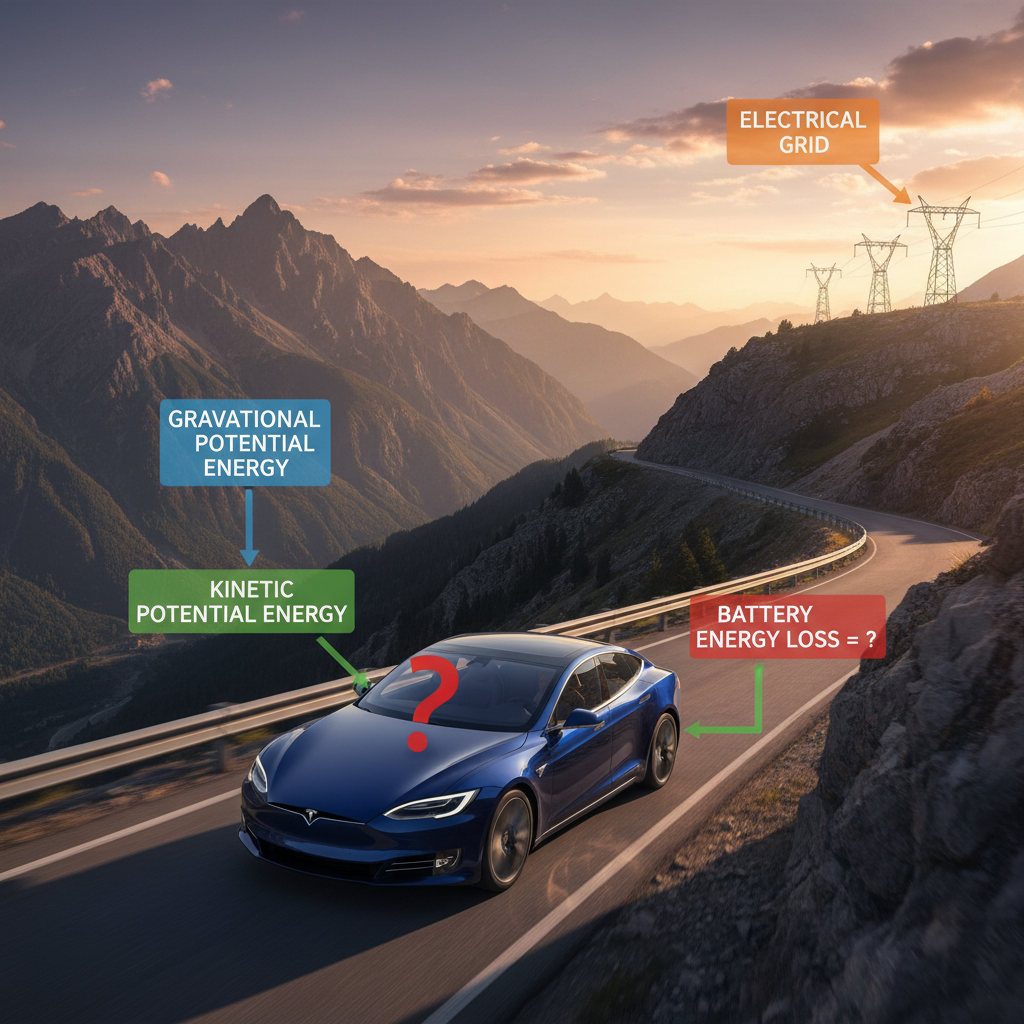
Electric vehicles (EVs) convert chemical energy stored in a battery into kinetic energy during acceleration and gravitational potential energy when climbing hills. This conversion is never perfectly efficient. A typical EV motor operates at around 90% efficiency, yet real-world range is significantly lower than laboratory predictions, particularly in hilly or mountainous terrain and in cold weather conditions.
a
Identify and explain two factors that reduce the efficiency of energy conversion from the battery to the wheels. [2]
b
Explain how regenerative braking recovers energy that would otherwise be lost, and describe where that energy goes. [2]
c
Analyse how two battery limitations combine to reduce the effective range of an EV driven repeatedly over hilly terrain in cold weather. [4]
d
Evaluate whether advances in battery energy density and thermal management are sufficient to make EVs fully practical for drivers in mountainous regions. [4]
Solutions
That's every free question here — 5 of 81.
+76 more questions, plus Mock Papers & Worksheets, are waiting in Premium.