You're viewing free preview questions — 5 questions previewing here — subscribe to unlock 65 more, plus the Full Question Bank, Mock Papers & Worksheets.Upgrade
Heat Transfer Conduction Convection Radiation — Free MYP4 Physics Practice Questions

1QuestionInsulation Techniques and Practical ApplicationsConcept Practice
1 mark~2 minCriterion A
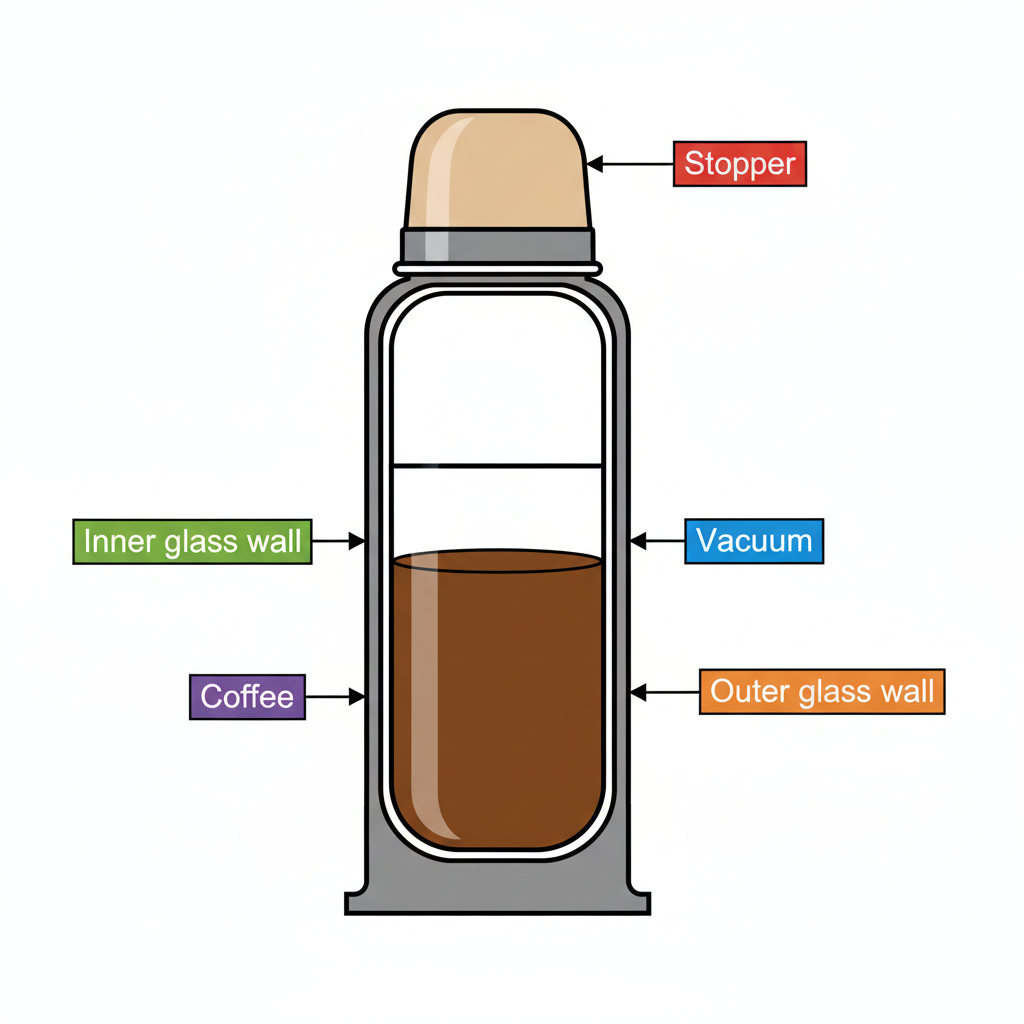
A thermos flask keeps hot coffee warm by using a vacuum between its double glass walls.
Identify the method of heat transfer that cannot occur through the vacuum, and explain why the vacuum prevents it. [1]
Identify the method of heat transfer that cannot occur through the vacuum, and explain why the vacuum prevents it. [1]

Solutions
2QuestionRadiation and Emission of Infrared EnergyAssessment Practice
3 marks~5 minCriterion A
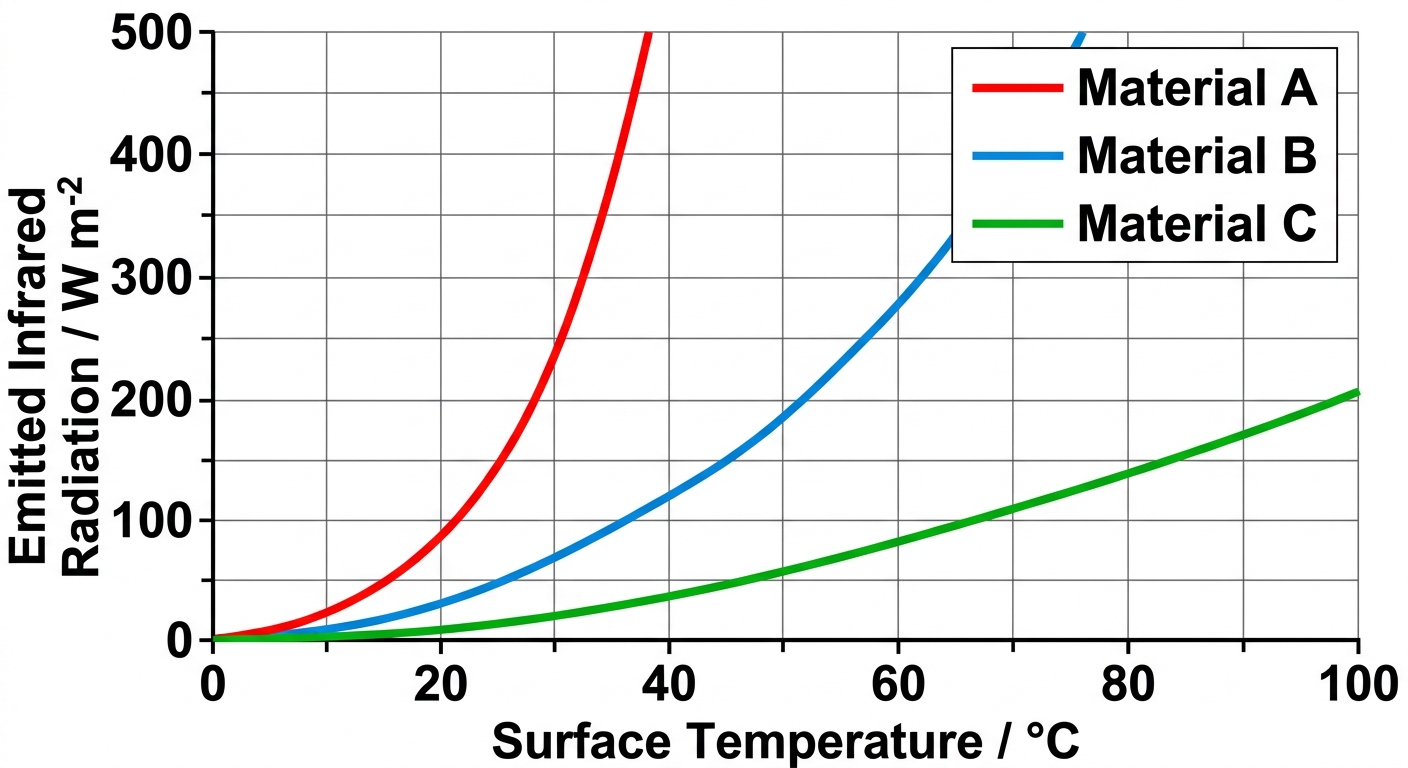
The graph below shows the infrared radiation emitted by three materials (A, B, C) across a temperature range of 0 °C to 100 °C. Material A produces the steepest curve, Material B a moderate curve, and Material C the shallowest curve. All three curves slope upward with increasing temperature.
a
Explain why the infrared radiation emitted by a material increases as its temperature rises. [1]
b
Explain why Materials A, B, and C emit different amounts of infrared radiation at the same temperature. [1]
c
Material A emits significantly more radiation than Material C at every temperature shown. Analyse what this difference reveals about the surfaces of the two materials and how this could be exploited in a real-world thermal engineering application. [1]
Solutions
3QuestionRadiation and Emission of Infrared EnergyConcept Practice
2 marks~3 minCriterion D
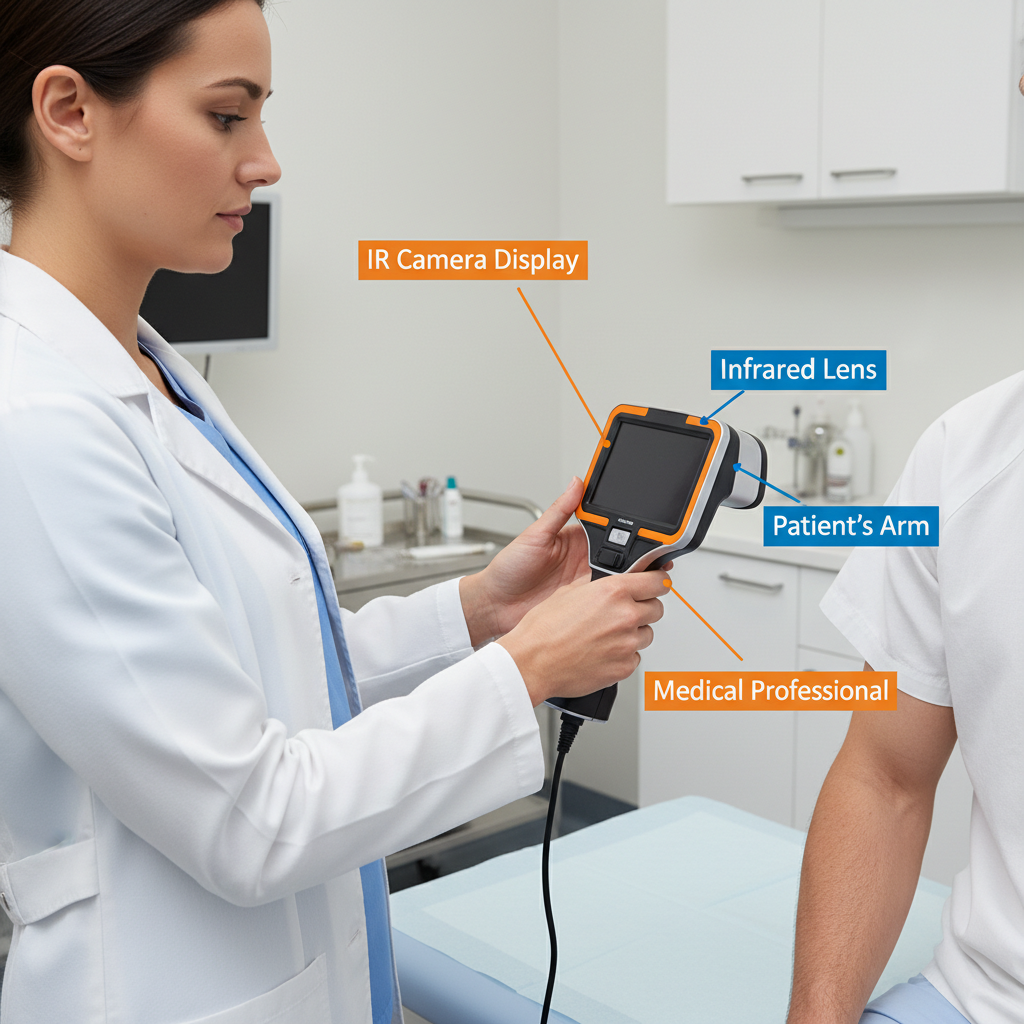
Infrared thermography is used in medical imaging to detect inflammation. A thermographic camera detects infrared radiation emitted from the skin's surface and maps temperature variations across the body. Doctors use these thermal maps to identify regions of elevated temperature, which may indicate underlying inflammation, without any physical contact with the patient.
Explain one benefit of using infrared thermography for the early detection of inflammation. [1]
Explain one limitation of infrared thermography as a diagnostic tool. [1]
Explain one benefit of using infrared thermography for the early detection of inflammation. [1]
Explain one limitation of infrared thermography as a diagnostic tool. [1]
Solutions
4QuestionConvection in Liquids and GasesAssessment Practice
9 marks~14 minCriterion D
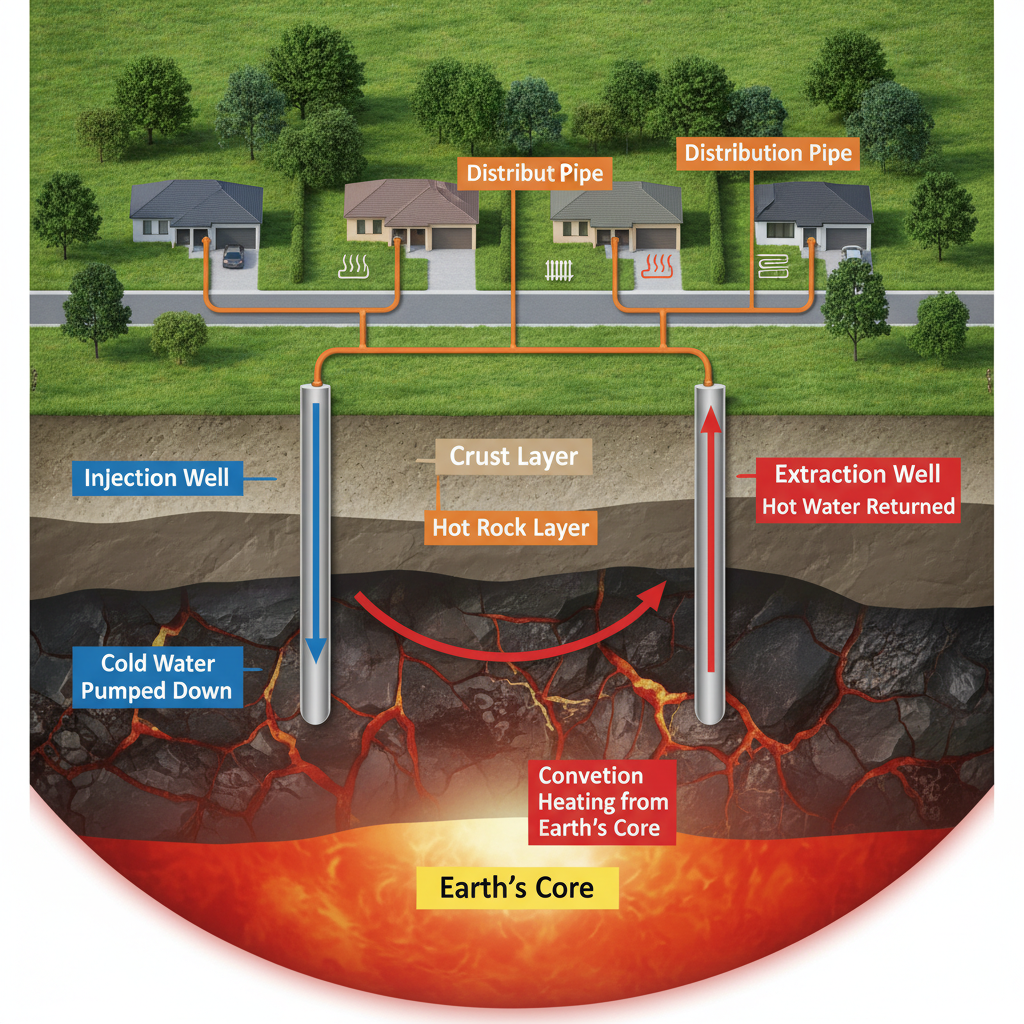
A town is evaluating a geothermal heating system. Cold water is pumped deep underground, heated by convection currents driven by geothermal energy, and returned to the surface through a distribution network. The system would replace the town's existing gas-fired boilers, which currently emit , , and . Multiple deep-well injection sites are required, and some drilling locations overlap with residential land. The geothermal resource is finite if extraction exceeds natural recharge rates.
a
Explain two environmental benefits of replacing gas-fired boilers with this geothermal system. [2]
b
Analyse the environmental risks introduced by the geothermal system, including induced seismicity, land use, and resource sustainability. [4]
c
Evaluate whether the geothermal system should be implemented, considering the ethical issues of community displacement and equitable access to heating, alongside the geographical and economic limitations of the technology. [3]
Solutions
5QuestionComparing All Three Modes of Heat TransferAssessment Practice
13 marks~20 minCriterion C
A student investigates heat transfer from a heat lamp. Three identical thermometers are placed from the lamp, each starting at .
- Thermometer A: wrapped in black paper
- Thermometer B: wrapped in white paper
- Thermometer C: inside a vacuum flask with a transparent front face directed at the lamp
Temperatures are recorded every minute for 10 minutes. The graph below shows temperature against time for all three thermometers.
- Thermometer A: wrapped in black paper
- Thermometer B: wrapped in white paper
- Thermometer C: inside a vacuum flask with a transparent front face directed at the lamp
Temperatures are recorded every minute for 10 minutes. The graph below shows temperature against time for all three thermometers.
a
Describe the temperature trends shown by thermometers A, B, and C over the 10-minute period. In your answer, compare the rates of temperature increase, identify which thermometer reaches the highest final temperature, and use values from the graph to support your description. [3]
b
Explain the differences in temperature change among the three thermometers. In your answer, refer to the absorption of infrared radiation by black and white surfaces, and explain how the vacuum flask affects heat transfer by conduction and convection. [4]
c
Evaluate the reliability of this investigation by identifying one strength of the experimental design, two distinct sources of uncertainty, and one improvement that would increase reliability. [4]
d
The student concludes: "Black surfaces are always the best choice for reducing heat transfer." Discuss whether the evidence from this investigation fully supports this conclusion. [2]
Solutions
That's every free question here — 5 of 70.
+65 more questions, plus Mock Papers & Worksheets, are waiting in Premium.