You're viewing free preview questions — 5 questions previewing here — subscribe to unlock 60 more, plus the Full Question Bank, Mock Papers & Worksheets.Upgrade
Renewable and Non-Renewable Resources — Free MYP4 Physics Practice Questions

1QuestionEnergy Resource Comparison ChartConcept Practice
1 mark~2 minCriterion A
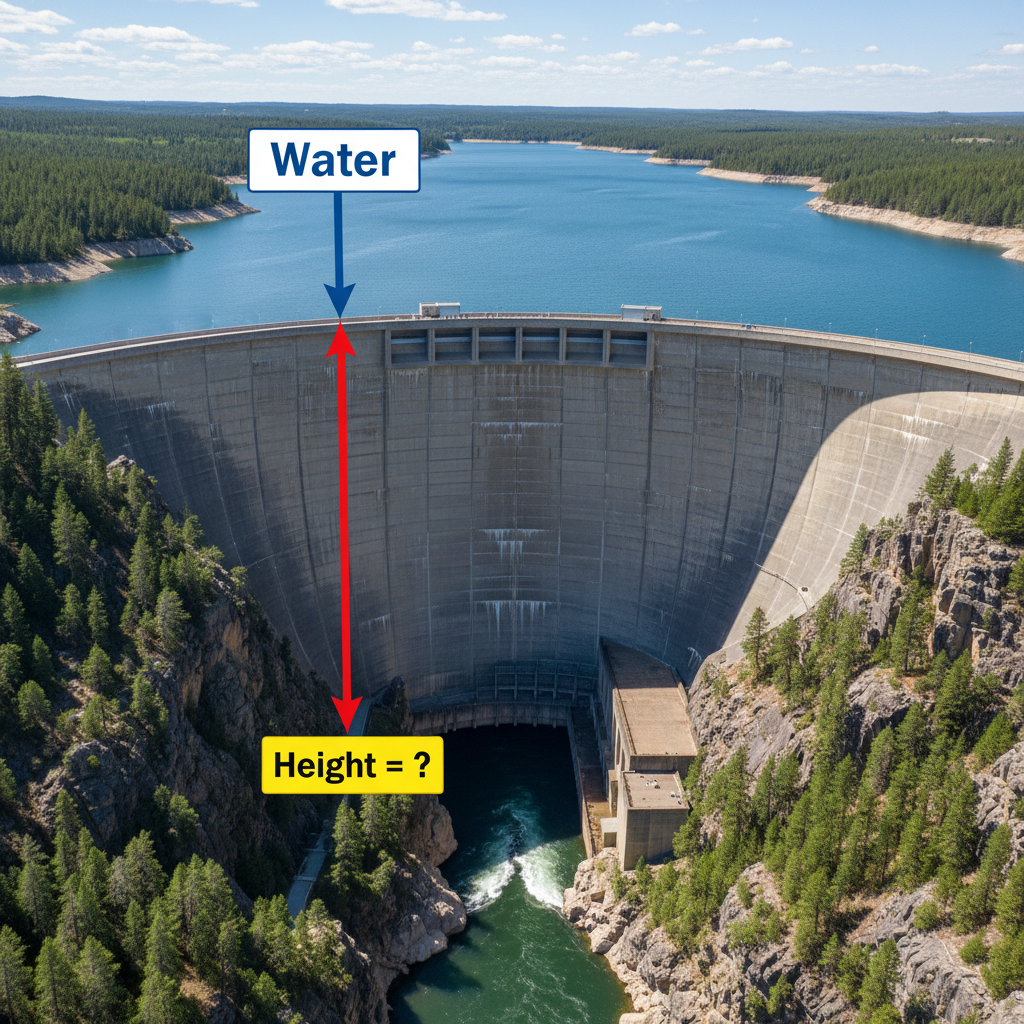
The diagram shows a hydroelectric dam with water stored at height above the turbines. The reservoir holds of water.
Identify the type of energy possessed by the water stored in the reservoir. [1]
Identify the type of energy possessed by the water stored in the reservoir. [1]

Solutions
2QuestionFossil Fuels and Their Environmental ImpactAssessment Practice
3 marks~5 minCriterion C
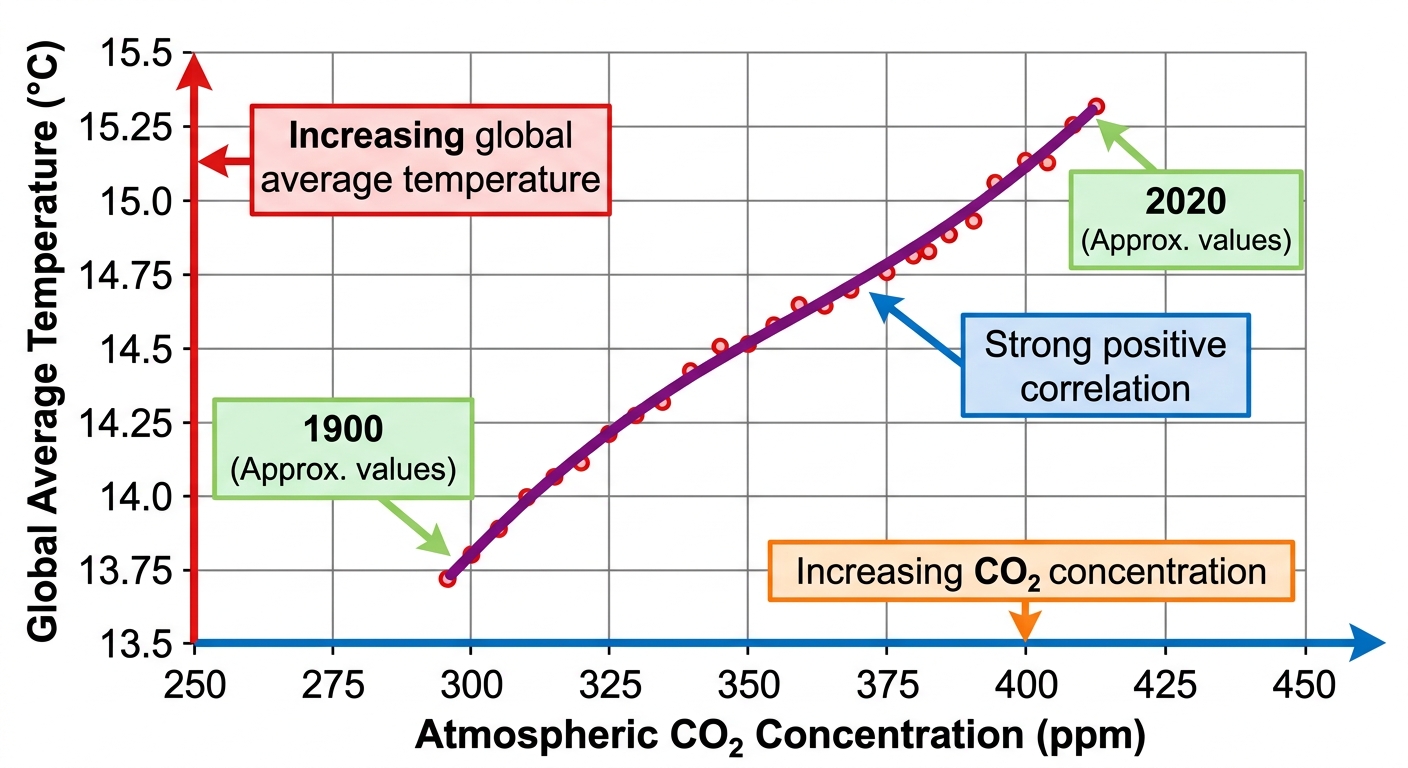
The graph below shows atmospheric concentration (ppm) and global average temperature (°C) from 1900 to 2020. Both quantities rise over this period.
a
Describe the relationship between concentration and global average temperature shown in the graph. [1]
b
Explain how molecules in the atmosphere interact differently with incoming solar radiation and outgoing radiation from Earth's surface. [1]
c
Explain how increasing concentration causes the temperature trend shown in the graph. [1]
Solutions
3QuestionFossil Fuels and Their Environmental ImpactAssessment Practice
3 marks~5 minCriterion A
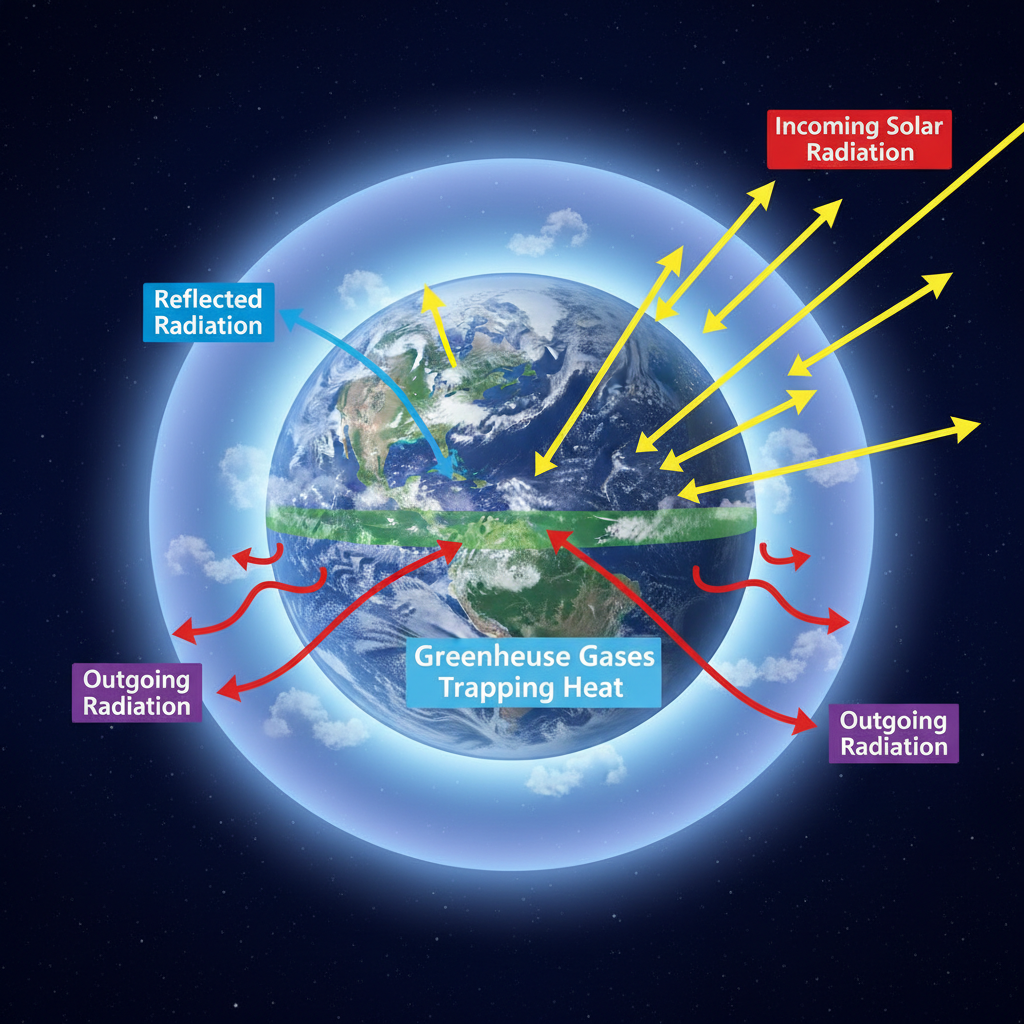
The diagram shows solar radiation entering Earth's atmosphere. Short-wave radiation from the Sun passes through the atmosphere and is absorbed by Earth's surface. The surface re-emits this energy as long-wave infrared radiation. Certain gases in the atmosphere absorb this outgoing infrared radiation and re-emit it in all directions, warming the lower atmosphere.
a
Identify one greenhouse gas responsible for absorbing outgoing infrared radiation. [1]
b
Explain why nitrogen () and oxygen (), which make up most of the atmosphere, do not contribute to the greenhouse effect. [1]
c
Analyse how increasing atmospheric concentrations of greenhouse gases affect the energy balance of Earth's surface. [1]
Solutions
4QuestionGlobal Energy Use and SustainabilityAssessment Practice
12 marks~18 minCriterion D
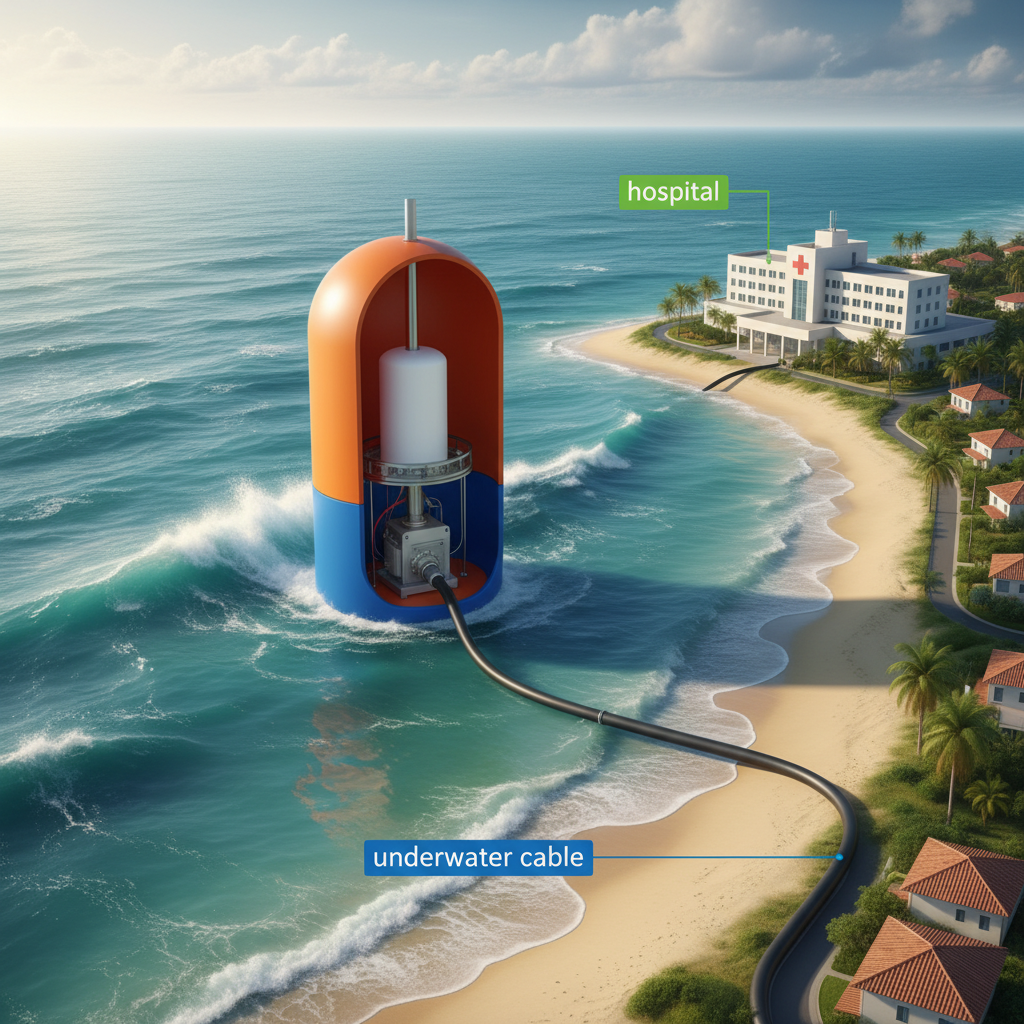
A small coastal community installs a wave energy converter (WEC) to power their local hospital. A floating buoy, connected via a hydraulic piston to a seabed anchor, drives a turbine and generator. The diagram shows the buoy rising and falling with waves, with arrows indicating energy flow: wave motion → hydraulic system → turbine → generator.
a
Explain how the WEC transforms the kinetic energy of ocean waves into electrical energy. [2]
b
Discuss two environmental benefits of using the WEC instead of a diesel generator to power the hospital. [4]
c
The hospital requires a continuous, reliable power supply. Evaluate whether wave energy alone is sufficient to meet this requirement, considering intermittency, environmental impact, and maintenance. [6]
Solutions
5QuestionFossil Fuels and Their Environmental ImpactAssessment Practice
12 marks~18 minCriterion C
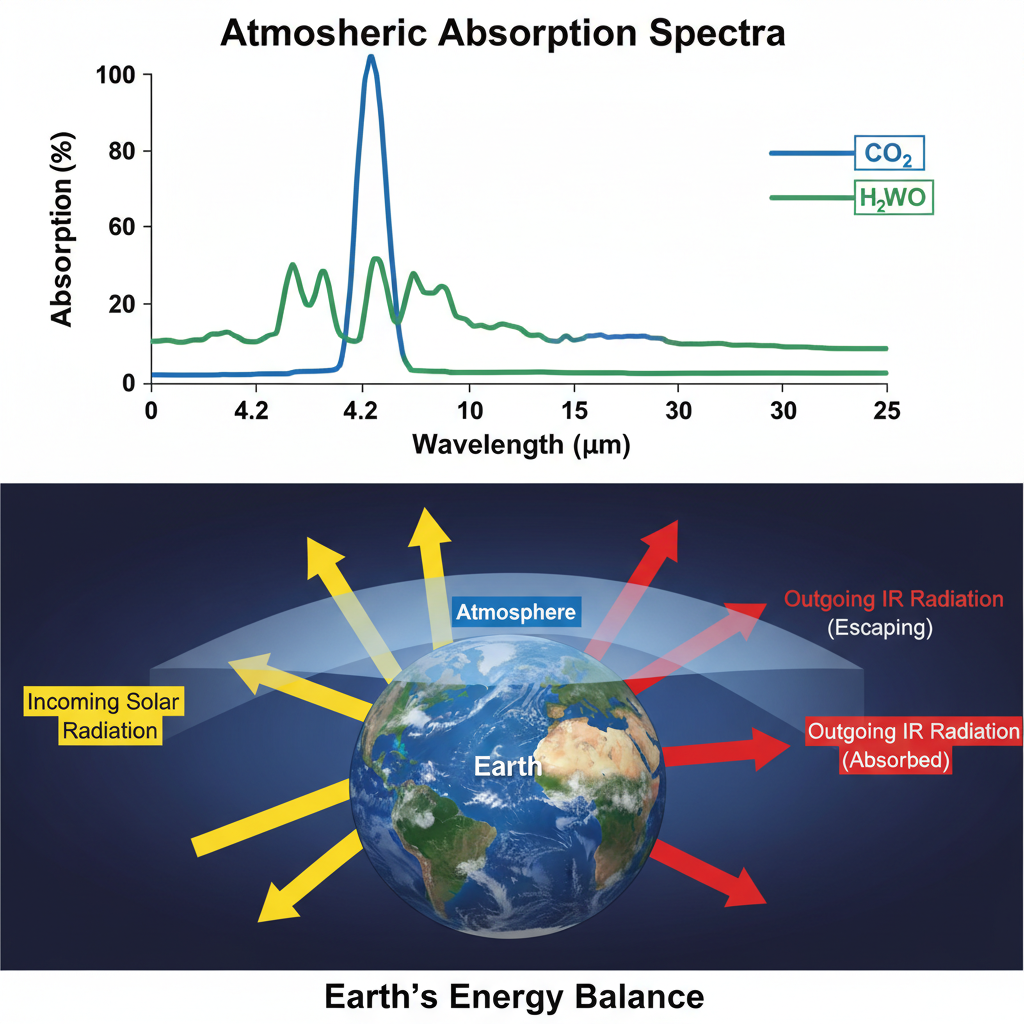
Figure 1 shows the infrared absorption spectra of CO2 and H2O across wavelengths 1–25 μm. Figure 2 shows a simplified energy-balance model: the atmosphere is transparent to incoming solar radiation but absorbs a fraction of outgoing infrared radiation, trapping heat near Earth's surface. Atmospheric CO2 concentration has risen from approximately 280 ppm (pre-industrial) to over 420 ppm today.
a
Identify the wavelength ranges at which CO2 and H2O each show strong infrared absorption, as read from Figure 1. [2]
b
Explain how the rise in CO2 concentration from 280 ppm to 420 ppm would affect the amount of outgoing infrared radiation escaping into space, referring to the absorption bands you identified in (a). [4]
c
Evaluate the ability of the simplified energy-balance model in Figure 2 to predict future global temperature changes accurately, discussing factors the model does not include. [6]
Solutions
That's every free question here — 5 of 65.
+60 more questions, plus Mock Papers & Worksheets, are waiting in Premium.