You're viewing free preview questions — 6 questions previewing here — subscribe to unlock 59 more, plus the Full Question Bank, Mock Papers & Worksheets.Upgrade
Back

Renewable and Non-Renewable Resources — Free MYP4 Physics Practice Questions

Free questions

Open in full, with answers, mark scheme and examiner insights.

Question 1Criterion A + C · Band 1-4 · Easy · 4 marksrevisionprep.com

Types of Renewable Energy Sources

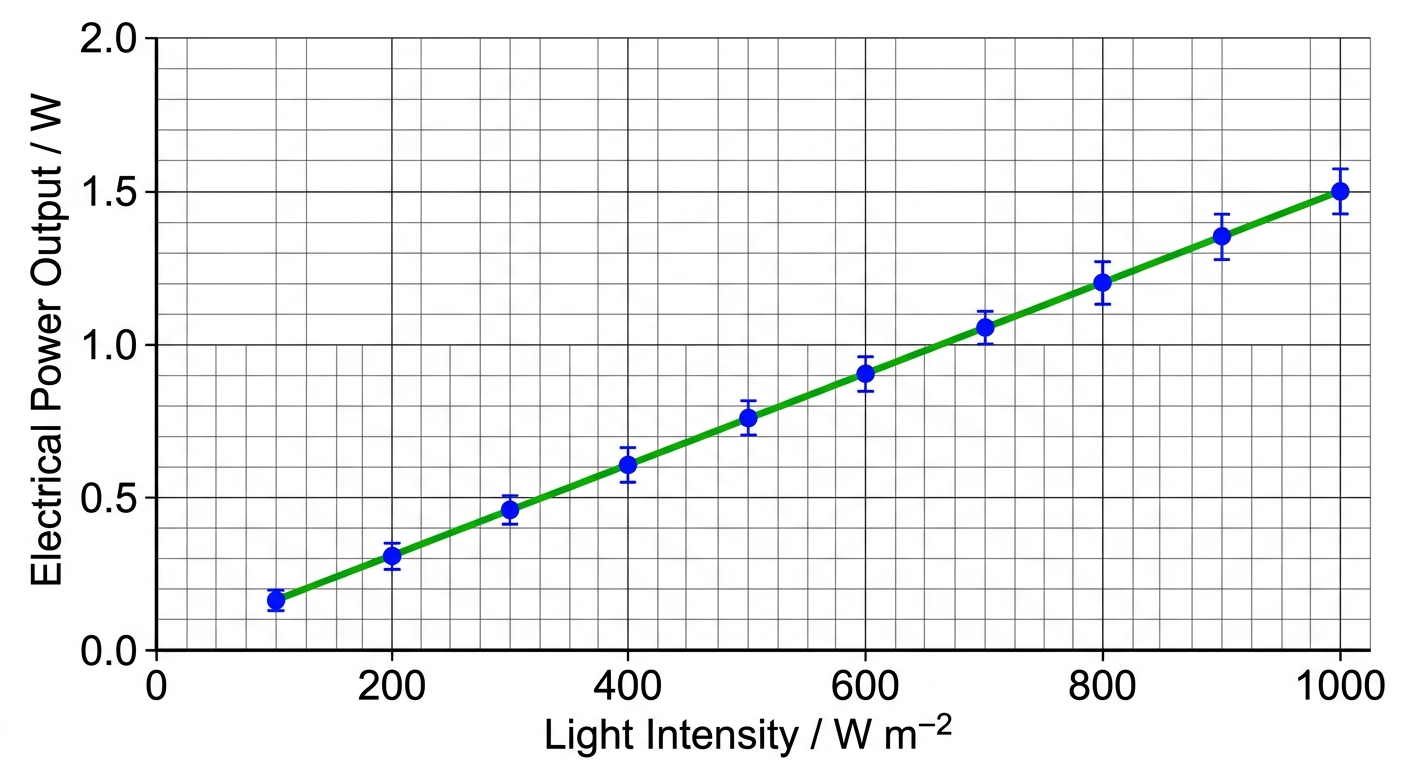
A photovoltaic (PV) cell of area 0.010 m² is tested with a lamp at different light intensities. The graph shows the electrical power output of the cell, with error bars, against light intensity.
Question diagram
(a)
Use the graph to determine the electrical power output when the light intensity is 600 W m⁻². [1]Criterion C (ii) · Level 1-2
(b)
Calculate the efficiency of the cell at a light intensity of 600 W m⁻². [3]Criterion A (ii) · Level 3-4

revisionprep.com

Summary Answer

Not available for this question.

Model Answer

Not available for this question.

Marking Scheme

Not available for this question.

Examiner Insights

Not available for this question.

Question 2Criterion A · Band 1-2 · Easy · 2 marksrevisionprep.com

Advantages and Disadvantages of Energy Resources
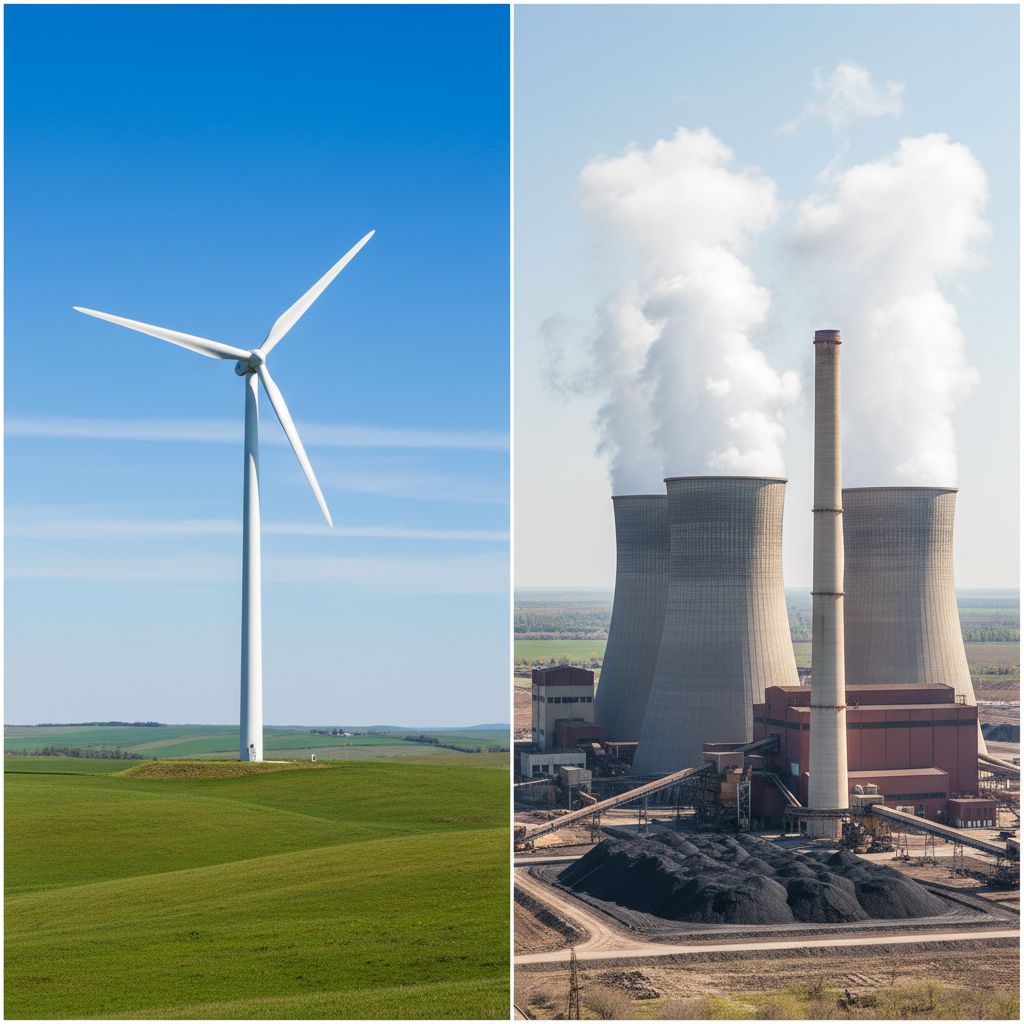
The photographs show a wind turbine and a coal-fired power station. Both generate electricity for the same national grid.
Question diagram
(a)
State which of these two energy resources is renewable. [1]Criterion A (i) · Level 1-2
(b)
State one advantage the coal-fired power station has over the wind turbine. [1]Criterion A (i) · Level 1-2

revisionprep.com

Summary Answer

Not available for this question.

Model Answer

Not available for this question.

Marking Scheme

Not available for this question.

Examiner Insights

Not available for this question.

Question 3Criterion C + B · Band 1-6 · Medium · 6 marksrevisionprep.com

Types of Renewable Energy Sources

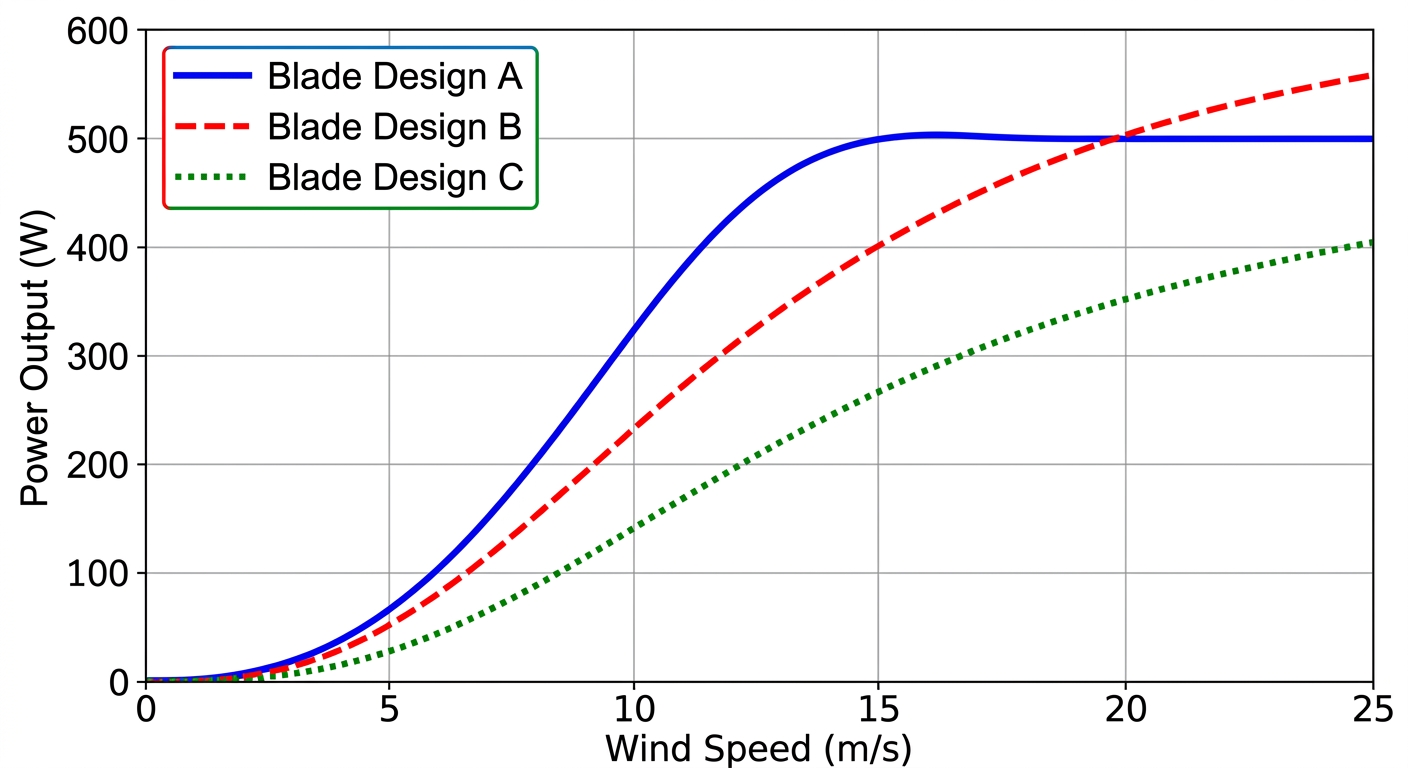
Three wind-turbine blade designs, A, B and C, are tested in a wind tunnel. The graph shows how the power output of each design varies with wind speed.
Question diagram
(a)
State the wind speed at which designs A and B produce the same power output. [1]Criterion C (ii) · Level 1-2
(b)
Describe how the power output of design A varies with wind speed between 0 and 25 m s⁻¹. [2]Criterion C (ii) · Level 3-4
(c)
A proposed site has wind speeds between 8 and 12 m s⁻¹ for most of the year. Justify which blade design should be used there. [2]Criterion C (ii) · Level 5-6
(d)
Suggest one change to the wind-tunnel method so that the results better represent a turbine on a real site. [1]Criterion B (iv) · Level 3-4

revisionprep.com

Summary Answer

Not available for this question.

Model Answer

Not available for this question.

Marking Scheme

Not available for this question.

Examiner Insights

Not available for this question.

Question 4Criterion A · Band 1-6 · Medium · 7 marksrevisionprep.com

Fossil Fuels and Their Environmental Impact
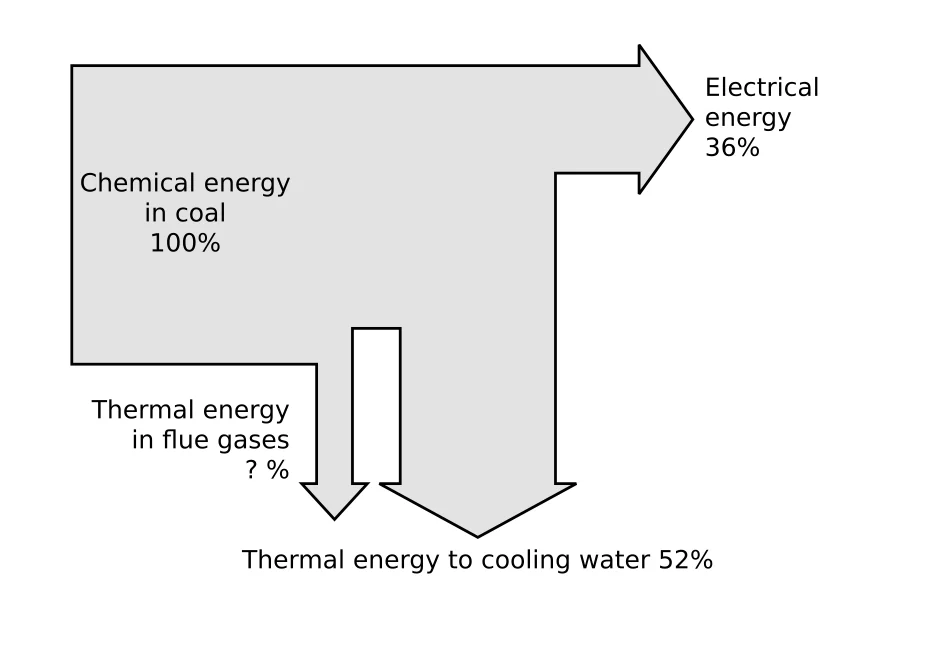
A coal-fired power station burns 2000 kg of coal every hour. The energy content of the coal is 30 MJ kg⁻¹. The Sankey diagram shows what happens to the energy from the coal.
Question diagram
(a)
Determine the percentage of the input energy lost in the flue gases. [1]Criterion A (ii) · Level 1-2
(b)
Calculate the electrical power output of the station. [2]Criterion A (ii) · Level 3-4
(c)
A town needs an average power of 7.5 MW. Calculate the extra mass of coal that must be burned each hour so the station can supply the town. [2]Criterion A (ii) · Level 5-6
(d)
Suggest how the energy lost to the cooling water could be put to use, and explain how this improves the overall efficiency. [2]Criterion A (ii) · Level 5-6

revisionprep.com

Summary Answer

Not available for this question.

Model Answer

Not available for this question.

Marking Scheme

Not available for this question.

Examiner Insights

Not available for this question.

Question 5Criterion B + C · Band 3-8 · Challenge · 10 marksrevisionprep.com

Comparing energy resources using data

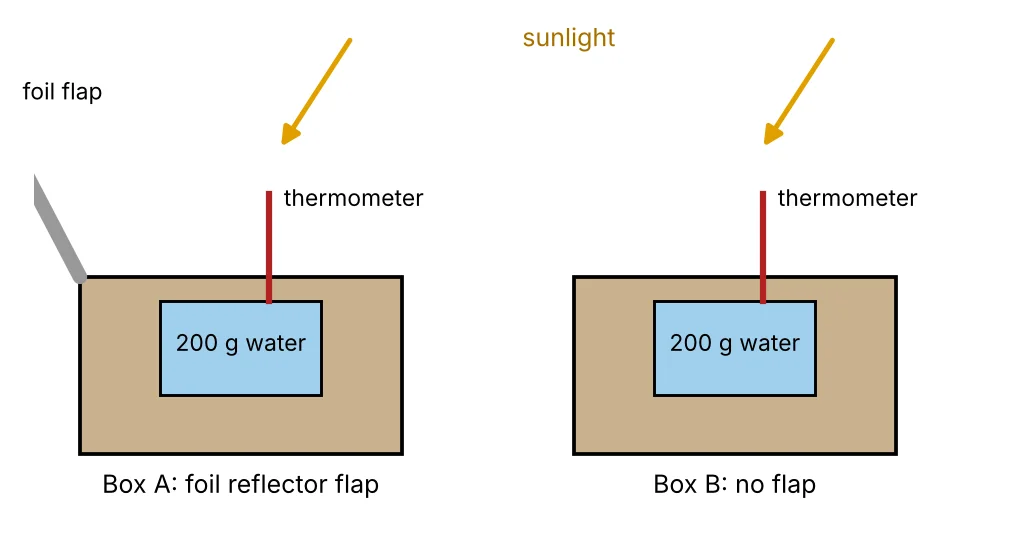
A student thinks that adding a foil reflector flap to a box-type solar cooker makes the water heat up faster. Two identical boxes, A with the flap and B without, each hold a beaker with 200 g of water, as shown in the diagram. A pilot test records the rise in the temperature of the water after 30 minutes. The test is repeated three times on different days.

BoxRepeat 1 (°C)Repeat 2 (°C)Repeat 3 (°C)Box A, with flap414436Box B, no flap333038\begin{array}{|l|c|c|c|}\hline \text{Box} & \text{Repeat 1 (°C)} & \text{Repeat 2 (°C)} & \text{Repeat 3 (°C)} \\ \hline \text{Box A, with flap} & 41 & 44 & 36 \\ \hline \text{Box B, no flap} & 33 & 30 & 38 \\ \hline\end{array}
Question diagram
(a)
Write a testable hypothesis for the student's idea, with a scientific reason. [2]Criterion B (ii) · Level 3-4
(b)
Identify the independent and dependent variables and three controlled variables, and say how each controlled variable is kept constant. [3]Criterion B (iii) · Level 5-6
(c)
State one safety precaution and one measuring instrument with a suitable resolution, giving a reason for each. [2]Criterion B (iv) · Level 5-6
(d)
Evaluate whether the pilot results support the student's hypothesis. Use the means and the ranges, and state one improvement for the main investigation. [3]Criterion C (iii) · Level 7-8

revisionprep.com

Summary Answer

Not available for this question.

Model Answer

Not available for this question.

Marking Scheme

Not available for this question.

Examiner Insights

Not available for this question.

Question 6Criterion D + A · Band 3-8 · Challenge · 8 marksrevisionprep.com

Global Energy Use and Sustainability

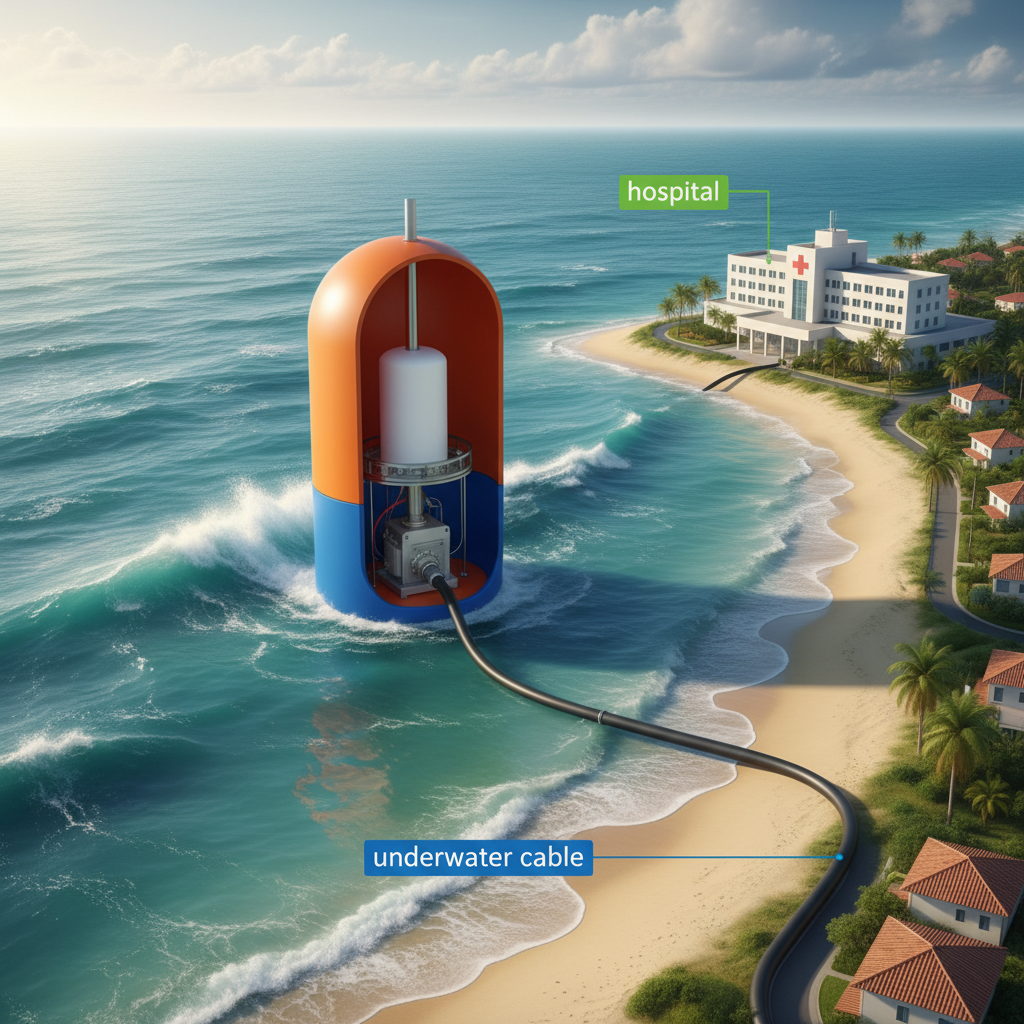
The diagram shows a wave-energy buoy anchored off the coast. As waves lift and drop the buoy, a generator inside it produces electricity, which is sent to a coastal hospital through an underwater cable. At present the hospital uses a diesel generator.
Question diagram
(a)
Describe the energy transfers that take place between the waves and the hospital. [2]Criterion A (i) · Level 3-4
(b)
Explain two environmental benefits of using wave energy instead of the diesel generator. [2]Criterion D (ii) · Level 3-4
(c)
The buoy has a mean power output of 120 kW. The hospital needs 200 kW at all times. Determine the number of buoys needed and evaluate whether wave energy alone can meet the hospital's needs. [4]Criterion D (ii) · Level 7-8

revisionprep.com

Summary Answer

Not available for this question.

Model Answer

Not available for this question.

Marking Scheme

Not available for this question.

Examiner Insights

Not available for this question.

That's every free question here — 6 of 65.

+59 more questions, plus Mock Papers & Worksheets, are waiting in Premium.

Upgrade