You're viewing free preview questions — 6 questions previewing here — subscribe to unlock 65 more, plus the Full Question Bank, Mock Papers & Worksheets.Upgrade
Back

Work, power and efficiency — Free MYP4 Physics Practice Questions

Free questions

Open in full, with answers, mark scheme and examiner insights.

Question 1Criterion A · Band 3-4 · Easy · 5 marksrevisionprep.com

Work done: W = Fd

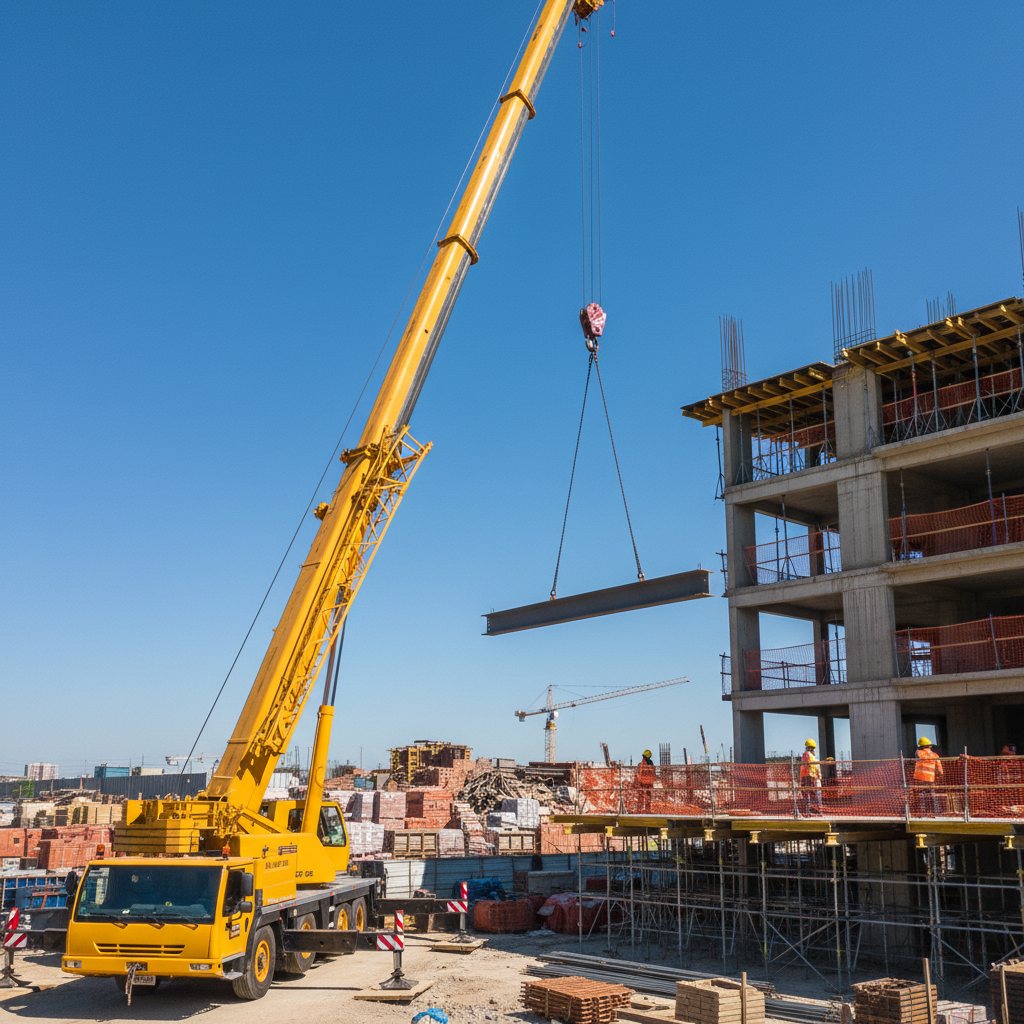
A crane lifts a steel beam of mass 2400 kg vertically through 18 m to the top of a building. The crane's motor does 520 000 J of work during the lift. Take g=10g = 10 N kg−1^{-1}.
Question diagram
(a)
Calculate the gravitational potential energy gained by the beam. [2]Criterion A (ii) · Level 3-4
(b)
Calculate the energy that is not transferred to gravitational potential energy, and suggest two places this energy goes. [2]Criterion A (i) · Level 3-4
(c)
The beam is then held still at the top for 2 minutes. State the work done on the beam by the crane during this time, with a reason. [1]Criterion A (i) · Level 3-4

revisionprep.com

Summary Answer

Not available for this question.

Model Answer

Not available for this question.

Marking Scheme

Not available for this question.

Examiner Insights

Not available for this question.

Question 2Criterion A · Band 1-4 · Easy · 6 marksrevisionprep.com

Improving Efficiency in Machines and Devices
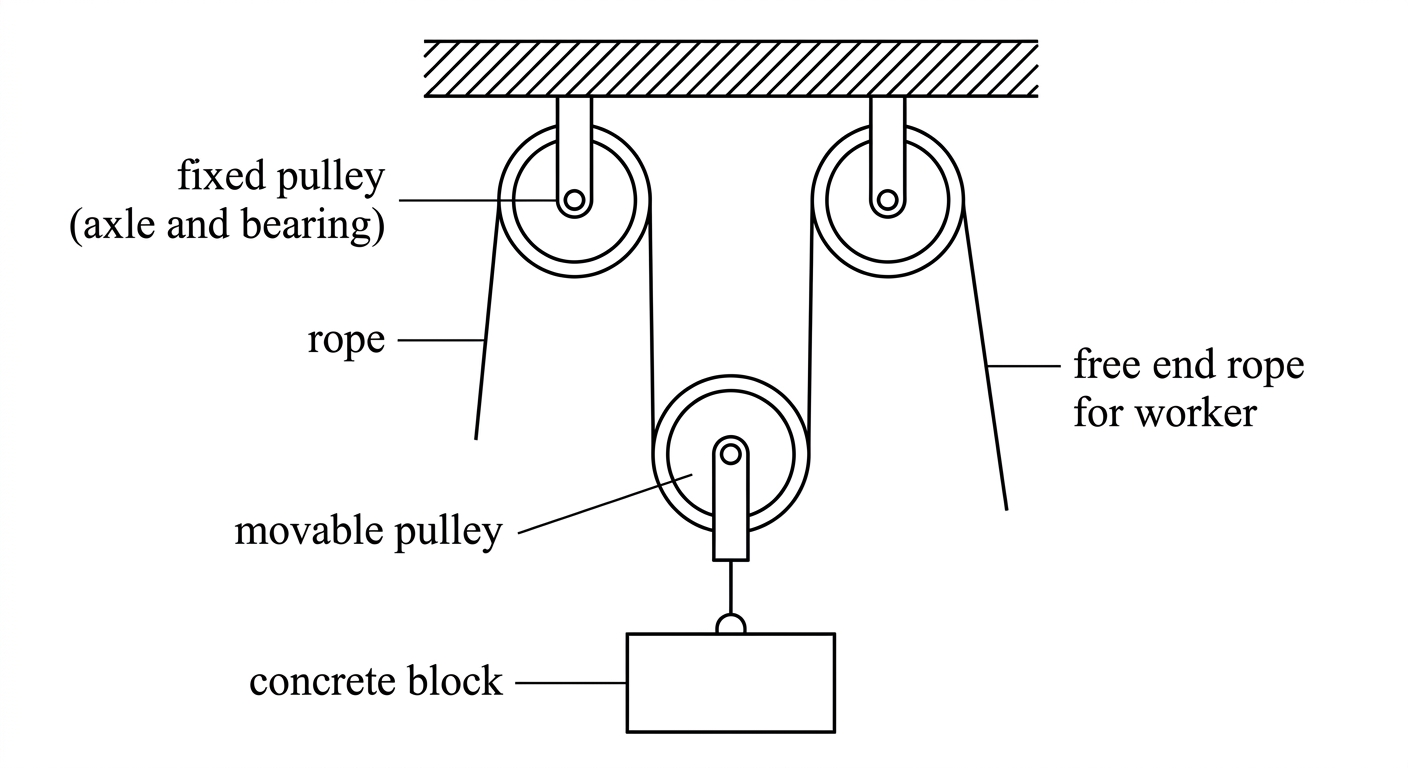
A builder uses the pulley system shown to lift a concrete block of weight 600 N through a height of 0.80 m. To do this she pulls 1.6 m of rope with a force of 350 N.
Question diagram
(a)
Identify one place in the system where friction causes energy to be wasted. [1]Criterion A (i) · Level 1-2
(b)
Calculate the efficiency of the pulley system. [3]Criterion A (ii) · Level 3-4
(c)
Suggest two practical ways to make this pulley system more efficient. Explain how each one helps. [2]Criterion A (i) · Level 3-4

revisionprep.com

Summary Answer

Not available for this question.

Model Answer

Not available for this question.

Marking Scheme

Not available for this question.

Examiner Insights

Not available for this question.

Question 3Criterion D + A · Band 1-6 · Medium · 6 marksrevisionprep.com

Efficiency = useful output ÷ total input × 100%
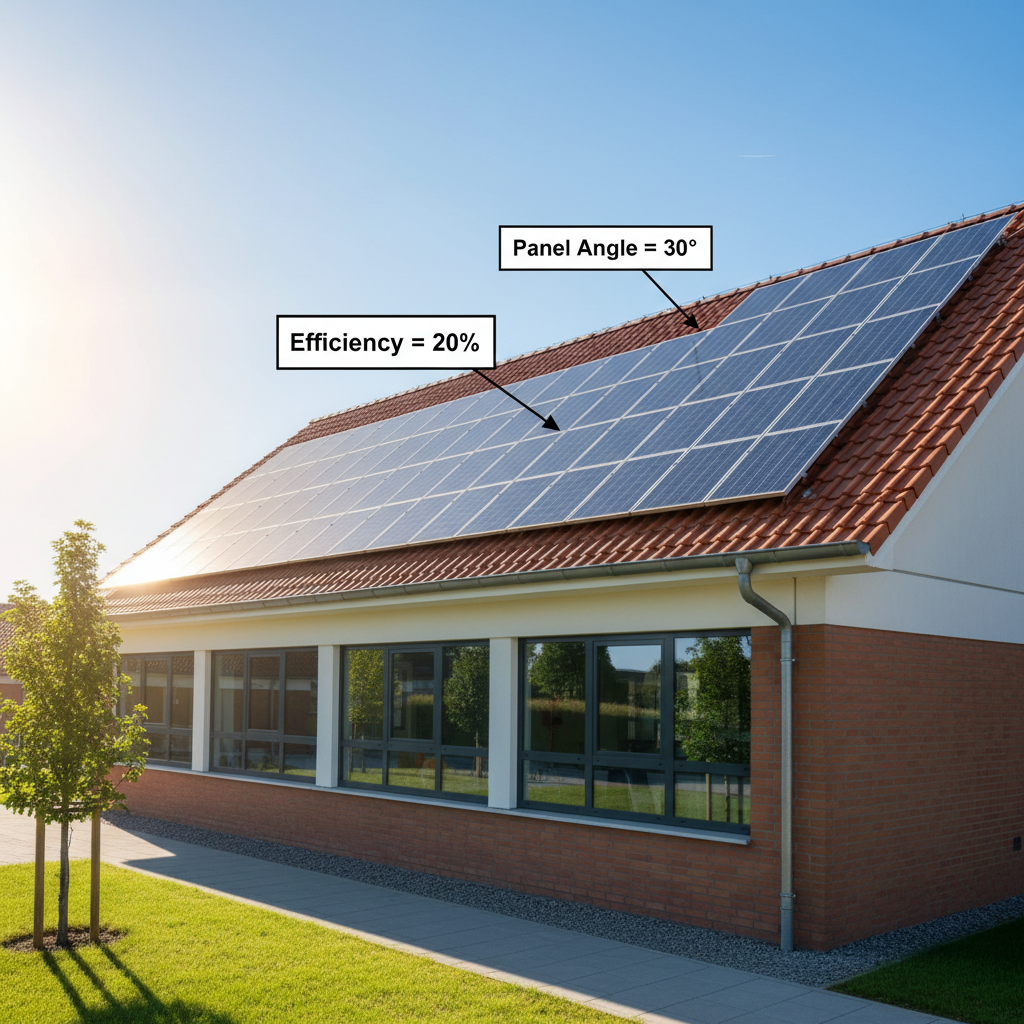
A school installs the rooftop solar panels shown. The panels are 20% efficient. On a typical sunny school day the panels receive 50 kWh of solar energy. The school uses 180 kWh of electrical energy on a school day.
Question diagram
(a)
Calculate the electrical energy output of the panels on that day. [1]Criterion A (ii) · Level 1-2
(b)
Calculate the percentage of the school's daily electricity that the panels supply. [1]Criterion A (ii) · Level 1-2
(c)
Discuss the economic and environmental implications of the installation, and justify whether you think it is worthwhile for the school. [4]Criterion D (ii), D (iii) · Level 5-6

revisionprep.com

Summary Answer

Not available for this question.

Model Answer

Not available for this question.

Marking Scheme

Not available for this question.

Examiner Insights

Not available for this question.

Question 4Criterion C + A · Band 1-6 · Medium · 6 marksrevisionprep.com

Units: joules, watts and conversions

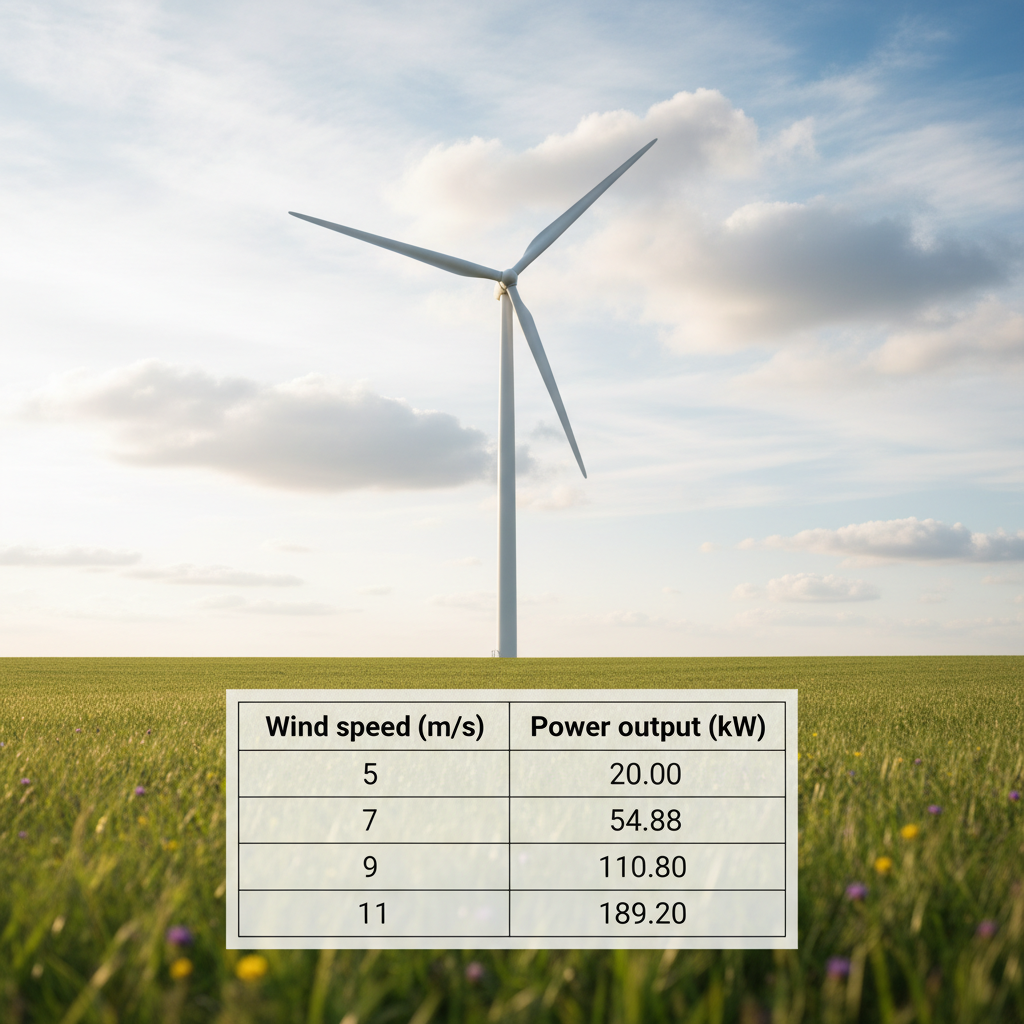
A wind turbine's electrical power output is measured at four wind speeds. At each speed the output stays constant for 10 minutes. The table shows the results.
Question diagram
(a)
Convert 20.00 kW into watts and 10 minutes into seconds. [1]Criterion A (ii) · Level 1-2
(b)
Calculate the energy produced in 10 minutes at each wind speed, in joules, using standard form. [2]Criterion C (i) · Level 3-4
(c)
Describe the relationship between wind speed and power output, and determine whether they are directly proportional. [3]Criterion C (ii) · Level 5-6

revisionprep.com

Summary Answer

Not available for this question.

Model Answer

Not available for this question.

Marking Scheme

Not available for this question.

Examiner Insights

Not available for this question.

Question 5Criterion B + C · Band 5-8 · Challenge · 10 marksrevisionprep.com

Work done: W = Fd

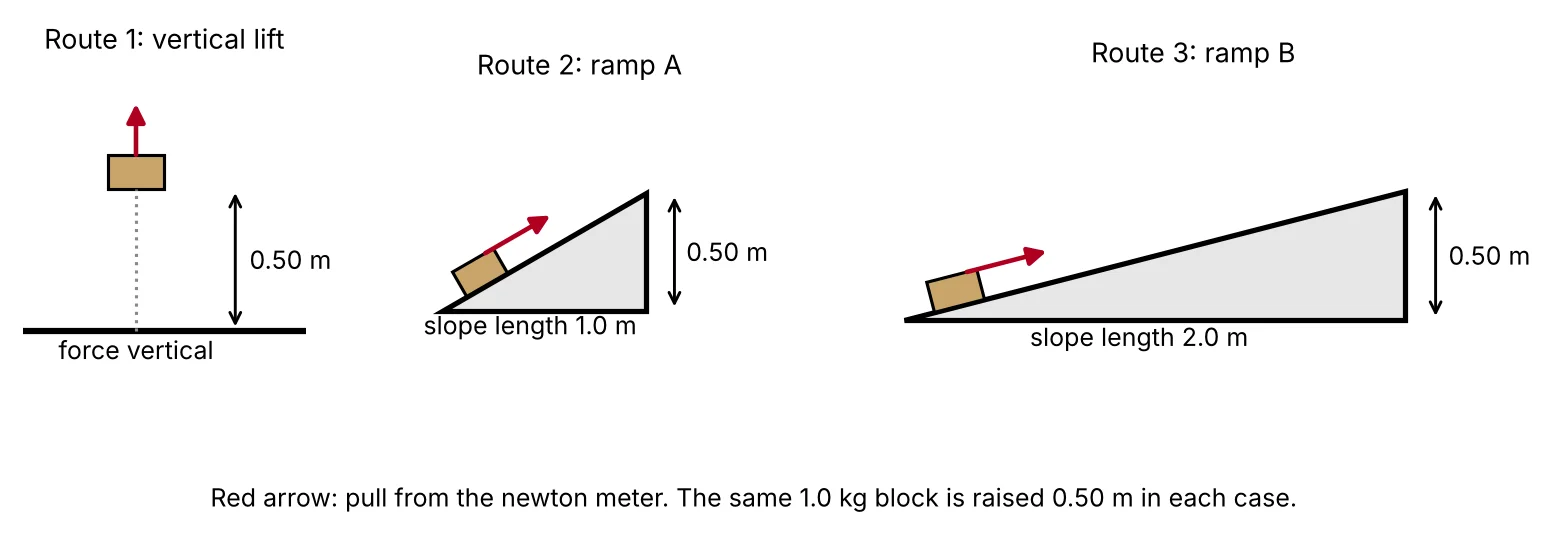
A student asks: does the route taken to raise a load change the work she must do? She raises the same 1.0 kg block through a vertical height of 0.50 m by three routes, as drawn: lifting it straight up, and pulling it up two ramps with the same surface. She pulls the block at a steady speed with a newton meter held parallel to its path. Take g=9.8g = 9.8 N kg−1^{-1}.
Question diagram
(a)
Formulate a testable hypothesis about how the work done by the student depends on the length of the route, and explain it using scientific reasoning. [2]Criterion B (ii) · Level 5-6
(b)
Identify the independent variable and the dependent variable, and explain how two other variables are controlled in this investigation. [3]Criterion B (iii) · Level 5-6
(c)
Explain why the newton meter must be held parallel to the route and the block pulled at a steady speed. [2]Criterion B (iv) · Level 5-6
(d)
The student's results are shown in the table. RouteNewton meter reading (N)Distance moved along the route (m)Vertical lift9.80.50Ramp A6.21.0Ramp B4.02.0\begin{array}{|l|c|c|}\hline \text{Route} & \text{Newton meter reading (N)} & \text{Distance moved along the route (m)} \\ \hline \text{Vertical lift} & 9.8 & 0.50 \\ \hline \text{Ramp A} & 6.2 & 1.0 \\ \hline \text{Ramp B} & 4.0 & 2.0 \\ \hline\end{array} Use the results to calculate the work done on each route. Evaluate your hypothesis, and explain what the results show about the force needed and the work done. [3]Criterion C (ii), C (iii) · Level 7-8

revisionprep.com

Summary Answer

Not available for this question.

Model Answer

Not available for this question.

Marking Scheme

Not available for this question.

Examiner Insights

Not available for this question.

Question 6Criterion A + D · Band 3-8 · Challenge · 9 marksrevisionprep.com

Power: P = W/t

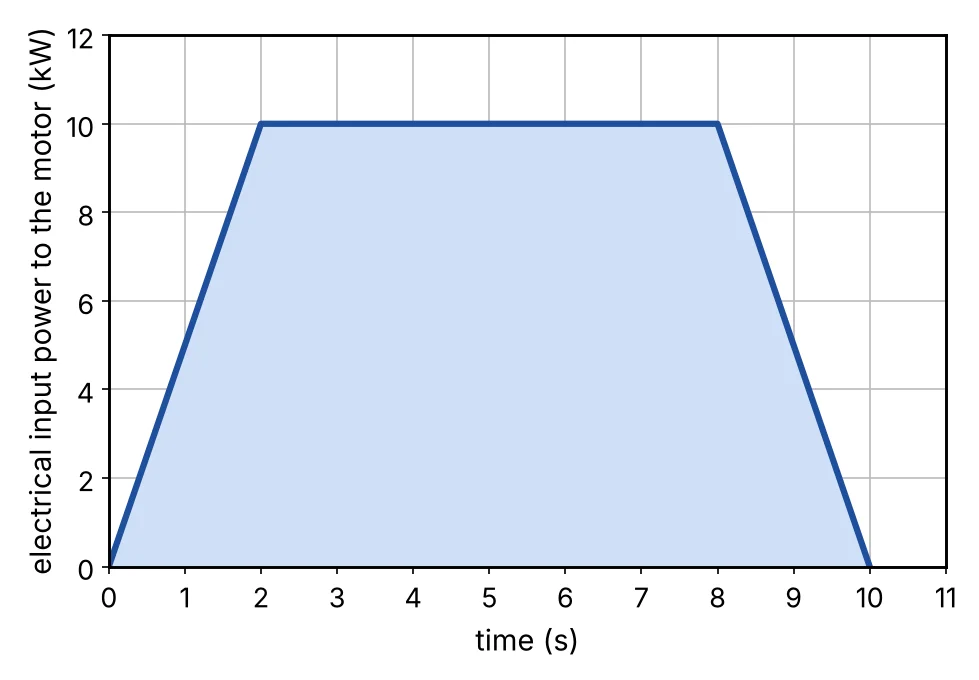
A lift cabin and its passengers have a total mass of 450 kg. The graph shows the electrical input power to the lift motor during one trip in which the cabin rises 12.0 m. Take g=9.8g = 9.8 N kg−1^{-1}.
Question diagram
(a)
Use the graph to determine the electrical energy supplied to the motor during the trip. [2]Criterion A (ii) · Level 3-4
(b)
Calculate the efficiency of the motor for the trip. [2]Criterion A (ii) · Level 5-6
(c)
Between 2 s and 8 s the efficiency is the same as in (b). Calculate the useful power in this time and the height the cabin rises each second. [2]Criterion A (ii) · Level 5-6
(d)
The manager says that fitting a motor with twice the power rating, to halve the time of a trip, would double the electricity bill for each trip. Evaluate this claim and give one other factor the manager should consider. [3]Criterion D (ii) · Level 7-8

revisionprep.com

Summary Answer

Not available for this question.

Model Answer

Not available for this question.

Marking Scheme

Not available for this question.

Examiner Insights

Not available for this question.

That's every free question here — 6 of 71.

+65 more questions, plus Mock Papers & Worksheets, are waiting in Premium.

Upgrade