You're viewing free preview questions — 5 questions previewing here — subscribe to unlock 79 more, plus the Full Question Bank, Mock Papers & Worksheets.Upgrade
Biodiversity and Conservation — Free MYP5 Biology Practice Questions

1QuestionImportance of Biodiversity in EcosystemsConcept Practice
2 marks~3 minCriterion D
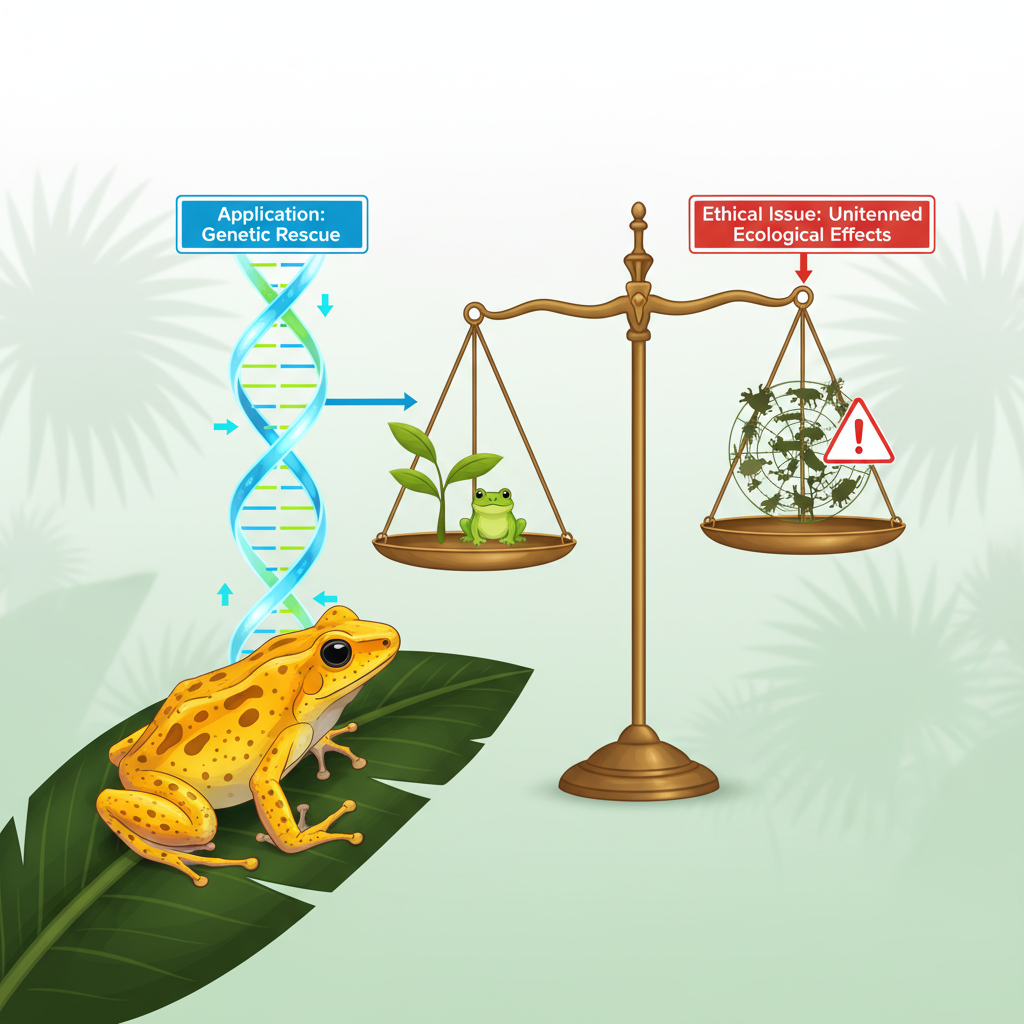
Chytridiomycosis, caused by the fungus Batrachochytrium dendrobatidis, has driven multiple frog species to extinction. Conservation biologists have proposed inserting disease-resistance genes directly into the genomes of critically endangered frog populations to improve their survival prospects in the wild.
a
Identify and outline this application of genetic modification in conservation biology. [1]
b
Describe one ethical issue that arises specifically from releasing these genetically modified frogs into wild ecosystems. [1]

Solutions
2QuestionEndangered Species and ExtinctionAssessment Practice
3 marks~5 minCriterion C
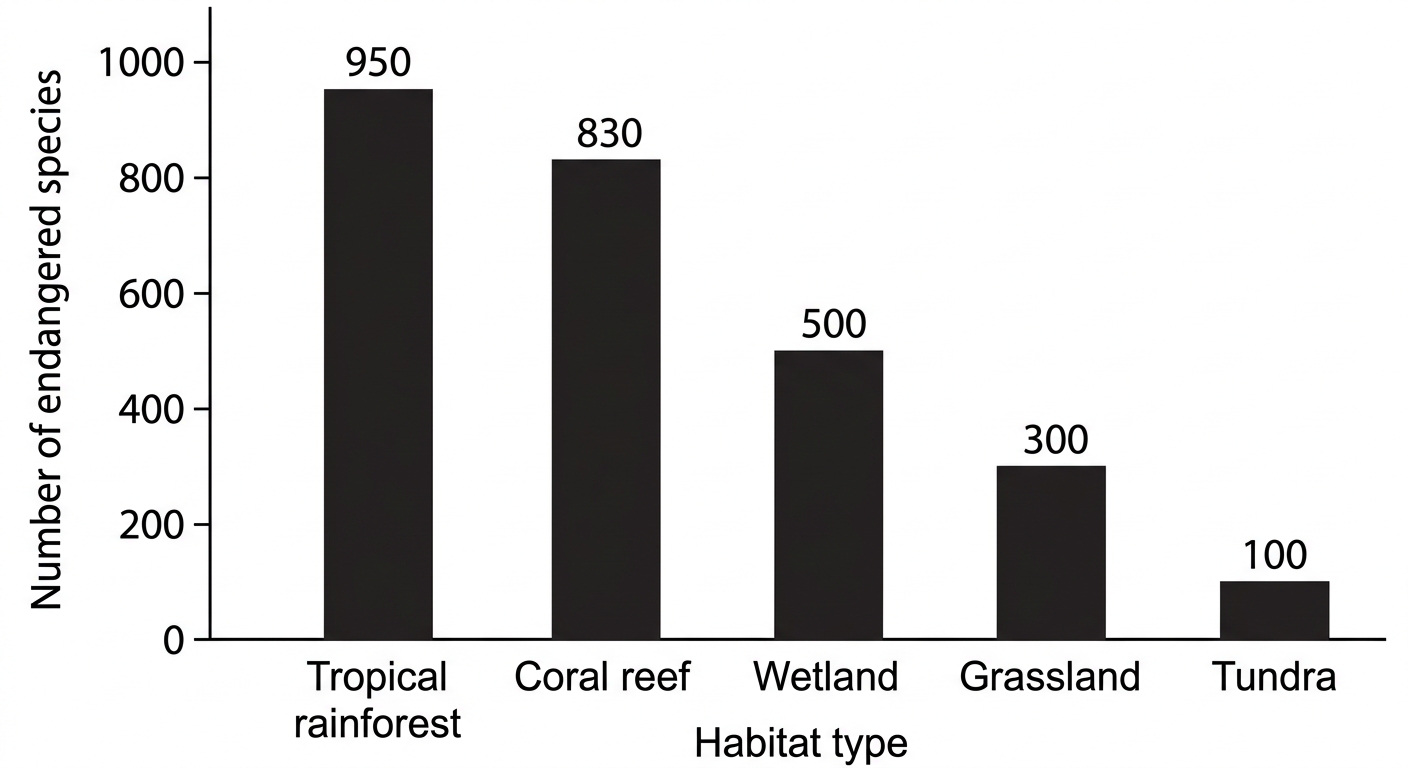
The bar graph below shows the number of endangered species recorded across five habitat types.
Habitat — Endangered species (approximate)
Tropical rainforest: 950
Coral reef: 830
Wetland: 500
Grassland: 300
Tundra: 100
Habitat — Endangered species (approximate)
Tropical rainforest: 950
Coral reef: 830
Wetland: 500
Grassland: 300
Tundra: 100
a
Describe the trend shown in the graph. [1]
b
Identify the habitat with the highest number of endangered species and explain why this habitat supports such a disproportionately large number of threatened species. [1]
c
A conservation biologist argues that protecting a single large tropical rainforest reserve will conserve more species than protecting several smaller reserves of equivalent total area across other habitats. Evaluate this argument using evidence from the graph and your biological knowledge. [1]
Solutions
3QuestionConservation Strategies and Protected AreasAssessment Practice
3 marks~5 minCriterion A
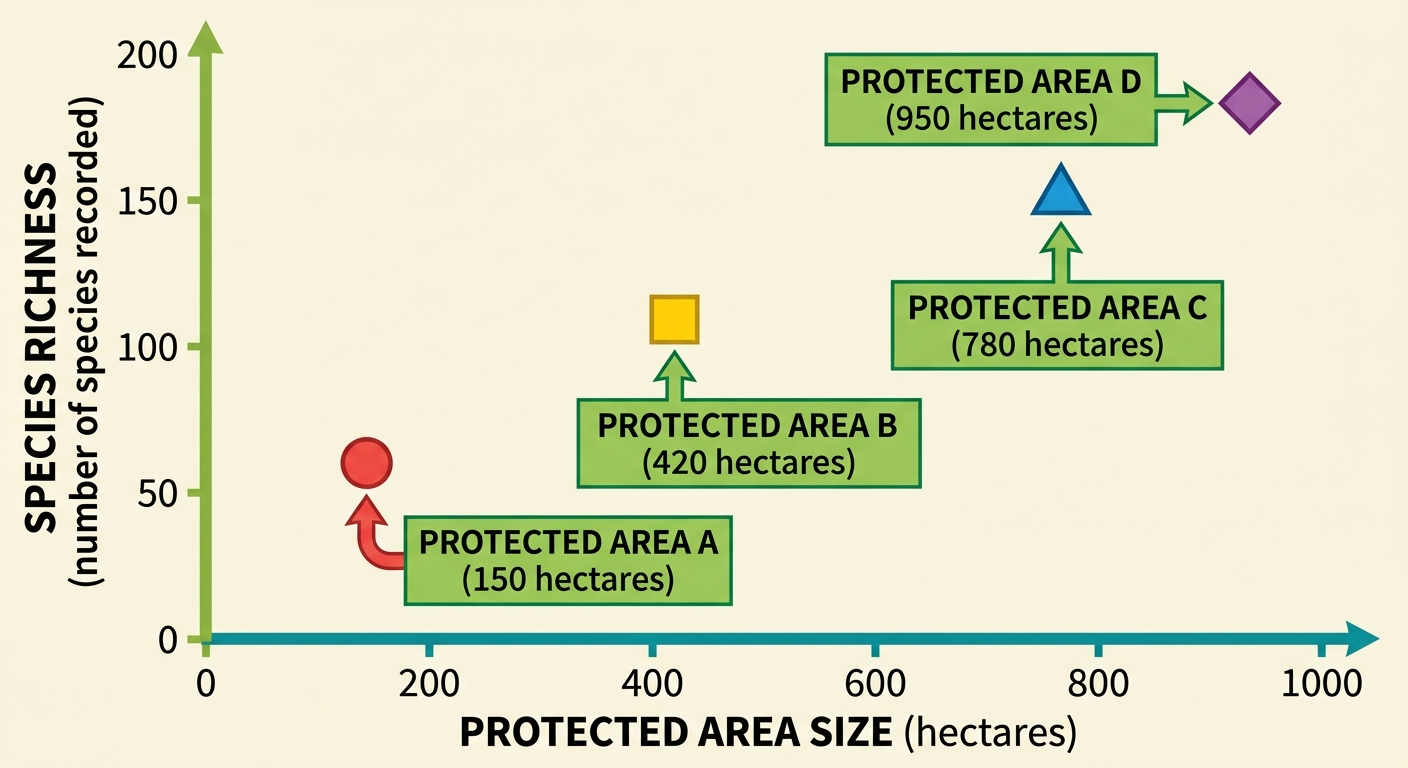
Data
| Protected area size (ha) | 100 | 1 000 | 10 000 | 100 000 |
|---|---|---|---|---|
| Number of species recorded | 48 | 97 | 201 | 398 |
The relationship between area and species richness follows the species–area relationship.
A survey of four tropical forest reserves recorded the following
a
Describe the trend shown by the data above. [1]
b
Explain how greater habitat diversity in larger reserves accounts for the higher species richness observed. [1]
c
Analyse why a single large reserve may be more effective at preventing local species extinction than several small reserves of equivalent total area. [1]
Solutions
4QuestionConservation Strategies and Protected AreasAssessment Practice
6 marks~9 minCriterion D
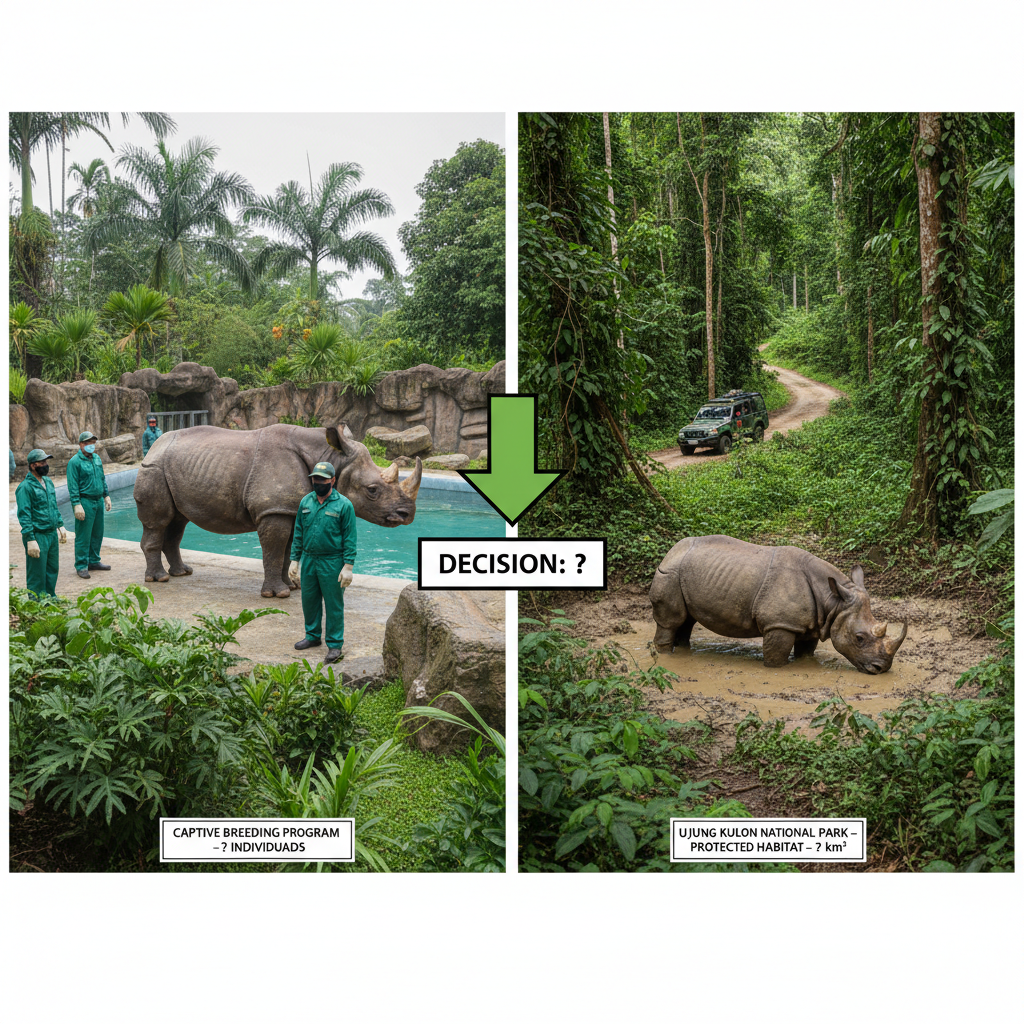
The Javan rhino (Rhinoceros sondaicus) survives as a single wild population of approximately 70 individuals in Ujung Kulon National Park, Indonesia. The population faces threats from poaching, volcanic eruption risk, and invasive Arenga palms that reduce carrying capacity. A conservation agency must allocate limited funding to either a captive breeding programme (ex-situ) or expansion and active management of protected habitat (in-situ).
a
Explain one ethical advantage of establishing a captive breeding programme for the Javan rhino. [2]
b
Analyse one ecological limitation of relying solely on in-situ conservation for a population of this size. [2]
c
Evaluate which conservation strategy is more justified for the Javan rhino, using biological evidence from the scenario. [2]
Solutions
5QuestionConservation Strategies and Protected AreasAssessment Practice
6 marks~9 minCriterion C
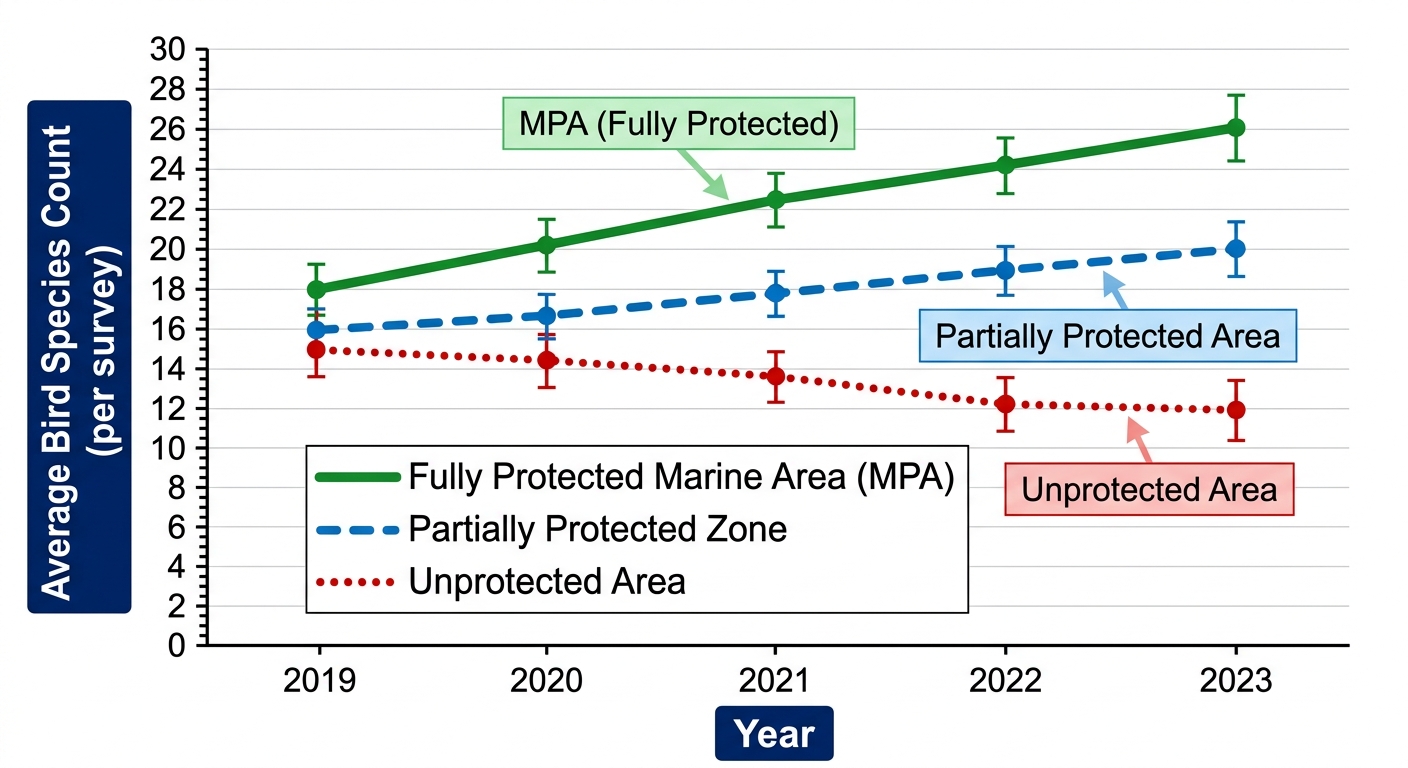
A five-year study monitored bird species richness across three coastal zones: a fully protected marine protected area (MPA), a partially protected zone (fishing permitted with restrictions), and an unprotected zone (no restrictions). The graph shows the average number of bird species recorded per survey in each zone from 2019 to 2023.
MPA (solid line): increases from 18 species (2019) to 26 species (2023).
Partially protected (dashed line): increases from 16 species (2019) to 20 species (2023).
Unprotected (dotted line): decreases from 15 species (2019) to 12 species (2023).
MPA (solid line): increases from 18 species (2019) to 26 species (2023).
Partially protected (dashed line): increases from 16 species (2019) to 20 species (2023).
Unprotected (dotted line): decreases from 15 species (2019) to 12 species (2023).
a
Identify the trend in bird species richness for each of the three zones between 2019 and 2023. [2]
b
Using data from the graph, analyse the relationship between the degree of protection and bird species richness. [2]
c
Evaluate the hypothesis that fully protected marine areas are more effective in conserving bird species richness than partially protected or unprotected areas, identifying one limitation of the evidence. [2]
Solutions
That's every free question here — 5 of 84.
+79 more questions, plus Mock Papers & Worksheets, are waiting in Premium.