You're viewing free preview questions — 5 questions previewing here — subscribe to unlock 78 more, plus the Full Question Bank, Mock Papers & Worksheets.Upgrade
Biotic and Abiotic Factors — Free MYP5 Biology Practice Questions

1QuestionAdaptations to Environmental ConditionsConcept Practice
2 marks~3 minCriterion A
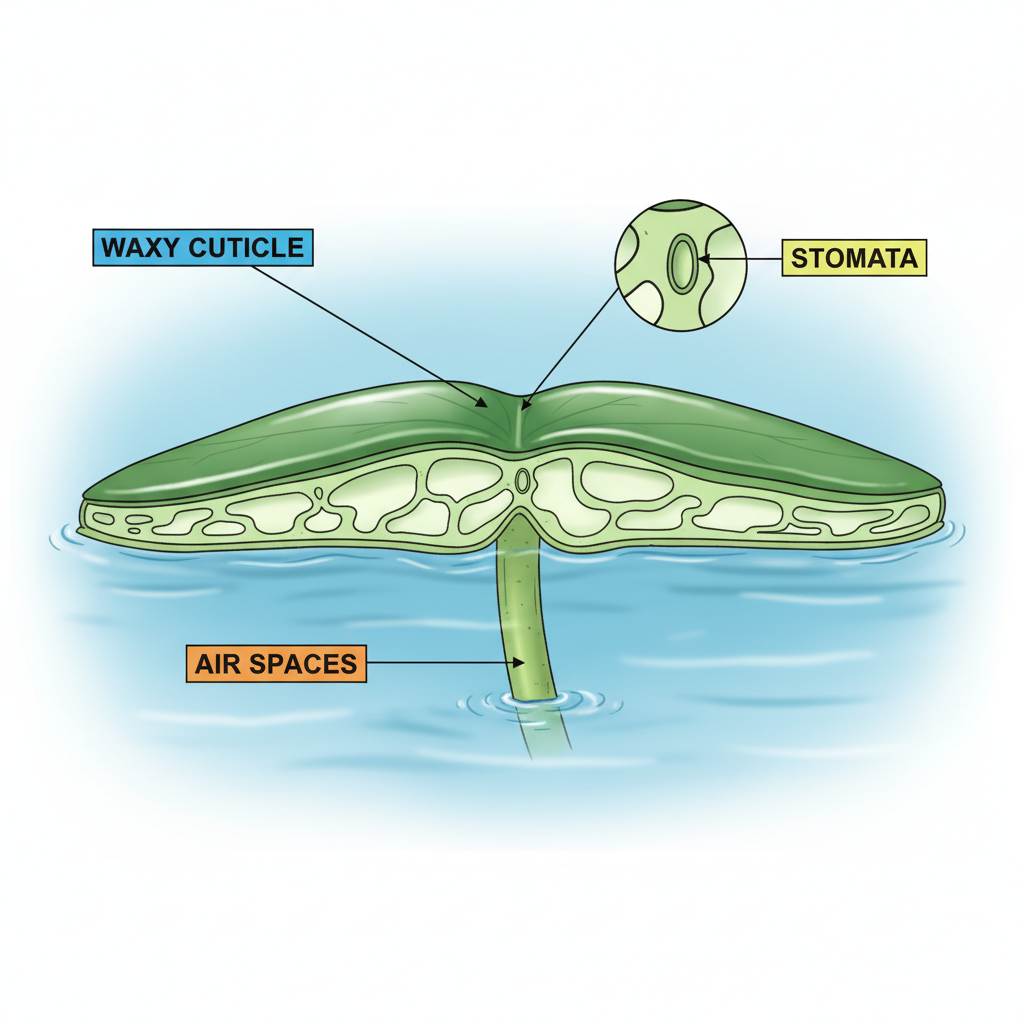
Water lilies (Nymphaea sp.) grow rooted in pond sediment, with leaves that rest on the water surface. Their leaves have four key structural features: a broad, flat shape; a waxy cuticle on the upper surface; stomata positioned on the upper epidermis; and large internal air spaces (aerenchyma).
a
State one structural feature of a water lily leaf that helps it float on the water surface. [1]
b
Explain how the position of stomata on the upper epidermis allows the water lily leaf to carry out gas exchange effectively in an aquatic environment. [1]

Solutions
2QuestionAdaptations to Environmental ConditionsAssessment Practice
3 marks~5 minCriterion D
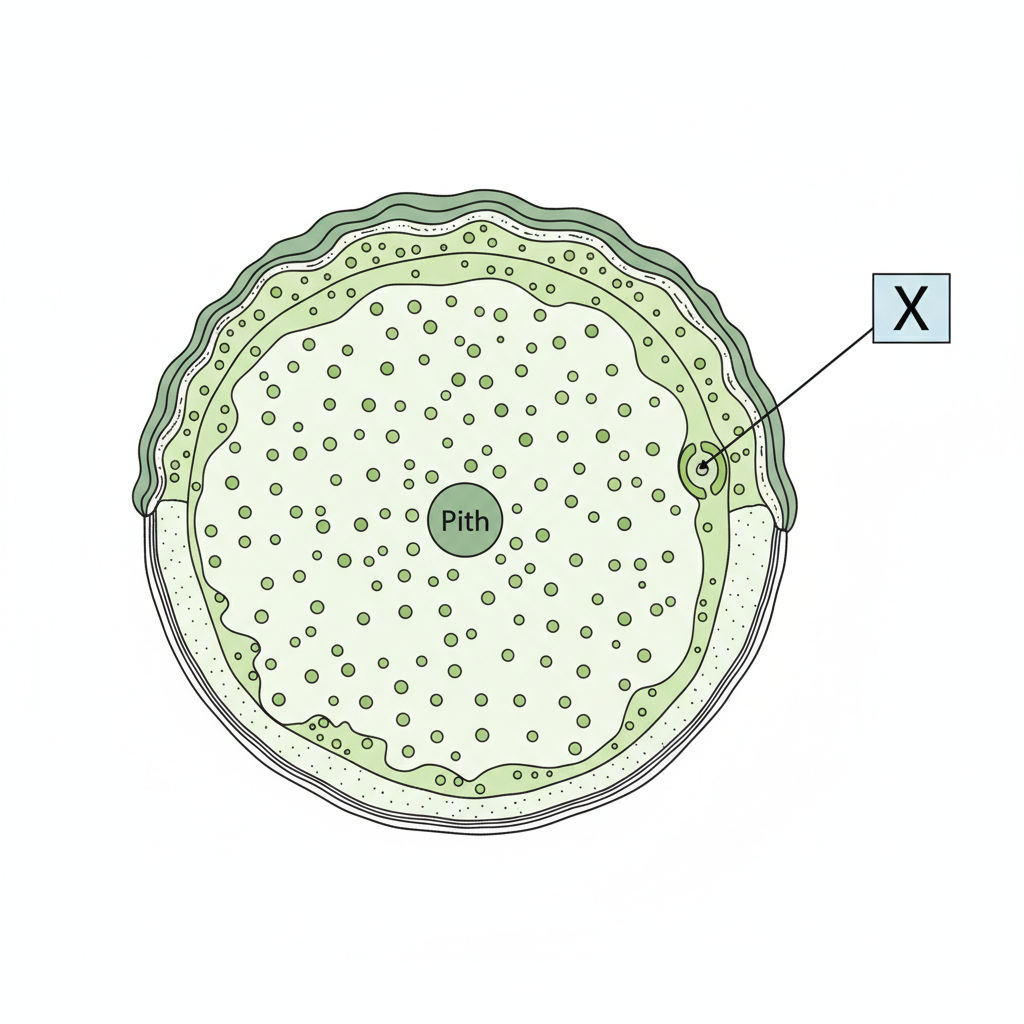
The diagram shows a cross-section of a cactus stem. Structure X is labelled on the outermost layer of the stem.
a
Identify structure X. [1]
b
State how structure X forms a barrier that limits water movement out of the stem. [1]
c
A cactus growing in a desert experiences daytime air temperatures of 45 °C and very low humidity. Explain why the properties of structure X are more critical to the cactus's survival under these conditions than they would be for a plant growing in a tropical rainforest. [1]
Solutions
3QuestionDefinition and Examples of Abiotic FactorAssessment Practice
3 marks~5 minCriterion C
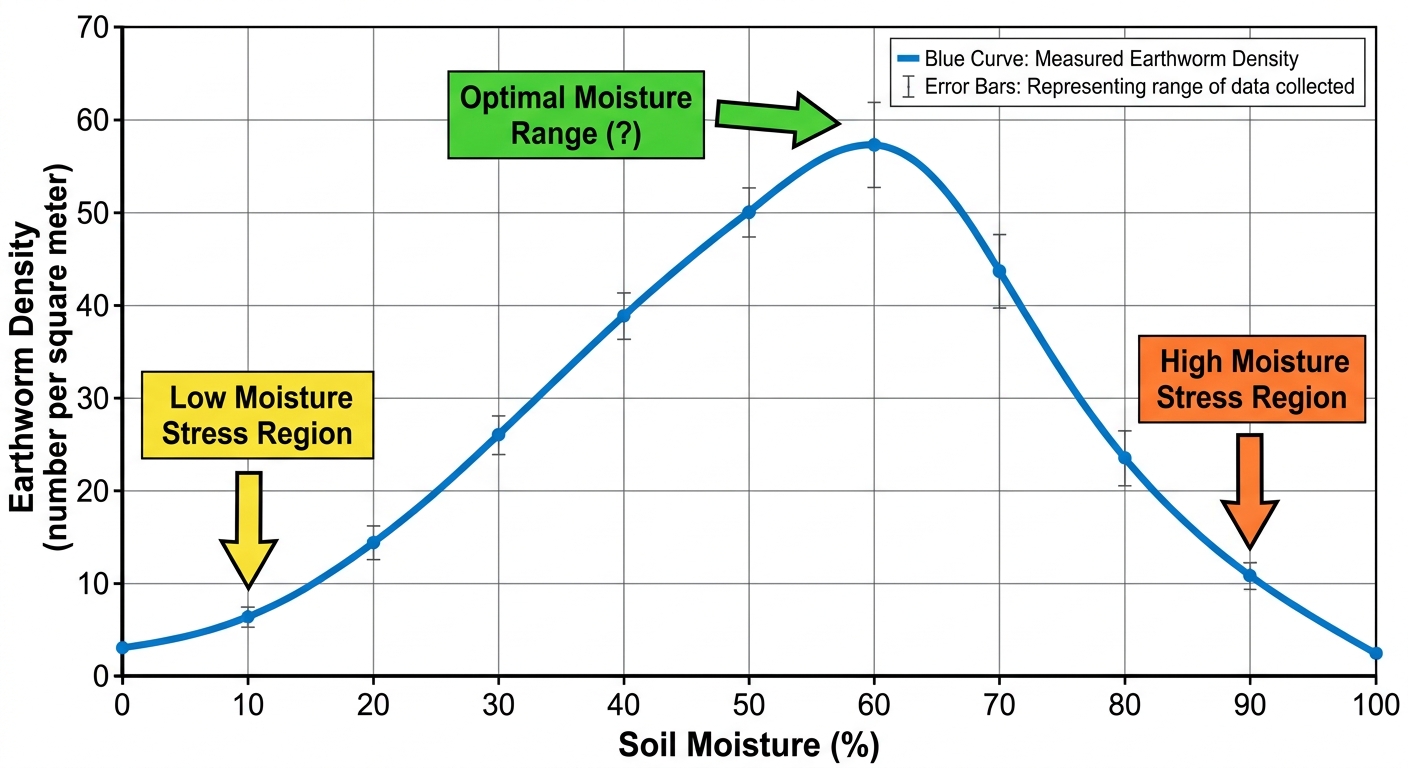
The graph below shows how earthworm population density (number per ) changes with soil moisture (%) in a grassland ecosystem.
a
Describe the relationship between soil moisture and earthworm population density shown in the graph. [1]
b
Identify the optimal soil moisture range for earthworm survival and explain how this range supports maximum population density. [1]
c
Analyse why both extremely dry conditions (below ~20% soil moisture) and extremely wet conditions (above ~85% soil moisture) are detrimental to earthworm survival. [1]
Solutions
4QuestionDefinition and Examples of Abiotic FactorAssessment Practice
4 marks~6 minCriterion D
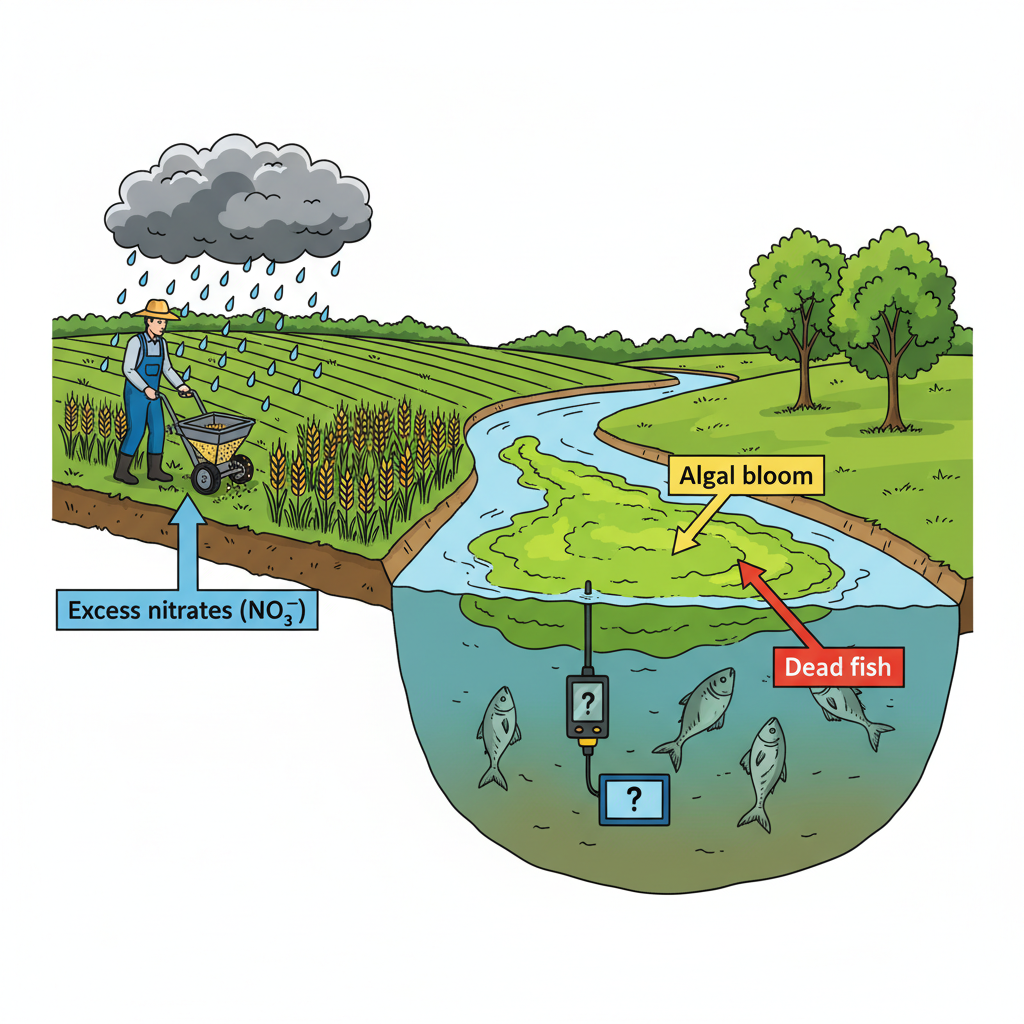
A farmer applies nitrogen-rich fertiliser to a wheat field to increase yield. During heavy rainfall, excess nitrates leach into a nearby river, triggering a rapid algal bloom. When the algae die, aerobic decomposers break down the organic matter, consuming large quantities of dissolved oxygen and causing fish kills.
a
Explain how excess nitrates entering the river lead to a decrease in dissolved oxygen concentration. [2]
b
Discuss the ethical conflict between the farmer's goal of increasing food production and the ecological impact of nutrient runoff on the river ecosystem. [2]
Solutions
5QuestionDefinition and Examples of Abiotic FactorAssessment Practice
5 marks~8 minCriterion C
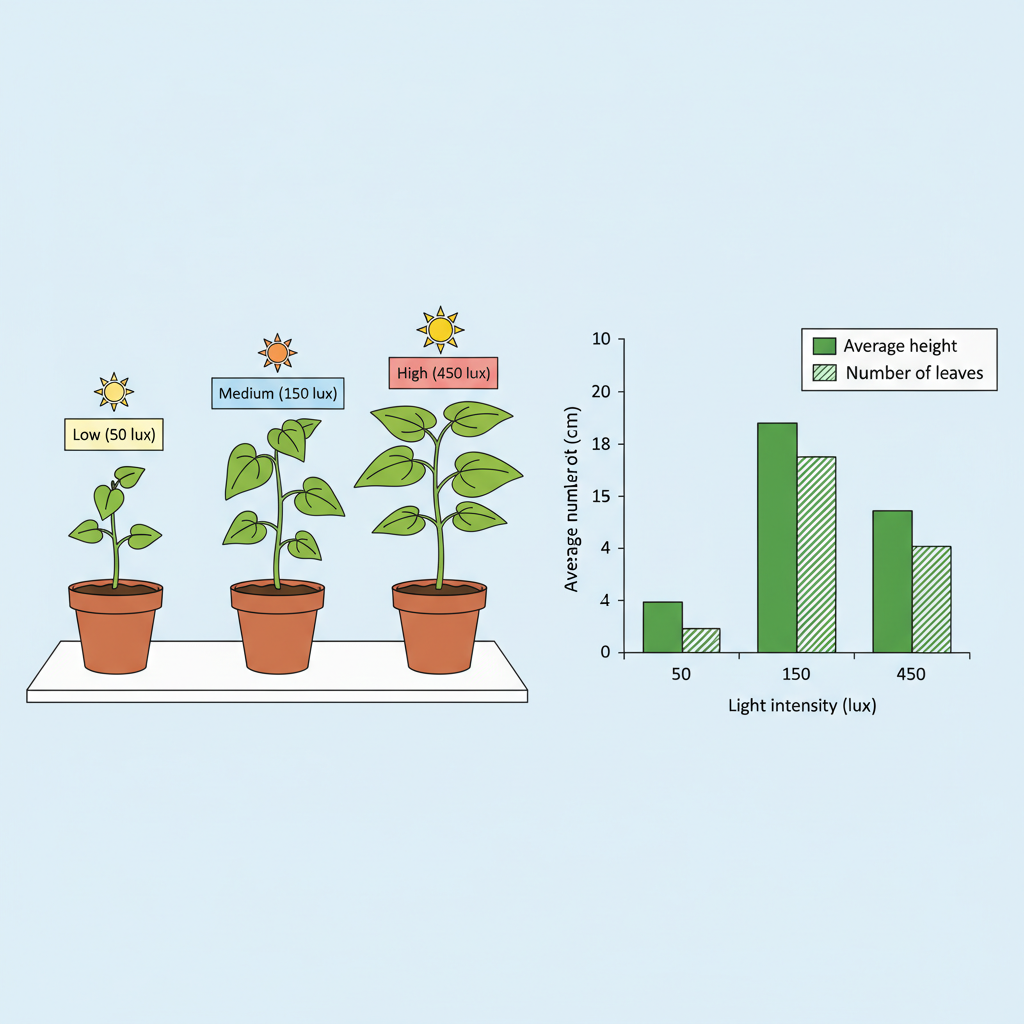
A group of students investigates how light intensity affects bean plant growth. Fifteen identical seedlings are divided into three groups of five, each receiving a different light intensity. Soil type, daily water volume (50 mL), and temperature (22°C) are kept constant throughout the four-week experiment. Results are recorded below.
The students hypothesise that light intensity is the primary abiotic factor limiting plant growth in this setup.
| Light intensity (lux) | 50 | 150 | 450 |
|---|---|---|---|
| Average height (cm) | 8 | 14 | 18 |
| Average number of leaves | 4 | 7 | 9 |
The students hypothesise that light intensity is the primary abiotic factor limiting plant growth in this setup.
a
Identify the independent variable in this experiment. [1]
b
Describe the trends shown in the data, referring to specific values for both growth measures. [2]
c
Evaluate whether the evidence supports the students' hypothesis, and discuss two limitations of the experimental design. [2]
Solutions
That's every free question here — 5 of 83.
+78 more questions, plus Mock Papers & Worksheets, are waiting in Premium.