You're viewing free preview questions — 5 questions previewing here — subscribe to unlock 86 more, plus the Full Question Bank, Mock Papers & Worksheets.Upgrade
Ecosystems and Trophic Levels — Free MYP5 Biology Practice Questions

1QuestionBiomass Pyramids and Energy PyramidsConcept Practice
2 marks~3 minCriterion A
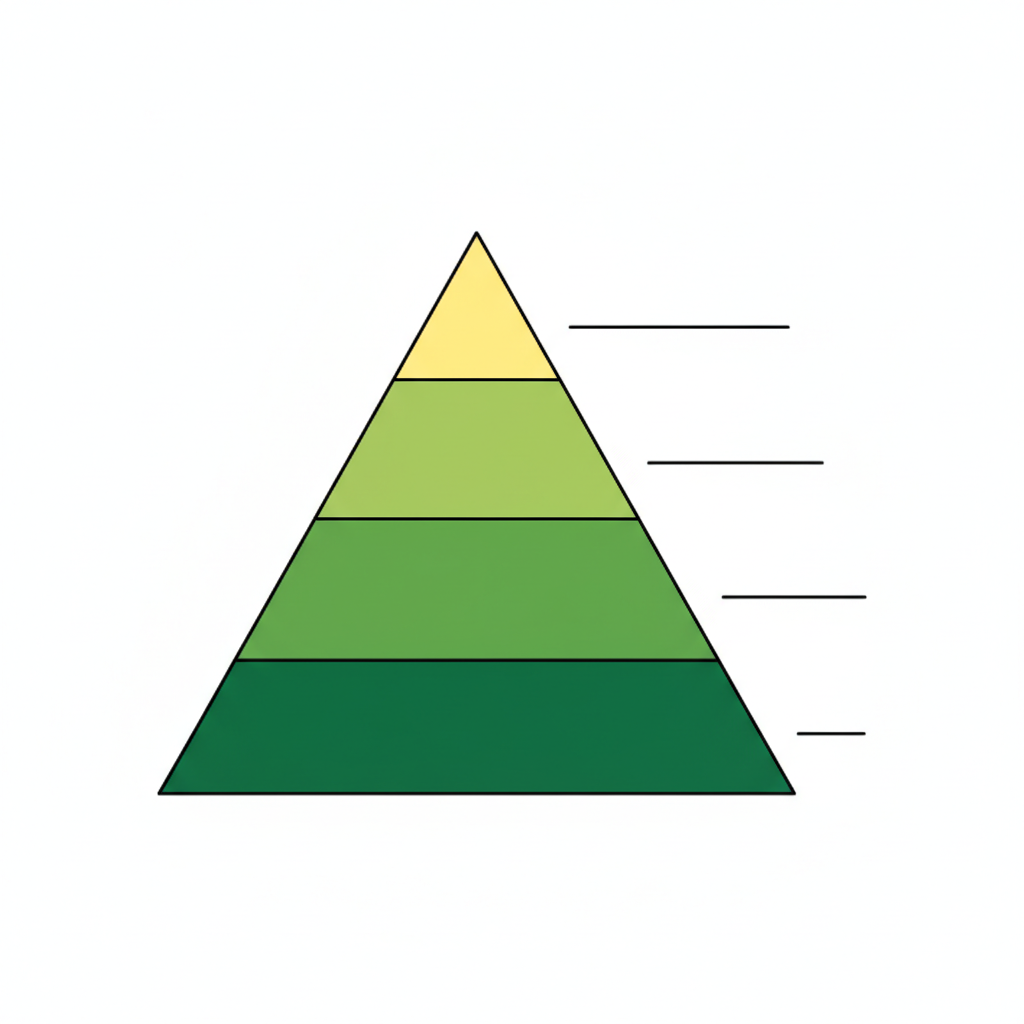
A biomass pyramid for a coastal kelp forest ecosystem contains four trophic levels. The dry mass values recorded are:
Trophic level 1 (base): 10 000 kg per hectare
Trophic level 2: 1 000 kg per hectare
Trophic level 3: 100 kg per hectare
Trophic level 4 (apex): 10 kg per hectare
Trophic level 1 (base): 10 000 kg per hectare
Trophic level 2: 1 000 kg per hectare
Trophic level 3: 100 kg per hectare
Trophic level 4 (apex): 10 kg per hectare
a
State the correct biological name for each trophic level, from base to apex. [1]
b
Explain why biomass decreases at each successive trophic level in this pyramid. [1]

Solutions
2QuestionDefinition and Components of an EcosystemAssessment Practice
3 marks~5 minCriterion D
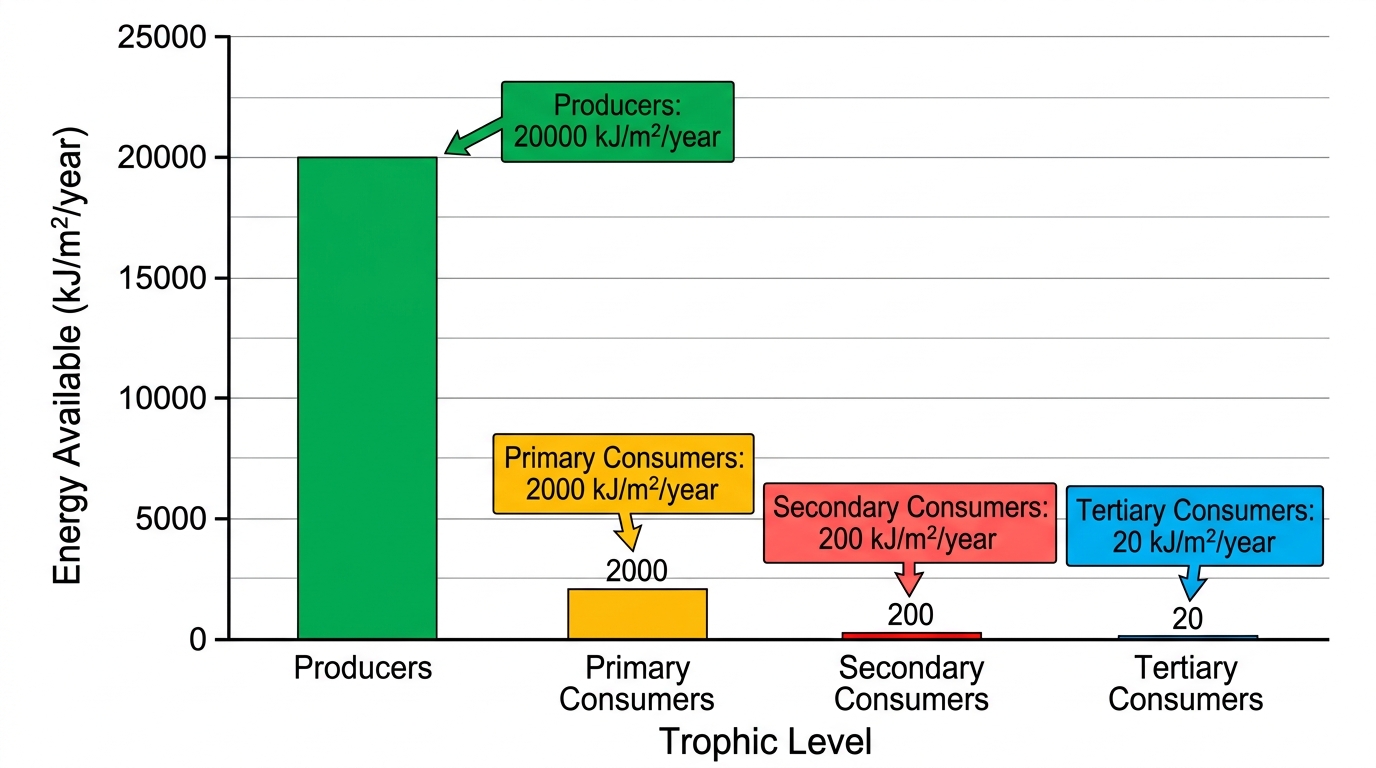
The bar graph below shows the energy available at each trophic level in a grassland ecosystem.
Producers:
Primary consumers:
Secondary consumers:
Tertiary consumers:
Producers:
Primary consumers:
Secondary consumers:
Tertiary consumers:
a
Describe the trend in energy availability across the four trophic levels shown. [1]
b
Explain why energy decreases between trophic levels, referring to at least two processes responsible for energy loss. [1]
c
A fifth trophic level (quaternary consumers) is proposed for this ecosystem. Analyse whether this ecosystem could realistically support it, using the data to justify your reasoning. [1]
Solutions
3QuestionDefinition and Components of an EcosystemAssessment Practice
4 marks~6 minCriterion A
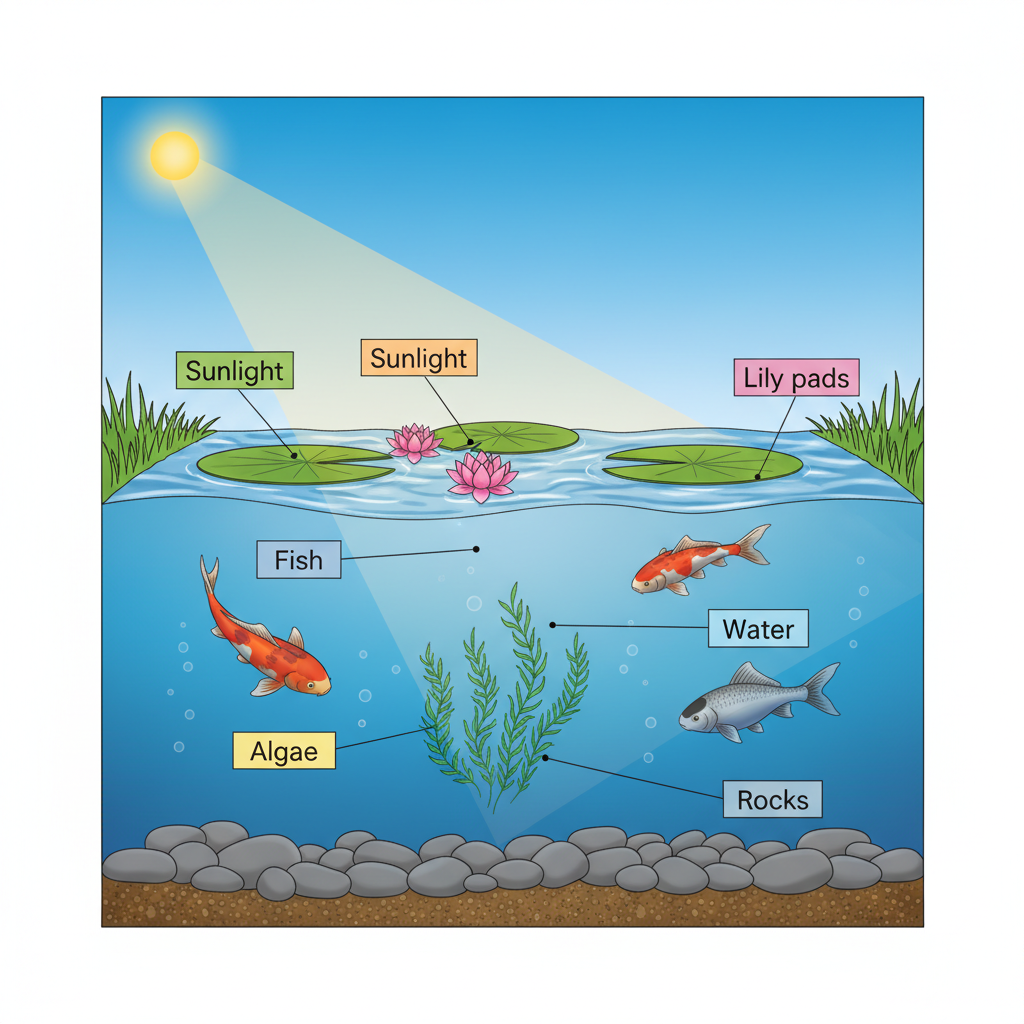
The diagram shows a pond ecosystem. Biotic components include algae, lily pads, and fish. Abiotic components include sunlight, water, and rocks.
a
Identify one biotic–abiotic interaction and one biotic–biotic interaction visible in this pond ecosystem. [2]
b
Explain how energy flows from sunlight through two trophic levels in this ecosystem, using the terms producer and consumer. [1]
c
Evaluate how the removal of algae from this pond ecosystem would affect both energy flow and nutrient cycling. [1]
Solutions
4QuestionDefinition and Components of an EcosystemAssessment Practice
5 marks~8 minCriterion C
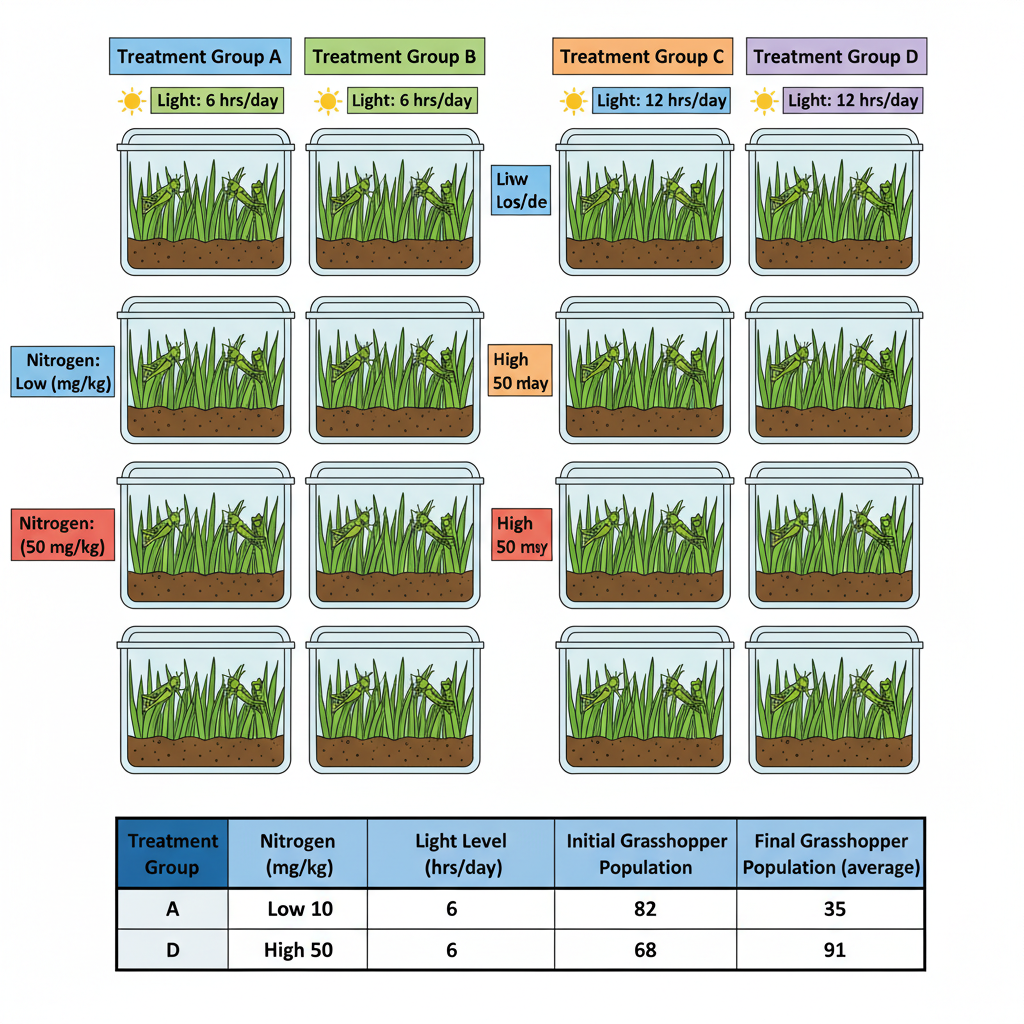
A researcher sets up 12 identical mesocosms (enclosed experimental ecosystems), each containing grass, soil, and 20 grasshoppers. The mesocosms are divided into four treatment groups with different nitrogen and light conditions. After 8 weeks, the final grasshopper populations are recorded.
The researcher claims: "Nitrogen is the only limiting factor in this ecosystem."
| Treatment Group | A | B | C | D |
|---|---|---|---|---|
| Nitrogen level (mg/kg) | 10 | 50 | 10 | 50 |
| Light level (hours/day) | 6 | 6 | 12 | 12 |
| Final grasshopper population | 35 | 82 | 68 | 91 |
The researcher claims: "Nitrogen is the only limiting factor in this ecosystem."
a
Describe the effect of increasing nitrogen level on grasshopper population at each light level. [1]
b
Analyse the effect of increasing light level on grasshopper population at each nitrogen level, and explain what this reveals about the researcher's hypothesis. [2]
c
Evaluate the researcher's hypothesis using quantitative evidence from all four treatment groups, and justify which abiotic factor appears to be the primary limiting factor. [2]
Solutions
5QuestionBiomass Pyramids and Energy PyramidsAssessment Practice
8 marks~12 minCriterion D
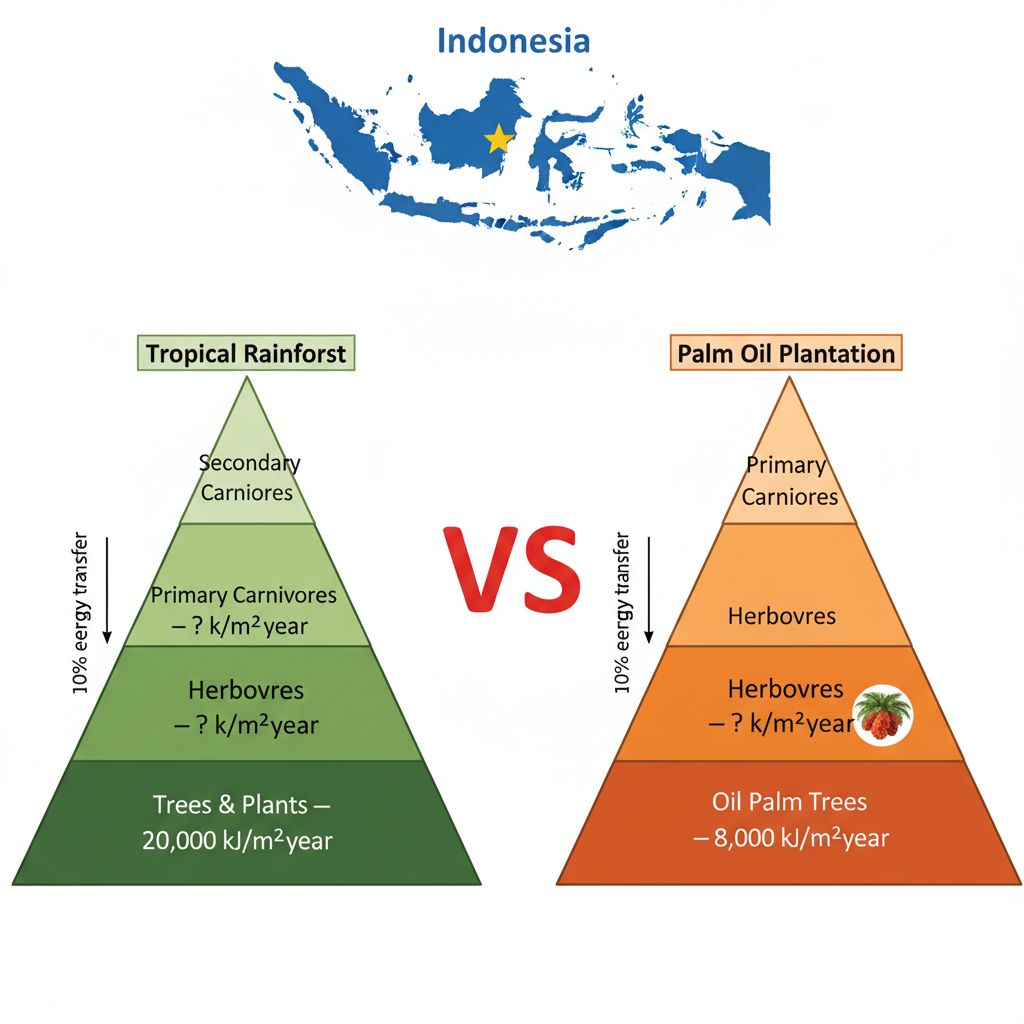
A company proposes converting 50,000 hectares of Indonesian tropical rainforest into a palm oil plantation to produce biodiesel. An ecological survey records that forest producers store . Energy transfer efficiency between trophic levels is 10%. The plantation would yield in palm fruits, all harvested for fuel.
a
Calculate the energy available to primary, secondary, and tertiary consumers in the natural forest. [2]
b
Using your results from (a), compare the ability of the natural forest and the plantation to support higher trophic levels. [2]
c
Evaluate the long-term societal and environmental impacts of this proposal, and discuss the limitations of energy pyramids as a tool for predicting real-world outcomes of such a conversion. [4]
Solutions
That's every free question here — 5 of 91.
+86 more questions, plus Mock Papers & Worksheets, are waiting in Premium.