You're viewing free preview questions — 5 questions previewing here — subscribe to unlock 80 more, plus the Full Question Bank, Mock Papers & Worksheets.Upgrade
Food Webs, Pyramids, and Energy Flow — Free MYP5 Biology Practice Questions

1QuestionBioaccumulation and ToxinsConcept Practice
2 marks~3 minCriterion A
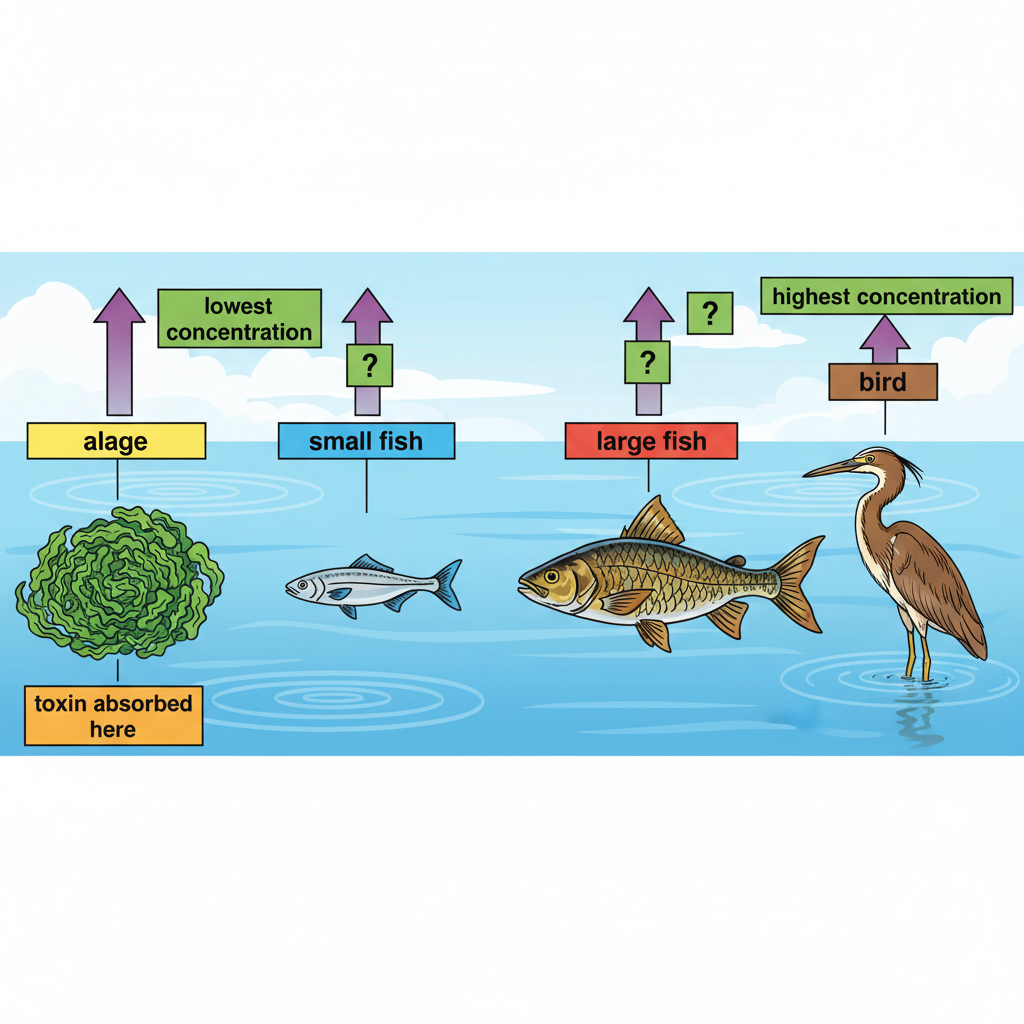
A lake ecosystem contains the following food chain:
algae → small fish → large fish → bird
A persistent chemical toxin enters the lake and is absorbed by algae. Data collected from tissue samples show that toxin concentration increases at each successive trophic level, reaching its highest level in the bird.
algae → small fish → large fish → bird
A persistent chemical toxin enters the lake and is absorbed by algae. Data collected from tissue samples show that toxin concentration increases at each successive trophic level, reaching its highest level in the bird.
a
State the term for the process by which toxin concentration increases progressively through the trophic levels of a food chain. [1]
b
Explain why the bird accumulates a higher concentration of toxin in its tissues than the large fish. [1]

Solutions
2QuestionConstructing and Analyzing Food WebsAssessment Practice
2 marks~3 minCriterion C
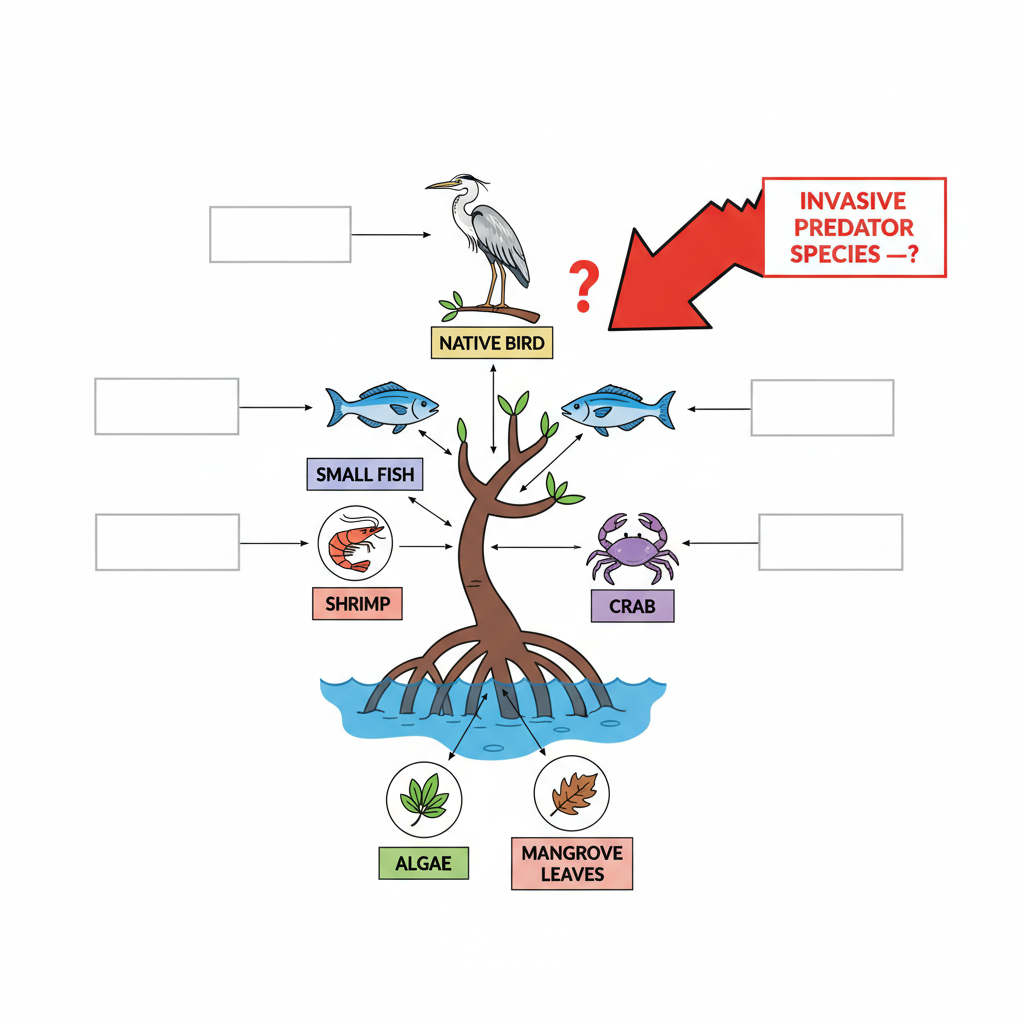
A conservation biologist constructs a food web for a mangrove ecosystem following the introduction of an invasive predator. The food web reveals that the invasive predator shares prey species with two native predators and feeds directly on three herbivore species, each of which supports a distinct set of primary producers.
a
Explain how the food web enables the biologist to predict which native species will be most severely affected by the invasive predator's introduction. [1]
b
Identify one limitation of using this food web when making such predictions. [1]
Solutions
3QuestionBioaccumulation and ToxinsAssessment Practice
2 marks~3 minCriterion D
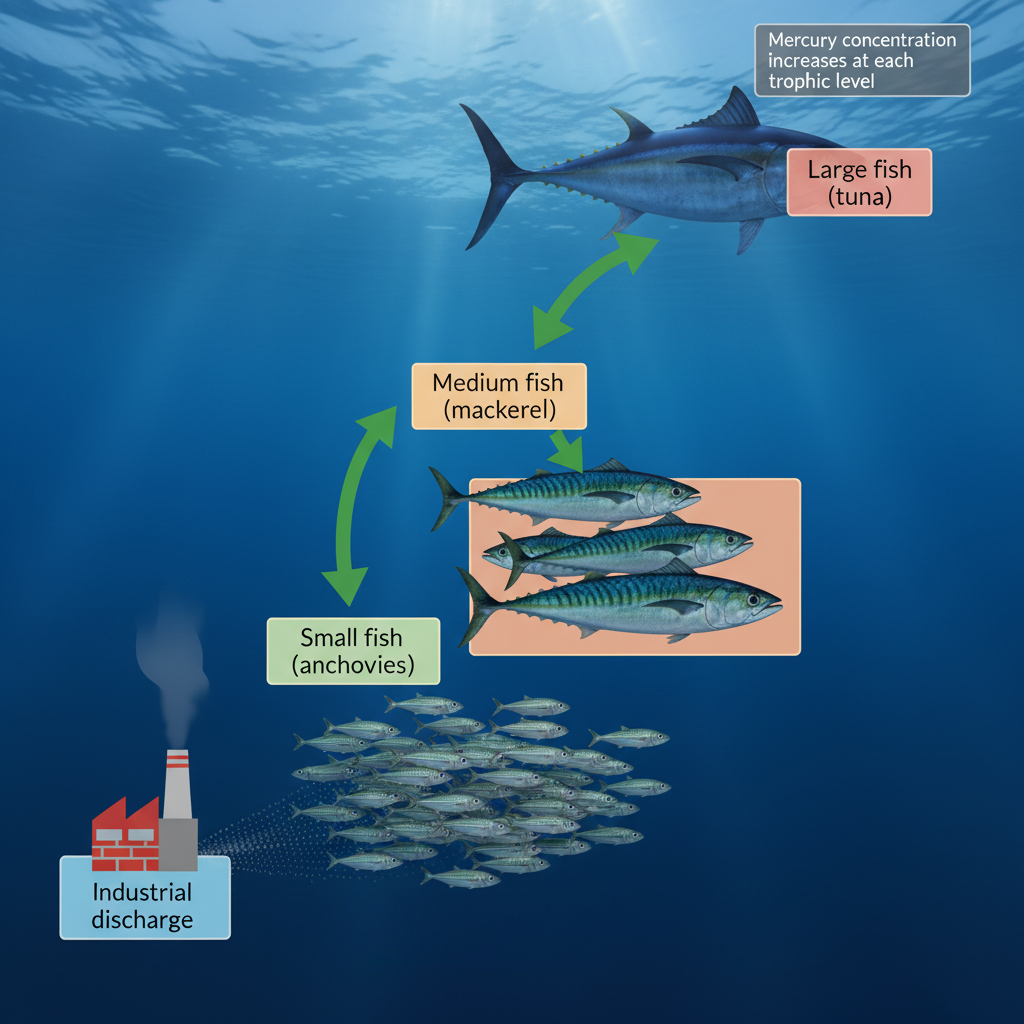
Industrial discharge releases mercury into coastal waters off Japan's Minamata Bay. Phytoplankton absorb dissolved mercury; small fish consume large quantities of phytoplankton; apex predators such as tuna consume many small fish.
a
Identify one ethical issue arising from mercury bioaccumulation in this marine food chain. [1]
b
Explain how the structure of this food chain causes mercury to reach dangerous concentrations in tuna, and discuss why resolving the ethical issue you identified in (a) is difficult in practice. [1]
Solutions
4QuestionConstructing and Analyzing Food WebsAssessment Practice
3 marks~5 minCriterion A
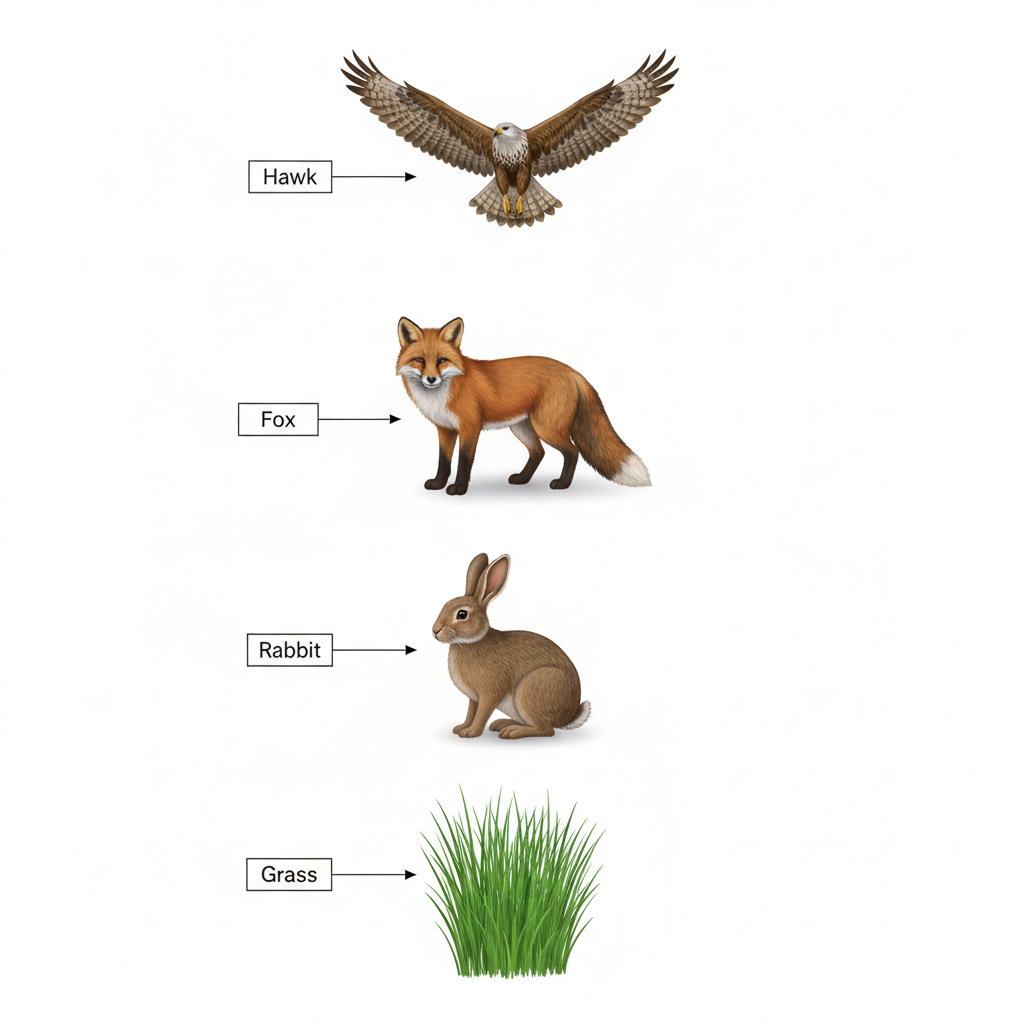
The diagram below shows a food web in a grassland ecosystem.
Grass → Rabbit → Fox → Hawk
Grass → Rabbit → Fox → Hawk
a
Identify the trophic level of the fox. [1]
b
Explain why the fox population has more energy available to it than the hawk population, using the concept of energy transfer efficiency between trophic levels. [1]
c
A disease eliminates 80% of the rabbit population. Analyse how this would affect energy availability at the fox and hawk trophic levels, and predict which population would be more severely impacted. [1]
Solutions
5QuestionBioaccumulation and ToxinsAssessment Practice
3 marks~5 minCriterion D
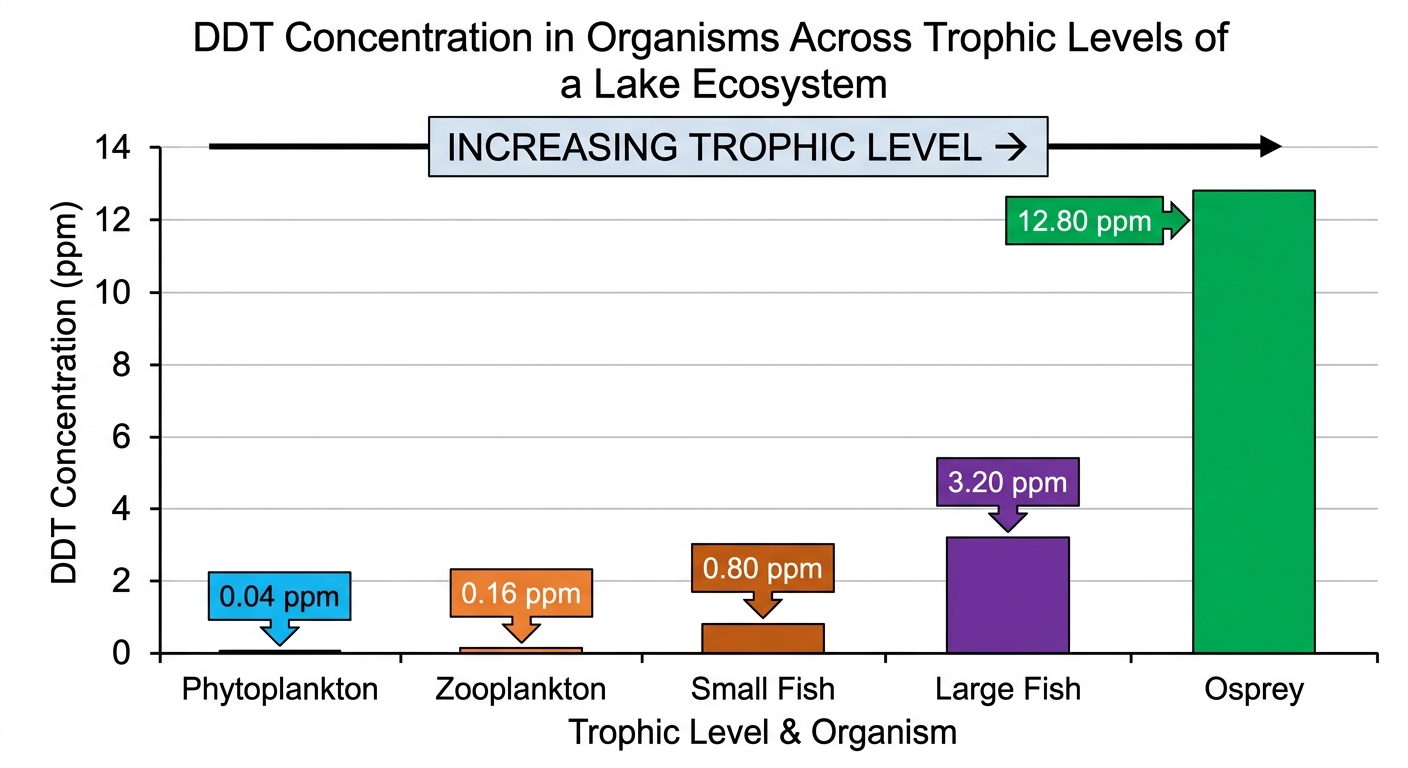
A bar graph shows DDT concentration (ppm) in a lake food chain:
Phytoplankton: 0.04 ppm
Zooplankton: 0.16 ppm
Small fish: 0.80 ppm
Large fish: 3.20 ppm
Osprey: 12.80 ppm
Phytoplankton: 0.04 ppm
Zooplankton: 0.16 ppm
Small fish: 0.80 ppm
Large fish: 3.20 ppm
Osprey: 12.80 ppm
a
Describe the trend in DDT concentration across the five trophic levels shown in the graph. [1]
b
Explain why DDT concentration increases at each successive trophic level, naming the process responsible. [1]
c
The osprey population in this lake has shown declining reproductive success. Using the data and your knowledge of biomagnification, discuss whether the osprey's trophic position makes it more vulnerable to DDT toxicity than the large fish. [1]
Solutions
That's every free question here — 5 of 85.
+80 more questions, plus Mock Papers & Worksheets, are waiting in Premium.