You're viewing free preview questions — 5 questions previewing here — subscribe to unlock 214 more, plus the Full Question Bank, Mock Papers & Worksheets.Upgrade
Pathogens (Bacteria, Viruses) — Free MYP5 Biology Practice Questions

1QuestionClassification of PathogensConcept Practice
3 marks~5 minCriterion A
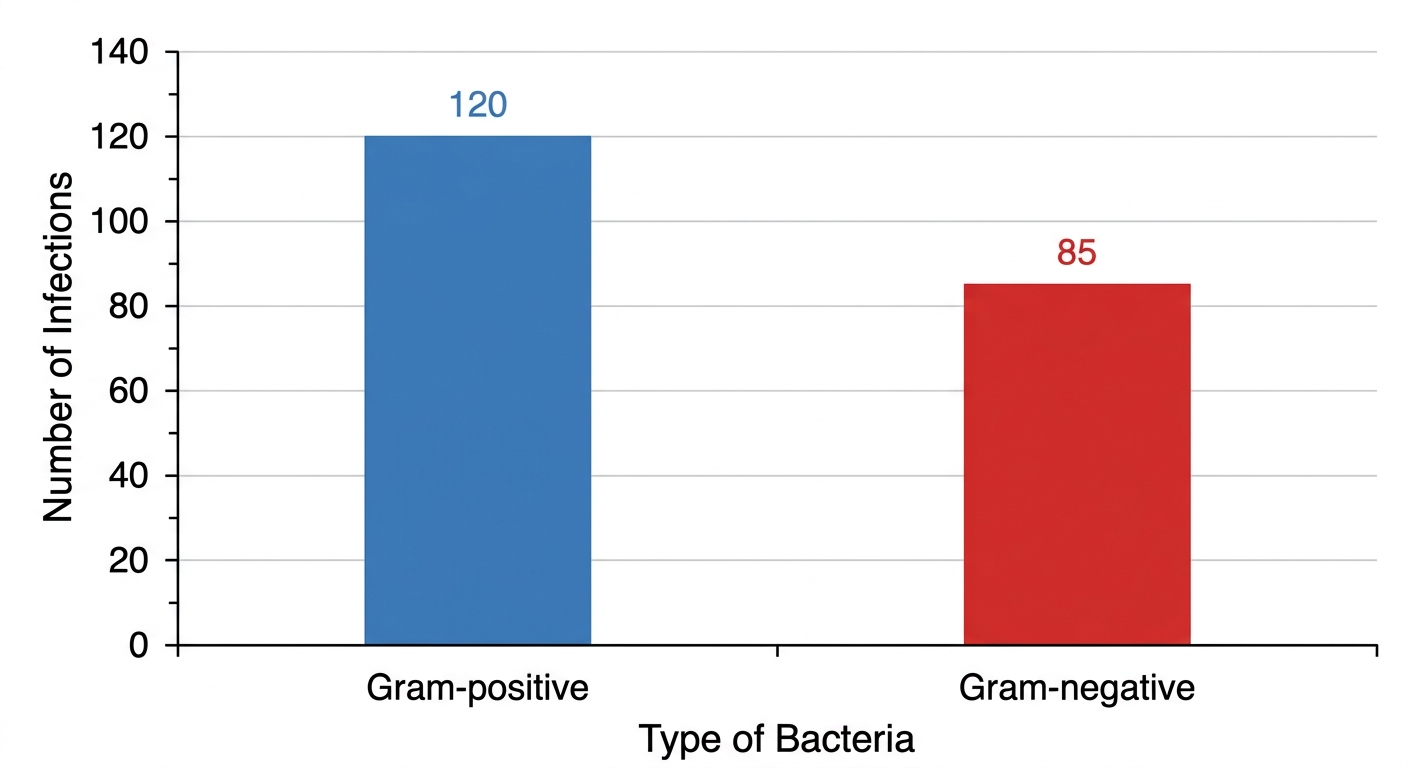
A hospital records the following bacterial infections over one year:
Gram-positive bacteria: 120 infections
Gram-negative bacteria: 85 infections
Despite causing fewer infections, Gram-negative bacteria are considered a greater clinical threat due to their antibiotic resistance.
Gram-positive bacteria: 120 infections
Gram-negative bacteria: 85 infections
Despite causing fewer infections, Gram-negative bacteria are considered a greater clinical threat due to their antibiotic resistance.
a
State which bacterial group caused more infections and calculate how many more infections it caused compared to the other group. [1]
b
Explain why Gram-negative bacteria are more resistant to antibiotics than Gram-positive bacteria, referring to their cell wall structure. [1]
c
Evaluate why a hospital might prioritise controlling Gram-negative infections over Gram-positive infections, even though Gram-negative bacteria caused fewer cases. [1]

Solutions
2QuestionClassification of PathogensAssessment Practice
2 marks~3 minCriterion D
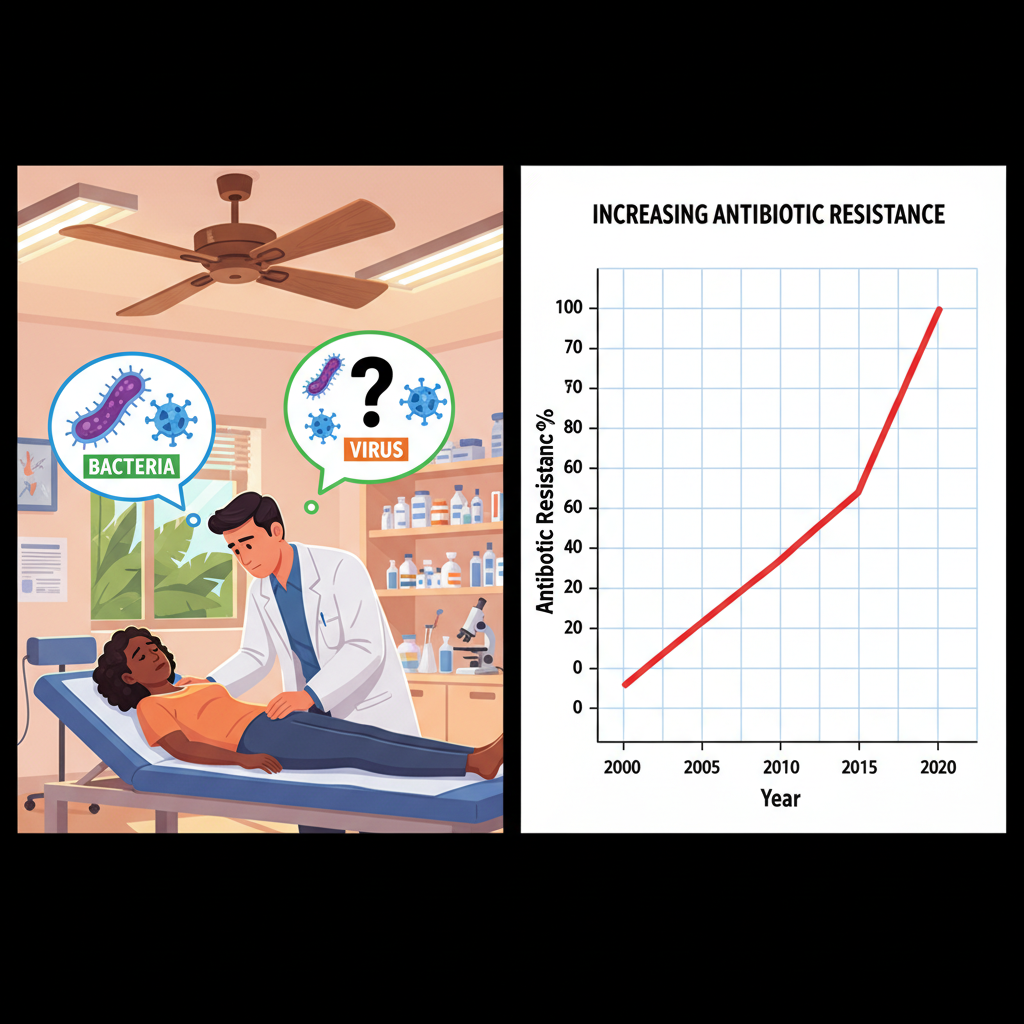
During a respiratory illness outbreak, a clinic must decide whether to prescribe antibiotics. Rapid diagnostic tests can classify the causative pathogen as either bacterial or viral.
a
Explain how classifying a pathogen as bacterial rather than viral directly influences the treatment a clinician prescribes. [1]
b
Discuss one ethical issue that arises when clinics in low-income settings lack access to rapid diagnostic tests for pathogen classification. [1]
Solutions
3QuestionPathogens: Bacteria, Viruses, Fungi, and ParasitesAssessment Practice
4 marks~6 minCriterion C
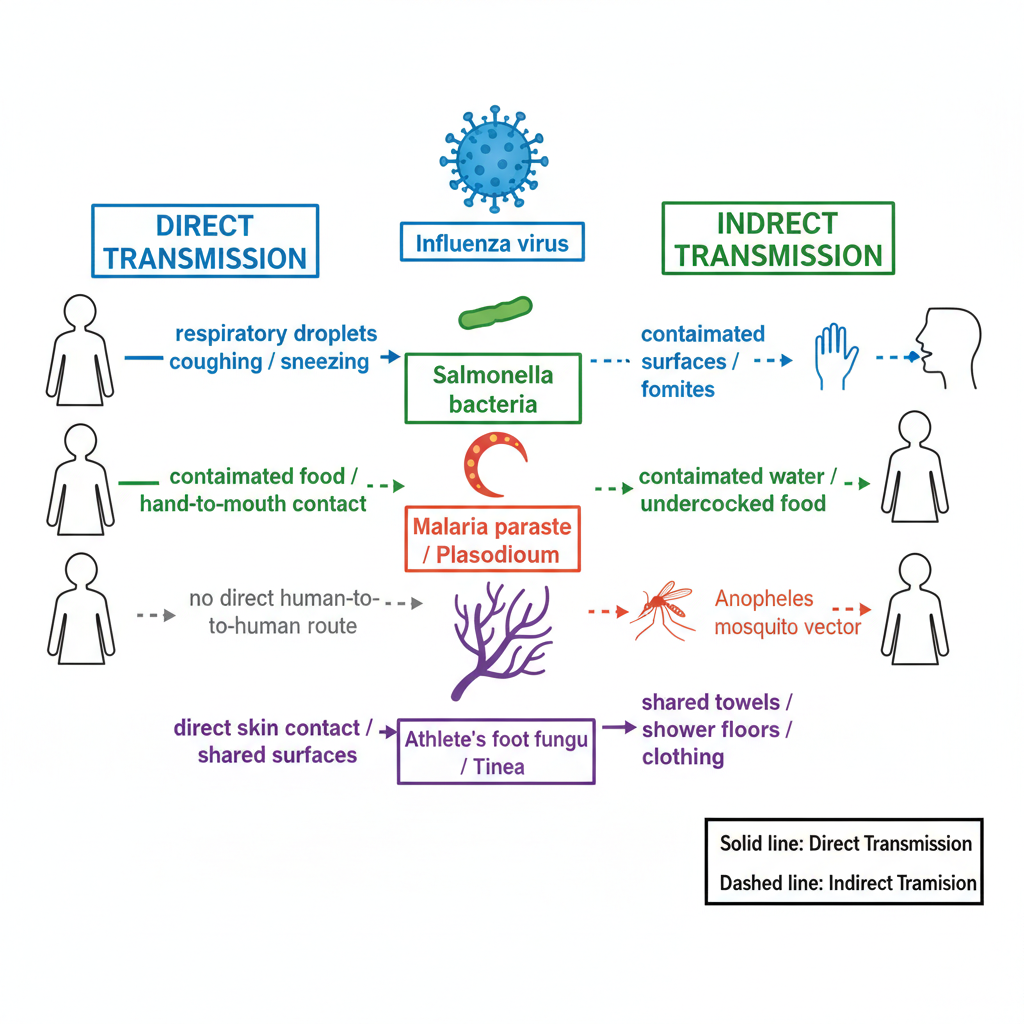
The diagram shows four pathogens and their transmission routes: influenza virus (respiratory droplets), norovirus (contaminated food/water), MRSA (direct skin contact), and malaria parasite (mosquito vector).
a
State the difference between direct and indirect transmission of a pathogen. [1]
b
Describe how influenza virus is transmitted from an infected person to an uninfected person. [1]
c
Evaluate the effectiveness of handwashing as a public health measure by analysing which transmission routes shown in the diagram it would interrupt and which it would not. [2]
Solutions
4QuestionClassification of PathogensAssessment Practice
5 marks~8 minCriterion A
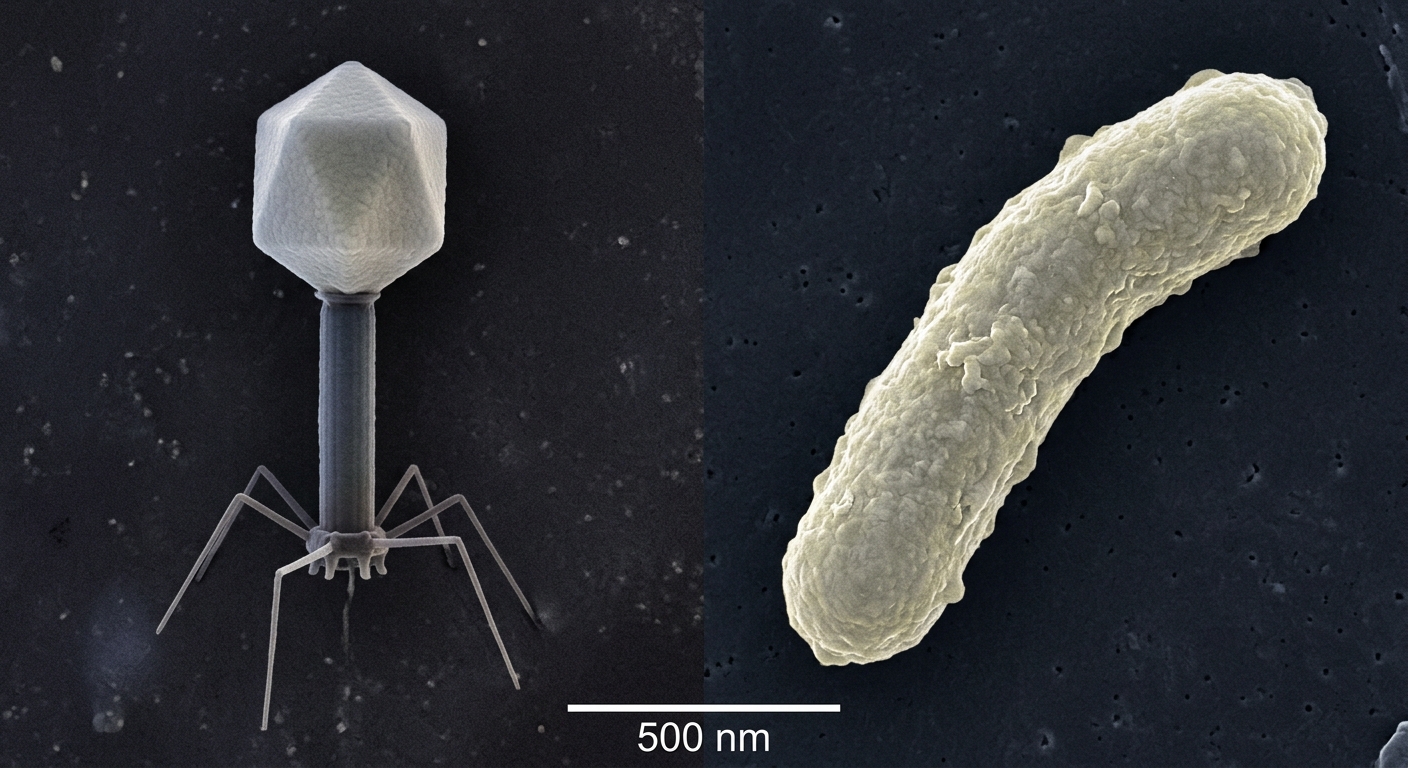
The electron micrograph below shows two pathogens imaged at the same scale: a bacteriophage (a type of virus) and Mycobacterium tuberculosis (a bacterium).
a
Identify which structure in the micrograph is the bacteriophage and which is Mycobacterium tuberculosis. [1]
b
Describe three observable structural differences between the two pathogens visible in the micrograph, using correct biological terminology. [3]
c
Justify how the structural features of each pathogen relate to its mode of reproduction and infection. [1]
Solutions
5QuestionClassification of PathogensAssessment Practice
5 marks~8 minCriterion C
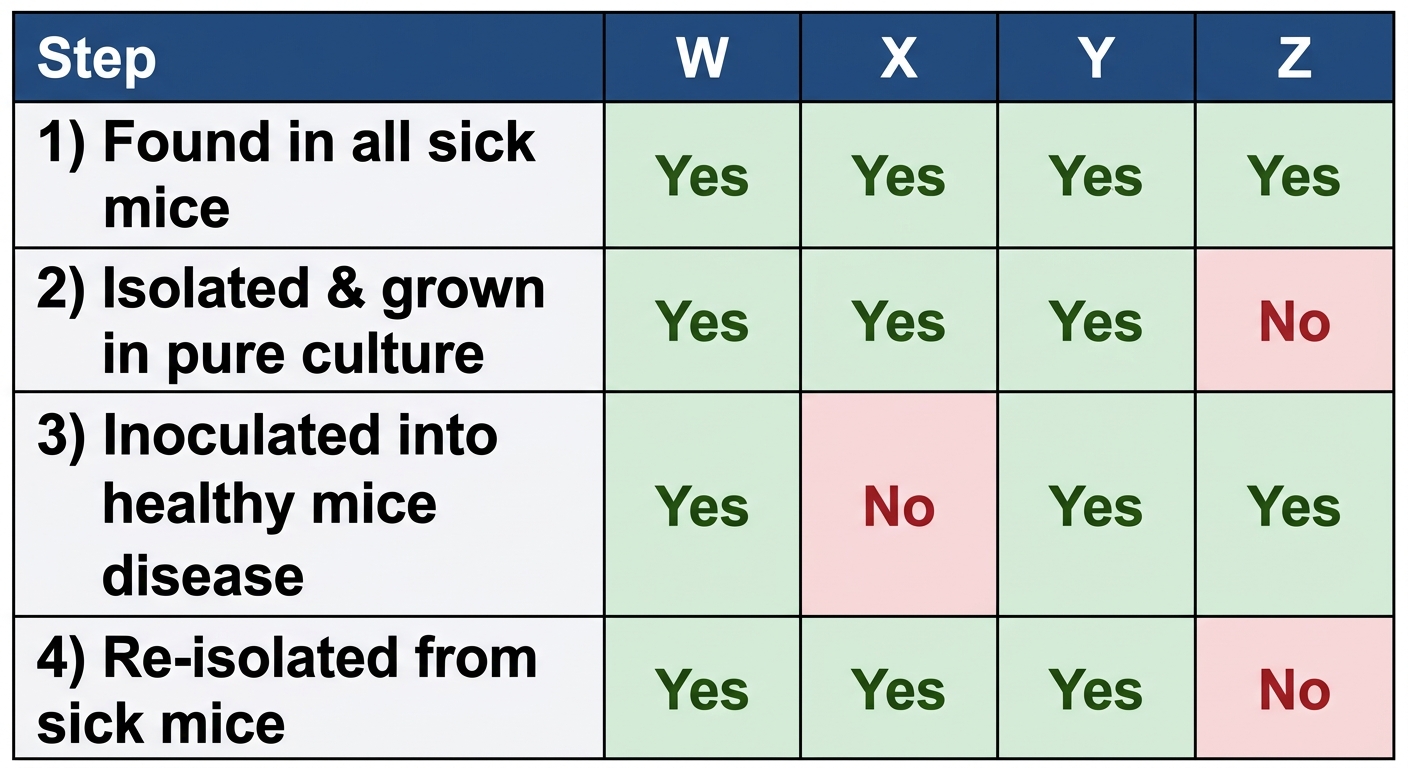
A researcher applies Koch's postulates to investigate four bacterial strains (W, X, Y, Z) isolated from diseased mice. The results are shown below.
Postulate — W — X — Y — Z
1. Present in all diseased individuals: Yes — Yes — Yes — Yes
2. Isolated and grown in pure culture: Yes — Yes — No — Yes
3. Inoculation causes disease in healthy mice: Yes — No — Yes — Yes
4. Re-isolated from experimentally infected mice: Yes — Yes — Yes — No
Postulate — W — X — Y — Z
1. Present in all diseased individuals: Yes — Yes — Yes — Yes
2. Isolated and grown in pure culture: Yes — Yes — No — Yes
3. Inoculation causes disease in healthy mice: Yes — No — Yes — Yes
4. Re-isolated from experimentally infected mice: Yes — Yes — Yes — No
a
State the purpose of Koch's postulates in microbiology. [1]
b
Identify which strain satisfies all four postulates and explain why each postulate is necessary to establish a bacterium as the causative agent of a disease. [2]
c
Evaluate the data for strains X, Y, and Z, justifying why each cannot be confirmed as the causative pathogen. [2]
Solutions
That's every free question here — 5 of 219.
+214 more questions, plus Mock Papers & Worksheets, are waiting in Premium.