You're viewing free preview questions — 5 questions previewing here — subscribe to unlock 81 more, plus the Full Question Bank, Mock Papers & Worksheets.Upgrade
Homeostasis and Regulation — Free MYP5 Biology Practice Questions

1QuestionControl of Blood Glucose LevelsConcept Practice
2 marks~3 minCriterion A
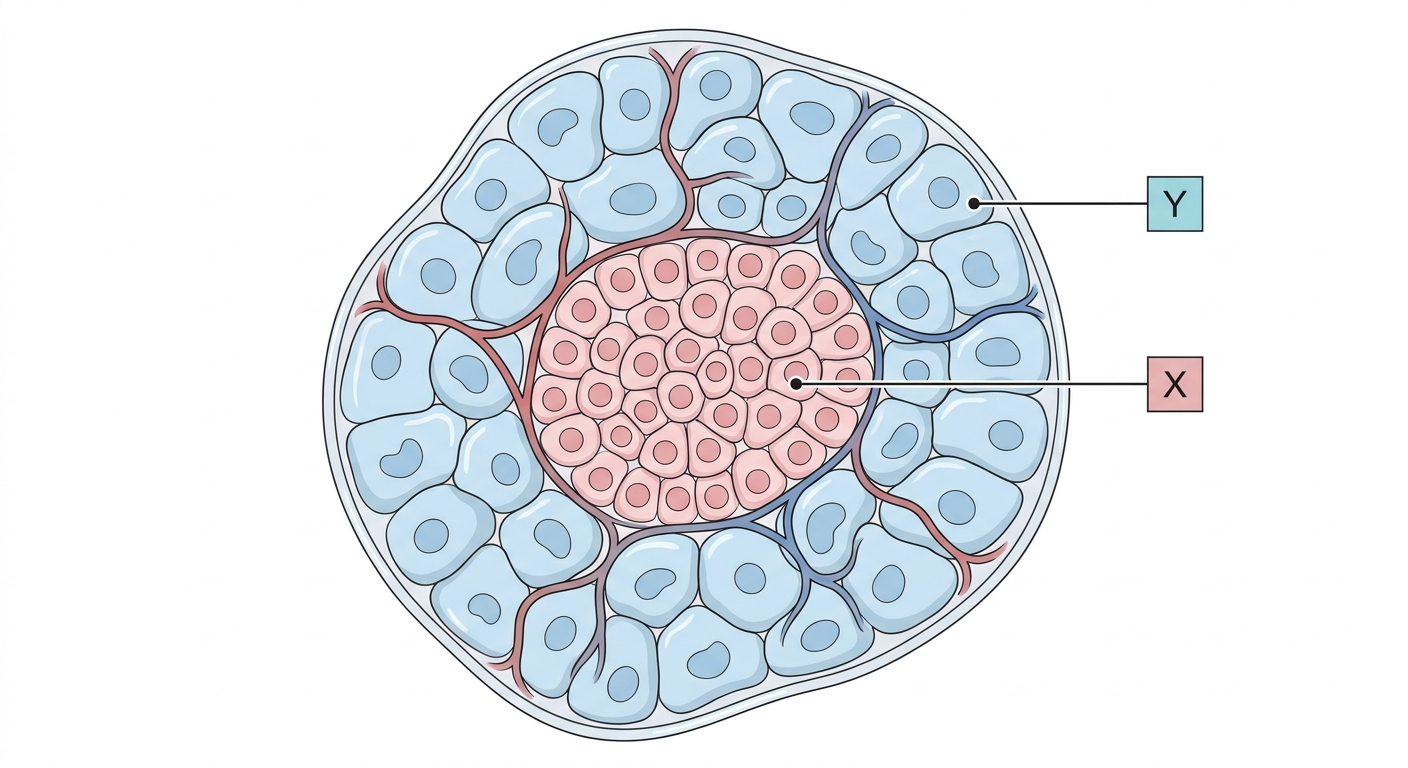
The diagram shows a pancreatic islet. Cell X is smaller, more numerous, and clustered toward the centre of the islet. Cell Y is larger, less numerous, and located toward the periphery.
a
Identify cell X. [1]
b
Explain how cell X regulates blood glucose concentration when glucose rises above the normal range. [1]

Solutions
2QuestionControl of Blood Glucose LevelsAssessment Practice
2 marks~3 minCriterion A
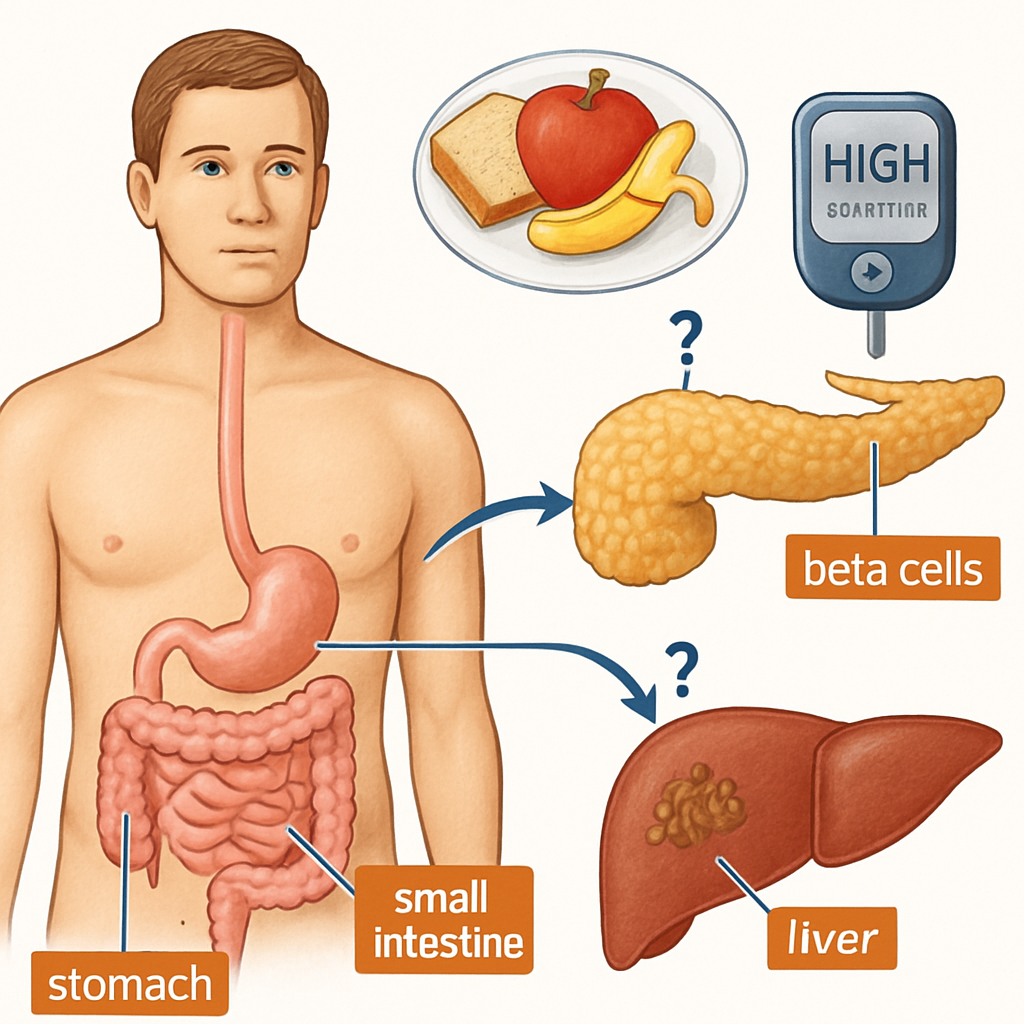
After eating a carbohydrate-rich meal, a student's blood glucose concentration rises above the normal range of approximately 4–6 mmol/L.
Describe the hormonal feedback loop that returns blood glucose to its normal range. In your response, use all of the following terms correctly: insulin, pancreas, beta cells, liver, glycogen. Present events in a clear, logical sequence. [2]
Describe the hormonal feedback loop that returns blood glucose to its normal range. In your response, use all of the following terms correctly: insulin, pancreas, beta cells, liver, glycogen. Present events in a clear, logical sequence. [2]
Solutions
3QuestionControl of Blood Glucose LevelsAssessment Practice
2 marks~3 minCriterion D
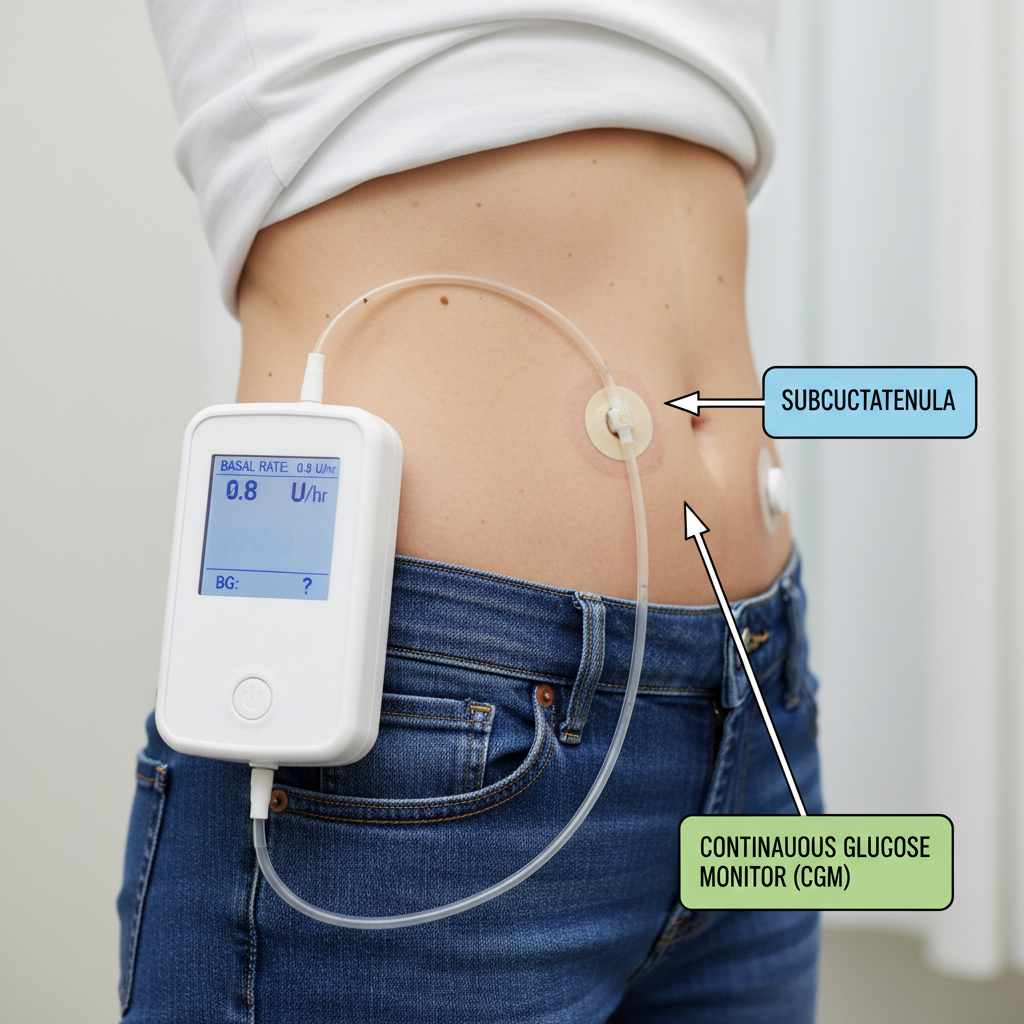
Insulin pumps are used in the management of type 1 diabetes. The device delivers a continuous low-level (basal) dose of insulin throughout the day, with additional bolus doses released at mealtimes in response to rising blood glucose levels.
a
State the role of insulin in restoring blood glucose levels to normal after a meal. [1]
b
Evaluate one limitation of using an insulin pump as a substitute for the body's natural homeostatic control of blood glucose. [1]
Solutions
4QuestionControl of Blood Glucose LevelsAssessment Practice
4 marks~6 minCriterion D
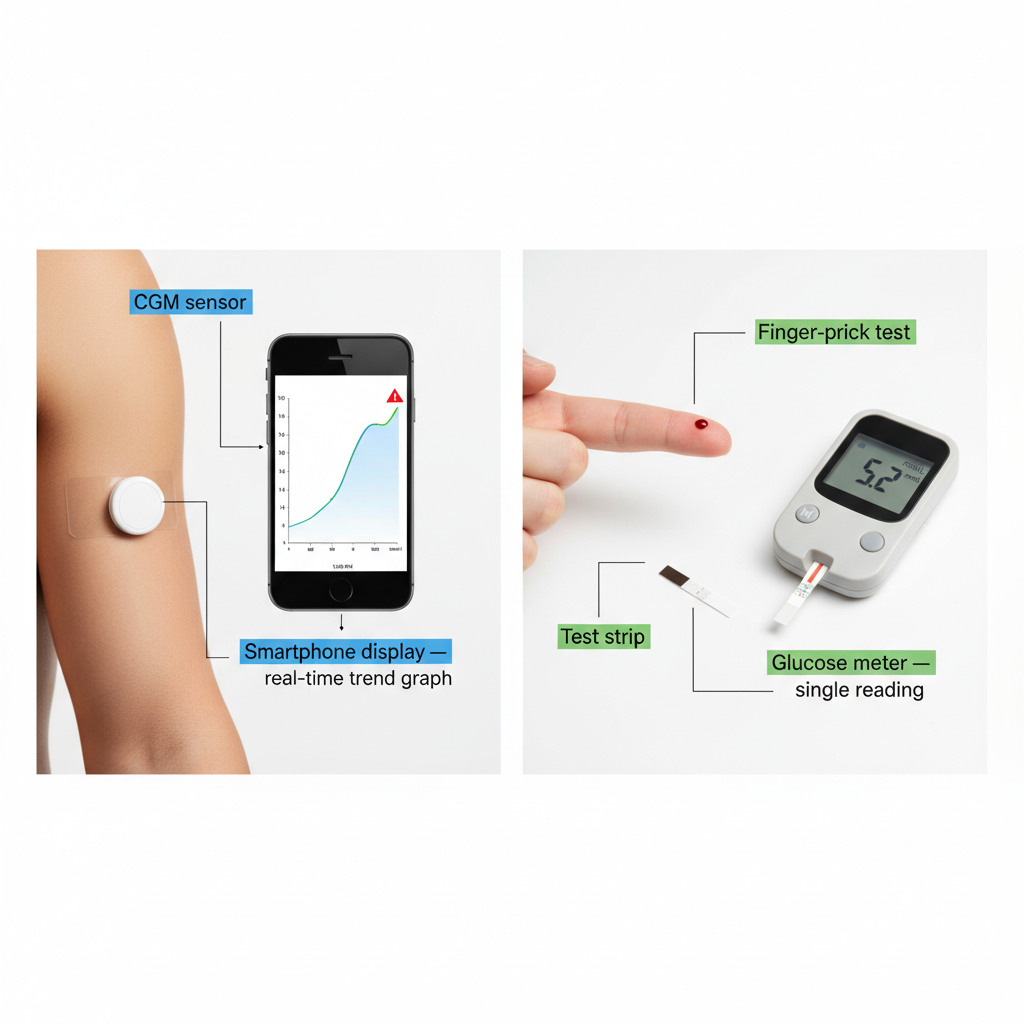
A diabetic patient wears a Continuous Glucose Monitor (CGM) that samples interstitial fluid every 5 minutes and sends real-time glucose readings and trend alerts to a smartphone. Traditional finger-prick testing provides only a single, momentary blood glucose value.
a
Explain one health benefit of CGM over finger-prick testing, linking your answer to the regulation of blood glucose levels. [1]
b
Explain one psychological impact — positive or negative — that continuous glucose data monitoring may have on the patient. [1]
c
Discuss the accuracy and limitations of CGM technology, and evaluate whether its overall benefits to a diabetic patient outweigh its drawbacks. [2]
Solutions
5QuestionControl of Blood Glucose LevelsAssessment Practice
6 marks~9 minCriterion C
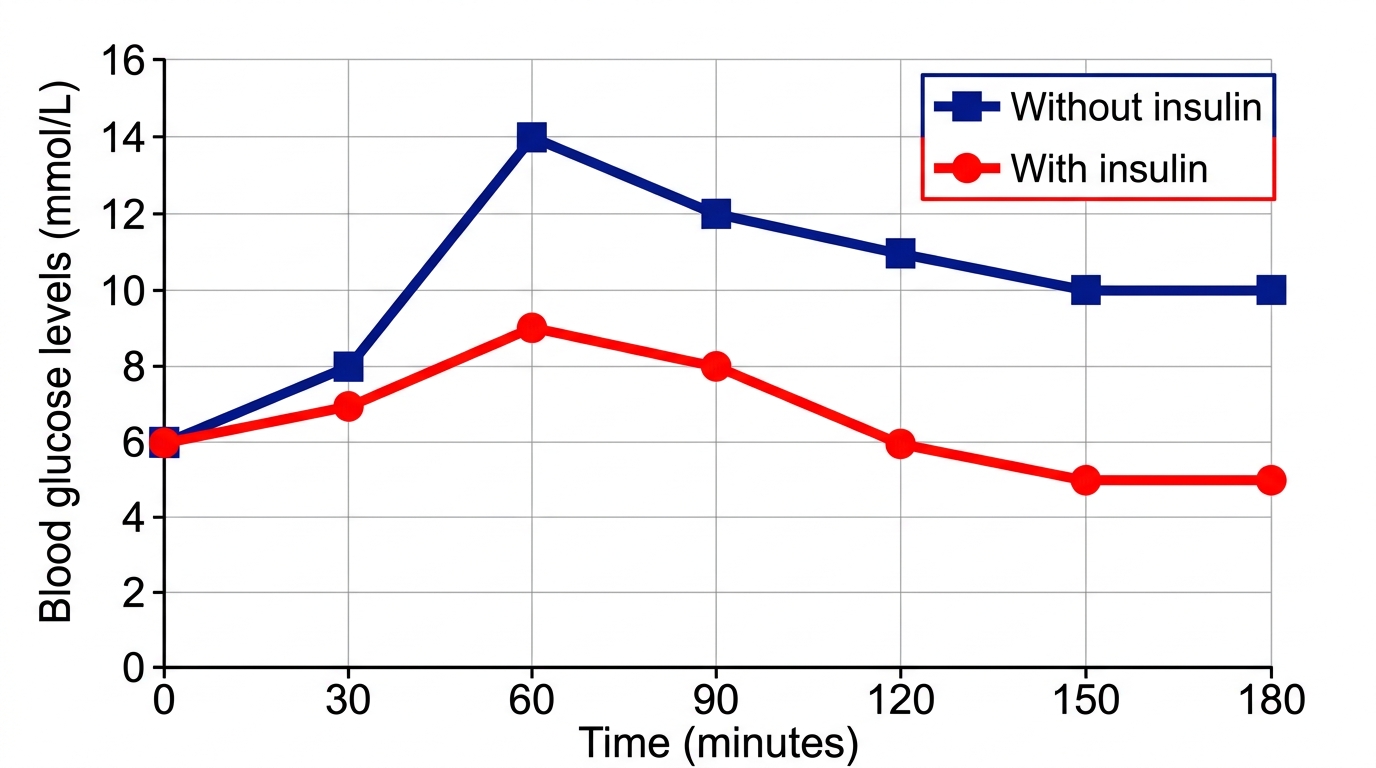
A diabetic patient consumes a meal containing 50 g of carbohydrates at time minutes. On one occasion, an insulin injection is administered immediately after the meal; on another, no insulin is given. Blood glucose (mmol/L) is measured every 30 minutes for 3 hours.
| Time (min) | 0 | 30 | 60 | 90 | 120 | 150 | 180 |
|---|---|---|---|---|---|---|---|
| Without insulin (mmol/L) | 6 | 8 | 14 | 12 | 11 | 10 | 10 |
| With insulin (mmol/L) | 6 | 7 | 9 | 8 | 6 | 5 | 5 |
a
Describe the trend in blood glucose levels for each condition. [2]
b
Explain how the difference between the two data sets is consistent with insulin promoting cellular uptake of glucose. [2]
c
Evaluate the hypothesis that insulin lowers blood glucose by promoting cellular uptake of glucose, identifying one limitation of using blood glucose concentration as evidence for this mechanism. [2]
Solutions
That's every free question here — 5 of 86.
+81 more questions, plus Mock Papers & Worksheets, are waiting in Premium.